




No Apologies
Beef prices are high, but deservedly so, CattleFax CEO Randy Blach tells audience at 2025 Angus Convention.
December 17, 2025
“We need to be thankful for where we are,” CattleFax CEO Randy Blach told attendees of the 2025 Angus Convention in Kansas City, Mo., this fall. The market analyst has spent four decades at the organization, the last 17 as CEO. He applauded Angus producers for spending their careers developing the vision and the cattle that people throughout the supply chain could build their businesses on.
“We don’t need to apologize for these prices,” Blach said, reminding the audience of prices in the 1980s when the beef demand picture was not so good.
Average profitability in the beef industry from 1980 to 1998 was $2.04 per head, he said (see Fig. 1). “We lost 400,000 producers when we went through that. … The industry owes the Angus breed, the leadership in the Angus breed, a round of thank yous for moving this needle.”
In the 1980s and 1990s, the industry was chasing lean. Angus followed a different course, focusing on quality and the consumer eating experience.
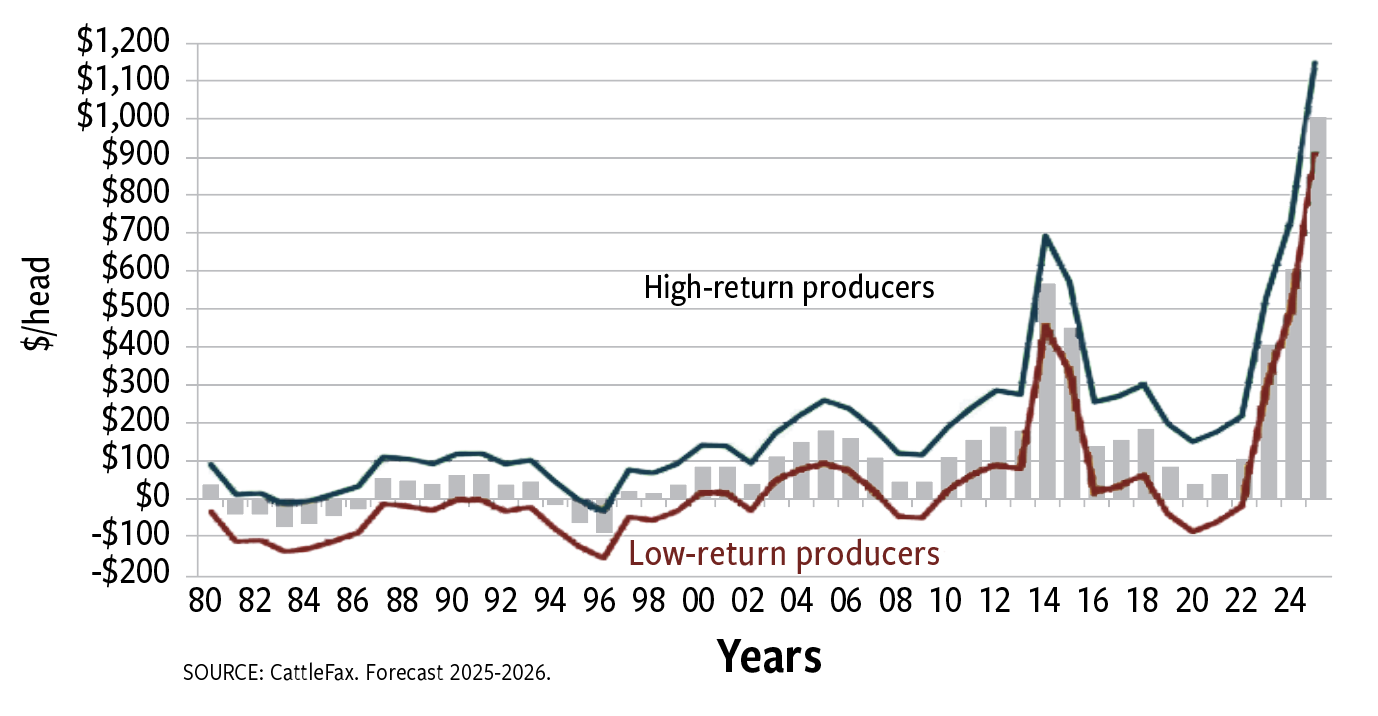
Fig. 1: Avg. cow-calf profit (loss), cash costs only

Beef demand was at a 20-year low in 1998, down 53% from 1980, Blach said. “The consumer said what you’re producing is worth 53% less than it was in 1980, and that’s why we lost so many people through that time period.”
He credited the Angus breed’s leadership with the Certified Angus Beef® (CAB®) brand for turning things around and setting the table for today’s beef demand and subsequent beef prices.
Domestic supply
Looking at some of the market fundamentals shaping those prices, Blach said the nation’s cow herd is beginning to expand, albeit slowly.
With cow slaughter down 30% and indications of a slight uptick in heifer retention, Blach said we likely saw the bottom of this cycle’s cow inventory in January 2025. He expects a slow gradual growth in numbers for the next few years.
The part of the nation’s cow herd that is growing, said Blach, is the dairy herd. Dairy-influenced cattle are making a larger contribution to the overall fed-cattle supply and could consistently make up 15%-20% of that supply.
“Beef-dairy crosses are the real deal. This is not a fad,” he said. “These cattle that are managed right and bred right are tremendous animals in our production systems. … We need ’em in our industry.”
Foreign imports
“Year in and year out, we bring in 1.2 million head of feeder cattle and calves out of Mexico,” Blach said, pointing out this year’s number is barely more than 200,000. The border was closed to cattle imports in November 2024; opened in February 2025; and has since continued to open, close and reopen.
“The market never believed that the Mexican border was going to be closed for a prolonged period of time — until July 7,” he said, when the decision was made that New World screwworm was advancing too close to the border.
At about the same time, the tariff on Brazilian imports was increased to 76.4%.
“The market was not anticipating that,” Blach said. “This big run in prices that we had from the first week in July into October here has been largely driven … by these factors because the market had to price that in.”
“Policy decisions have a major impact on the market in the short term,” Blach said, adding they eventually settle out and get back to normal.
“That’s what we’re going through right now,” he observed. “The market is anticipating there’s going to be a change in policy, and we’re having to take out some of the gas that we put into the tank as the market realizes there may be some additional supply that will start to move into the U.S., either from an imported beef standpoint (Argentina) or Mexican feeder cattle.”
Fed-cattle market
Blach predicted the smallest fed-cattle slaughter would occur in 2026, especially if the Mexican border reopens by early next year. Explaining that it is the market’s job to be forward-looking, he told producers to expect the cycle highs in price to occur in 2025.
“That doesn’t mean the markets aren’t going to stay good,” he added.
Carcass weights
While head counts are down, carcass weights are up — 27 pounds (lb.) last year and expected to be up another 22-23 lb. this year. Together, that’s the equivalent of 1.8 million head of cattle.
“The market has sent that signal, hasn’t it? It’s sent the signal to make every one of ’em bigger and make ’em better,” Blach said. “I think the market has done a great job of responding to that.”
Lean trim
Normally the United States imports 10%-12% of total beef consumption in the form of lean beef. As we have decreased fed slaughter from the peak of 30.2 million head in 2001 to 25-25½ million, lean beef is the product category lacking.
“We focus a lot of time and attention on ribs and loins and chucks and rounds,” Blach said. “Don’t forget 53% of our beef consumption in the U.S. is in the form of ground beef — 53%.”
The trim coming out of plants today is 50%-60% lean, meaning we need more 90%-95% lean to mix with it to provide a consumer-friendly ground beef product. About 18%-19% of beef consumption in the United States this year was imported, Blach said, “because we aren’t filling that void ourselves.”
Imports will decrease in the next three to five years as we start increasing the cow herd and harvesting more cows, he said.
Per capita consumption
Blach called the flat per capita consumption of the last several years a symptom of supply, while beef prices are indicative of increased demand. Two years ago, fed cattle sold for a $1.65; this year the average will be $2.25, $2.26 per lb., Blach predicted. “That’s demand growth.”
That comes even as consumers have more choices — more pork and more poultry. It points to more demand for protein in general. So far, Blach pointed out, consumers aren’t trading down to lower-priced proteins, but as average retail beef prices have increased from $8.15 a year ago to $9.35 per lb. (see Fig. 2), we should expect it to happen.
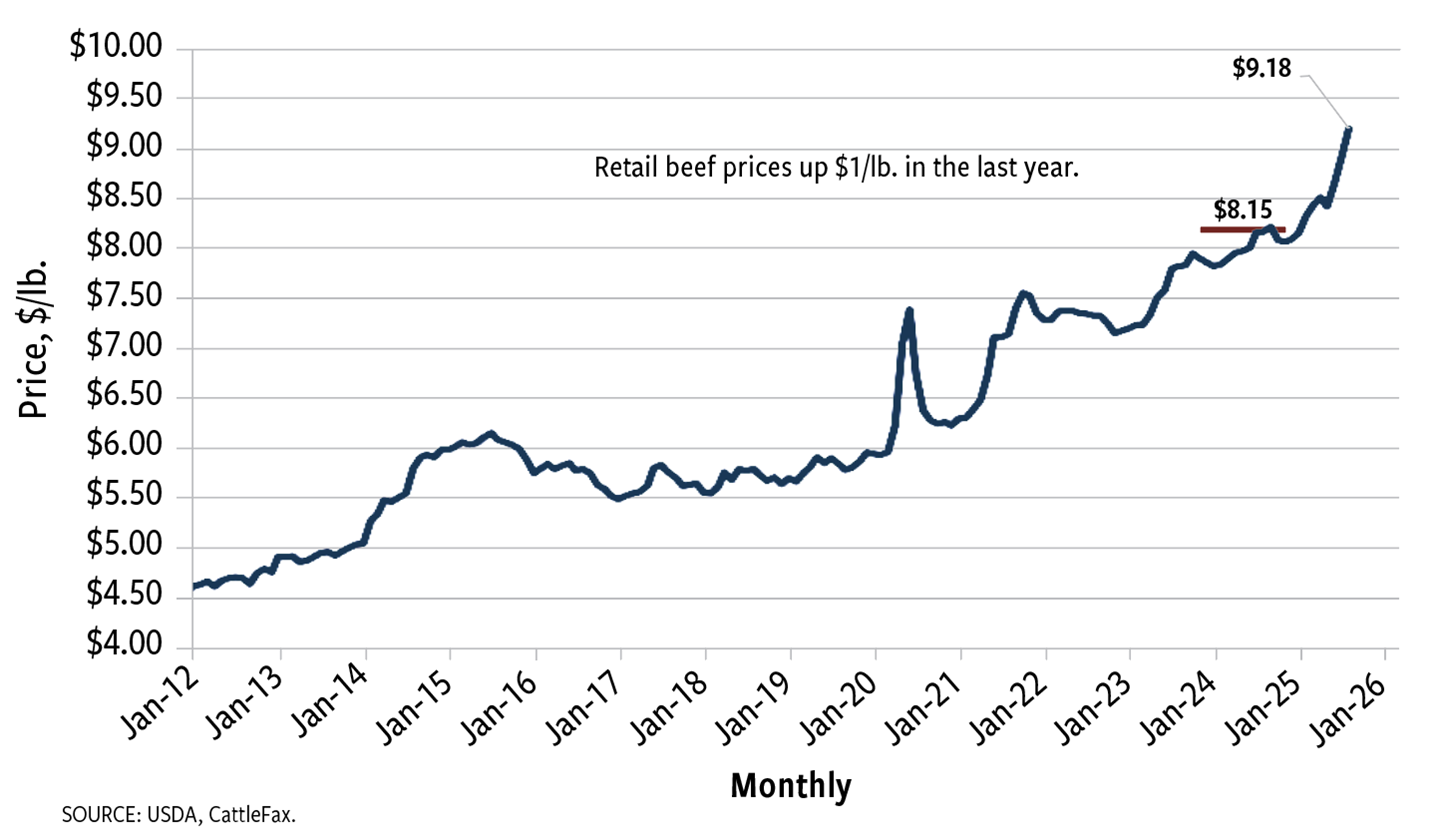
Fig. 2: USDA all-fresh retail beef price

The market’s job is to ration supply, and the only way you have to ration supply is with price, Blach said, “because we’re not going to be able to fix the supply situation that we’re in for at least another 12 to 18 months.”
Blach advised the audience to keep an eye on what happens with SNAP payments. With roughly 45 million people getting SNAP benefits, “this is a big deal,” said Blach. “Protein is a big part of what they buy.”
Dollars into the system
“What does beef demand at a 40-year high mean to you? Envision taking $1,070 a head off the value of every animal you sell,” Blach said (see Fig. 3). “It wouldn’t look near as good, would it?”
Referring back to Fig. 1, Blach asked: “Did anybody notice where that average cow-calf profitability is right now? It’s a thousand dollars a head. Without that demand growth, there would be no profitability for cow-calf producers.”
That’s why it’s important to focus on what the consumer values, Blach emphasized. “It’s not what we all want. It’s what the consumer is willing to pay for.”
At $9.50 per pound, it would take about 13 minutes for the average consumer to pay for a pound of beef, Blach said, pointing out that metric has ranged from 11 to 13 minutes for the past decade (see Fig. 4).
“What’s that tell you? Consumer incomes have gone up a lot, haven’t they?” he emphasized. “We forget that side of the equation. We forget how much salaries have gone up, how much better people are paid today than they were 10 or 15 years ago.”
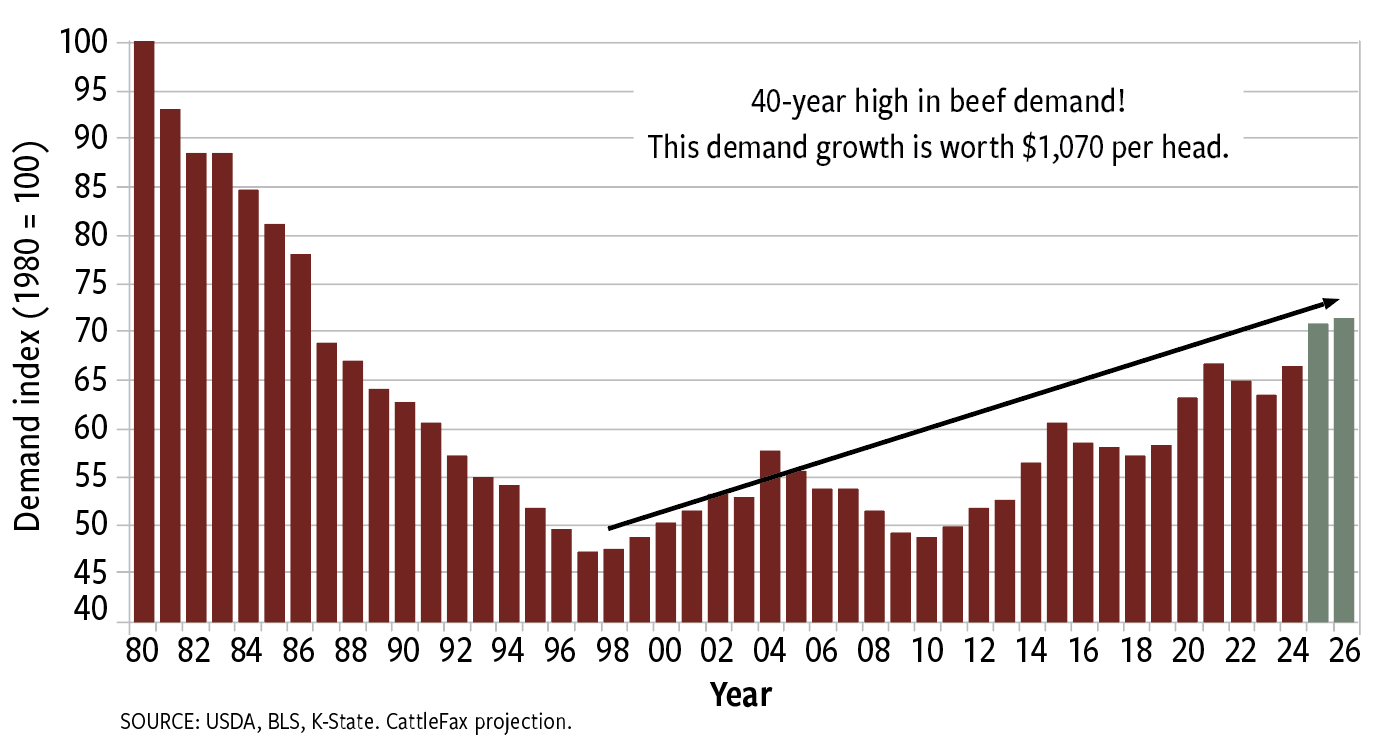
Fig. 3: Annual U.S. retail beef demand index

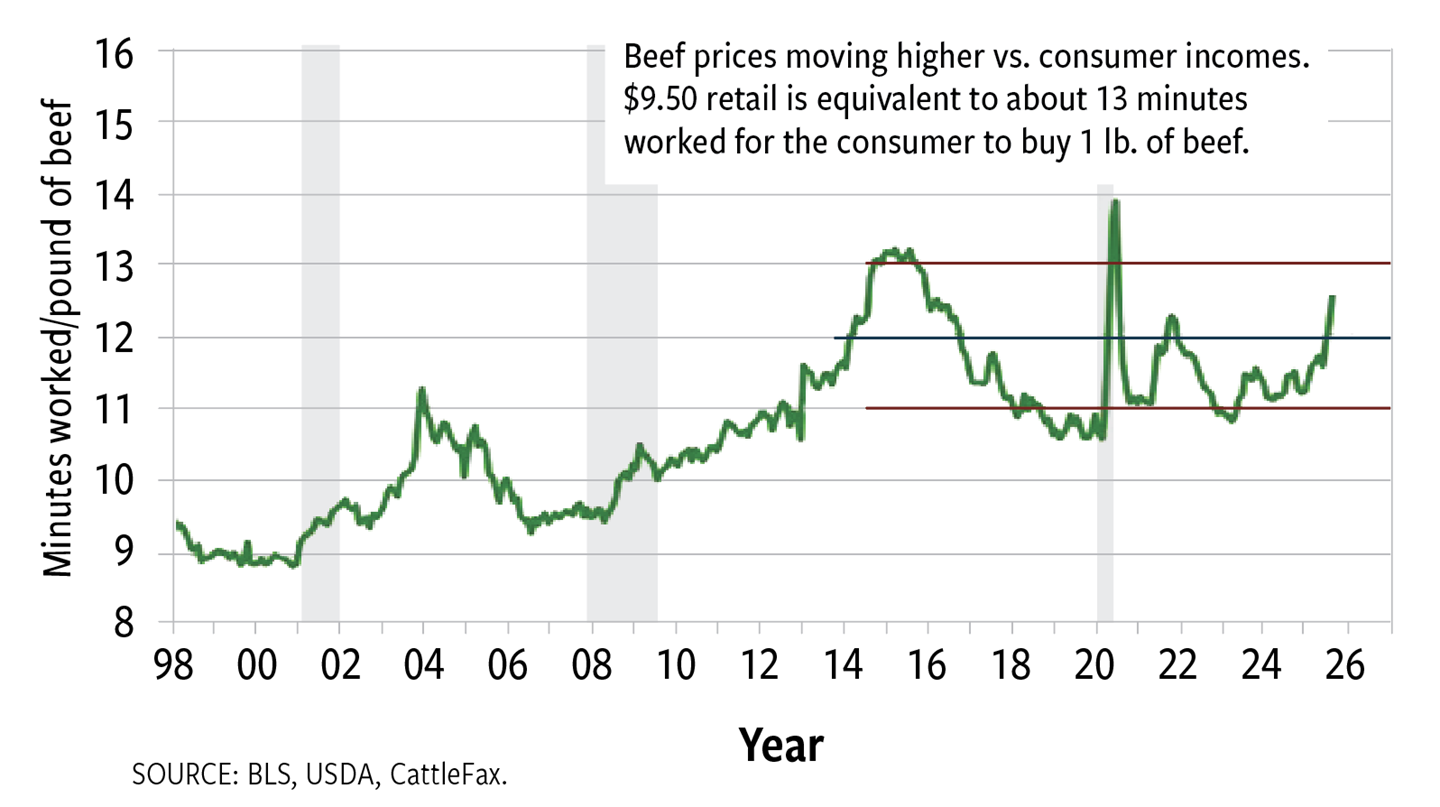
Fig. 4: Minutes worked for U.S. consumer to pay for 1 lb. of USDA all-fresh beef

Still, he cautioned, retail prices are reaching the point of resistance.
Demand drivers
“I want you all to hear this: 100% of the demand growth that we’ve had since the 1998 demand lows has been for [upper two-thirds Choice] or higher beef,” Blach said, noting Angus can take a lot of credit for the blue line in Fig. 5. “Select demand has not grown.”
Consumers are separating the beef category and telling us what they want by what they are willing to spend, Blach explained. They have sent the price signal to produce higher-quality beef, and producers have responded.
“The number of Choice and Prime carcasses we produced in 2005 was just shy of 15 million. It’s over 20 million in this last year,” Blach reported, calling the feat phenomenal.
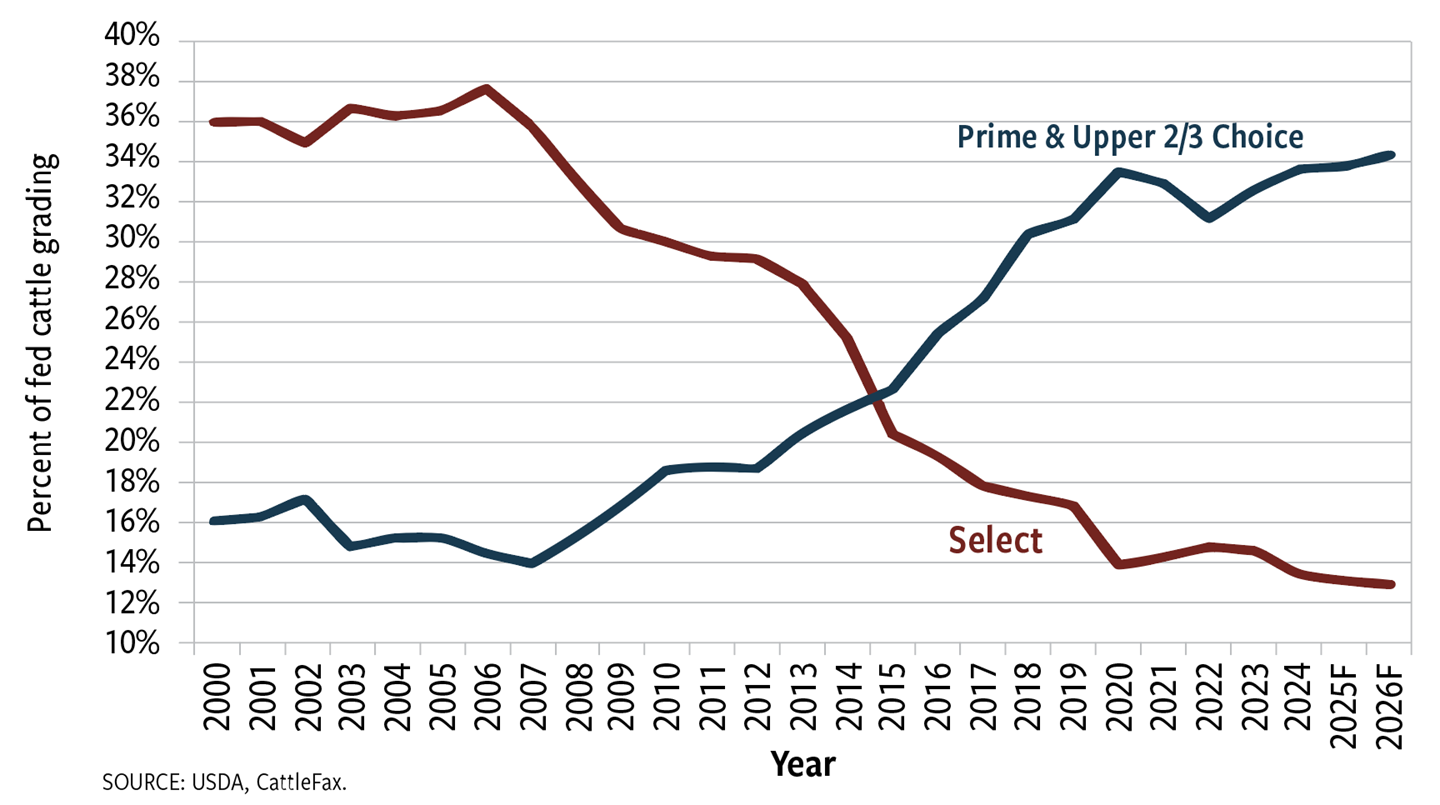
Fig. 5: Shifting from commodity to quality

While fed-cattle slaughter has decreased about 3 million head from the cycle highs of 26.1 million head to a predicted 23.5 million head in 2026, the number of Prime-grading cattle has increased 16%, and the number of upper-2/3 Choice and Prime has held steady, down only 1%.
Signaling quality
The Prime-Choice spread, expected to average $42 per hundredweight (cwt.) for 2025, continues to send the signal to produce high quality, Blach said. “Is that a worthwhile target to go after?”
The Prime-to-Select spread will be close to $60 per cwt. on a carcass weight basis — the third biggest spread in history, he noted. So, even though more high-grading cattle are coming to market, the market is signaling it wants more.
The average grid premium for loads grading more than 80% Choice across all regions is $96 per head, Blach shared. Loads grading 95% Choice and Prime with 35%-40% Prime garner premiums of $150-$200 per head.
“These signals are being sent all the way through our marketplace,” Blach said. Feeders pay more for calves with the potential to perform on the grid. The range in price of five-weight calves sold in summer video auctions in the Northern and Southern Plains and Western States for October-December delivery averaged $83 per cwt. — $456 per head (see Fig. 6). The average range in price for the eight-weight steers was $40 per cwt., or $340 per head.
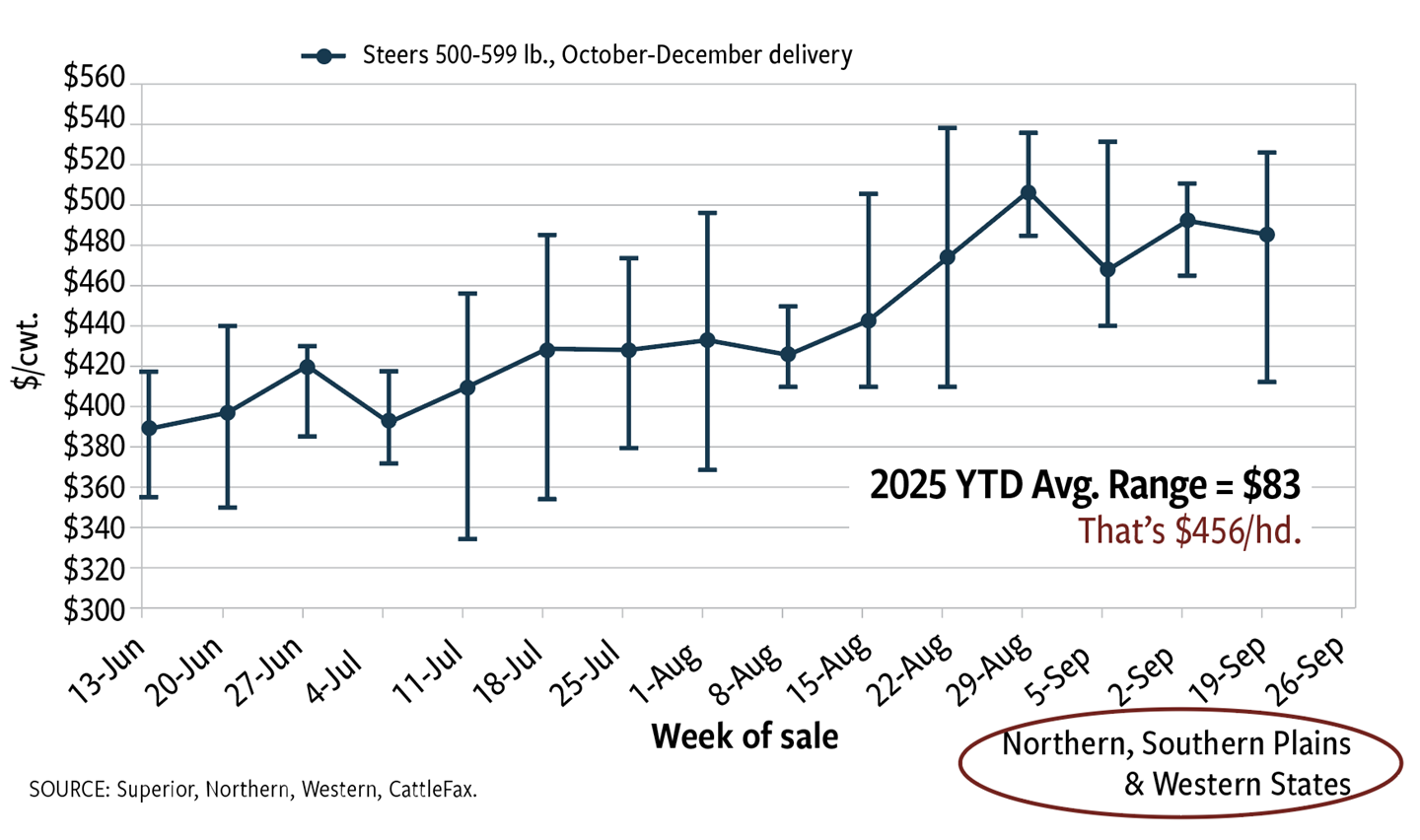
Fig. 6: Summer video auction weighted avg. price and ranges

Volatility
Blach recognized that recent comments by President Trump regarding increasing beef imports from Argentina were causing cattlemen some heartburn (see “Beefing Over Beef Prices,” page 124).
For all the chatter about Argentina, “it was a nothing burger. It had no impact,”
Blach said (see Table 1). “That was not what the market was worried about. The market was worried about the two big 800-pound gorillas in the room — if we reopen the Mexican border and [if] the tariffs in Brazil were lowered from 76.4%.”
Blach pointed to the effects of these two “gorillas” happening on feeder-cattle prices in Fig. 6.
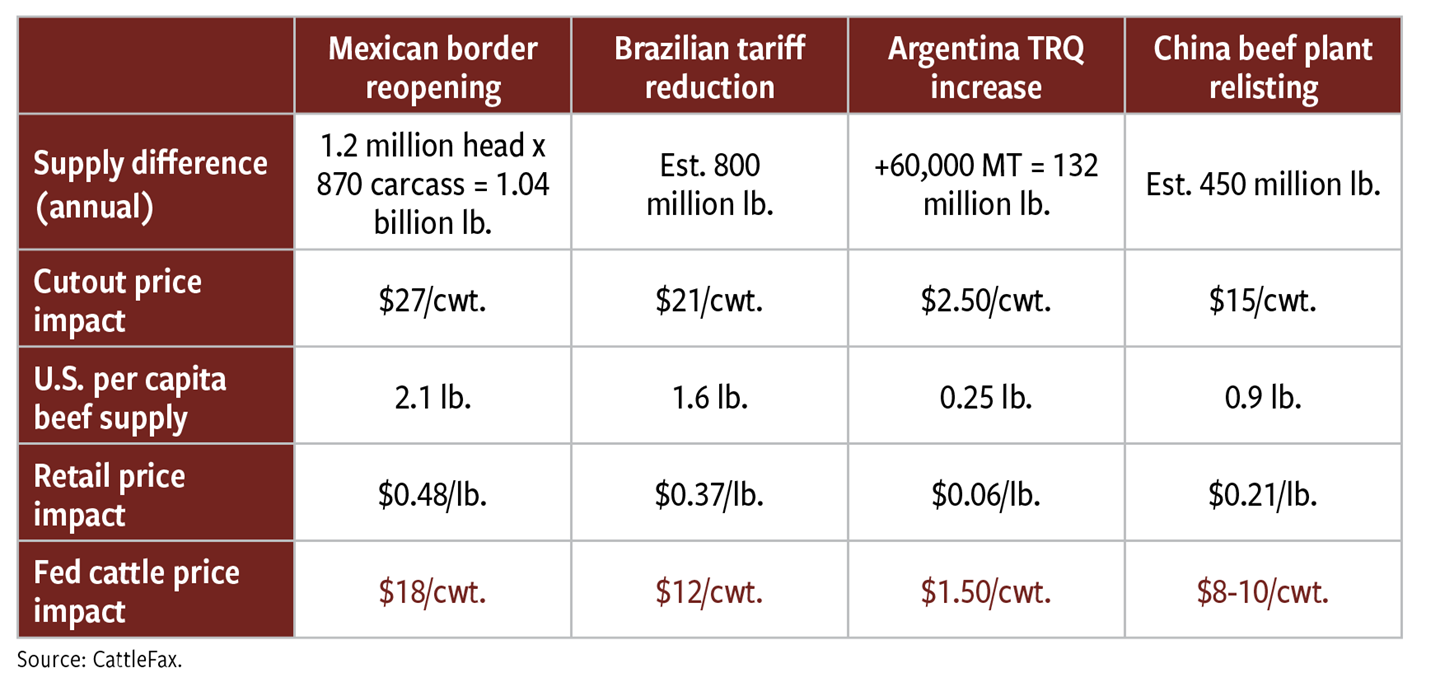
Table 1: Trade policy supply and price estimates

“Look what happened after the July 11th video because the market fundamentals changed,” Blach said, explaining that calf prices increased as the market began rationing supply.
The announcements also affected live-cattle futures contracts. The live cattle strip (the average of the next six live-cattle futures contracts) was trading at $207 per cwt. when the border was closed and the Brazilian tariff went into effect. The market went to $242 as the futures market tried to get out in front to ration supply.
As noise started with talk of lowering the tariffs and importing more beef from Argentina, open interest started getting out of the market.
“They don’t like the uncertainty,” Blach said.
“We’ve lost 25% of the open interest,” Blach said. “It doesn’t mean the market’s going to wreck. All it means is the market’s going to adjust. It’s going to adjust back in here to where the supply and demand fundamentals would really put them.”
What is that level? Blach predicted the market would shift back to where the fundamentals had it before the border-tariff influence in early July. That puts fed-cattle at $215-$220 per cwt., 800-lb. feeder steers at about $320 per cwt. and 550-lb. steers at about $390 per cwt.
“Every animal we’ve produced in the system this year is going to generate — when you add all the margins up across the segments — $1,700, $1,800 a head,” Blach emphasized.
“We don’t need to apologize. You’ve worked your whole life for this. You focused on the right things,” he continued. “We’re not chasing rabbits, but we’ve got to continue to focus on the right things. We have to continue to focus on the things that the consumer believes are important.”
Angus Beef Bulletin EXTRA, Vol. 17, No. 12-B
Topics: Business , Events , Management , Feeder-Calf Marketing Guide , Marketing , News
Publication: Angus Beef Bulletin
Issue: January 2026
Related Content


Current Angus Beef Bulletin
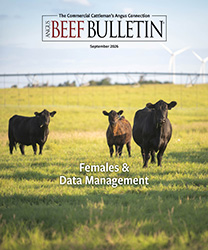
Our September issue focuses on the females of the herd and the records that validate them.