



Move Forward With Breeding Objectives
DNA testing helps keep breeding objectives in sight.
January 6, 2026
by Burt Rutherford
"Do you want to make money? Do you want to be profitable?” That’s the answer Chase Dewitz offers when asked why breeding objectives are essential for commercial cow-calf producers.
Dewitz manages 1,500 Angus-based cows bred to Angus bulls along with an extensive farming operation around Steele, N.D. With that many cows, all bred in multi-bull pastures, keeping his genetic objectives and outcomes consistent can be a challenge.
Breeding objectives set the target
It starts with knowing where your cow herd is genetically, deciding on where you want to be, and putting together a plan on how you’re going to get there, says Mark Johnson, Oklahoma State University (OSU) Extension beef cattle breeding specialist. “It’s the notion of what we’re trying to accomplish when we select a bull or make an AI (artificial insemination) mating. What is our goal?”
For Dewitz, his goal is to stay close to neutral. By that, he’s looking for moderation in genetic traits.
“I think sometimes people get too concerned about selective objectives and may find themselves in right or left field, chasing a trend,” he explains. “I think we’ve seen that in the past in livestock breeding generationally, thinking back to the ’70s through the ’80s with some of the extremes that we had.”
That tendency extended to the trend to improve carcass traits in the late 1990s and early 2000s, he says. “I think some guys got way too dialed in on that, and I think some maternal traits started suffering.”
Now, he thinks the Angus herd nationally is better balanced, which is why he believes a good set of breeding objectives keeps a cow herd close to neutral, given that different producers have different objectives.
“A good breeding objective is what is conducive to what works in your operation and what the market is demanding,” Dewitz says.
Focused on consistency
Like many cow-calf producers who keep replacement heifers, maternal traits, calving ease and genetic consistency are his main goals.
“So my breeding objectives,” he says, “I am trying to produce a very consistent, uniform calf crop at scale. I tend to select two, three or four different breeding lines, and then I’ll have either all sons of those or I stay with certain sire groups to replicate that consistency with each calf crop.”
His cows calve in late April, May and into early June to take advantage of better weather. That’s also when spring planting is underway. With limited staff, the cows have to calve on pasture without much babysitting.

Calving issues, temperament issues and mothering ability have all improved on Dewitz’s operation.

“So calving ease and low birth weights are a necessity,” Dewitz says. “I don’t strive for extreme performance. That’s not my objective. I want a live calf, not a big dead one.”
Dewitz says consistency will become increasingly more important as the beef business continues to change.
“Looking at beef on dairy, it has become a way for feedyards and packers to get livestock that are extremely similar to each other at scale. As the processing industry becomes more automated, a consistent carcass is going to become more of a necessity,” he says.
“I think large groups of very, very like cattle are going to be in high demand. I think it’s going to take a lot of years before we get there, but I think the rapid expansion of the beef on dairy is a glimpse of that,” he says.
For many commercial cow-calf producers, breeding objectives are basically goals, the declaration of the genetic improvement they want to make in their cow herd and the calves they produce. Dewitz, on the other hand, views his breeding objectives as guardrails that make sure he stays in his lane.
“I don’t know that where I’m currently at really needs to change unless something tells me it should,” he says.
In a good place
The reason Dewitz likes where he’s at is because he knows where he’s at. He knows where he’s at because he has DNA-tested every animal in his herd.
The DNA results come back with a score of 1 to 5, with 1 being low and 5 being high, which he uses to select his replacement heifers.
“That DNA scoring is taking 70 to 80 different gene markers and compressing it down to a score. It’s giving more of a maternal rating, and it helps us group the cattle,” he says.
Grouping a set of heifers that score 4 and 5 allows Dewitz to concentrate his genetics for the outcomes he wants.
“We’ve calved two groups of heifers now that have been higher scoring on their DNA test. The calving issues, the temperament issues, their mothering ability has improved. We’ve cleaned all that up, and we’ve done it in three years with DNA testing. It’s allowed us to get the bottom end cleaned out very quickly.”
Any replacement heifer that scores a 3 or lower is automatically culled. Any heifer that scores a 3 plus, which puts emphasis on maternal traits, is kept, assuming she passes the eyeball test. All the replacement heifers get an electronic identification (eID) tag, which matches up with the ranch visual tag and allows records on each animal to be kept in an Excel®-based software program.
Carcass merit isn’t one of the traits that Dewitz selects for because he says those genetics are already preloaded in the Angus breed. However, he gets carcass data on a portion of the calves in which he retains ownership.
“We’ve done that for a number of years, and it’s worked well. It’ll be interesting as we get another calf crop with DNA testing to see if it comes through on the carcass data a little bit.”
He’s seen the same effect on his mature cows.
“There were some cows that I wouldn’t have considered problematic or wouldn’t have expected to be lower scoring, but there was something in their genetic makeup that was making them score lower,” he says. “So I think DNA testing is a very useful tool at the commercial level that is probably being underutilized right now.”
No limit to number of objectives
There can be an overall breeding objective based on where you want to be genetically with your cow herd, then multiple breeding objectives that will help you reach that goal.
“If I’m going to select an AI sire or a herd bull to turn out on my cows, am I trying to primarily improve weaning weight, or am I looking for a bull that’s going to give me calving ease relative to as much weaning weight as possible while trying to keep mature cow size in check? I can go from one breeding objective to several,” Johnson says.
If your management objective is a terminal program, your breeding objectives are fairly simple, he says. “If I’ve got a black baldie cow herd and I’m pleased with the level of maternal traits they’ve got and I want terminal sires, I could look at the dollar beef index ($B). It has weighted all the traits that are economically relevant into one dollar value.”
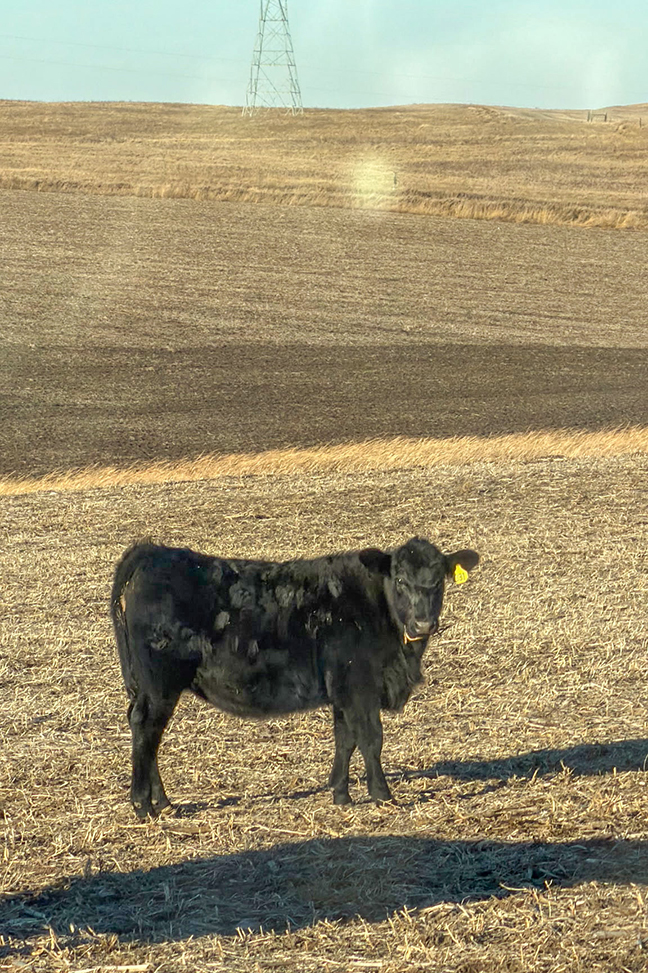
“Selection pressure is one of the most precious commodities we have in the cow-calf and seedstock business,” says Mark Johnson, OSU Extension beef cattle breeding specialist. “We don’t want to squander it.”

However, if you plan to keep replacement heifers out of your calf crop, bulls that have a high $B may well send you into a downward spiral that puts your cow herd out in left field.
“If we’re thinking about rotational sires and keeping daughters out of bulls, we are looking for multiple traits among our breeding objectives,” Johnson says. But that adds time and complexity. “The more traits you include in a selection program as breeding objectives, the more it’s going to temper what you can accomplish in a given amount of time,” Johnson says.
Sire search tool available
Fortunately, the Angus Sire Evaluation Report has a search tool that allows you to plug in multiple breeding objectives, then ranks the sires that are a match.
“I could plug in a ranking of the highest-weaning-weight bulls in the Angus breed that were proven sires above a certain level of accuracy. I would ask it to search, and it would spit out the ranking of the bulls from the top end,” he says.
“Well, I need to consider more than just weaning weight. So, now I’m going to say that I want weaning weight relative to bulls that are above a 10 on calving ease direct and below a 1.5 on a birth weight EPD (expected progeny difference).”
The tool allows you to plug in minimum and maximum values for various traits.
“So now I plug in a minimum value and a maximum value on a birth weight EPD of 1.5, and I ask it to search again for the highest weaning weight bulls. I get a new ranking because I’ve now put restrictions on what I was willing to accept for the sake of calving ease,” Johnson says.
“Well, I’m going to keep daughters back. So I plug in my minimum acceptable value of a heifer pregnancy EPD and maybe a range of milk EPDs. I’m going to potentially retain ownership through finishing. So I really want my marbling to be 1.0 or higher. So I just go to all those traits and I plug in minimums, maximums, ranges, and I ask it to rank them again on weaning weight and I’ll get a new list,” he says.
“Those are my breeding objectives. I’m trying to identify a sire that meets those objectives.”
In short, you’re defining your breeding objectives based on what you plug in on multiple traits as minimum and maximum values or acceptable ranges of EPDs relative to what you want to prioritize, he says.
“Selection pressure is one of the most precious commodities we have in the cow-calf and seedstock business. We don’t want to squander it. You want to make sure it gets used in the most appropriate way to improve the profit potential of your operation,” says Johnson, who is also a commercial cow-calf producer.
“Have a plan, think it through, identify your breeding objectives and choose wisely. Because the decisions you make now will affect your cow herd for the next 10 to 12 years.”
Editor’s note: Burt Rutherford is a freelance writer, photographer and founder of Rangeview Strategies LLC.
Building a better cow herd starts with heifer selection
by Kelli Retallick-Riley, Angus Genetics Inc. president
While selecting their herd sires, cattlemen routinely use tools like expected progeny differences (EPDs) and dollar value indexes ($Values) for guidance. However, choosing females is just as important. In fact, developing replacement heifers is one of the most costly investments a cattle operation makes each year.
With a DNA sample and for a testing fee of just $28 per head, commercial cow-calf producers can unlock a powerful toolkit to make commercial heifer replacement selection.
Offered through Angus Genetics Inc. (AGI), GeneMax® Advantage™ provides benchmarks for a series of traits (see Table 1), putting the same types of tools in the hands of cow-calf producers for heifer selection as are available for selection of herd sire candidates.
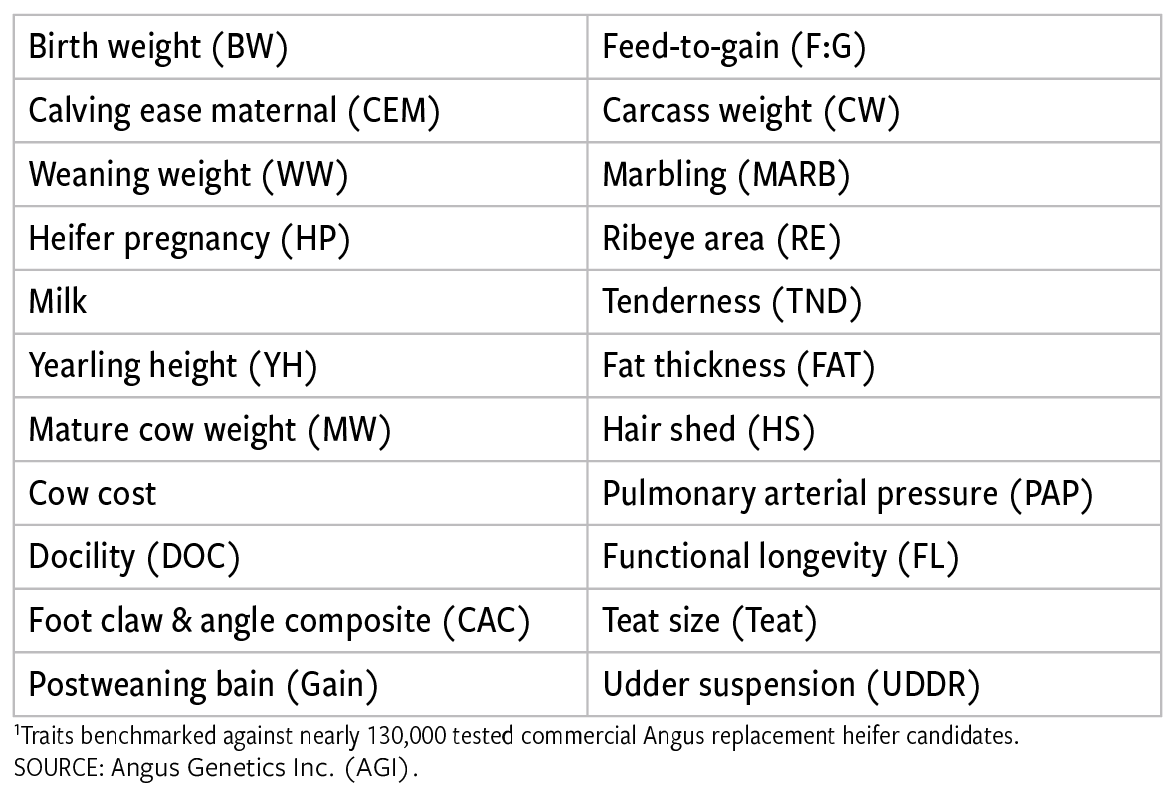
Table 1: GeneMax delivers genomic predictions for 22 individual traits*

This powerful tool has just been through a series of updates and now includes teat size and udder quality traits, as well as functional longevity and dollar value indexes ($Values).
These tools have been effectively used in herds to select the right females to drive individual herds to their end goals, and also to find and market extra commercial heifer candidates to others in the industry (see “Marketing Heifers?” in this issue).
To learn more about GeneMax Advantage, visit www.angus.org/agi/commercial.
Editor’s note: Excerpted from the November 2025 “Sorting Gate” column available online at here.
Topics: Management , Selection , Sire Evaluation
Publication: Angus Beef Bulletin
Issue: January 2026
Related Content


Current Angus Beef Bulletin
Our November issue focuses on the females of the herd and the records that validate them.