



Marketing Heifers?
Producers sell commercial bred heifers at premiums.
January 17, 2026
On Nov. 1, 2025, 119 commercial bred heifers averaged $4,543 at a sale in Mississippi. On that same day in Missouri, 68 averaged $4,889; and 50 commercial bred heifers averaged $5,875 at a sale in Georgia.
With a market as hot as that for bred heifers and feeder cattle, buyers and sellers might find themselves on the fence about what to do with their females this spring. They can look to the experts and those who have tapped into market premiums in the fall of 2025 perhaps for clues as to what might be the right move for them and their herd.
On Oct. 31, 2025 — the day before these sales — Randy Blach, CattleFax CEO, stood in front of 1,000 attendees at Angus Convention to talk about the markets. He answered questions like, “Where are we at with herd rebuilding?”
His answer to that question was, yes, herd rebuilding is beginning, but herd expansion is happening very slowly.
Wilkes Barnett, Barnett Angus of Washington, Ga., says most everyone he’s talked to in his region is saving heifers back to breed.
Building a reputation
For those who will sell commercial bred heifers, whether to capitalize on market conditions or as part of their typical marketing model, Barnett says creating uniform groups and having confirmed pregnancies with estimated calving dates has been helpful. Aligning with the priorities they have for all their cattle, they also emphasize the docility of their commercial females.
He says buyers of these females are often smaller-scale producers looking for a well-rounded genetics package and cattle that are low-maintenance. He sees large-scale producers raising their own replacements because of the prices.
For their sixth annual production sale — the one where commercial bred heifers averaged $5,875 — Barnett says, “We broke it up from 6 months bred to 8 months bred, every 15 days is what we thought.”
While their main business is selling registered Angus bulls, Barnett says they have also worked to build a reputation for offering high-quality commercial replacements because it’s a win-win for them and their customers.
“Our commercial heifers come from our recip cows that are proven raisers for us,” he says. “None of them are out of first-calf heifers, so we know they are strong mamas and good milkers. These commercial heifers give them a glimpse of our whole operation.”
Opportunity to improve
For those looking to buy commercial bred heifers, this season offers a great opportunity to advance the genetic makeup of a cow herd.
“You want them better every year,” Barnett says. “That’s the commercial man’s goal. That’s our goal.”
Each sire and his genetics affect a herd for generations, especially if producers are developing their own replacements. However, the genetics of the cow herd still play a huge role in genetic progress and profitability.
Commercial producers evaluating their genetic game plan have used dollar value indexes ($Values) as a tool for selecting bulls for years. Then in 2024, those testing females with Angus’s commercial female genomic test GeneMax® Advantage™ also gained access to $Values as a tool for selecting and mating commercial females.
The power of information
Ryan Groose had been a customer of the genetic services company Method Genetics and decided to transition to the GeneMax Advantage product when Method Genetics stopped providing those services in 2025 under the advice of his seedstock provider, Worthington Angus of Dadeville, Mo.
Groose operates a diversified farm with his family near Dadeville. They develop commercial Angus heifers and farm soybeans, corn and wheat; and Groose works full-time in town as a financial advisor.
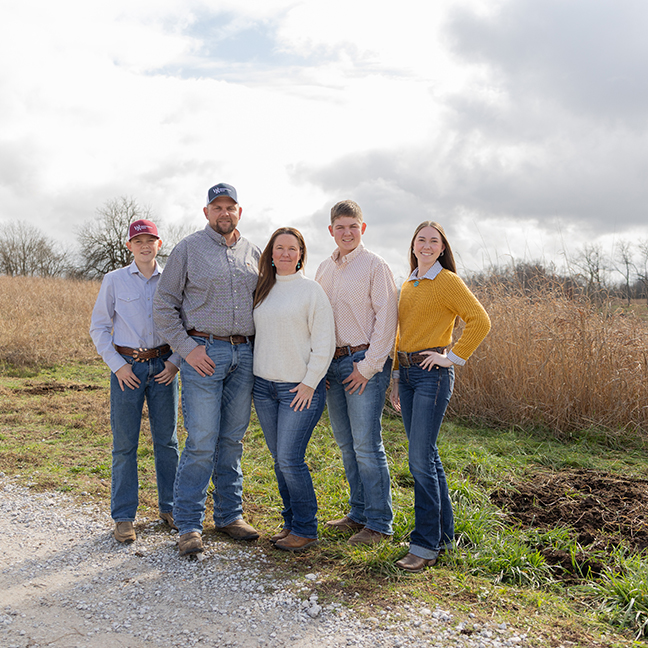
Henry, Ryan, Casey, Ben and Noah Groose

With access to $Values on their heifers through GeneMax Advantage, he sorted them based on $C (combined value), calving window and fetal sex as part of his marketing strategy.
“On our cattle operation, all we do is develop commercial females and sell them through [Josh Worthington’s] program,” Groose says. “You always think you have an idea of what stuff’s going to bring, but you never know until the gavel goes.”
Groose says he was pleased with how his 49 bred females sold in November 2025, with an average of $4,740 per head, just a few ticks below the sale’s average of $4,889.
“The heifers that sort out and test better do tend to bring more,” he says.
Worthington, who was recognized by the American Angus Association as the 2025 Young Breeder of the Year in November, says their fall 2025 sale was the first where Groose and other commercial female sellers provided $Values for buyers from GeneMax Advantage.
“They did kind of sort them out based on $C,” Worthington says of the buyers.
When asked about what he knew of the buyers of his females in the fall 2025 sale, Groose said a little more than half of the females went to repeat buyers and then a couple new buyers bought the others.
One of those new buyers is local to the area where Groose and Worthington operate. Groose says the new buyer bought heifers at the sale to complement what he’s done with his bull battery, buying Worthington Angus bulls, and with the intention of driving further genetic change over his whole herd.
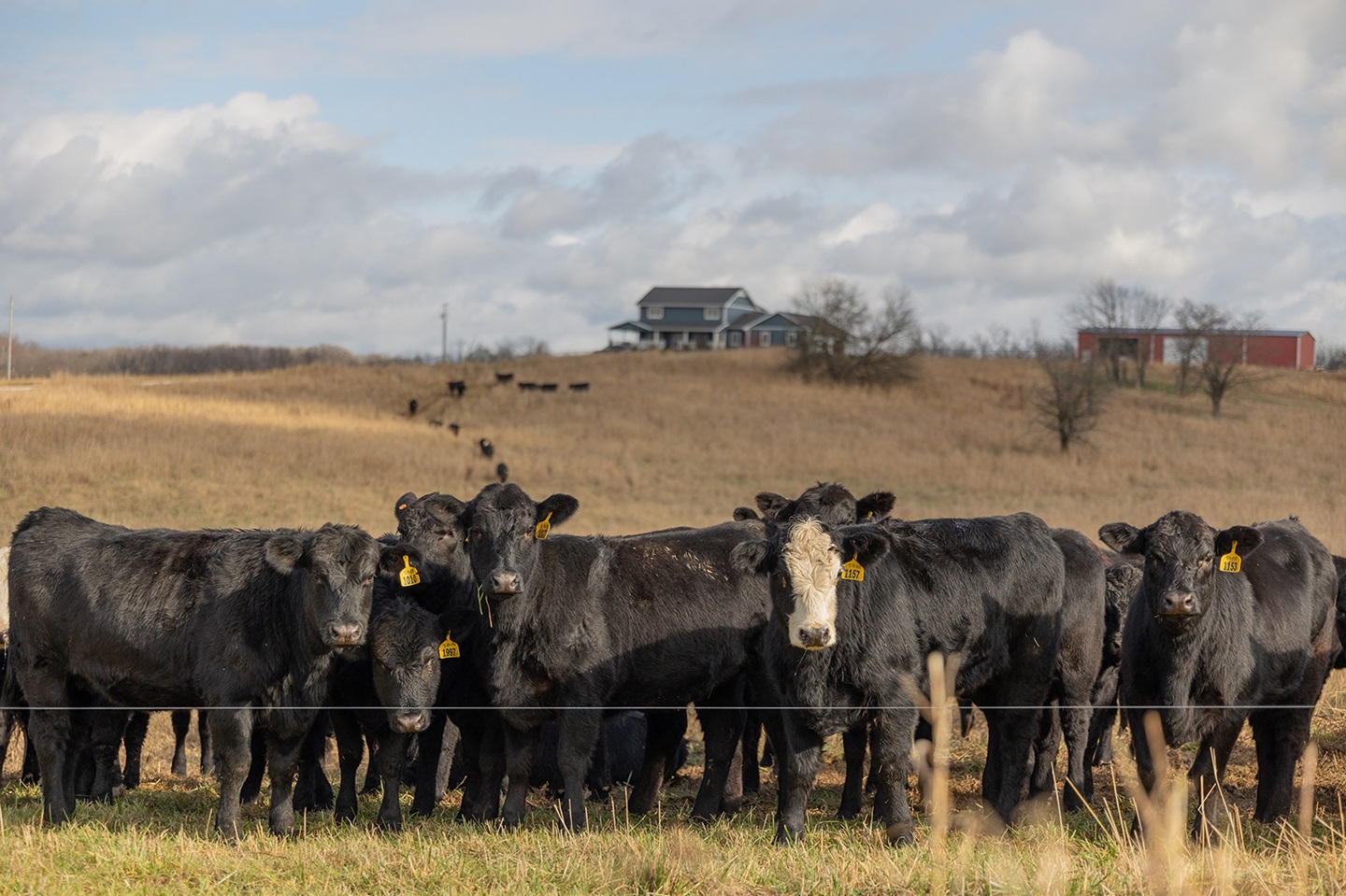

“Buyers could develop their own replacements, but buying them like this can help them accelerate their progress quicker and build better females immediately,” Groose says. “Then we tend to see those guys step up and be pretty aggressive buyers. I’ve seen that scenario play out a number of times over the years.”
Groose sources the heifers he develops from nearby cow-calf producers, and the heifers are bred using a combination of artificial insemination (AI) and cleanup bulls from Worthington Angus.
“We’ve been doing this for over five years now and sold 400-500 head through his program,” Groose says. “It’s working for us.”
Strong prices give Groose financial fuel for the next set of heifers to develop, he says.
Editor’s note: Sarah Kocher is a senior communications specialist for the American Angus Association.
Angus Beef Bulletin EXTRA, Vol. 18, No. 1-B
Topics: Female Foundations , Management , Marketing , Selection , Success Stories
Publication: Angus Beef Bulletin
Issue: January 2026
Related Content


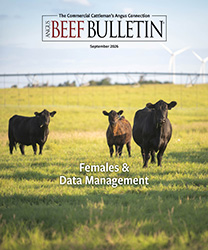
Current Angus Beef Bulletin
Our September issue focuses on the females of the herd and the records that validate them.