Feeder-Calf Marketing Guide
All About The Fat
A look at red meat yield, increased days on feed and quality-beef production.
July 25, 2025
Has beef production ever not been about the fat? In the 1800s, U.S. ranchers discovered feeding surplus corn to cattle would increase marbling in beef, raising their value. Fast-forward to the 1970s, beef quality tanked, and demand for Angus cattle waned. The Certified Angus Beef ® (CAB®) brand was launched, aiming to reverse those dynamics. Then, in the 1980s, the war on fat was declared, targeting both intramuscular and external fat.
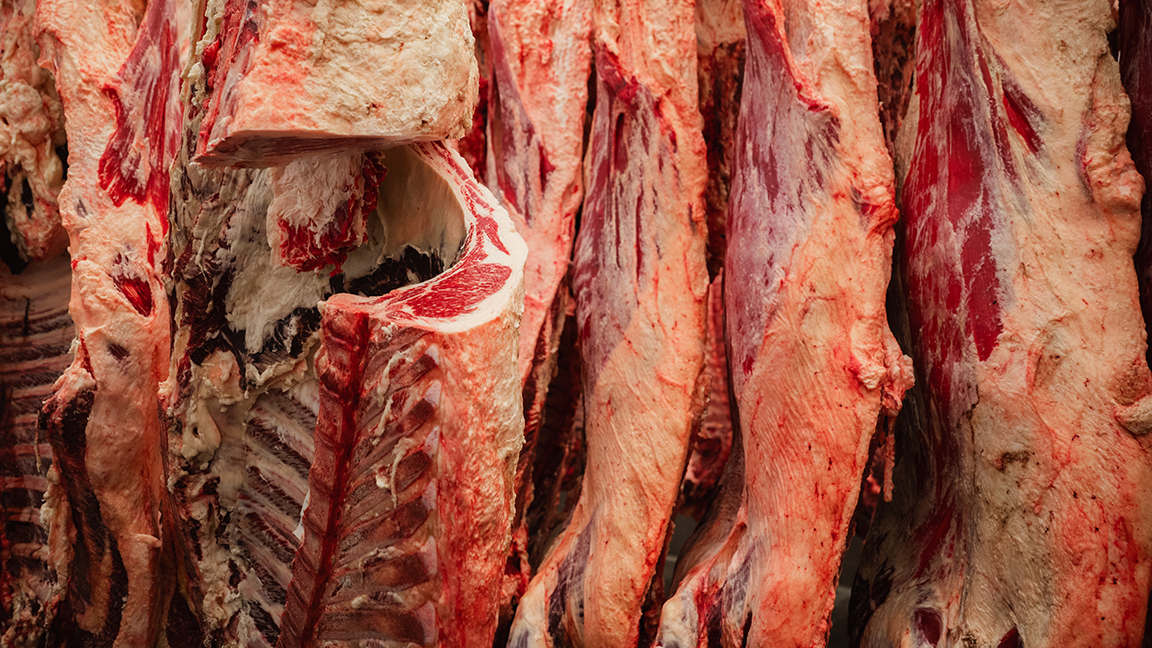
Red meat yield, or the percentage of saleable beef from a carcass, has taken the main stage in an era of record-low cattle numbers and longer feedyard stays for feeder cattle.

We’re decades down the road, yet the more things change, the more they stay the same. As an industry, we’re still talking about fat.
The conversation now points to excess backfat. Feedyards are encouraged to feed cattle longer, thus pushing carcass weights to record highs. More and more pounds — but how many of those pounds are saleable beef? Is there a way to increase red meat yield while maintaining marbling for palatability — without increasing the waste fat?
Researchers think so. Like the beef life cycle, it starts at the ranch and finishes at the feedyard.
Finding the problem
First, how did we get here? Cattle supplies have been tight, and herd expansion has failed to get a good start in 2025. From February to May, USDA’s Cattle on Feed report revealed an 18% drop in cattle placements. Amidst fewer head available, cheap corn prices and strong demand for high-quality beef, cattle have remained on feed for longer periods.
Down the supply chain, some packing plants have been modernized, and packers are beginning to accept bigger cattle.
“They’re a lot more accommodating for heavies, and in a population where we’re only going to have 25 million fed cattle, we better make them big, right?” Pete Anderson, cattle nutritionist and director of research for Midwest PMS, says.
The average feedyard stay is up from 170 days to 195 days, with many cases longer than 200 days. Extended days on feed at the feedyard have pushed carcass quality up, a direct result of increased marbling. With fewer cattle on feed, there are more pounds of beef to market, filling some of the gap in production.
Pete Anderson says there is a problem on the horizon: too much fat.

Seems fine, right? If we remove the rose-colored glasses, we’ll see a problem on the horizon. Cattle are getting fatter — some would even say too fat.
“As they increase in weight, they become more valuable,” Anderson says. “But, if you feed them too long, they get too heavy or too fat, and then they lose value as their feed intake and cost increase.”
Fat can get real expensive, real quick. When yield grade (YG) goes up, feed conversion gets worse, because depositing fat requires more energy than muscle. To quantify that, Robbie Pritchard completed a research study, finding it took 11 days for steers to increase in fatness enough to move from a YG 3 to a YG 4. Had those steers been harvested at YG 3, their feed conversion would have been 6.4; but, adding the extra fat increased feed-to-gain to 6.8 for the entire feeding period. The feed conversion during the added days was 13:1.
To Anderson, the right marketing date maximizes value over cost by using a dynamic model to integrate both value and cost in accordance with incremental dressing percent. The standard rule of thumb is that a steer on feed will gain 0.26 unit of dressing percent for every 10 days.
Profitability will increase until the incremental cost of gain exceeds the sale price.
As cattle are fed, the value of the weight that they add exceeds the cost of putting it on, so profitability increases. Eventually, though, the extra cost of adding fat will get so high that the cost exceeds the value of the weight added, and profitability will decline.
Looking at processing, YG 1s and 2s get a premium; whereas, YG 4s and 5s receive a discount. On a 1,000-pound (lb.) carcass, that discount could cost up to $250 per animal. As explained by Ty Lawrence, professor of animal science at West Texas A&M University, more than half the nation’s fed cattle population falls into the YG 3 category, while approximately 22% are YG 4s and 5s.
With today’s supply dynamics, YG 4s are receiving smaller discounts than in the past, reflecting more packer tolerance for larger cattle.
Further incentivizing heavier cattle, like the YG 4s, extra tallow has value to the biofuel industry. Anderson believes that in the future, the renewable fuel industry could become a strong competitor for beef tallow, intertwining the food and fuel industries in a new way and creating “competition for the calories.”
“We are enjoying a nice time now because our [beef] tastes so good; people can afford to buy it, and they prefer it,” Anderson says. “But, eventually we’re going to have to answer for those calories we’re putting into cattle.”
The more weight we put on cattle, the more corn — and water — it takes to produce beef. Water usage, and the current state of resources like the Ogallala Aquifer, are at the forefront of sustainability conversations in agriculture. From “competition for calories” to sustainability, and the need for high-quality beef to meet consumer demand, the industry will have to get more efficient.
Solutions
The beef supply chain starts at the ranch, with genetic decisions laying the foundation for carcass quality and CAB brand acceptance. On top of quality, genetic selection could also be the key to increased red meat yield.
“If we want to find solutions in Angus cattle, we have the variability within our genetic pool to do that,” says Kelli Retallick-Riley, Angus Genetics Inc. (AGI) president. “Some things are not available today, like an EPD (expected progeny difference) for red meat yield; but we do have carcass traits that, when used as part of balanced-trait selection, could help make progress.”
Each breeding season, all cow-calf producers face genetic selection decisions. But not all have the same goals. For commercial producers geared toward a terminal calf crop, retained ownership, and selling on the grid, the beef value index ($B) is one of the most applicable tools available.
“Always try to use the multitrait indexes,” Retallick-Riley says. “We want to make sure we balance genetics and that we’re aiming for profitability.”
By definition, $B is an economic index value, expressed in dollars per carcass, to assist in selecting animals profitable for terminal traits, including feedlot gain and carcass merit. While $B will push profitability, particularly for those selling cattle on the grid and targeting CAB, it does not contain any maternal traits.
Another consideration is the economic weight assigned to individual traits within the $B index. These weights are grounded in real-world industry costs and profit drivers. As a result, the index tends to favor cattle with larger carcasses and higher marbling, even if that means allowing for a bit more backfat.
For producers aiming to reduce excess waste fat, $B remains a valuable overall guide, but it may be beneficial to place emphasis on selecting for lower backfat. In practice, that could mean choosing between two bulls with similar $B values by giving preference to the one with a lower fat EPD.
A history lesson in Angus genetic progress explains the correlation between traits. In the 1970s, the Angus breed was looking to improve growth. Breeders selected for growth, and birth weights got bigger, too. By the early 1990s, birth weights had reached highs that pushed against what was ideal.
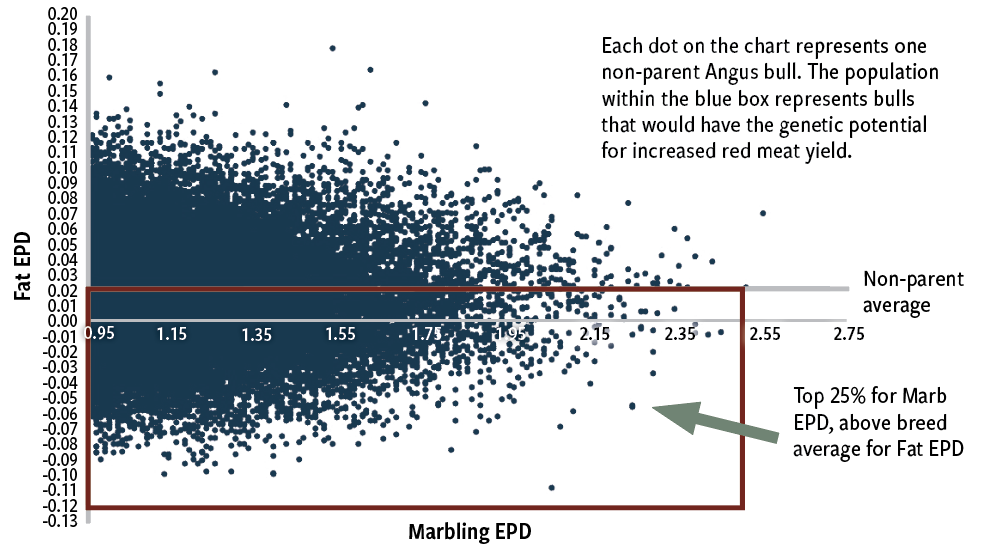
Fig. 1: Top 25% marbling EPD non-parent bulls

We’ve learned yearling weight and birth weight are correlated. However, by using EPDs, breeders could apply selection pressure to one and not the other, and they have.
“We got more performance without more birth weight because we had tools that would let us do that,” Anderson says. “Now we have to do the same thing with fat.”
In a world where insufficient marbling is the No. 1 reason cattle don’t qualify for CAB, and its effect on palatability is huge, we’ve got to keep the marbling. How do we get the fat deposited in the right spot?
Genetic selection.
Next question: Do the genetics exist to make this progress?
American Angus Association data indicate they do.
Anderson and Esther Tarpoff, director of performance programs at the Association, collaborated on an analysis of marbling and fat EPDs. When looking at Angus non-parent bulls, Tarpoff and Anderson evaluated bulls in the top 25% for marbling against their fat EPD. A significant number of those high-marbling bulls are negative for fat, above breed average.
With a large population of bulls above average for marbling (pushing quality grade up), and above average for fat thickness (less external fat), breeders have plenty of options for sire selection. While this analysis doesn’t account for other traits like scrotal circumference or calving ease, it does give breeders an indication of where to apply extra selection pressure.
As the cycle turns, a herd rebuild is looming. With historical lows in cow herd numbers and strong beef demand, we know it’s imperative for the beef community to respond. Efficiency, or producing more beef with less cattle, seems to be obvious.
It’s not just about genetic selection and the days on feed, but also the right nutrition, feed additives and implants. They all have a part in producing the kind of beef consumers like, the kind that delivers taste and tenderness.
When carcass quality goes from Choice to Prime, there’s typically a lot of external fat added to the carcass, Anderson says. But if the added fat were just marbling, there would not be very much waste fat added to the animal.
The fat’s in the right place — and that’s the goal.
The tools are there. Cattle producers have the genetics to take a step in the right direction toward increasing red meat yield. Genetic selection for more marbling and less external fat, combined with optimal days on feed, means more high-quality, saleable beef for the consumer.
Editor’s note: Lindsay Graber Runft is director of producer communications for CAB.
Topics: Feeder-Calf Marketing Guide , Marketing , Meat Science , Industry News , News
Publication: Angus Beef Bulletin
Related Content


Current Angus Beef Bulletin
Our September issue focuses on the females of the herd and the records that validate them.