




Money Talks: Session Five
Estimating breeding costs.
December 15, 2025

For six nights in early 2025, Aaron Berger, beef extension educator at University of Nebraska-Lincoln talked to a group of cattlemen about the one thing that’s king in every business: money. More specifically, the process of calculating annual cow costs to create a profitable business. Equipped with a thick black sharpie and an easel pad, Berger shared economic wisdom and left attendees thinking in a new light. This series walks through each of the six sessions and shares some of the concepts Berger explained.
Session Five: Breeding Costs
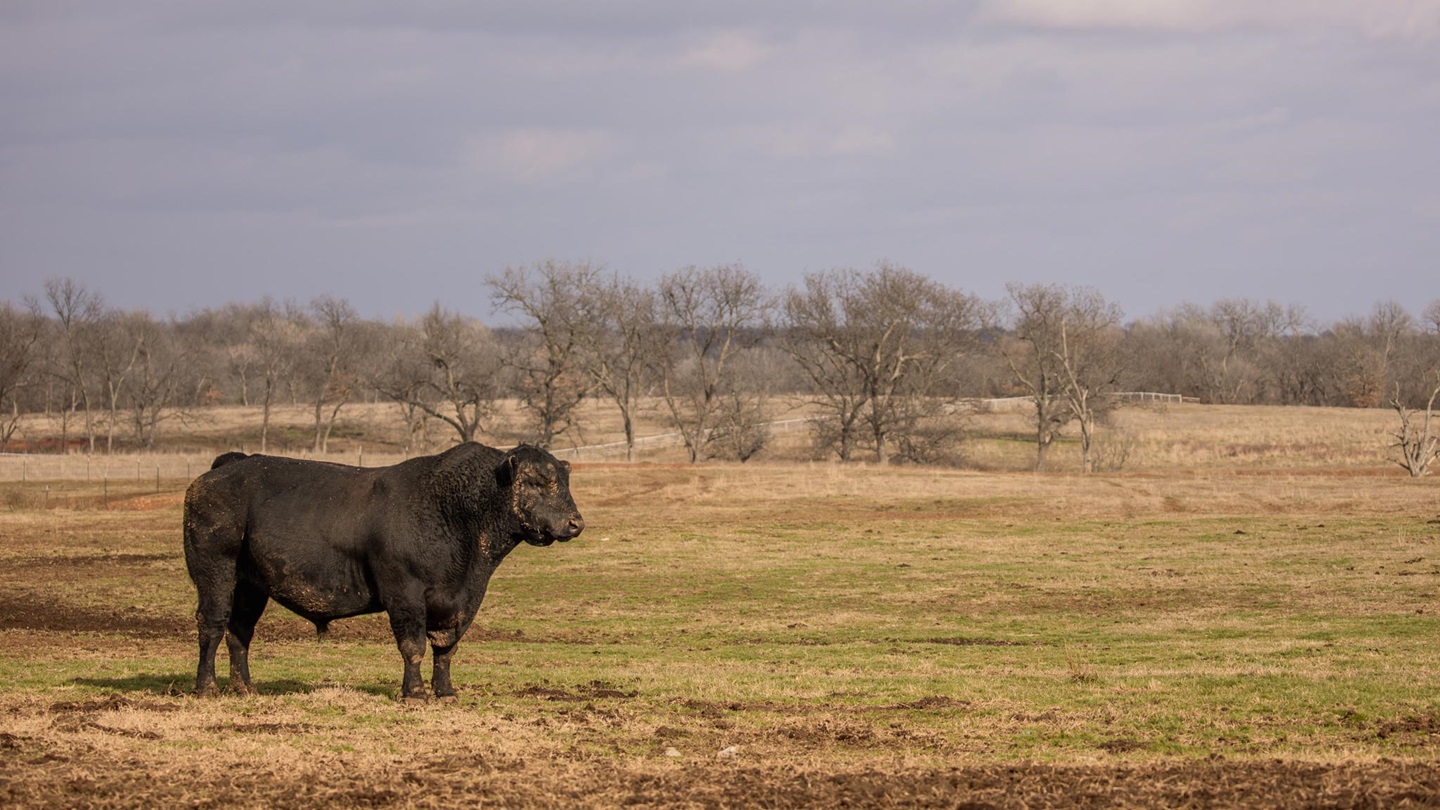
The fifth session focused on bull costs in cow-calf operations. It’s a smaller cost category than feed or labor, but still significant. Berger explained how to calculate true bull cost per calf produced and the importance of picking the right bull for each operation
He says, “Whoever your seed stock supplier is … they should come from an environment that’s similar to yours with management and culling strategies as stringent as yours — or maybe more stringent.”
Berger also discussed different approaches like leasing bulls, raising your own and using artificial insemination (AI). He challenged producers to consider genetic decisions carefully, especially when retaining replacements.
- Bull costs add up. Buying a bull feels like a one-time expense, but Berger breaks it down: depreciation, feed, vet care and death loss should all be on the balance sheet too.
“Sometimes you actually sit down and calculate it and think, oh, this is maybe a little more than I recognize,” he says.
He wrote out an example on his easel pad: using a $10,000 bull over five seasons with 25 cows, the cost per calf produced was $116 — and that assumes no early injuries or infertility.
- There are only three factors control bull cost. Berger explains the formula to calculate bull cost: purchase price minus salvage value, divided by productive years and cows bred.
“Three ways to address this,” he explains. “Get a bull into the herd at less cost, maybe get more value when he leaves or get more cows pregnant by that bull.”
Even one extra productive year can cut costs by 20%. Berger stresses that each operation should work to build a business plan that is best for their bottom line.
- Leasing bulls can be a good option. Leasing does require annual investment, but avoids costs like winter feed and injuries, making it a good option for many ranches.
Berger ran the numbers: a leased bull at $2,000 plus feed costs came out to $101 per calf produced, an amount nearly the same as owning the same bull. Leasing also reduces risk of death loss and eliminates the need for off-season care.
He says, “If I can get bulls that are really good that I like at a leased price and not have to winter him … that might be a good option.”
- Balance genetics with long term cost. High-dollar bulls with strong EPDs don’t always pay off if calves are sold at weaning. Berger urges producers to think about daughters’ mature size and milk needs before buying ‘above breed average’ bulls.
Bigger cows mean higher feed costs for years to come. In many cases, buying below breed average bulls for milk and mature weight may be more profitable.
“I really do think in many situations there are folks who should be buying below breed average bulls,” Berger says.
- Reproductive technologies offer flexibility. AI isn’t just about superior genetics, it’s also a cost-management tool. Berger explains that AI can reduce the number of bulls needed, lower winter feed costs and allow producers to access high-quality genetics without buying multiple expensive bulls.
While AI may initially look more expensive per calf, Berger points out that the added genetic value — such as crossbreeding benefits or improved maternal traits — can offset the difference.
He encourages producers to use a tool like the Breeding Cost Cow-Q-Lator, saying, “It's a nice tool to do some what if scenarios. If I change some things how does that impact my cost per calf produced? What's the additional value I need to get from something like AI if I choose to do that?”
Want to learn more about session six, a look at benchmark data and trends in beef production? Click here to see more!
The following summarizes what to expect from each of the series articles in the “Money Talks” series:
Session 1: Foundational Mindset
Berger lays the foundation for the series, talking about the economic principle of unit cost production. Click here to read more.
Session 2: Calculating Feed Costs
Berger demonstrates how to compare feed options and make the best choice for your operation. Click here to read more.
Session 3: Cow Depreciation and Replacement
Berger discusses a cost often left off of balance sheets, cow depreciation and replacement. Click here to read more.
Session 4: Labor and Equipment Costs
Berger talks about ways to manage what are frequently second and third largest economic expenses for a cow-calf enterprise. Click here to read more.
Session 5: Breeding Costs
Berger shows how to use the Breeding Cost Cow-Q-Lator to evaluate and minimize breeding costs.
Session 6: Benchmark Data
For the final session, Berger analyzes benchmark data from North Dakota, Kansas and Colorado to show the difference between productivity and profitability. Click here to read more.
Topics: Business , Marketing , Record Keeping
Publication: Angus Journal
Related Publications


Current Angus Journal
Keep up on the latest stories of the people and programs in the breed.

Latest Podcast Episode
Don’t miss conversations with breeders and industry experts.