




Money Talks: Session Four
Calculating labor and equipment costs.
December 15, 2025
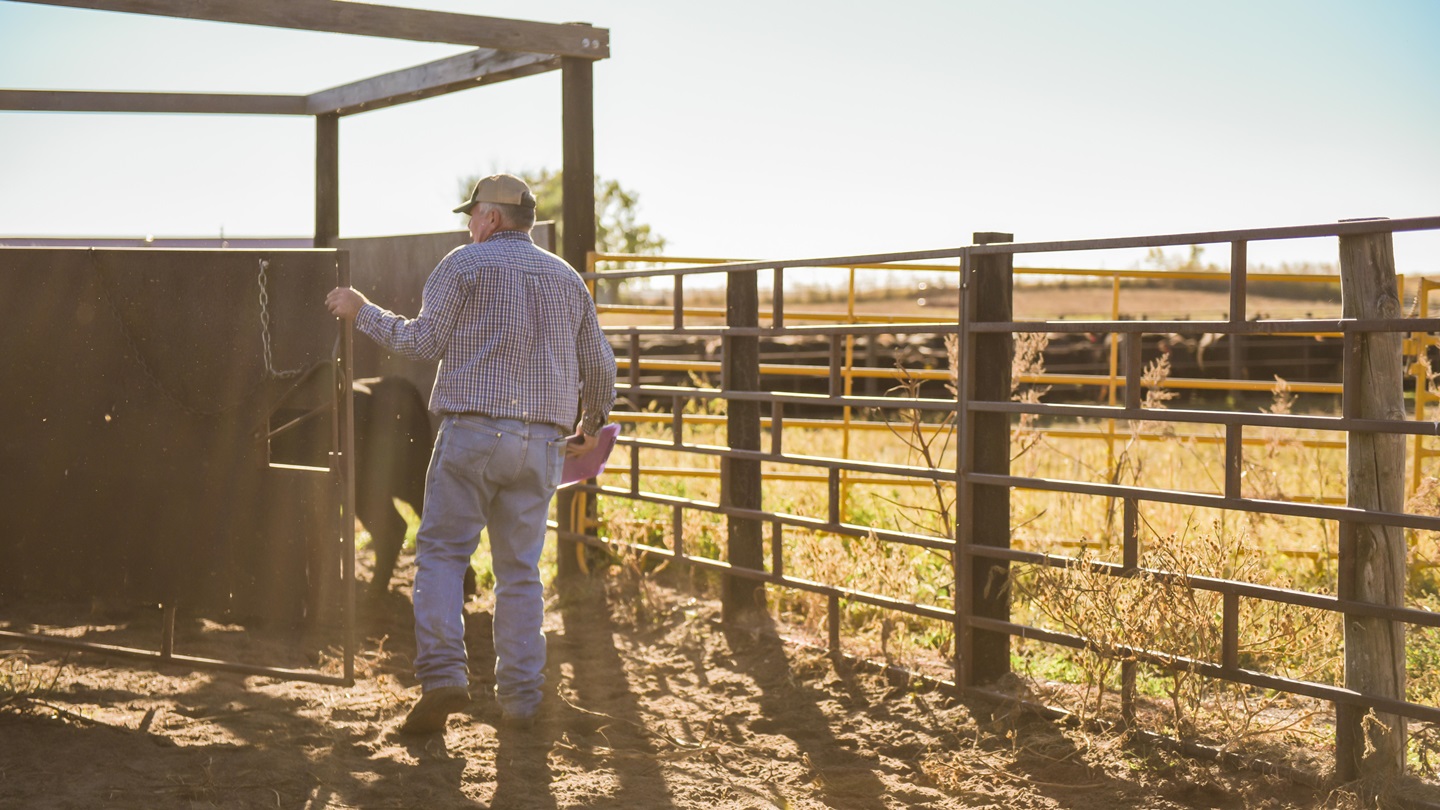

For six nights in early 2025, Aaron Berger, beef extension educator at University of Nebraska-Lincoln talked to a group of cattlemen about the one thing that’s king in every business: money. More specifically, the process of calculating annual cow costs to create a profitable business. Equipped with a thick black sharpie and an easel pad, Berger shared economic wisdom and left attendees thinking in a new light. This series walks through each of the six sessions and shares some of the concepts Berger explained.
Session Four: Labor and Equipment Costs
In the fourth session, Berger discussed overhead costs in cow-calf operations, focusing specifically on labor and equipment. He emphasized understanding true costs, including depreciation, interest, repairs, insurance and taxes, and highlighted strategies to reduce overhead.
Berger also explored labor valuation, illustrating how total compensation can far exceed wages, and stressed aligning herd and system design to minimize costs while maintaining productivity.
Five Key Takeaways
- Overhead costs are often underestimated. Labor and equipment are classified as overhead costs, expenses that remain relatively stable regardless of herd size. Operations with enough equipment and labor to manage 200 cows can often handle 300 or 400 cows without significant change in these costs.
In a callback to session one, Berger reminds producers that while these costs are often referred to as fixed, managing them well is still important.
“Just because these costs don't change very much doesn't mean you can't change them,” he says.
- True equipment cost includes more than repairs. Buying new equipment is a big purchase. But after making the big buy, many often think the yearly costs only include fuel and repairs. Berger explains that true cost includes depreciation, interest, insurance and inflation.
“Somewhere around 20-25% of equipment’s value is probably what you should estimate that you would spend in owning that equipment each year,” he says.
- Avoid tax-driven purchases. It’s tempting to buy equipment at year-end to get a deduction on taxable income. A new pickup, anyone? But Berger warns against making purchases that don’t also improve cost of production.
“If you’re spending money to try to avoid taxes … make sure it’s a good business decision. If it’s not a good business decision, it’s not a good tax decision,” he says.
It’s like a buy on get one free deal. It’s a tempting offer but buying one is still part of the equation. If it’s not contributing to profitability, it’s better to hold off entirely.
- Labor costs go beyond wages. A paycheck tells only part of the story when it comes to labor costs. Berger outlines how a hired hand earning $30,000 in wages can actually cost an operation $56,000–70,000 annually when housing, utilities and taxes are included. The rule of thumb to make accurate estimates? Take the cash wages and double it.
“If you can figure out a way to reduce your labor per cow it's a big deal,” Berger says.
- An efficient production system is essential. As talked about in the last session, the cost of feeding adds up fast. Berger encourages systems that let cows harvest their own feed, like grazing standing forage or bale grazing. These approaches cut labor and equipment costs dramatically.
“Almost always anything we can do to avoid getting that cow’s mouth between herself and her directly harvesting it is going to be an advantage for us,” he says.
He even points to creative examples: laying out hay bales in a grid for winter feeding, using temporary electric fencing for controlled access or leveraging technology like remote water sensors and virtual fencing to reduce daily labor
Want to learn more about session five, a discussion on breeding expenses? Click here here to see more!
The following summarizes what to expect from each of the series articles in the “Money Talks” series:
Session 1: Foundational Mindset
Berger lays the foundation for the series, talking about the economic principle of unit cost production. Click here to read more.
Session 2: Calculating Feed Costs
Berger demonstrates how to compare feed options and make the best choice for your operation. Click here to read more.
Session 3: Cow Depreciation and Replacement
Berger discusses a cost often left off of balance sheets, cow depreciation and replacement. Click here to read more.
Session 4: Labor and Equipment Costs
Berger talks about ways to manage what are frequently second and third largest economic expenses for a cow-calf enterprise.
Session 5: Breeding Costs
Berger shows how to use the Breeding Cost Cow-Q-Lator to evaluate and minimize breeding costs. Click here to read more.
Session 6: Benchmark Data
For the final session, Berger analyzes benchmark data from North Dakota, Kansas and Colorado to show the difference between productivity and profitability. Click here to read more.
Topics: Business , Management , Record Keeping
Publication: Angus Journal
Related Publications


Current Angus Journal
Keep up on the latest stories of the people and programs in the breed.

Latest Podcast Episode
Don’t miss conversations with breeders and industry experts.