




MARKET ADVISOR
Beef Production Will Affect Beef Cow Herd Rebuilding
What to look for as the year continues.
March 5, 2026
Cattle prices have been increasing cyclically since the last cyclical price low in 2020 and have started 2026 on a record high pace again. Prices have been supported by cyclically declining beef cow numbers occurring since 2019 and strong beef demand.
High prices are encouraging beef cow herd restocking in areas where improved grazing conditions allow it. The top 10 beef cow states in order of importance are Texas, Oklahoma, Missouri, Nebraska, South Dakota, Montana, Kansas, North Dakota, Kentucky and Florida, which account for 57% of the U.S. beef cow herd.
Six of those states including, Texas, Missouri, Oklahoma, Montana, North Dakota and Florida, saw increases in beef cow numbers during 2024, indicating interest in beef herd restocking.
The USDA National Agricultural Statistic Service will release the annual Jan. 1 Cattle inventory report Jan. 30, which will document changes in beef cow and replacement numbers. The report may show modest increases in those categories and will be the topic of next month’s column. Even though beef cow numbers have declined, the industry continues to be very adaptive and resilient at producing beef.
On a long-term basis, beef cow numbers have generally declined since 1975 with each cyclical high lower than the previous cyclical high. However, U.S. beef production has been on a long-term uptrend despite the decline in cow numbers.
Beef cow herd expansion is expected the next few years if forage availability allows it, but numbers will likely not increase to the previous cyclical high of 31.6 million head due to increased beef production.
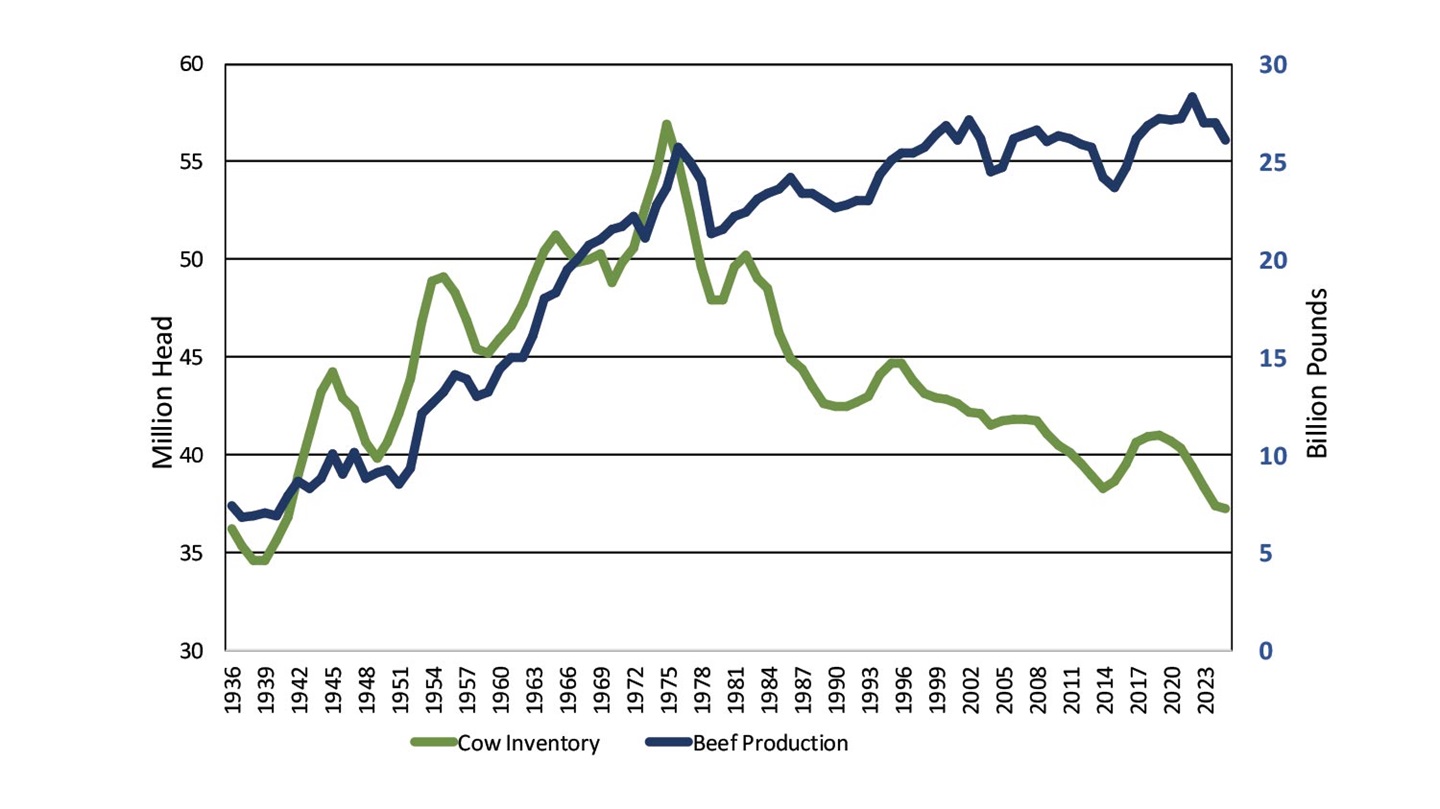
Fig. 1: U.S. Cow Herd and Beef Production

Production drivers
The long-term increase in beef production resulted from an increase in fed-cattle live and carcass weights. Carcass weights have trended higher for more than 60 years, with steer carcass weights increasing an average of more than 4 pounds (lb.) per year. Steer carcass weights averaged a record high 955 lb. in 2025, compared to 931 lb. in 2024, and 908 lb. in 2023.
The increase in steer and heifer carcass weights the last two years amounted to the equivalent of slaughtering more fed cattle than the 1,075,800-head two-year decline in beef cow numbers. That is just one of the reasons beef cow numbers may not increase back up to the last cyclical high.
Feedlots are keeping cattle on feed longer and feeding to higher weights due to fewer feeder cattle available at near record high prices and low feed costs. USDA’s recent estimate is for a record high 17 billion bushels corn crop with a $4.10 average U.S. price this marketing year.
Beef packers are encouraging higher weights to help bolster lower beef production levels, because strong beef demand has resulted in historically high beef cutout values.
U.S. beef production reached an all-time record high of 28.36 billion lb. in 2022, buoyed by drought-forced beef cow liquidation. 2023 and 2024 beef production declined to 27 billion lb. with fewer cattle available.
Each month, USDA predicts expected annual beef production and projected prices in the World Agricultural Supply and Demand Estimates (WASDE) report. It is available at www.usda.gov/oce/commodity/wasde.
USDA’s Jan. 2026 estimate for 2025 beef production was 26.07 billion lb., with another decline to 25.8 billion lb. in 2026.
Lower beef production will be supportive to cattle prices.
USDA projects fed-cattle prices to average a record high $236 per hundredweight (cwt.) in 2026 compared to $224 per cwt. in 2025.
Editor’s note: Tim Petry is a livestock marketing economist with the North Dakota State University Extension Service.
Topics: Association News , Business , Industry Insights , Industry News , Labor , Marketing , Member Center Featured News , News
Publication: Angus Journal
Related Publication Articles


Current Angus Journal
Keep up on the latest stories of the people and programs in the breed.

Latest Podcast Episode
Don’t miss conversations with breeders and industry experts.