


BY THE NUMBERS
The Science and Surprise of Animal Breeding
Genetic improvement in beef cattle has always happened by slowly choosing animals with better genes, generation after generation.
March 9, 2026
Through the years, breeders have used many tools to help them make good decisions. Early on, they measured simple things like weights and performance. Today, they also use genomic tools, which let them see deeper into an animal’s genetics.
Even with new technology, one thing has never changed: the basic biology of how genes are passed from parents to offspring. This process is known as Mendelian inheritance, and it still guides every mating decision breeders make.
Tracing the foundations
Mendelian inheritance explains how traits move from one generation to the next. Cattle, like humans, get half of their genes from the sire and half from the dam. This happens because of two rules discovered by a scientist named Gregor Mendel.
The first is the law of segregation, which says each parent has two copies of every gene but can only pass one of those copies down at random. The second is the law of independent assortment. Figure 1 shows a simple example of how different pairs of genes can be passed from a parents to its calf in a two-gene trait. This rule says genes are mixed and matched in many different ways before being passed on.
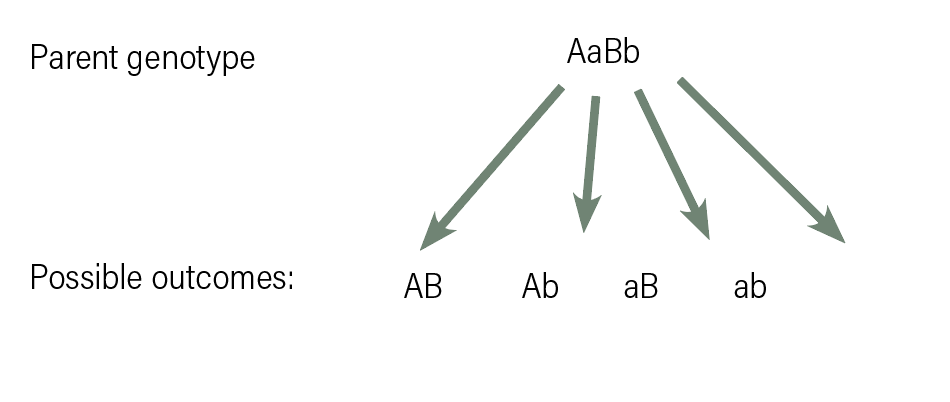
FIG. 1: Example of Mendelian assortment for a two-locus trait showing four possible gamete combinations when a parent is heterozygous (AaBb).

Together, these rules create lots of variation, or differences, which is why calves from the same parents can still look and perform differently.
Variation increases when many genes work together to affect a trait. For example, if a parent carries different versions of two genes, it can pass down several possible combinations to its calves. Which combination the calf gets depends on how the genes are mixed during the formation of sperm or eggs.
Sometimes genes sit very close together on the chromosome. When this happens, they tend to be passed down as a pair. This is called linkage. But genes can also switch places during a process called recombination, which breaks up these pairs and creates new combinations. All these natural steps — mixing, matching and swapping — add to the randomness we see from one calf to the next.
Mendelian sampling and its consequences
These two rules of inheritance work together to create something called Mendelian sampling. This simply means that about half of the differences we see between calves come from the random way genes are passed down. Each sperm or egg carries a random half of the parent’s DNA, and which two meet during fertilization is also random.
Because of this, even when you mate two parents with very strong, well-proven genetics, their calves will not all turn out the same. Some calves may perform better than both parents. Others may not perform as well. Most will end up somewhere in the middle. If you bred the same two parents hundreds of times, the average of all their calves would match the parents’ average; but each individual calf would still be different — some higher, some lower.
This kind of variation can be both helpful and frustrating. A mating that produces an outstanding calf one year might give a very average calf the next year. A mating that disappointed once might produce a great calf later on. Figure 2 shows how the EPDs of the calves spread out above and below the parents’ average due to Mendelian sampling. The randomness can surprise even the most experienced breeders; but without this natural variation, cattle would never improve over time.
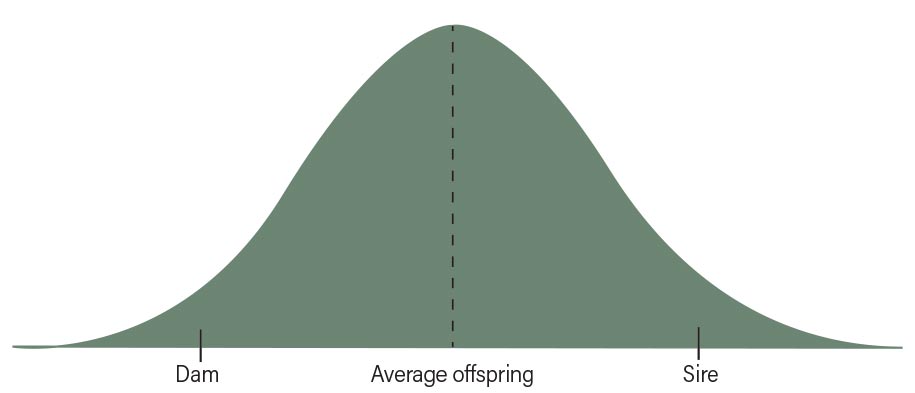
FIG. 2: Expected distribution of progeny around the parental average due to Mendelian sampling.

The evolution of selection tools
Breeders have used different tools in the past to help them figure out which animals carry the best genes. The earliest tools were simple measurements, like how much a calf weighed at weaning or yearling age. Later, within-herd ratios made things even better. These ratios helped breeders compare animals fairly by accounting for differences in age, sex and management group within a single herd. This made it easier to spot the top animals in a herd.
A big step forward came with expected progeny differences, or EPDs. Unlike ratios, EPDs let breeders compare animals across many herds, not just within their own. This helped everyone make more accurate decisions. Angus breeders made EPDs even stronger by using artificial insemination (AI) widely, which created better genetic connections between herds and improved the accuracy of the evaluations.
Another major improvement arrived in 2010 with genomic information. At first, people hoped genomics would find single genes that explained big traits. But most traits are controlled by many genes working together. Instead, genomics is now used to better understand how closely animals are related at the DNA level.
Sometimes a pedigree might say a calf is 25% related to a grandsire, but genomic testing might show the calf actually got more — or less — of that ancestor’s genes. Knowing these true genetic relationships helps make EPDs more accurate, especially for young animals that don’t have any offspring yet.
Progress over time
Breeders have used many different tools to help find animals with the best genes. The tools have changed, but the goal has stayed the same: choose cattle that will help improve traits that matter for the ranch and the industry. Today, with things like good records, ratios, EPDs and genomics, breeders have the most accurate system ever for predicting how an animal will perform. These tools work very well overall, even though each calf will still turn out a little different because genetics always include some randomness.
It’s important for breeders to stay realistic. No tool can remove natural variation, and no mating will give the exact same results every time. But when breeders keep turning in high-quality performance data and use EPDs and good cattle logic when making decisions, they can keep moving their herds — and the Angus breed — in a better direction.
In the end, cattle breeding is both science and chance. The science comes from the data and our understanding of how traits are passed down. The chance comes from the random mix of genes each calf receives that we cannot control.
When breeders use good information and accept that some randomness will always be there, steady progress becomes possible. Variation, while frustrating at times, is also the key to how improvement happens.

Kelli Retallick-Riley, President

Topics: Genetics , Member Center Featured News , Association News , EPDs , Record Keeping
Publication: Angus Journal
Related Publication Articles


Current Angus Journal
Keep up on the latest stories of the people and programs in the breed.

Latest Podcast Episode
Don’t miss conversations with breeders and industry experts.