



A Tool in the Fight Against New World Screwworm
Conditional approval given to new product in the fight against ticks and the New World screwworm.
June 3, 2026
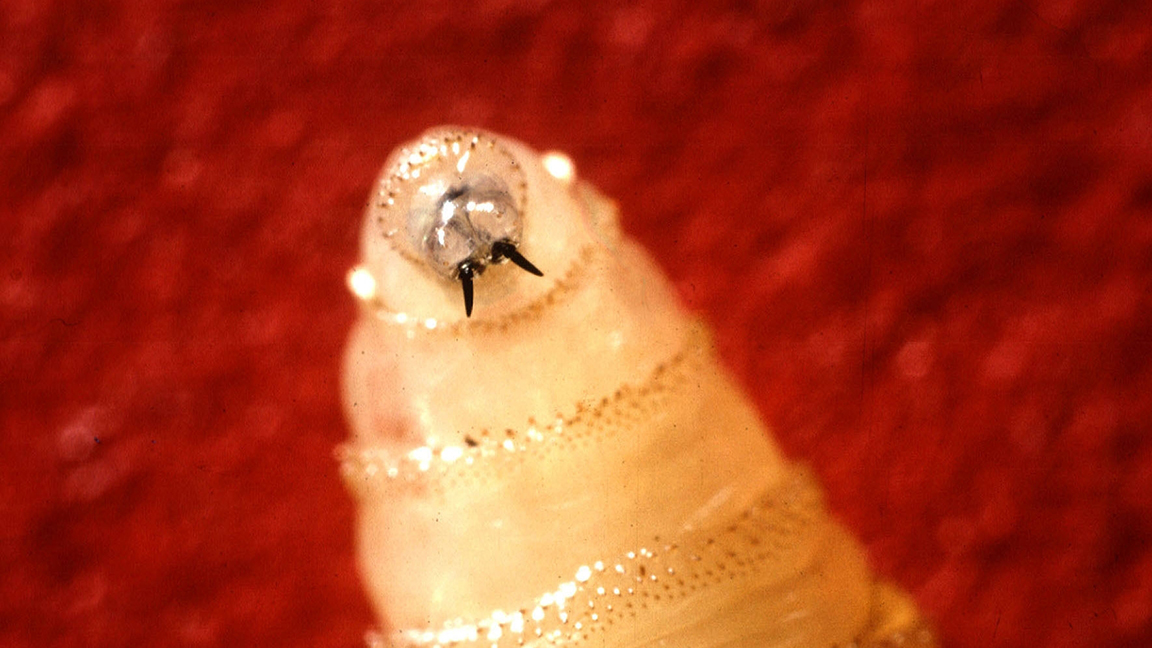

As the weather begins to warm up and insects return, ranchers will again face the challenge of managing insect pressure, as well as concerns associated with complications caused by these tiny nuisances.
On a recent episode of Angus at Work, Shauna Hermel was joined by Deana Hardee, veterinarian with Merck Animal Health, and Megan Silveira, managing editor with the Angus Journal, regarding New World screwworm (NWS), cattle fever ticks, the Asian longhorned tick (ALT) and a conditionally approved product from Merck that could help protect U.S. cattle from future threats.
A new line in the sand
While flies and ticks are certainly not a new issue, selecting products that can protect cattle from being pestered to death or exposed to disease isn’t as easy as picking a jug up off the shelf.
Luckily, innovation is happening within the livestock pharmaceutical field. One such innovation is a new product from Merck known as Exzolt® Cattle-CA1. This conditionally approved product has been given the green light by USDA in the fight against both the NWS and the cattle fever tick.
What exactly does conditional approval mean? Producers can rest assured that Exzolt Cattle-CA1 is a safe and effective choice for their herds.
“I think it’s important to note: When we think about conditionally approved products, this is a product that has all the safety and data packages already approved. So that’s human food safety, as well as target animal safety,” says Hardee. “What we were lacking to get [full approval] across the finish line was our in-house studies or data, specifically as it relates to cattle fever tick and New World screwworm.”
Hardee notes that studies from Merck’s other global markets — Australia and Brazil specifically in these cases — were used to get that conditional label for the prevention and treatment of New World screwworm myiasis as well as for the control and treatment of the cattle fever tick.
You need a partner
Interested in potentially using Exzolt Cattle-CA1 within your own herd? Producers are encouraged to have a strong veterinary-client-patient relationship (VCPR) in place, as this product will require a prescription. Additional importance has been placed on staging product nearer to the southern markets.
“We certainly encourage good fly control in general. Paying attention, being aware. Reporting if you think you have a case of New World screwworm is critically important, especially as we reach peak fly season.” — Deana Hardee
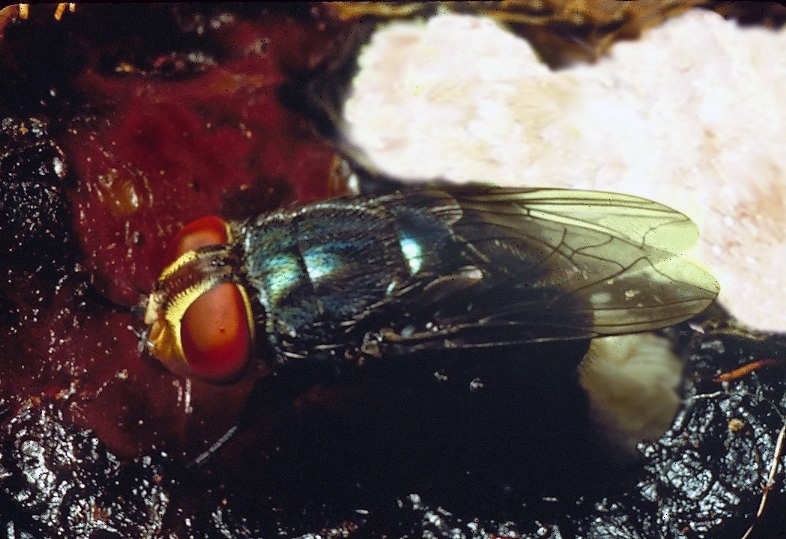

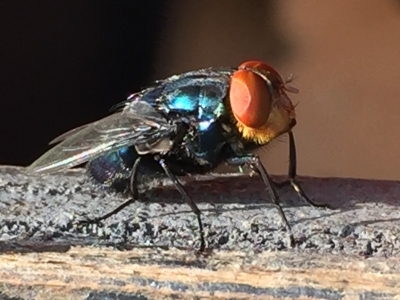

“We are obviously targeting our southern markets, because that’s where those threats are most likely to occur,” Hardee says. “We’ve watched that northern progression of the [NWS], right? From Central America into Mexico.”
Distance isn’t as much a safety net as one might hope, so focusing on flies is becoming increasingly important across the livestock industry. Increased fly numbers as we come into peak summer fly months and particular stressors in our industry that may promote flies to come in (e.g., calving, branding, working where we’re creating wounds, castrating, dehorning) serve as potential chinks in the armored stand against NWS.
“We certainly encourage good fly control in general. Paying attention, being aware; reporting if you think you have a case of New World screwworm is critically important, especially as we reach peak fly season,” Hardee stresses. “It’s just something we want everyone to have on their radar and then know that we’re trying to bring solutions to the industry’s current needs and certainly, a threat to our cattle industry.”
Exzolt Cattle-CA1 is a bright spot in the challenging struggle that is managing cattle pests. But Hardee says producers shouldn’t view it as a silver bullet, as overuse could cause problems with resistance.
To cut down on the potential for open wounds, Hardee recommends evaluating stress points in processing systems that may create entry points, as well as utilizing [products] in a way that makes sense for the biology of the pests that producers wish to target.
Dollars and cents
With all of that data in mind, can producers make treating with Exzolt pencil out? Hardee says the product averages out to roughly $1 per hundredweight.
“In general, it should be a little less or around $1 per hundredweight,” Hardee says. “When we look at the dosage, like I mentioned, it’s a pour-on product — a solution that goes from the withers essentially to the base of the tail. It’s 1 milliliter per 44 pounds. So again, that five-weight animal would probably be about $5, and so forth.”
Hardee says that Merck is excited to be able to share a novel and new class of drug like Exzolt Cattle-CA1, sharing: “We just like to have [it] as a tool in the toolbox. It might not be the entire solution, but it’s a good option and something to consider as we think about this imminent threat.”
Editor’s note: The information above is summarized from the March 11, 2026, episode of Angus at Work. To access the full episode — including more information on protecting your herd from New World screwworm and ticks — check out our Angus at Work archive on www.angus.org. [Photo courtesy of the USDA.]
Angus Beef Bulletin EXTRA, Vol. 18, No. 6-A
“It might not be the entire solution, but I think it’s a good option and something to consider as we think about this imminent threat.” — Deana Hardee
Topics: Equipment / Facilities , Health , Industry News , News
Publication: Angus Beef Bulletin
Related Content


Current Angus Beef Bulletin
Our November issue focuses on the females of the herd and the records that validate them.