




Study Reveals How Bull Buyers Use Key Genetic Information
Eye-tracking research sheds light on decision-making at bull sales.
March 18, 2026
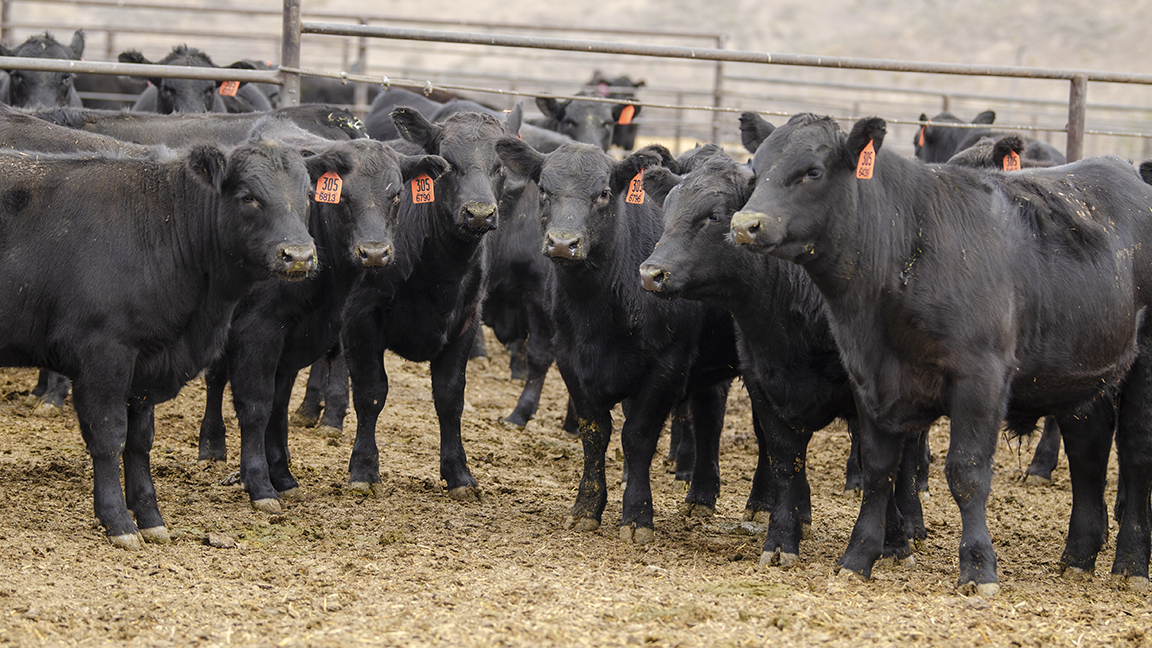

by Katie Wagner for Beef Improvement Federation
Editor’s note: Before you begin reading, we’d like this article to be a conversation starter. We’ll put a post on our Facebook page asking for your input to begin a genuine, helpful discussion on how you buy bulls and what you want seedstock providers to provide.
A first-of-its-kind study using eye-tracking technology has revealed that when commercial producers shop for bulls, they overwhelmingly focus on an animal’s physical appearance and basic production traits and often overlook economic selection indexes designed to improve their buying accuracy.
The multistate research project, led by University of Tennessee ag economist Charley Martinez, examined how the layout of expected progeny difference (EPD) profiles affects buyers’ ability to accurately predict bull prices and assess quality.
“Our results show that how you present genetic information matters,” Martinez said. “Producers who used more detailed tools, like EPD rankings and genomically enhanced EPDs, were more likely to make accurate pricing decisions. But many buyers aren’t even looking at those indexes in the first place.”
Testing layouts, tracking eyes
The study involved 208 producers from Tennessee, Alabama, West Virginia and Iowa. Participants were asked to view videos of 18 actual sale bulls — six each of Angus, Simmental and Hereford — along with corresponding EPD profiles. They then predicted each bull’s selling price.
To measure attention, an infrared eye-tracking bar was calibrated for each participant. Heat maps later revealed exactly where on the screen participants focused.
Researchers tested four different EPD profile layouts: a traditional format with percentile ranks, the same layout without percentile ranks, an inverted format placing economic indexes first and an inverted format without percentile ranks.
Across all treatments, average pricing accuracy ranged from 21% to 26%, with the inverted layout including percentile ranks producing the most accurate results.
![Charley Martinez was a breakout speaker on a bull-buying behaviors study at the 2025 Beef Improvement Federation (BIF) Research Symposium, hosted in Amarillo, Texas, in June 2025. Presentations from that event are located on the BIF website. [Photo courtesy of BIF.]](https://cd.angus.org/-/jssmedia/4bb85eca525e4345be83b4b044ff0a76.jpg?mw=1440&iar=0)
Charley Martinez was a breakout speaker on a bull-buying behaviors study at the 2025 Beef Improvement Federation (BIF) Research Symposium, hosted in Amarillo, Texas, in June 2025. Presentations from that event are located on the BIF website. [Photo courtesy of BIF.]

Iowa stands out, while risk-takers miss the mark
The data revealed several notable patterns:
- Iowa producers consistently outperformed participants from the other three states, being 23.8% more likely to predict prices accurately.
- Users of genomically enhanced EPDs and EPD rankings were significantly more accurate, with a combined likelihood of being correct nearly 35% higher than those who did not use these tools.
- Risk-tolerant participants tended to be wrong more often, while those willing to delay gratification — suggesting a long-term investment mindset — scored higher on accuracy.
- Trust mattered, as producers who placed greater importance on trusting a breeder were more accurate in their price predictions.
Phenotype dominates decision-making
Despite the push from geneticists to use economic indexes as efficient decision-making tools, the study found they are rarely consulted. Eye-tracking from this research showed that:
- 97% of participants fixated on the bull’s phenotype.
- Production EPDs like calving ease, birth weight and weaning weight were the most viewed genetic measures.
- Economic indexes ranked lowest, with index percentile ranks viewed by just 11% of participants on average.
“When producers do look at indexes, it’s more often the raw number than the percentile ranking,” Martinez said. “That suggests we need more education on what those rankings mean and why they matter.”
Quality differentiation and pricing patterns
The research also examined whether producers could correctly differentiate between high-, average- and low-quality bulls, and adjust their willingness to pay accordingly. While some buyers consistently overestimated or underestimated prices, many could still distinguish relative quality levels. Producers using more advanced genetic tools were better at making those distinctions.
“Our goal is that buyers allocate the most dollars toward the highest-quality animals and less toward average or low-quality bulls,” Martinez explained. “If they can identify quality but can’t nail the price, that’s still a valuable skill. It shows they understand relative worth.”
Implications for breeders and sales
The findings have clear takeaways for seedstock breeders, sale managers and breed associations.
- Profile layout matters. Moving economic indexes to more prominent positions could improve buyer accuracy.
- Education is crucial. Breeders and extension programs may need to emphasize the value and interpretation of indexes and percentile ranks.
- Buyers should use all available tools. Phenotype alone provides an incomplete picture of an animal’s value.
“A repeat customer is the best kind of customer,” Martinez said. “The more confident they feel in their buying decision, the more likely they are to come back. Presenting genetic information in a way they’ll actually use is key to making that happen.”
Next steps in research
Martinez and his collaborators plan to further explore sale book design, potentially testing which layouts maximize the use of economic selection indexes.
“This is the first time anyone has proven that layout impacts accuracy in livestock buying decisions,” he said. “Now that we know it matters, the question is how to use that knowledge to help producers make better choices.”
The study also raises broader questions about decision-making in agriculture and how behavioral economics can inform extension programs, breed association policies and marketing strategies.
“In the end, the more informed the decision, the better the outcome for the producer,” Martinez said. “That benefits everyone in the supply chain.”
Takeaways
- EPD profile layout influences accuracy. Inverting the profile and placing economic indexes first, along with percentile ranks, led to the highest price prediction accuracy among bull buyers.
- Advanced genetic tools improve decisions. Producers who used genomically enhanced EPDs and ranked EPDs were significantly more accurate, with a combined 35% greater likelihood of correct pricing.
- Phenotype dominates attention. Eye-tracking showed 97% of buyers focused on bull appearance, while economic indexes were viewed the least (about 11% looked at percentile ranks).
- Buyer traits affect accuracy. Iowa producers outperformed others; higher trust and willingness to delay gratification improved accuracy, while high risk tolerance reduced it.
- Indexes underutilized despite value. Economic selection indexes, though designed to simplify decisions, are often ignored, which suggests a need for better placement in sale books and more education on their use.
Editor’s note: The Beef Improvement Federation (BIF) is an organization dedicated to coordinating all segments of the beef industry — from researchers and producers to retailers — in an effort to improve the efficiency, profitability and sustainability of beef production. Find out more here. [Lead photo by Shauna Hermel.]
Angus Beef Bulletin EXTRA, Vol. 18, No. 3-B
Topics: EPDs , Events , News , Seedstock Marketing , Selection , Sire Evaluation
Publication: Angus Beef Bulletin
Related Content



Current Angus Beef Bulletin
Our September issue focuses on the females of the herd and the records that validate them.