




Cattlemen Helping Cattlemen
Resources for those looking to donate to ranchers in the path of recent wildfires.
February 19, 2026
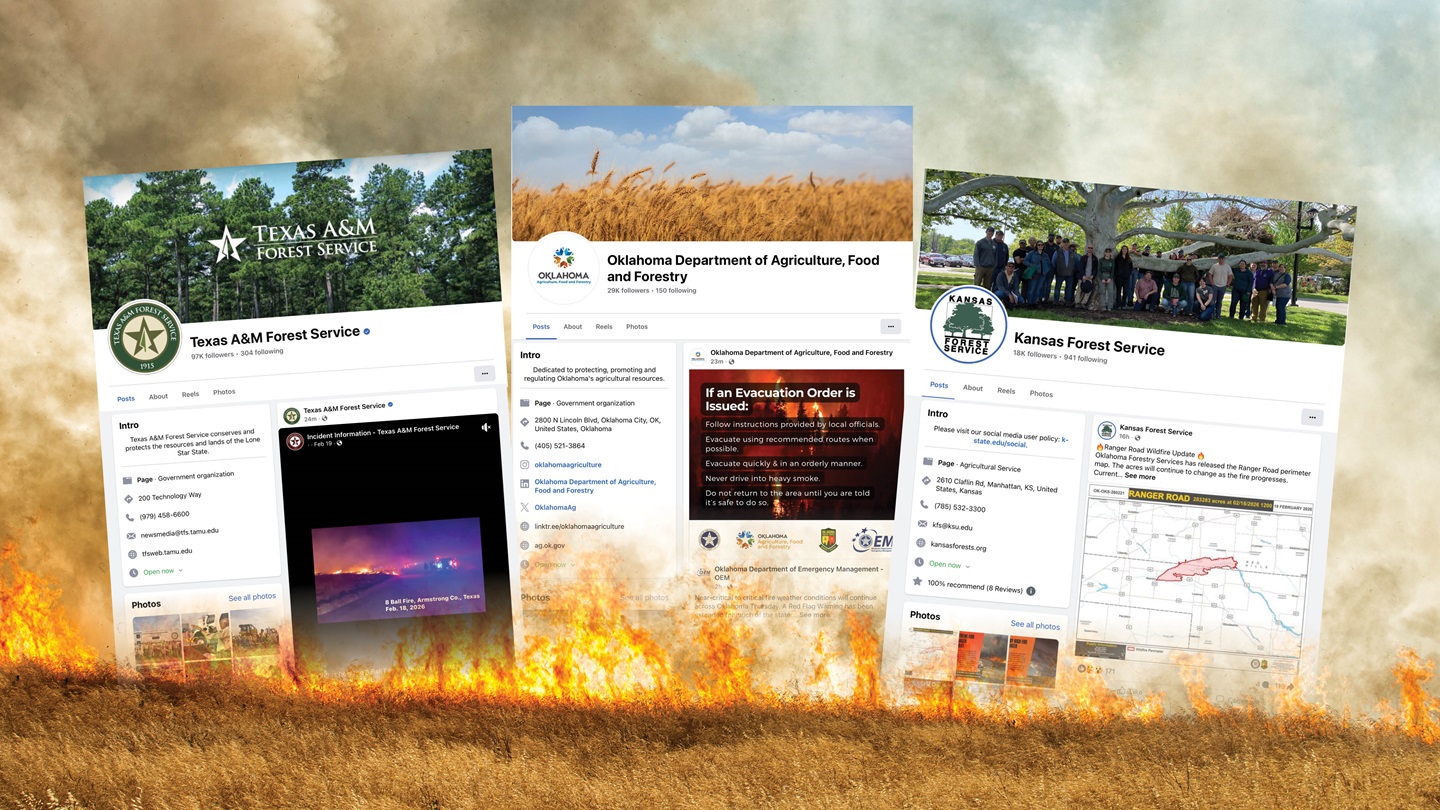
Keep up-to-date on Oklahoma, Texas and Kansas Forestry Facebook pages.

The cattle industry could be described as sizable, but sometimes it feels like just about anyone’s hometown: there really are only one or two degrees of separation between any two individuals.
In the aftermath of recent fires in Kansas, Oklahoma and Texas, many of those within our industry are feeling the desire to help — whether that’s by donating fencing supplies, cattle care items, feed, hay or money. Here’s a quick update on the status of known fires, as well as an initial overview of opportunities to donate.
Current scope
In a January Angus Beef Bulletin EXTRA article (please see “Dry Conditions, Increased Vegetation Set Stage for Higher Wildfire Risk”), Texas A&M Forest Service highlighted the potential for a rough spring heavy with wildfire potential. Rains over the last few years have helped increase forages, but what can be a blessing can also offer abundant fuel to rapidly expanding grass fires.
With high winds projected for Tuesday, Feb. 17, and the following days, those residing in red flag warning areas across Kansas, Oklahoma and Texas were on high alert for potential fires.
In the late morning through early afternoon, vegetation fires were reported across the Oklahoma and Texas Panhandles, western Oklahoma and in parts of southwest Kansas.
As of 5:22 p.m. Wednesday, Feb. 18, the Kansas Department of Forestry reported the largest of those fires — now known as the Ranger Road Fire — had consumed 283,283 acres across Beaver, Harper and Woods counties in Oklahoma, as well as Clark, Comanche and Meade counties in Kansas.
Other fires reported by the Oklahoma Department of Forestry include the Stevens Fire at 12,279 acres and the Side Road Fire at 3,629 acres in Texas County, Okla., as well as the 43 Fire at 1,680 acres and the 206 Road Fire at 168 acres in Woodward County, Okla.
Additionally, Texas A&M Forest Service reported responding to nine wildfires across the state on Feb. 17 totaling 18,522.9 acres.
While these numbers will continue to change as more information comes in and days pass, what won’t change is the need of cattlemen in the fires’ path.
How to help (for now)
Several organizations have hit the ground running in organizing supplies and assistance. If you’re looking to donate in the state of Kansas, the Kansas Livestock Association is helping connect those wishing to donate with the most suitable drop location.
If you’re hoping to donate goods including fencing materials, livestock feed or hay in the state of Kansas, please reach out to the Kansas Livestock Association at 785-273-5115 for more information.
The Ashland Community Foundation (ACF) is accepting monetary donations to help those affected by the fires in their community. To donate, please visit www.ashlandcf.org and select “Become A Partner” in the dropdown.
Donations are also being accepted at Stockgrowers State Bank or can be mailed to ACF at P.O. Box 276, Ashland, KS 67831.
For those wishing to donate to ranchers in the state of Oklahoma, the Oklahoma Cattlemen’s Foundation has established a relief fund to help cattle producers who have been affected. As the 501(c)(3) charitable arm of the Oklahoma Cattlemen’s Association, the fire relief fund at the Oklahoma Cattlemen’s Foundation will distribute 100% of received funds to affected cattle producers.
If you would like to donate, please visit Oklahoma Cattlemen’s online giving platform or make checks payable to Oklahoma Cattlemen’s Foundation with “Fire Relief” in the memo line and mail to P.O. Box 82395, Oklahoma City, OK 73148.
For those willing to donate fencing supplies, feed or hay to the Beaver County, Okla., area, Beaver County Stockyards and the Beaver County OSU Extension office are coordinating efforts in the area.
Lean into safety tech
It’s always a good time to look into emergency preparedness. With that in mind, our team urges our readers to consider signing up for alerts through their local emergency management coordinator or looking into apps that notify users of developing situations.
Mobile apps like WatchDuty compile emergency management updates in one location and inform users with notifications straight to their phone if fire conditions change or evacuation orders are put in place.
Other apps to consider include weather warning and radar options. For those who may not want another app on their phone, you can always refer to your local news via television or radio to stay in the know when it comes to changing conditions.
After all, it doesn’t matter how you choose to stay informed, just that the information is readily available to you, your friends, neighbors and family.
Angus Beef Bulletin EXTRA, Vol. 18, No. 2-B
Topics: News
Publication: Angus Beef Bulletin
Related Content



Current Angus Beef Bulletin
Our November issue focuses on the females of the herd and the records that validate them.