China Tariff Decisions and Implications for U.S. Beef
Chinese officials to impose quotas on beef imports. Out-of-quota product now faces a 55% tariff.
January 6, 2026

People at a butcher shop in To Kwa Wan, Kowloon, Hong Kong.

by Steiner Consulting Group
Chinese officials announced they would impose quotas on beef imports. Out-of-quota product now faces a 55% tariff. Who stands to lose the most from this, and what does it mean for U.S. beef imports, pricing and U.S. beef exports?
A yearlong “investigation” of Chinese beef imports resulted in what some in the trade expected — import quotas and higher tariffs on product surpassing the allocation. For 2026, the quota allocation has been set at 2.688 million metric ton (mt) and will be raised by 2% in both 2027 and 2028. Imports above the quota will pay an additional 55% tariff.
Currently, China applies different tariffs, depending on trade agreements and product. It is our understanding that the 55% tariff for out-of-quota product will be in addition to other tariffs already in place, effectively making it extremely prohibitive to exceed the quota.
Brazil stands to lose the most from this decision. It will have a 1.106 million mt quota allocation for all of 2026 and faces a 55% tariff on any beef above that level. We estimate Brazilian exports of fresh and frozen beef to China in 2025 will be around 1.6 million mt. Total Brazilian beef exports in 2025 are expected to surpass 2.9 million mt, with China by far the most important market. Brazilian exporters will now need to find other outlets for product that in 2024 and 2025 moved into the Chinese market.
Table 1: Chinese fresh/frozen beef imports in November 2025 and year to date, product weight basis |
||||||||||||
| Import partners | 11/1/2024 | 11/1/2025 | Y/Y, mt | Y/Y, % | 2024 YTD | 2025 YTD | Y/Y, mt | Y/Y, % | ||||
| Brazil | 140,000 | 116,052 | (23,948) | -17% | 1,191,767 | 1,329,345 | 137,578 | 11.5% | ||||
| Uruguay | 16,879 | 9,084 | (7,795) | -46% | 225,057 | 188,502 | (36,555) | -16.2% | ||||
| Argentina | 55,369 | 33,474 | (21,895) | -40% | 533,033 | 435,609 | (97,424) | -18.3% | ||||
| Australia | 15,516 | 12,286 | (3,230) | -21% | 209,563 | 294,957 | 85,394 | 40.7% | ||||
| New Zealand | 6,911 | 4,003 | (2,908) | -42% | 140,973 | 109,709 | (31,264) | -22.2% | ||||
| United States | 13,382 |
263 | (13,119) | -98% | 126,703 | 55,218 | (71,486) | -56.4% | ||||
| Other | 13,690 | 12,305 | (1,384) | -10% | 175,412 | 49,689 | (125,723) | -71.7% | ||||
| Total | 261,747 | 187,468 | (74,279) | -28% | 2,602,507 | 2,463,029 | (139,479) | -5.4% | ||||
| Source: China Customs. Analysis by Steiner Consulting. | ||||||||||||
Other suppliers also face quota allocations below the volumes they are projected to ship in 2025, noting that December figures are still undetermined. Australia is currently on track to ship around 260,000 mt of beef to China this year, but it will have a 205,000 mt quota allocation for 2026. Argentina is on track to ship more than 560,000 mt to China in 2025, but it will have a quota of 511,000 mt in 2026.
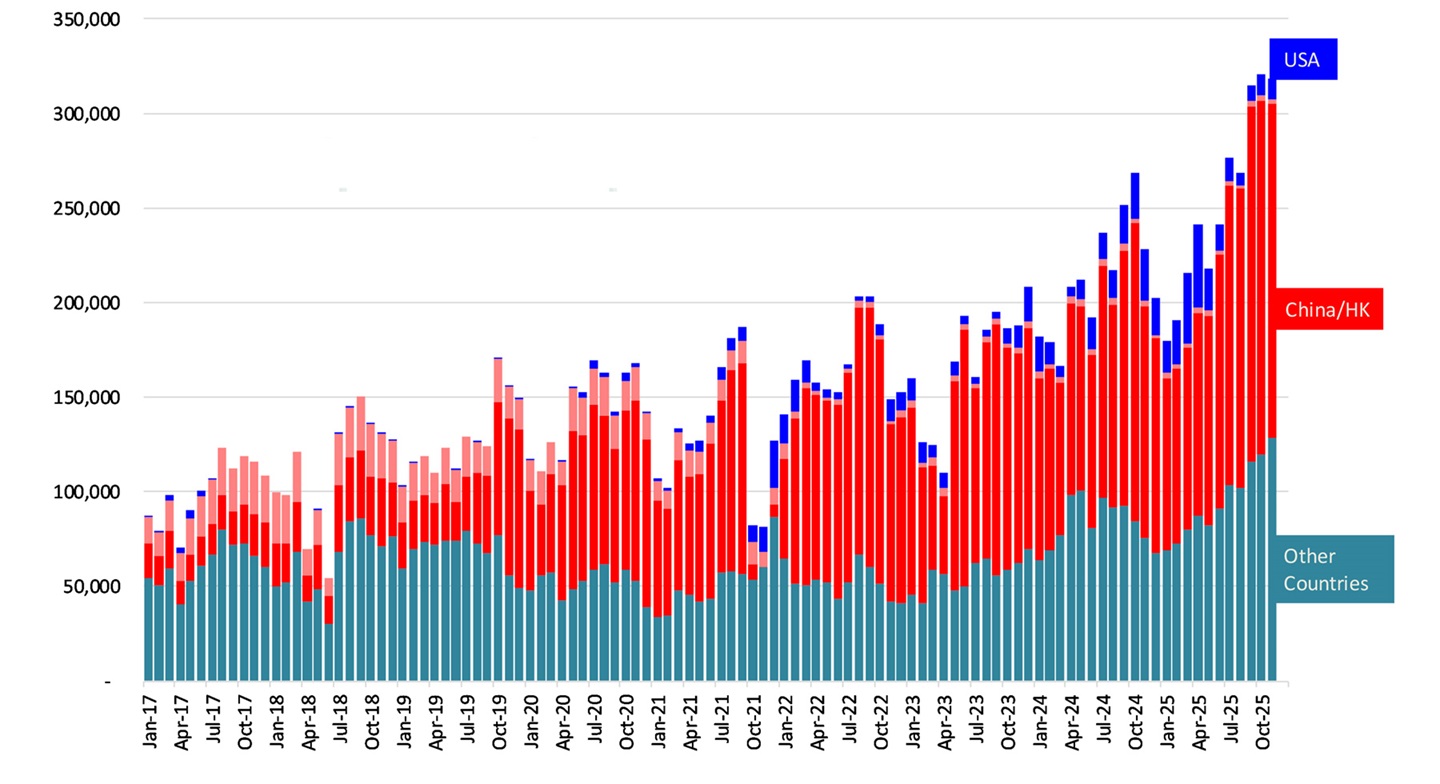
Fig. 1: Monthly fresh/frozen Brazilian beef exports to China/Hong Kong, United States and rest of the world
Source: COMEX. Analysis by Steiner Consulting.

We think this decision by Chinese authorities is bearish for imported beef prices in the United States. Note we did not say bearish for all beef prices. More imported beef, whether from Brazil, Australia or other suppliers, is likely to come to the United States than before this decision went into effect. Since the U.S. domestic beef supply is expected to decline further in 2026, it is reasonable to expect imported beef to trade at a larger discount to domestic product. Already, 90CL (90% chemical lean) imported beef trim is trading anywhere from 25¢ to 40¢ under domestic 90CL. With spring demand around the corner, that spread could widen further, especially as New Zealand production ramps up.
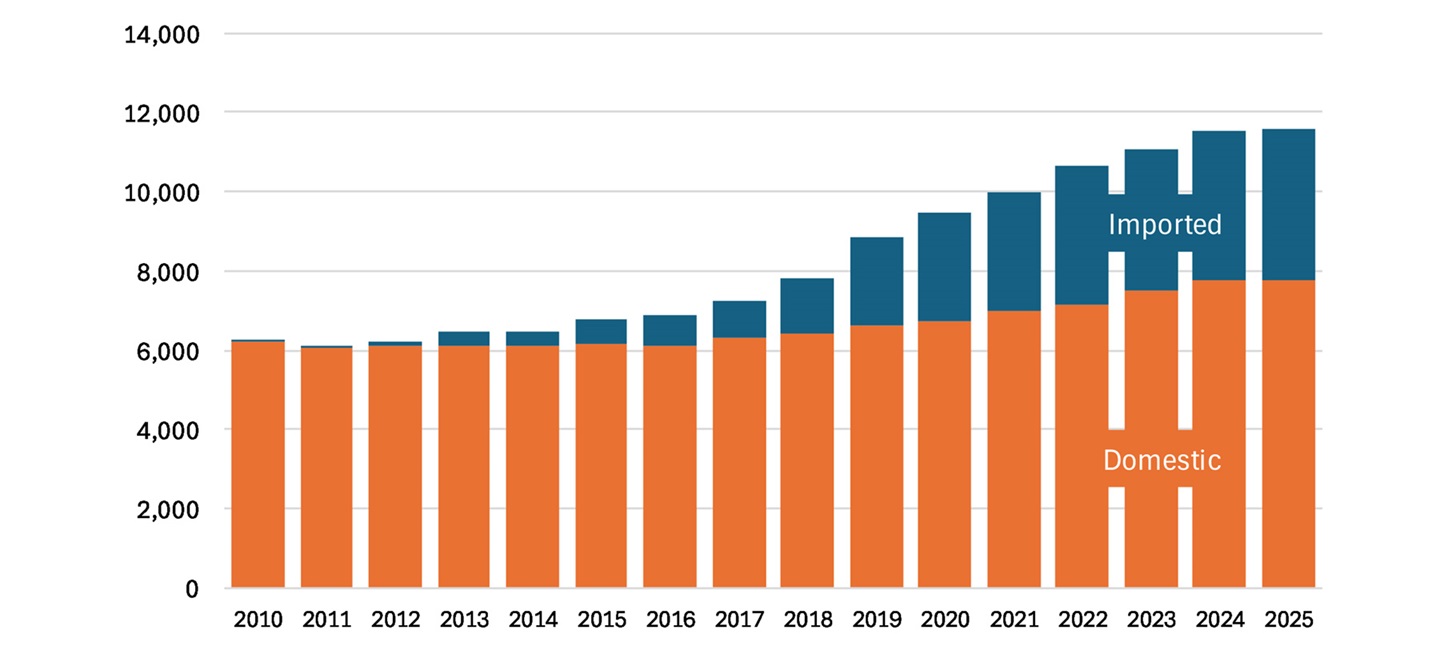
Fig. 2: Chinese beef consumption and imported share, ’000 mt, on a carcass-weight basis
Data Source: USDA-FAS. Analysis by Steiner Consulting.

As for U.S. beef exports, the decision from China does not have a direct effect. The U.S. beef quota allocation for 2026 is 164,000 mt, but with no plants approved to ship there, no U.S. beef is expected to move into the market. The indirect effect, however, is negative, as U.S. exporters are likely to face increased competition from Australia, Brazil and other suppliers in key markets.
Editor’s note: The Daily Livestock Report is published by Steiner Consulting Group, DLR Division Inc. This report and past issues, along with subscription details, can be found at: https://dailylivestockreport.com. Contact the Steiner Consulting Group at info@dailylivestockreport.com if you have any questions or comments. [Lead photo by winhorse from Getty Images.]
Angus Beef Bulletin EXTRA, Vol. 18, No. 1-A
Topics: Industry News , Management , Marketing , News , Policy
Publication: Angus Beef Bulletin
Related Content


Current Angus Beef Bulletin
Our September issue focuses on the females of the herd and the records that validate them.