



Here’s How to Make the Most of Vaccinations
Whether modified live or killed, vaccines used strategically can create lifetime immunity.
November 5, 2025

When it comes to setting your herd up for success, cattle health can be one place producers focus attention. With a solid veterinarian-client-patient relationship (VCPR), a product list and a plan of attack, producers can ensure cattle have the best chance of developing a robust immune system they can harness to stave off future illness.
On this episode of the Angus at Work podcast, our Angus Beef Bulletin team visited with Thach Winslow, veterinarian and beef cattle technical consultant with Elanco, to learn when each type of vaccine is optimally used, how vaccines can work together, what kind of timing should producers keep in mind, and about profitability and where opportunities to save money might exist.
Fostering lifetime immunity
One question with multiple potential answers: Where does immunity begin? For Winslow, understanding that the foundation for herd success centers on proper management — whether nutrition, genetics or animal husbandry — is a good place to start.
“I want to say that the foundation of animal health on a cow-calf operation — really any operation — centers around management,” says Winslow, noting that some of the most predominant pathogens of concern can attack cattle in more than one way. “Bovine viral diarrhea virus (BVDV) and infectious bovine rhinotracheitis (IBR) are unique in that they are both respiratory, but they’re also reproductive [diseases]. The term ‘lifetime immunity’ could be a little deceiving. We don’t have a product that provides lifetime immunity. There is no easy button.”
While there may not be a big red button that supplies all the answers, not all hope is lost when it comes to protecting your herd. Vaccines handled and administered in the correct way can go a long way toward helping cattle build immunity and maintain it, stresses Winslow.
He points out that using modified-live virus (MLV) vaccines stimulates both branches of the immune system and thus allows the animal to respond long after the vaccine is a distant memory. Winslow points out that calves vaccinated from branding all the way through weaning with MLV vaccines often enter the feedlot as moderate- or low-risk animals.
“Less sickness means better performance. Better performance and less use of antibiotics are all things we want in regard to that animal performing [in the feedlot],” Winslow states, while also noting that potential replacements and bulls might need to be managed separately from the rest of the herd during vaccinations. “What we have understood for a long, long time is that heifers with a modified-live vaccine can have decreased fertility.”
Wait. On one hand we are encouraging vaccination, but on the other we’re cautioning against using MLV vaccines too close to breeding. There are some solid reasons for caution, says Winslow.
“Less sickness means better performance. Better performance and less use of antibiotics are all things we want in regard to that animal performing [in the feedlot].” — Thach Winslow
He cites research showing a decrease in conception rates when MLV vaccines are used too close to breeding. While [modified-live] used to be the gold standard for immunity, the research has shown that if [cows] have a modified-live foundation, they can be boostered with a killed vaccine and still receive the same level of immunity through the next breeding season. This method protects your herd while also avoiding unintended consequences of decreased conception rates.
Right animal, right time
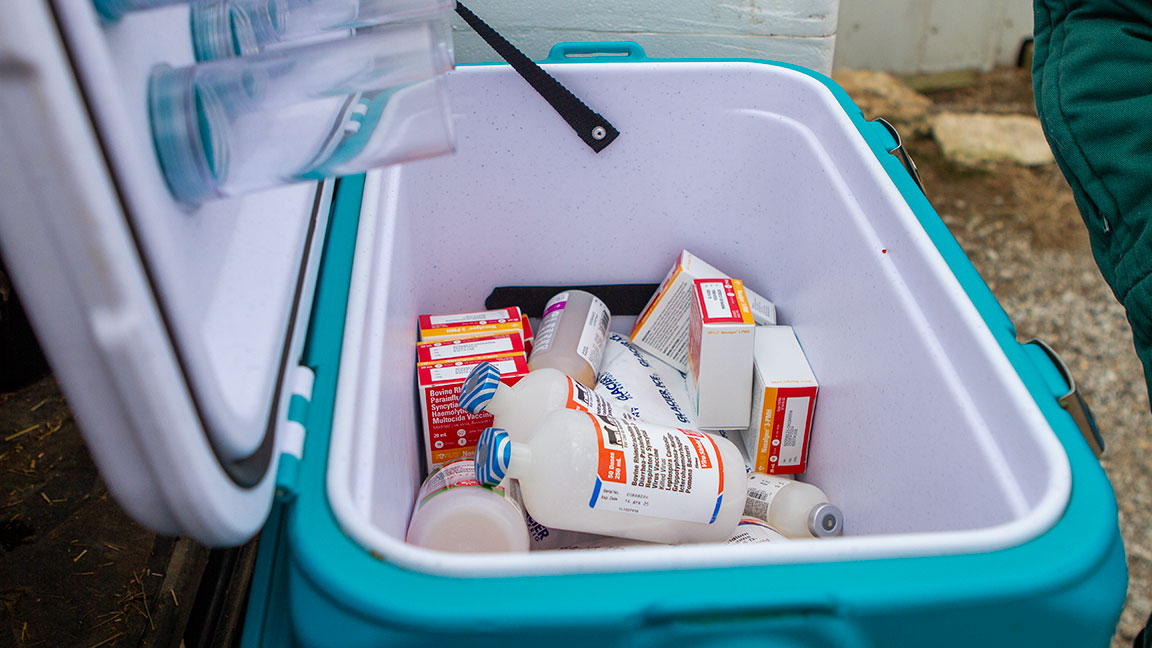
You’ve implemented a vaccination program, and the time has come to administer vaccinations. Have you given your vaccines a fair shot at working? If not cared for properly — like being left on the dash or in less-than-ideal temperatures — we can’t expect products to perform at 100%.
“I used to say that the only thing worse than not vaccinating an animal is to vaccinate them thinking that it’s going to work, but it doesn’t,” Winslow shares. “You want to make sure you’re purchasing your vaccines from a reliable source so you know that they’ve been handled well. Then at the farm level — if it’s a vaccine you have to mix — don’t mix them all up at the beginning. Keep them refrigerated, but don’t let them freeze. Keep them in a cooler and out of the sun. Make sure you’re administering them properly.”
While proper vaccine handling techniques can be applied across a variety of products, vaccination protocols are far from a one-size-fits-all solution.
“I used to say that the only thing worse than not vaccinating an animal is to vaccinate them thinking that it’s going to work, but it doesn’t.” — Thach Winslow
Winslow could write a vaccination plan to be used across the country; however, he says, 99% of the time it would be wrong. Even on the same farm, in the same county, on the same land, veterinarians and producers may have two different protocols. That’s where it is critical that you involve a veterinarian or a herd health consultant, working with you to develop your protocols.
Despite those differences and the need to adopt a more local perspective on vaccinations, the timeline for treatment might look familiar.
“Typically, some calves get vaccinated at birth. The more common is at branding or what we call spring turnout in some parts of the country. Then calves are handled midsummer. Oftentimes they’re not accessible, but when they are, it’s a great opportunity to give a booster vaccine, maybe to throw in an implant, maybe a midsummer deworming. Then we get into preweaning and weaning; those are very critical times for vaccination,” suggests Winslow. “As we jump around into the end of the breeding herd, then the most common times to vaccinate are going to be prebreeding and then at pregnancy checks. Maybe a third time for a scours vaccine precalving if it’s not combined with pregnancy checking.”
While there were no MLV vaccines approved to give to calves at the time the podcast was initially recorded, this is an instance where developing a strong relationship with your consulting veterinarian can come in handy.
“Once we prime that immune system with a modified-live [vaccination], that memory is there for the life of the animal. So we can come in with that killed vaccine again and again and again, and get the same strong immune response. We don’t have to come back five years later and throw another [modified-live vaccine] in. We can continue with that.”
Editor’s note: The information above is summarized from the June 28, 2023, episode of Angus at Work. To access the full episode, including more information on vaccinations, herd health planning and cultivating a relationship with your local veterinarian, check out our Angus at Work archive on www.angus.org. [Lead photo by Leann Schleicher.]
Angus Beef Bulletin EXTRA, Vol. 17, No. 11-A
“Once we prime that immune system with a modified-live [vaccination], that memory is there for the life of the animal. So, we can come in with that killed vaccine again and again and again, and get the same strong immune response. We don’t have to come back five years later and throw another [modified-live vaccination] in.” — Thach Winslow
Topics: Animal Handling , Health
Publication: Angus Beef Bulletin
Related Content


Current Angus Beef Bulletin
Our November issue focuses on the females of the herd and the records that validate them.