



Data Make the Difference
Using eIDs and TSUs, commercial producers get solid, accurate data for herd improvement.
November 4, 2025

by Burt Rutherford for Allflex
You could say Scott Turpin thinks like the coach of a winning team. He likes what he sees, but he’s always pushing for improvement.
Yet, his winning team is 120-strong and has four legs and black hides, so how does he know where to make improvements?
The data tell him, and collecting that data is streamlined by using electronic identification (eID) ear tags.
Turpin and his dad, a retired teacher, run a 120-head cow-calf operation at Richmond, Ky. They’ve been participating in a calf buyback program with Branch View Angus, where they buy their bulls. The carcass data they get back is tied to each animal’s Allflex eID tag numbers. The outcome is a report card on each steer that’s been fed and harvested.
How it works
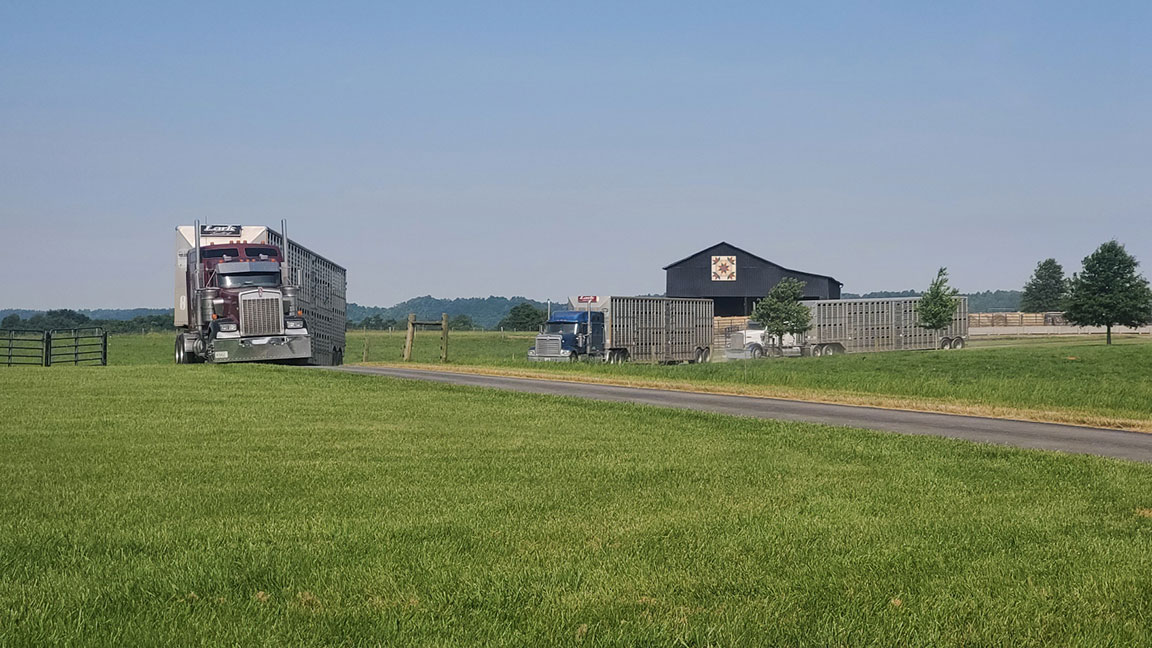
As far as James Coffey knows, he’s one of few seedstock breeders east of the Mississippi who offers a calf buyback opportunity to his bull customers. He’ll buy steer calves in the spring and fall, then background them to 800 pounds (lb.), when they’re shipped to Pratt Feeders in Pratt, Kan.
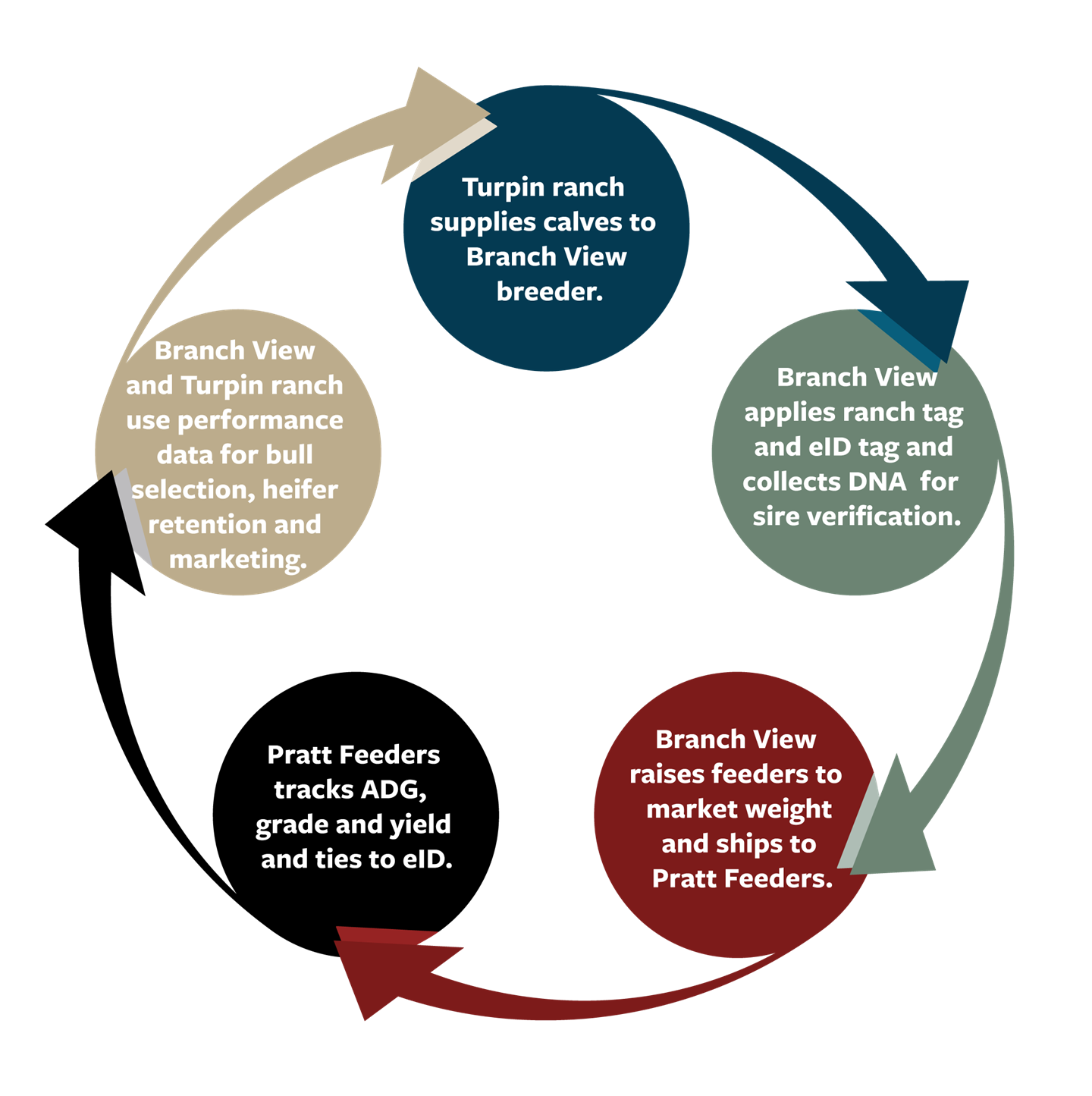

Coffey, owner of Branch View Angus, will buy 500-600 steer calves a year from his customers. While being backgrounded at Branch View, steers are weighed every 30 days to monitor gain and identify any that are falling behind the group.
When customers’ calves arrive at Branch View, they receive an Allflex eID button, as well as a ranch tag, vaccines, a pour-on and an ear notch to test for bovine viral diarrhea persistent infection (BVD-PI).
“We scan the weight on arrival into the scale head,” says Tim Dietrich, who runs the buyback program at Branch View Angus. Each time a calf is weighed, it’s scanned again, and that weight goes into the database.
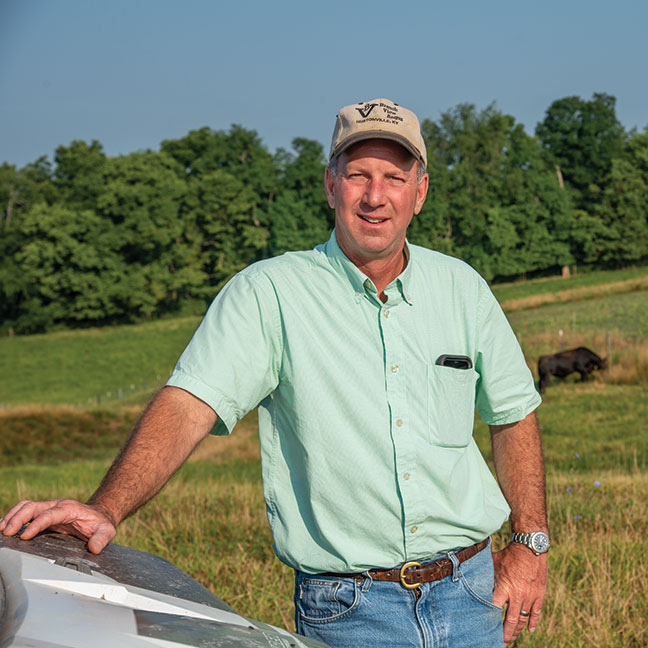
Giving customers group data on their calves is important to allow them to benchmark their calves’ performance versus the group the calves were marketed with, says James Coffey.

The eID tag gives the Branch View crew a private electronic record to which field and group each calf came from. “And we’re also able to record a lot of data for the American Angus Association with those eIDs chuteside,” Coffey says, using a hand wand as a reader.
When enough calves are ready to make a load, they’re shipped to Pratt Feeders. “When we receive them, we record the ranch tag numbers,” says Taylor Hughes, manager at the feedyard. “That’s basically for our and James’ reference.” Then the feedyard crew scans each animal’s eID button and matches that number to the ranch tag number and the feedyard lot tag number.
It’s when the calves are harvested, however, that the eID buttons strut their stuff. The feedyard tells the packer they want individual carcass data when the Branch View calves are shipped.
“The packer will give us carcass data on each individual animal matched to those eID numbers,” Hughes says. “But, they have to have an eID tag to do that.”
Recording the eID number is seamless, he adds. “We do it at initial processing. We have a hand wand, and we scan the eID tag as we ear-tag them. It’s pretty simple, because [we] put our own ear tags in them on arrival, so we do it right then.”
Hughes likes the button eID tags.
“They’re usually not in the way, and they usually stay in,” he says. “They’re pretty simple, pretty straightforward, and they’re honest. If you want to be completely accurate with what you’re doing and make no mistakes, these are the easiest way to go.”
The harvest data on each steer is valuable, says Turpin. “I get yield grade; quality grade; IMF (intramuscular fat), or marbling; ribeye area; and their live weight and hot carcass weight.”
In addition, he gets group data on feedyard performance, including feed conversion and cost to feed the steers, in a separate report.
Producers could have calves in multiple groups, meaning they get multiple reports off one calf crop, Coffey says. “Probably the most frequent question we get is, ‘I see these calves gained X. How do I get them to gain more and what type of bulls do I need to buy?’”
“Most of [my customers] are primarily interested in the group data and how they can improve performance on their calves,” Coffey says. “Giving them that group data is important to see how they benchmark versus the group their calves were sent with.”
Connecting to the sire
In addition, the Branch View crew takes an Allflex tissue sampling unit (TSU) on each calf during the initial processing to collect DNA and verify its sire.
“We can tie that back to the bulls we sold to our commercial customers,” Coffey says.
Combining the individual carcass data, the group feedyard performance data and the individual sire data along with his calving records, Turpin knows which bull sired each calf and which cow raised it. If a bull isn’t pulling his weight at breeding time, Turpin knows that, too, and can use that for sorting replacements.
“We use that data to make sure we’re selecting the right females. There are certain cows, time in and time out, their calves are better than others. So we’re trying to figure that out and keep more daughters out of those lines,” he says.
However, the data are only another tool. The eye of the expert is equally important.
“I’m pro data, but we don’t go overboard on the data, either,” Turpin says. “We still do a lot of phenotypical selection when we buy bulls.” He buys bulls in the top half of the breed to continue his quest for better feedyard and carcass performance.
“But we’re not selling out just for carcass traits, either,” he says. “We’re still making improvement, but maintaining a good maternal cow that will be in the herd for 10 or 12 years and raise a good calf every year. If we can get them grading a little bit better every generation, then we’re ahead.”
Beyond using the eID-generated data to improve his genetics, Turpin finds it’s a moneymaker at the sale barn when he markets the remaining calves. Last year, his buyback calves converted around 6 lb. of feed per 1 lb. of gain and averaged 95% Choice and Prime, and 65% qualified for the Certified Angus Beef ® (CAB®) brand.
He’s got the data on his phone and can show it to the order buyers at the sale. Numbers as impressive as that get noticed.
“We’re still making improvement, but maintaining a good maternal cow that will be in the herd for 10 or 12 years and raise a good calf every year. If we can get them grading a little bit better every generation, then we’re ahead.” — Scott Turpin
“They’re starting to give us a premium for our calves at the stockyards,” he says.
Then there are the heifers
In addition to buying back and feeding steer calves, Coffey buys heifer calves from his customers’ commercial herds and sells them as bred heifers during his annual bull sale. Others he’ll keep as recipients to use in his embryo transfer program.
The heifers are DNA-tested and weighed every 60-90 days, he says. “Any poor doers, we’ll send to feed if they’re not phenotypically correct.”
While eIDs and TSUs are integral to the Branch View Angus program, Coffey says each producer needs to pencil the return on their technology investment and additional management. He and his customers find it the backbone of their efforts to measure and benchmark performance and cull the underperformers.
It’s simple once the technology is in place.
“In this day and age, with all the technology and smartphones and so forth, I don’t think it’s difficult at all,” Coffey says.
“Everybody’s got to determine what’s feasible and what’s not feasible,” he says, because it’s an investment. “But if you’ve got enough cows to make it worthwhile, absolutely. I think it’s integral to overall management.”
While eIDs and TSUs are integral to the Branch View Angus program, James Coffey says each producer needs to pencil the return on their technology investment and additional management.
Editor’s note: This article written exclusively for the Angus Beef Bulletin was provided by Allflex. [Lead photo by Jame Coffey.]
Angus Beef Bulletin EXTRA, Vol. 17, No. 11-A
Topics: Feeder-Calf Marketing Guide , Genetics , Marketing , Selection , Success Stories
Publication: Angus Beef Bulletin
Related Content


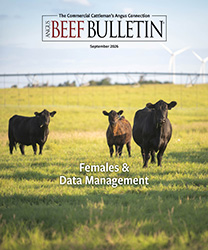
Current Angus Beef Bulletin
Our September issue focuses on the females of the herd and the records that validate them.