



eID Tags: Helping Make Black Ink Blacker
In a connected marketing system, information flow is a win-win.
November 19, 2025

by Burt Rutherford for Allflex
“It’s make or break, if they use it the right way.”
That’s what Dale Moore, owner of Cattlemen’s Choice Feedyard, Gage, Okla., says about the carcass data he sends to his customers after their cattle are harvested. It’s all right there, tied to the electronic identification (eID) tag that individually identifies each animal.
“We can go over [the carcass data]. We can talk about it. We can say where we need to improve. We can say where we’re good,” Moore says. “It’s very efficient. It is so much better than standing in the plant with a Big Chief tablet and trying to write down tag numbers like we did 20 years ago.”
Jimmy Taylor agrees. He; his wife, Tracy; and one employee manage about 600 Angus females on 12,000 acres near Cheyenne, Okla. The Taylors retain ownership and feed with Cattlemen’s Choice.
The carcass data Taylor receives has helped him increase the number of calves that grade Prime from about 13% in the first group harvested with an eID tag to now having several pens grade as high at 82% Prime. When sold on a grid, that brings a healthy premium.
For Taylor, however, that’s just the beginning. The eID tags are essential for him to participate in value-added programs that return even more of a bonus.
“IMI Global comes out and audits us once a year to make sure we’re complying with the programs we’re in. Those programs are all-natural, NHTC (non-hormone treated cattle) and their Care program,” he says.
When Jimmy Taylor tags his calves with the eID button, it begins a coordinated effort of connectivity that easily transfers vital information up and down the marketing chain.
In fact, marketing program cattle is his main reason to tag his calves with an Allflex eID button along with ranch tags. “They’ll have ear tags, but ear tags can get smudged and lost. The eID is pretty permanent once we put it in.”
Taylor, who is a past chair of the Cattlemen’s Beef Board, weans his calves early, with the youngest at 90 days old. They’ll have two rounds of vaccinations before weaning and they apply the eID tags when the calves are in the chute for their second round of shots. He sends animal health records to Moore when he ships his calves, so the feedyard has a complete record of everything that happened on the ranch.
Linking calf ID to marketing opportunities
When Taylor tags his calves with the eID button, it begins a coordinated effort of connectivity that easily transfers vital information up and down the marketing chain.
Rather than working at cross purposes in the cattle supply chain, cattle raisers and feeders use the eID tag to share information that helps all of them improve. The information backbone connects the production segments in a coordinated effort. As a result, they can meet and even exceed consumers’ expectations when they enjoy a meal centered on beef.
While Taylor tags calves on the ranch with the eID button, feeders can make the tagging investment mutually beneficial.
“We are a 100% natural, NHTC and IMI Care feedyard,” Moore says of his 10,000-head-capacity operation. “So every animal we receive has to have an eID.”
When calves walk off the truck on arrival, they pass through dual alley Allflex panel readers.
“The eID is read, and it sends a message to my phone with the information about that animal in particular and the whole group of cattle — where they came from, what their age is, what they are approved for in different verifications, age and source, all the bells and whistles.”
The cattle are scanned again at processing, which allows the feedyard to tie the eID tag to both the ranch tag and the feedyard ear tag. Tying the eID number to the ranch tag is important, Moore says. Connecting the ID numbers enables him to share reliable carcass data with ranchers and makes it easier for the rancher to match the carcass data with ranch records.
“Then, when we schedule the cattle for harvest, all that information is turned into IMI Global, which does our verification for shipments. They verify that all the tags are correct and they’re approved for the claims we’re selling them at,” Moore says. “Then they send us a shipment report and a tag manifest with all those eIDs listed and all the secondary tags. We weigh up the cattle and send them to the plant.”
Connecting harvest outcomes to ranch information
At harvest, the packing plant scans the eID tags using the same system as Cattlemen’s Choice.
“We’re one of the few feedyards that use the same system as the plant,” Moore says, which allows for seamless information transfer.
“They get a readout and verify that all the cattle in the readout are the cattle I sent them on my tag manifest, and then everything’s good,” he says. That ensures carcasses accurately get processed for the program in which they were enrolled, eliminating any problems at the beef customer end of the marketing chain.
“As soon as that animal goes through grading, we have that information on a download with the Allflex eID. We match it up to our tag, then we tie it back to the ranch tag so the producer can review the carcass data,” Moore says.
Cow-calf producers can more easily use the data to make herd improvement decisions, like connecting grade and yield information to sire genetics, using feeding and carcass insight to raise cow families or making changes in management practices.
For Taylor, the eID tag is part of an even bigger goal, helping keep the family ranch in the family.
“It makes me eligible for those bonus programs that add to the bottom line,” he says. “We’ve been through some tough economic times in the cattle industry. And those bonuses have allowed me to be in the black where I’m seeing other people are maybe in the red.”
With feeder cattle prices hitting record highs and likely to stay high for several years, are value-added programs all that valuable? According to Moore and Taylor they are. Program cattle identified with an eID just make the black that much blacker.
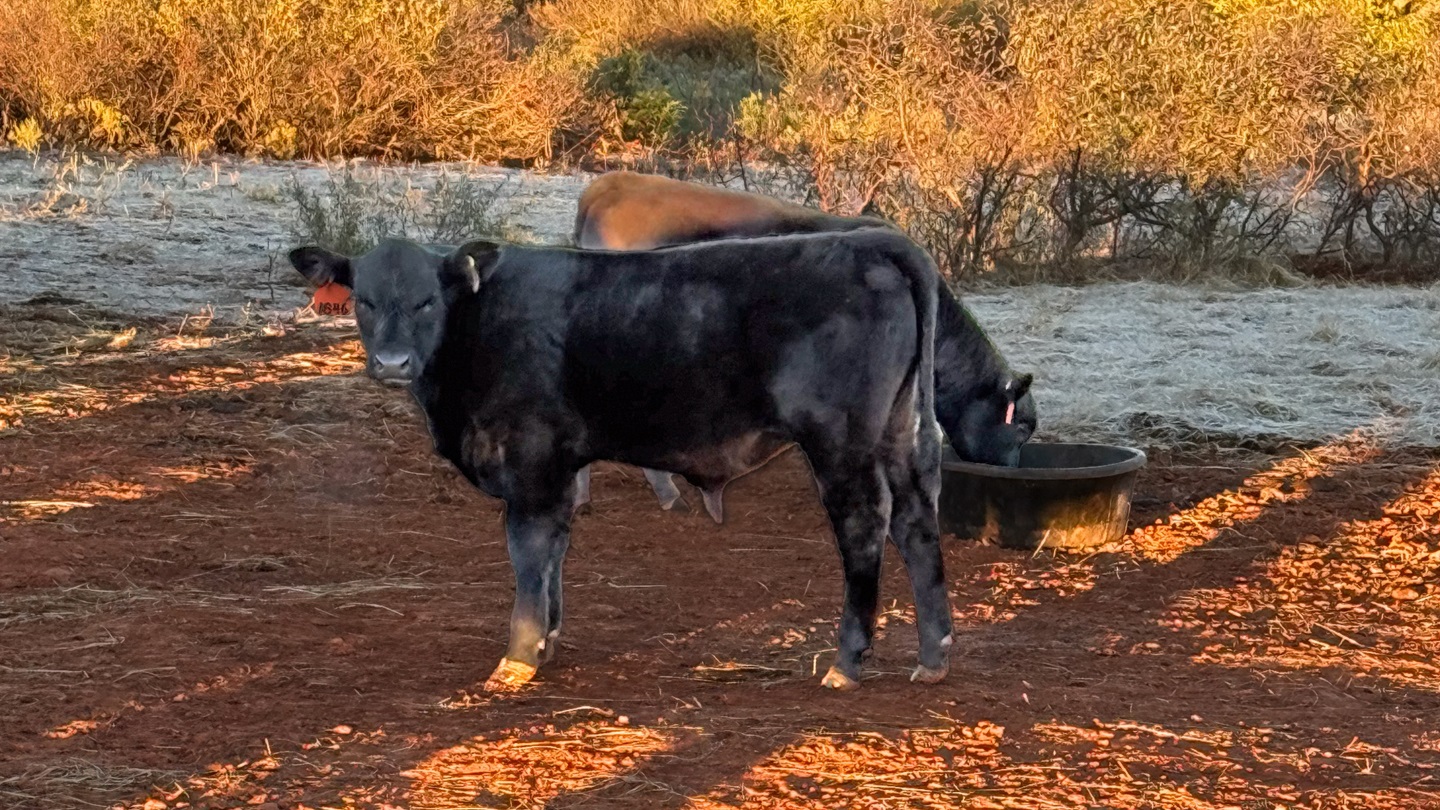
Editor’s note: This article written exclusively for the Angus Beef Bulletin was provided by Allflex. [Lead photo by Jimmy Taylor.]
Angus Beef Bulletin EXTRA, Vol. 17, No. 11-B
Topics: Management , Marketing , Record Keeping
Publication: Angus Beef Bulletin
Related Content