Prepare Cattle for Second Heat Wave
Recognizing and treating heat stress can salvage potential performance loss when temperatures suddenly rise.
July 24, 2025

by Julie Harker & Linda Geist
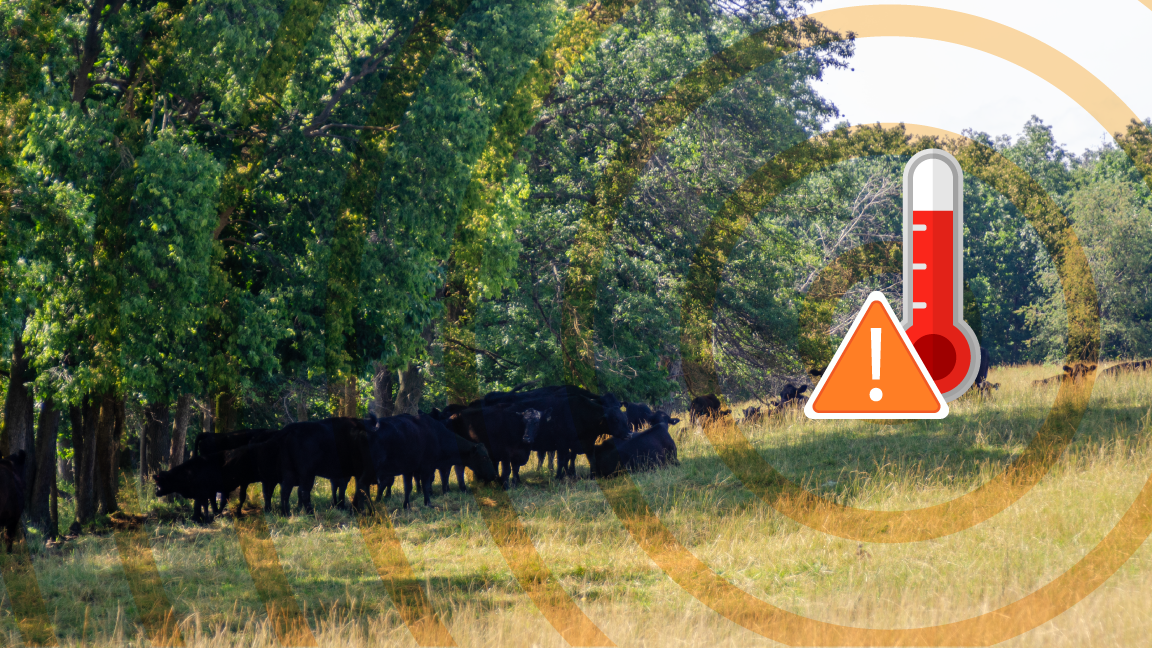
The first heat wave of summer can have negative effects on Missouri cattle, but it’s the second heat wave that causes the most damage, say University of Missouri (MU) Extension specialists.
Tim Evans, MU Extension state specialist in veterinary toxicology and animal health, says cattle may still be recovering from the first major heat event and may be less resilient to future stresses.
Zach Leasor, MU Extension climatologist, says it is not just high temperatures that are concerning.
“Environmental factors such as high overnight lows (greater than 70° F), minimal cloud cover, little air movement and high relative humidity compound heat stress in cattle and other animals,” Leasor says.
Also concerning are high dew points, he says. Dew point marks the temperature at which water turns into liquid droplets. The higher the dew point, the more moisture in the air and the more uncomfortable it becomes.
Animal scientists attribute potential damage from a second heat wave to four major causes:
- Cumulative heat load. Cattle rely on lower temperatures at night to rid themselves of accumulated heat. When nighttime temperatures remain high, cattle have a hard time recovering, and body heat continues to build.
- Reduced resilience. Long periods of heat weaken the animal’s ability to cope.
- Prolonged effects. Even after a heat wave ends, risk of cow mortality remains high for three days, according to research.
- Lowered THI (temperature-humidity index) threshold. Prolonged heat stress lowers cattle’s THI threshold, which increases risk of death. High humidity makes it hard for cattle to regulate their body temperatures.
Eric Bailey, MU Extension state beef nutritionist, says prolonged heat exposure affects some animals more than others. Older, less healthy animals and those with low body condition scores are at more risk than others. Some breeds also respond differently when temperatures, humidity and dew point are high.
Unlike many other animals that rid their bodies of heat by sweating, cattle pant. As heat stress worsens, they may drool and foam at the mouth, exhibit open-mouth breathing with protruding tongues, push with their flanks, become restless and isolate themselves from the herd.
Cattle can adjust to gradual increases in temperature and humidity, but abrupt shifts and seasonal changes bring on heat stress.
Evans says effects on animal health include poor fertility, lower milk production, poor weight gain, digestive tract problems and increased susceptibility to infectious disease.
Relief from the heat
Heat abatement measures, including proper shade; fresh, clean drinking water; ventilation/air exchange and air movement can bring some relief, says MU Extension Agricultural Engineer Joe Zulovich. He gives more ways to alleviate heat stress in the article “Five Ways to Help Cows Beat the Summer Heat” on the MU Extension website.
Beef cattle grazing on tall fescue infested with toxic endophyte face additional risks when temperatures rise because the toxins severely impair the dissipation of heat from the cow’s skin. Bailey tells more in the article “Tall Fescue Adds to Heat Stress in Cattle” on the MU Extension website and in an MU Extension Forage and Livestock Town Hall on YouTube.
Evans and Bailey represent MU on the board of directors of the Alliance for Grassland Renewal, which strives to reduce or eliminate the health effects of toxic endophyte-infested tall fescue on livestock.
Zulovich, Evans and Bailey offer these tips:
- Allow air movement. Limit air restrictions where cattle feed, water or gather.
- Water is your best tool. An ample water supply is the best heat abatement there is.
- Add shade near watering tanks and feedbunks.
- Avoid handling animals during extreme heat. Work or move cattle in a calm, strategic manner when it is cooler.
- Wet animals for direct evaporative cooling using large droplets instead of a fine mist. Wet animals to the hide so water runs off them. Avoid extremely cold water.
- Avoid bunching. Bunching traps heat, cuts radiation and convection in half and raises humidity significantly.
- Practice good fly control. Cattle bunch in the middle of pastures to avoid biting flies that gather at field edges.
- Consider normal cattle behavioral adaptations to heat before radically changing feeder-cattle rations. Cattle will shift meals to the cooler part of the day in response to hot weather. Consult with your beef nutritionist or veterinarian before making feeding management changes.
- Monitor for respiratory disease. Consult your local veterinarian.
- Review your stocking rate. Overcrowding can restrict airflow and increase heat accumulation.
The publication “Hot Weather Livestock Stress” is available free on the MU Extension website.
Editor’s note: Julie Harker is an Extension news strategist and Linda Geist is a senior strategic communications consultant with the MU College of Agriculture, Food and Natural Resources. [Lead photo by Shauna Hermel]
Angus Beef Bulletin EXTRA, Vol. 17, No. 7-B
Topics: Animal Handling , Health , Equipment / Facilities , Management
Publication: Angus Beef Bulletin
Related Content


Current Angus Beef Bulletin
Our September issue focuses on the females of the herd and the records that validate them.