



Sire Selection FAQs
Five answers to common bull selection questions.
February 22, 2023

by Drew LaKamp, University of Nebraska-Lincoln
Given bull-sale season is underway, addressing a few frequently asked questions (FAQs) might prove helpful as you begin to consider what bull(s) to buy this spring and the tools you use to select them.
No. 1: I keep my own replacement heifers, but also retain ownership on cattle through the feedyard. How can I keep cow weight down but ensure that hot carcass weights do not go down?
Balancing maternal and terminal characteristics can be tricky. If you want to keep your own replacement heifers and you don’t want to use either multiple bulls (with multiple breeding pastures or an investment in parentage testing) or artificial insemination (AI) (with the potential for sexed semen), the best solution is to select a herd bull that optimizes mature weight and carcass weight. Many breeds have expected progeny differences (EPDs) for both traits, making selection for both possible. Ideally, this would be done based on an economic index that assumes replacements will be kept and culls sold along with steers. Combined indexes like $C (combined value) for Angus or API for Simmental are designed to optimize maternal traits like mature body weight with terminal traits like carcass weight to maximize profit.
No. 2: Uniformity of calves is important to me (and to buyers of my feeder calves). I generally try to buy half-sibling bulls to increase uniformity. Is this the best approach?
No, because this method is truly a gamble. Half-siblings share 25% of their alleles on average, but a specific pair of half-siblings can share anywhere from 0%-50% of their alleles, meaning that two half-sibling bulls could be completely different in terms of their genetic potential. A better strategy is to select bulls that have similar EPD profiles for the traits where uniformity is desired.
No. 3: I buy Angus bulls and generally request that the breeder send me the genomic percentile ranks, EPDs, adjusted weights and ultrasound scans. The data doesn’t always agree. Why? Which should I believe?
For making selection decisions, the EPD is the best tool. Every other source of data for a trait (the adjusted phenotype, the genomics, the pedigree, etc.) is already included in the calculation of the EPD. Phenotypes like weights and scans are affected by both genetics and environment. Genomic profiles by themselves do not account for the bull’s own performance. Only the EPD brings all those pieces together and appropriately weights them.
No. 4: My heifers need to calve unassisted, given I work off-ranch. I keep back my own replacement heifers, as well. How do I select bulls to make sure their calves, and their daughters’ calves, will come unassisted?
Calving ease EPDs are going to be the most effective in this situation. The calving ease direct EPD is an estimate of how easily a bull’s calves will be born when he is bred to heifers. The calving ease maternal EPD is an estimate of how easily a bull’s daughters will give birth when they have their first calf. While it may be tempting to select on birth weight, as birth weight is an indicator of calving ease, it does not tell the whole story. In addition, birth weight records are used to calculate the calving ease EPD, and selecting on both will not improve calving ease more than selecting on calving ease alone.
No. 5: I generally try to select bulls with large scrotal circumference to increase fertility in the heifers I keep back. Is this the best approach to improve fertility in my herd?
There is evidence that selection for larger scrotal size leads to decreased age of puberty in daughters. However, for taurine breeds, females reaching puberty early enough is not the concern it once was. Scrotal circumference is not a good indicator of female fertility (age at conception, sustained fertility), particularly for taurine breeds. The scrotal circumference of a sire has little relationship with heifer pregnancy rate or sustained fertility of his daughters. Selecting on heifer pregnancy or stayability EPDs would yield much greater genetic gains in female fertility.
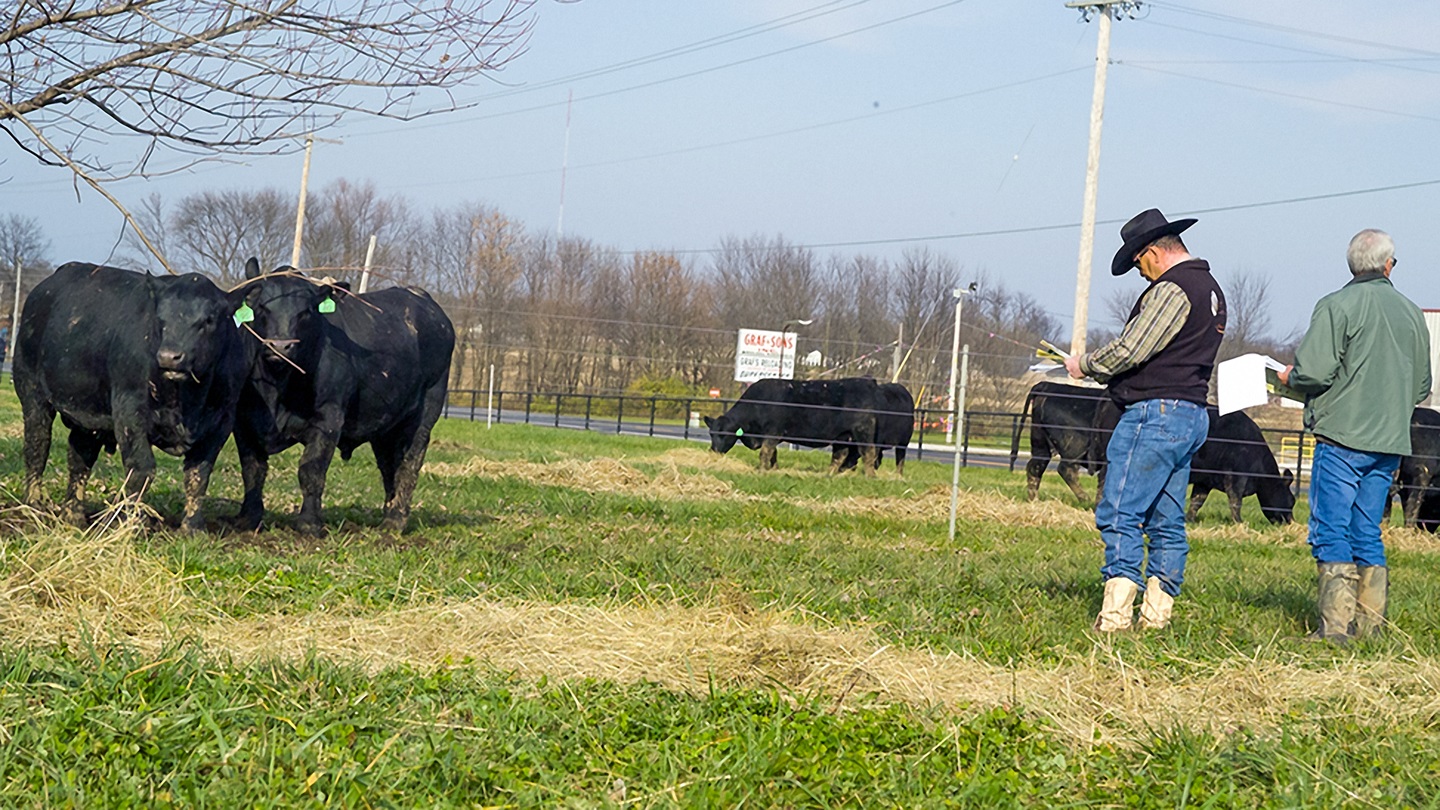
Editor’s note: Drew LaKamp is a University of Nebraska-Lincoln doctoral student. [Lead photo by Shauna Hermel.]
Angus Beef Bulletin EXTRA, Vol. 15, No. 2-B
Topics: EPDs , Management , Selection
Publication: Angus Beef Bulletin
Related Content


Current Angus Beef Bulletin
Our September issue focuses on the females of the herd and the records that validate them.