



Health & Husbandry
The problem(s) with pinkeye.
April 20, 2026
The joys of summer: picnics, warm weather, an ice-cold glass of lemonade. One thing that can put a damper on the fun is the presence of pesky flies that decided to join the picnic uninvited.
Another disease that can detract from the joy of green grass and sunshine is pinkeye. Pinkeye can be very frustrating due to sporadic occurrence and challenges with managing contributing risk factors. To better control pinkeye, it is important to understand the disease process and how to minimize factors that could increase cattle risk.
Pinkeye in cattle
Pinkeye, or infectious bovine keratoconjunctivitis (IBK), is a disease causing inflammation and damage starting at the cornea (or the outer layer of the eye). The disease process can lead to corneal ulceration or more severe disease, and causes significant discomfort in affected cattle.
Young cattle and calves are most frequently affected, and pinkeye is most prevalent during the summer fly season.
Several contributing factors are associated with the disease, including bacteria (most commonly Moraxella bovis and M. bovoculi), especially when combined with other eye irritants (e.g., flies, dust). Pinkeye is multifactorial: eye irritation first, followed by infection. As the bacteria grow rapidly on the eye, they also reproduce, making tears an effective method to transfer the disease when flies move between infected and noninfected animals.
Clinical signs of pinkeye often start with blepharospasm (twitching and closing eyelids) and excessive tear production (which may result in facial staining). Abrasions on the cornea of the eye can be quite painful, and the resulting inflammation makes the eye very sensitive to light.
At the early stages, cattle can be treated with antibiotics according to label directions and may need to be placed in an environment to limit further ocular damage.
Early in the process, inflammation on the cornea may appear as only a small white spot. However, the disease progresses very rapidly, and soon the ulcer may progress. Blood vessels will start to infiltrate toward the source of the lesion, marking the edges of the discolored area with a red ring.
Treatment is less effective later in the disease process. Work with your veterinarian to design a treatment plan for pinkeye, and diligently observe cattle to identify this disease early in the process.
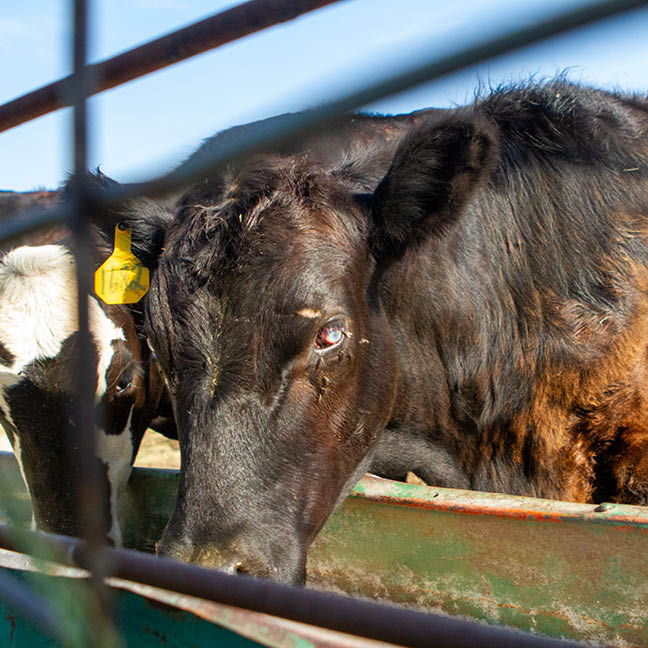
As pinkeye progresses, blood vessels will start to infiltrate toward the source of the lesion, marking the edges of the discolored area with a red ring.

Flies and pinkeye
Flies can play an important role in mechanical transmission of pinkeye, carrying bacteria from infected to noninfected cattle. More specifically, this transmission is caused by face flies, which feed on the lacrimal secretions (tears) and then, when moving to a noninfected animal, can transfer the bacteria. To minimize this challenge, it is important to understand a little bit more about the flies of concern.
Two main types of flies affect cattle: face flies and horn flies.
Horn flies are biting flies and spend most of their time on the animal, with typical landing spots on the flanks and torso of the animal. Horn flies are smaller than face flies and are often present in larger groups. Some reports have described necessary interventions when fly burdens are greater than 200 flies per animal. Horn flies can be a severe irritant due to their biting nature and — in high levels — can decrease production.
In contrast, face flies are similar in size to a common housefly and, when present on cattle, are typically seen in small numbers (six-12 flies) on the face. Importantly, face flies feed on secretions from the animal, but also feed on decaying material and spend most of their time off the cattle. Thus, managing the type of flies may require different techniques. A comprehensive fly control program should account for both types of flies and be implemented in a manner designed to provide protection throughout fly season.
Other factors that may cause eye irritation associated with pinkeye include unclipped tall pastures and environments conducive to high face fly populations. Managing the pasture to prevent eye irritation, when possible, can be an important control technique.
Conclusions
Pinkeye is a challenging disease syndrome in cattle, and it is difficult to predict when cases will become an issue. Early identification and treatment are keys to successful outcome on individual cases.
Managing the face fly burden and environment is important for keeping group disease challenges at a minimum. Work with your veterinarian before fly season to create your management plan for this year.
Editor’s note: Author Brad White is the E.J. Frick Chair at Kansas State University College of Veterinary Medicine and serves as director of the Beef Cattle Institute. The Beef Cattle Institute has two weekly podcasts focused on a variety of cattle topics: Cattle Chat and Bovine Science with BCI. Learn more at www.ksubci.org.
Related Content



Current Angus Beef Bulletin
Our September issue focuses on the females of the herd and the records that validate them.