



Health & Husbandry
Be prepared: Building cattle health kits.
March 1, 2026
It’s a sinking feeling when you get ready to head home and realize you have a flat tire. The problem can be compounded if everything you need (e.g., jack, lug wrench, spare tire) is not ready to go. As the saying goes: Prior preparation prevents poor performance.
Cattle health challenges are a lot like flat tires: They seem to pick the most inconvenient times to occur. Being prepared with the proper equipment, protocols and training can reduce stress on cattle and people while supporting timely, effective decision-making. Purpose-built cattle first-aid kits help you prepare for the unexpected.
Protocols and planning
Preparation begins with three foundational elements: a working relationship with your veterinarian, training in treatment administration and a plan for safe animal restraint.
Veterinarians cannot legally prescribe or dispense prescription animal health products without a valid veterinary-client-patient relationship (VCPR). More than just a legal requirement, veterinarians can provide better information if they have good knowledge of your operation and management practices.
Establishing this relationship before an emergency occurs is a good idea. With an established VCPR, veterinarians can help develop written treatment protocols for common conditions, improving consistency and animal welfare.
Before administering treatments, everyone should be familiar with Beef Quality Assurance (BQA) guidelines. The online training is comprehensive, including methods of treatment administration, selection of appropriate needles/syringes for different cattle types, and cattle handling techniques. The training is valuable for both experienced and novice cattle health providers, and should be completed prior to administering products to cattle.
Equally important is having a safe and functional system to restrain cattle for treatment. Evaluate your chute, alleyways, gates and pens routinely to ensure they are in good repair and appropriate for both the size and type of cattle being handled. Facilities should prioritize low-stress cattle handling, protect the safety of people, and minimize the risk of injury to cattle.
Emergencies may occur when labor is limited, so you may want to form a plan for handling cattle when only one or two people are available. Addressing facility issues ahead of time prevents rushed decisions when animals are already compromised.
Once protocols, training and facilities are in order, the next step is to ensure all the necessary tools are readily available.

Standard cattle kit
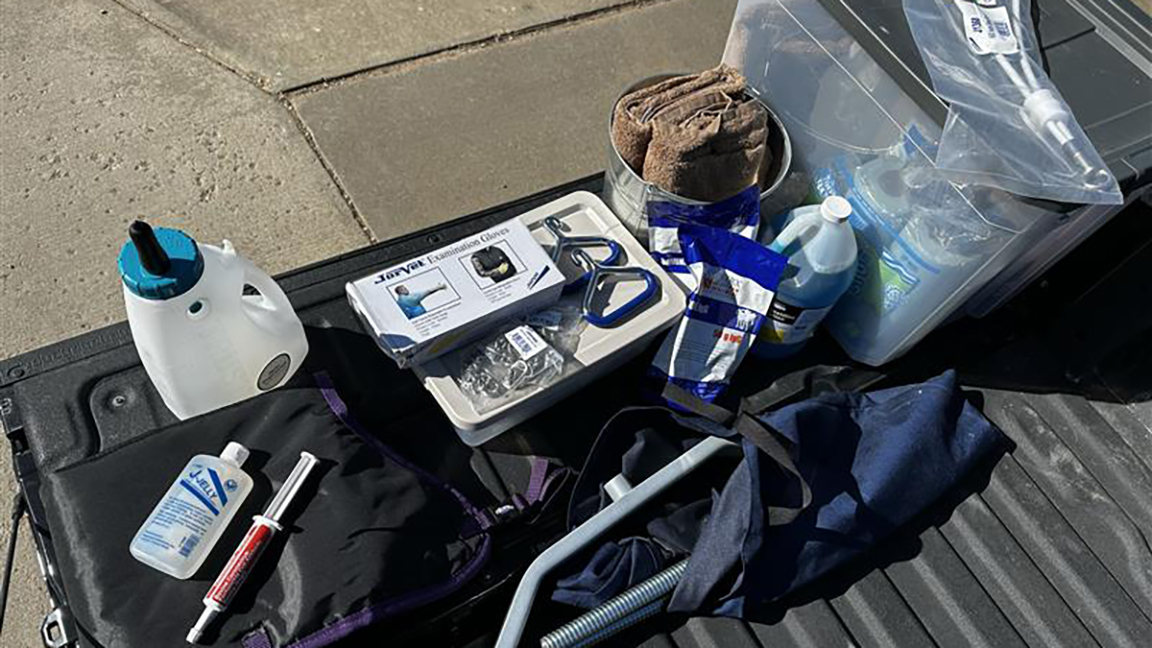
A basic cattle health kit can be a toolbox containing durable, commonly used items that are easy to access. Whenever possible, include items with long shelf lives to reduce the need for frequent replacement.
Core items for your cattle health kit include disposable gloves, halter, lariat, antiseptic solution, scissors, tweezers or forceps, thermometer, and a flashlight/headlamp (urgent health issues may not occur during daylight hours). The kit should also include a variety of methods to administer potential treatments, including syringes, needles, a bolus gun and an oral dosing syringe.
Advanced kits
Some health conditions occur infrequently, and the tools to manage these conditions require additional training and veterinary guidance. Occasionally cattle will bloat, and access to an oral speculum and stomach tube can be useful if you have been trained to pass the tube into the correct location in the rumen.
Difficult calvings are another area where a specialized health kit may be useful. A calving kit should include obstetrical sleeves, obstetrical lube (or powder, which can be mixed with water), calving chains and handles.
Young calf management kit
Newborn calves have specific health challenges, and the postcalving health kit should contain an esophageal feeder, colostrum supplement, a nursing bottle and electrolytes.
Calves obtain most of the immunity for the first few months of life in the colostrum, or first milk, from the dam. A difficult birth makes calves less likely to nurse well, and an esophageal feeder may be necessary to ensure adequate intake of colostrum. Allow only trained personnel to use the esophageal feeder to be sure the supplement is placed in the correct area.
Newborn calves can be fed colostrum milked from the dam (the best case, but it can be challenging to obtain enough) or a commercially prepared colostrum supplement. Commercial colostrum powder supplement is good to have on hand to mix up if needed.
Calf scours can be an issue, and one of the major challenges is dehydration occurring as a result. If affected calves can be identified early, administering electrolytes orally can be beneficial. Electrolytes can be given by bottle (if the calf will nurse) or by esophageal tube. If the calf is down with no suckle reflex, this is a time to contact your veterinarian.
Conclusions
A cattle first-aid kit is not a substitute for veterinary care, but it is an important tool to support timely intervention, animal welfare and BQA-aligned management. Preparation includes more than supplies. It requires planning, training and communication. Taking time now to assemble your cattle kit and review protocols can pay dividends when health challenges arise.
Editor’s note: Author Brad White is the E.J. Frick Chair at Kansas State University College of Veterinary Medicine and serves as director of the Beef Cattle Institute. The Beef Cattle Institute has two weekly podcasts focused on a variety of cattle topics: Cattle Chat and Bovine Science with BCI. Learn more at https://ksubci.org.
Angus Beef Bulletin EXTRA, Vol. 18, No. 4-A
Related Content


Current Angus Beef Bulletin
Our September issue focuses on the females of the herd and the records that validate them.