



Pictured are (from left) Andy, John, Gaye, John Christopher and Sierra Pfeiffer with Jack Pfeiffer on his pedal tractor.
Family on the Farm
How considerations for cattlemen of all ages make working cattle safer for both laborer and livestock.
February 21, 2026
When it comes to facilities — whether pens, alleyways or chute systems — planning for the future can be a thought-muddling endeavor.
We can spend copious amounts of time planning cattle handling systems; however, the fact remains: Time marches on. Eventually, even the most thoughtfully designed systems will need slight changes to accommodate cattlemen of all ages.
John Pfeiffer admits he might have a habit of overengineering cattle handling facilities. While the oil-field-pipe pens at Pfeiffer Angus will certainly stand the test of time, adapting existing facilities to changing needs and younger family members has required a bit of creativity.
The Pfeiffers work with a mix of existing pens and mobile systems to funnel cattle to a central working facility. That system has worked for the family through the generations and accommodates one feature somewhat unique to the state of Oklahoma.
“Typically, in Oklahoma, these places were all settled during the Land Run,” says John, noting that those who took advantage of settling the West were granted 160 acres. “Of that 160, they usually have 40 or 50 acres of wheat, and then the rest of it will be grass.”
With the breakout of land, the difficulty of procuring contiguous ground and the prevalence of rented grass, having a way to catch cattle — safely and efficiently — is a major need. One of the first purchases John and Gaye made after taking over the family operation was a heavy-made set of portable pens.
With a way to catch the cows locked down, the Pfeiffers were better able to use their central working system. Built with heavy pipe and a central chute, the system worked well until the family was able to invest in a barn to facilitate moving cattle handling indoors.
“I tell people, moving the chute inside did more to improve our [artificial insemination] conception rate than anything,” John says. “It helped my attitude so much. I’m not a real friend of cold weather. Working cows when your fingers freeze to the chute was not a fun time for anyone.”
Considerations for the comfort of livestock and the humans working with them are both points the Pfeiffers take to heart.
Docility and design
Good design is important, but calm cattle who are comfortable around people make days spent at the pens much smoother, says John.
“Our cows are all pretty broke to feed, so we don’t like to do a lot of driving. We can back in with the pickup with the cubes on it, scatter cubes in the corral, and they’ll come running in. Then we can load them up and go,” John explains, sharing that penning isn’t usually a hardship. “Our cows are used to it. They get penned a lot and handled a lot.”
Whether a registered Angus matriarch or commercial heifer, docility is a trait the Pfeiffers consider when making keep/cull decisions. After all, John laughs, it’s a whole lot easier to gather wayward animals when you can drive up, honk and they come running.
That focus on docility goes hand in hand with good systems regarding cattle stress. At their main handling location, most work is seasonal. Setting cows up for breeding means that many females come through the chute three or four times within a three-week period, Gaye says.
“One thing that I really do appreciate that John does, even though I don’t tell him this at the time, he buys heavy-duty, good stuff to start,” she adds. “I do think that makes a difference. I’m not plugging equipment companies, but you want to make sure that it’s built well enough to withstand going through it every week. That has saved us a lot of problems.”
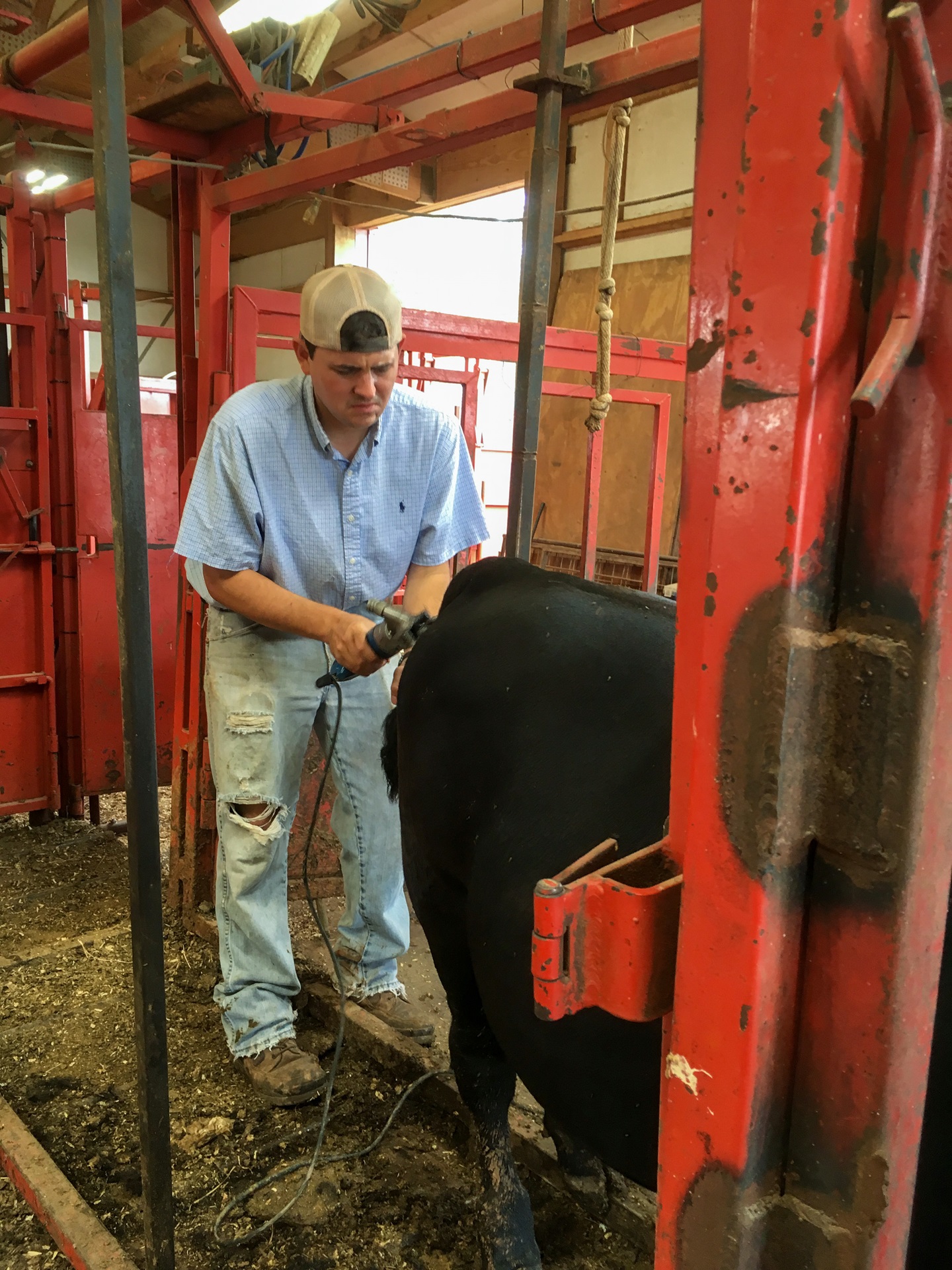
Move the chute inside, advises John Pfeiffer, recalling the cold days. “Working cows when your fingers freeze to the chute was not a fun time for anyone.”

Having easy-going cattle accustomed to being handled has opened the door to a new customer base for the Pfeiffers: seasoned cattle producers looking for the bull who will cause the least amount of drama.
“I like to tell people that the help is no good around here, so our cattle have to be gentle,” Gaye says.
“And the help is not very fast anymore, either,” John chimes in.
Still, he says, nothing is 100%, and building facilities with that in mind can lead to a lot less heartache down the line.
If cattle know there is a possibility they can get out or they can push a barrier over, he says, that leads to wilder cattle.
“I think the facilities also impact the temperament of your cattle,” John says, while admitting that being willing to change a previous design that isn’t working for you is important.
Nobody wants their family or help getting hurt. So having pens where cattle are restrained and where they’re not going to get out is a boon for handler and bovine alike, he adds.
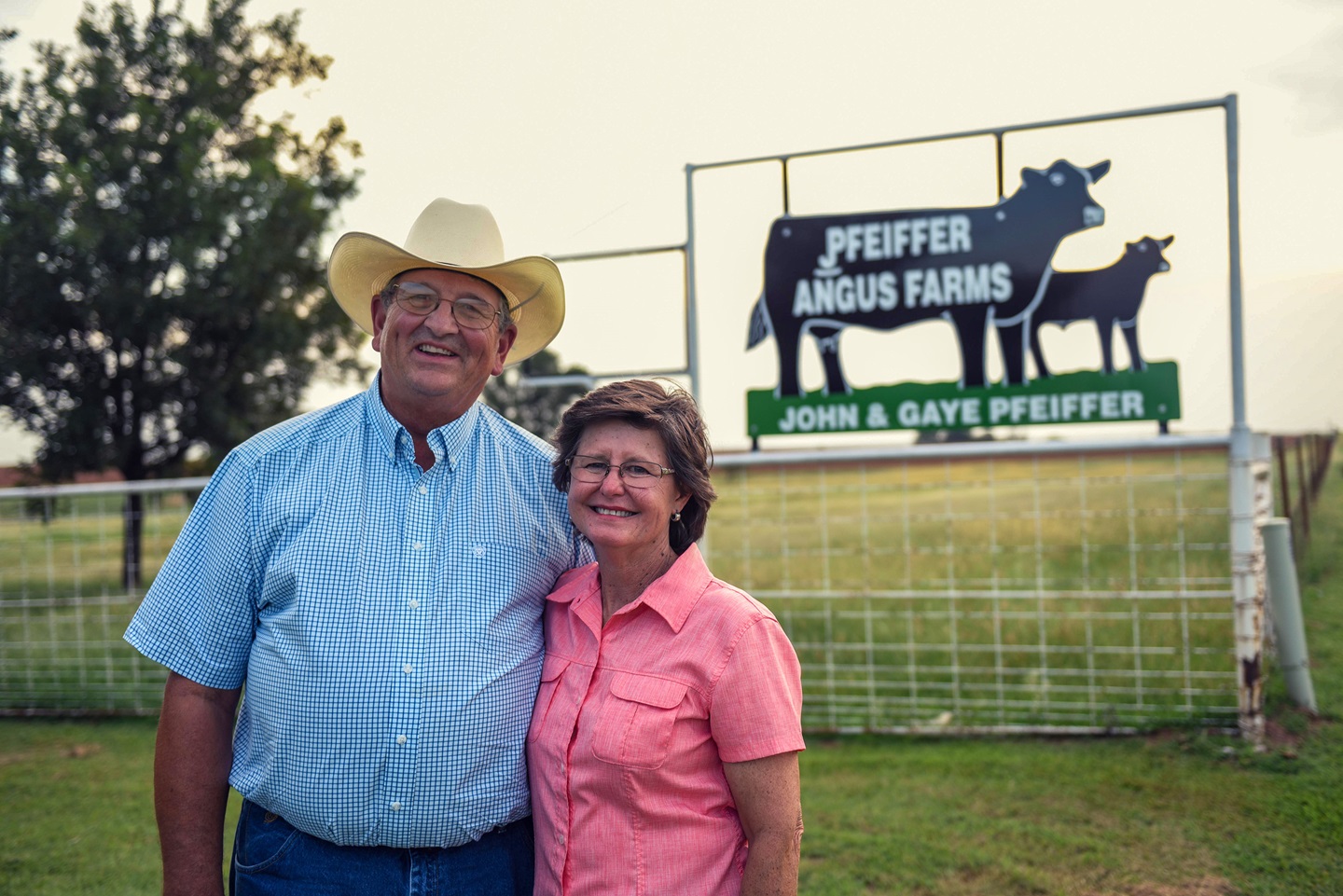
John and Gaye Pfeiffer

“I don’t want the cows to get hurt, either. [Our pens] are built so that the cows can go through and they’re not going to get hurt,” John says, explaining that a recent project entailed reworking a cement floor that had previously caused traction issues for their cattle. “This past year, when [the] cattle market got good and we got some extra money, we put a rubber floor over that cement to stop the cows from slipping. So [there are] some updates we’ve had to do as money became available.”
Something else to keep in mind, he says, is that while we don’t always get everything we want, it’s still important to build working systems correctly so they don’t break down and cause injuries to livestock or people. The sweet spot, John says, is finding something that works better for all parties involved.
The last cattle chute put in their central working barn was a hydraulic chute. That was not the Pfeiffers’ first choice. In 2000, when the family started adding cows, they worked with an experienced designer and purchased a manual chute. When the time came to purchase another chute, John and Gaye were barred from purchasing another manual.
“He said, ‘You guys are too old. I’m not selling you another manual chute,” John explains, saying that the facility sat empty for nearly a year before he made the decision to install a hydraulic option. The verdict?
“There are things I like about it. There are things I don’t like about it,” he says, before admitting it’s not all bad. “You’re not nearly as tired when you work a whole set of cows through there in a day.”
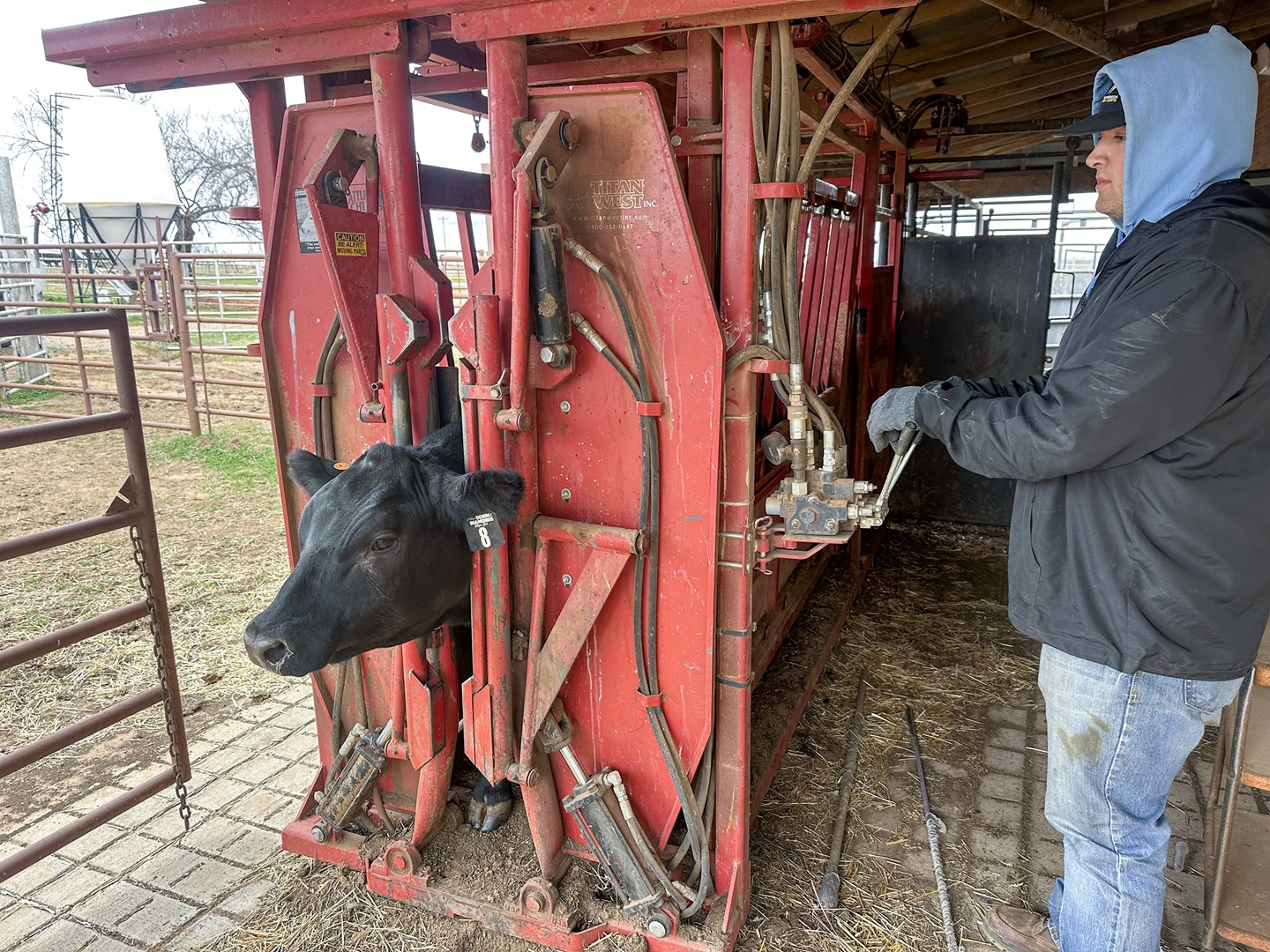

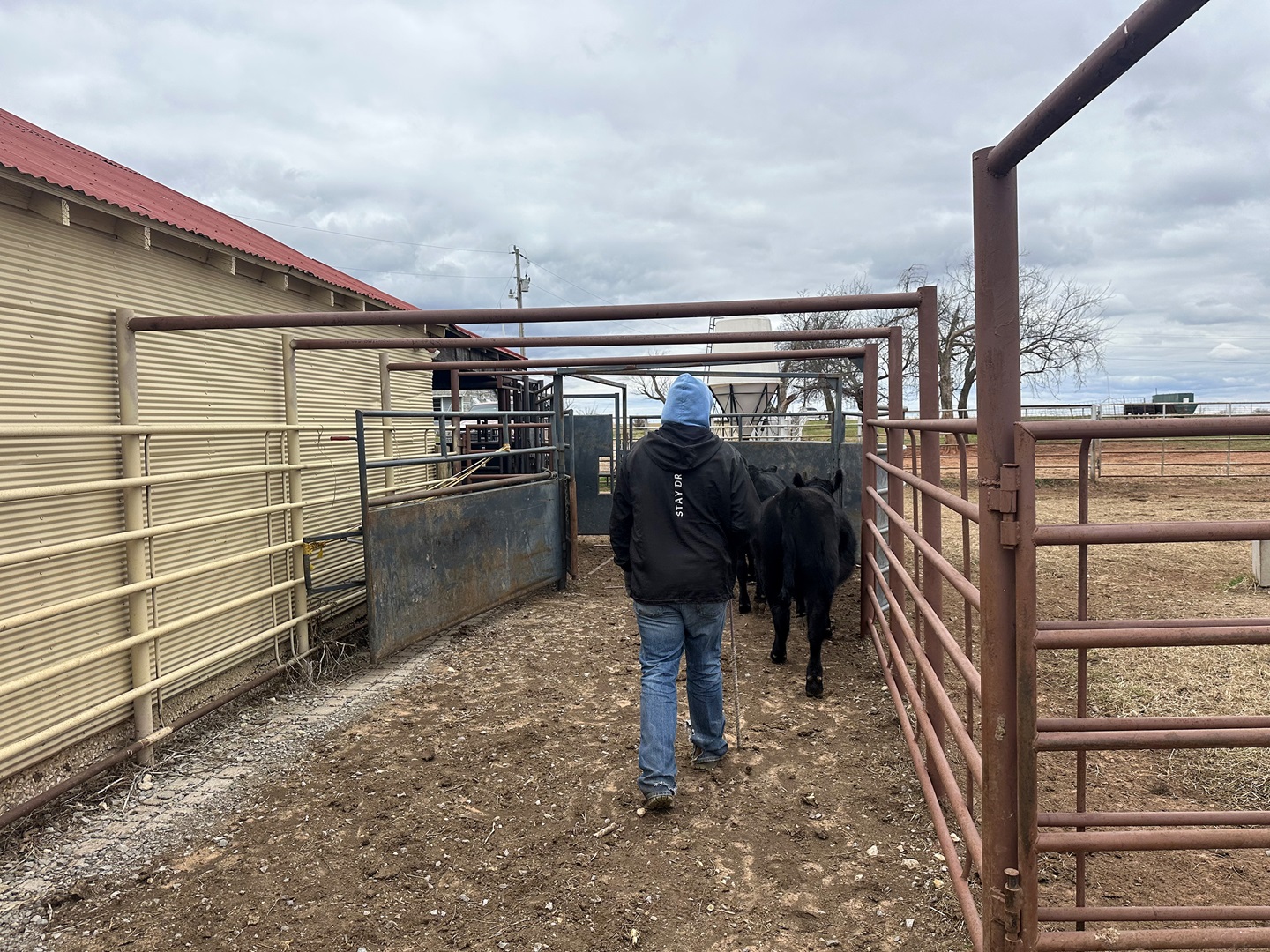

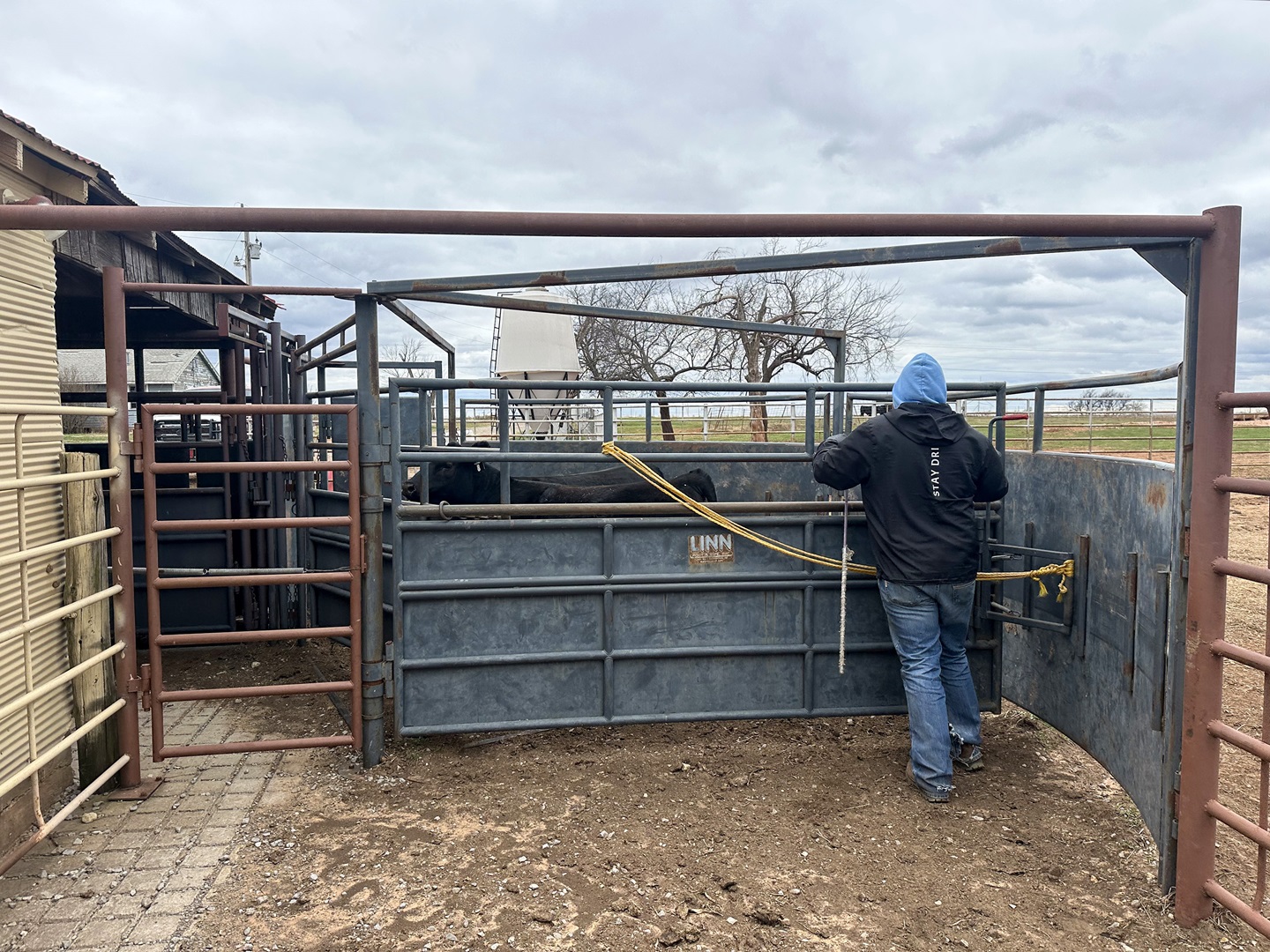
Good design is important, but calm cattle that are comfortable around people make days spent at the pens much smoother, says John Pfeiffer of Pfeiffer Angus, Mulhall, Okla. With the right facilities and the right number of hands, working cattle goes much smoother.

Starting them young
John isn’t the only one who notices when facilities might need a facelift.
Gaye recalls an alleyway setup with solid sides that required stepping up on a rail to push cattle. When a new setup was added across the road, the Pfeiffers made a change.
“One side is solid, but the other side has a couple of open panels at the top part so that you can push everything through without climbing up and down, and you can see better. That is an amazingly better setup,” Gaye says. “You’re not up and down and up and down. It also makes it easier for the younger kids to be able to push cows through.”
Much like cow kids across America, the Pfeiffer children started riding along even before they were big enough to really help out. With two parents who both had jobs in town, the youngsters would sit in a stroller or play in the playpen chuteside while Gaye helped John work cows.
“They’ve been around cows since the very beginning. Then as they got older, they helped. They learned how to push cows up by pushing baby calves first,” John explains, adding that younger calves made it less likely the younger Pfeiffers would get run over. “I have two great-nephews that have been here, and they work for me now. In the summer, when school was out, they had to be somewhere because their parents worked, so they usually came out here.”
Starting kids young means they build a solid foundation and make quite a hand; but it does come with risks, according to Gaye.
“The bad part about that is … when you train them up too well, all the neighbors try to hire them away,” she laughs.
The newest cattle hand on the place may only be 4 years old, but he’s learning the finer points of moving cattle, John says. Right now that might just look a little like chasing the cows, but he’s learning.
Working alongside his parents and grandparents, the tiniest Pfeiffer is being allowed to learn skills that are hard for some adults to grasp.
Cows know when things are off, and seemingly can pick up on emotions. Starting at a young age and being able to grow into age-appropriate tasks means that children have the chance to watch good cattle handling as well as how cattle react when being worked.
“I think it helps with your instincts, because when you bring somebody in — even if they’re older and they’re trying really hard — they’re not used to it. You have to move at a certain pace. You can’t clown too much,” Gaye says. “Starting young, you just get a little bit of cow sense, hopefully.”
Expect the unexpected
When including cattlemen of all ages in the everyday business of working cattle, facilities need to be built for one thing in John’s opinion: safety.
“You have got to have safety for not only you, but you’ve got to have safety for the cows and the calves,” he says.
Part of ensuring safety is planning for the unexpected. With the right facilities and the right number of hands, working cattle goes much smoother.
Paying attention to the world around you is one thing Gaye stresses. Paying attention when working cattle is important, but paying attention to detail when building facilities is equally important.
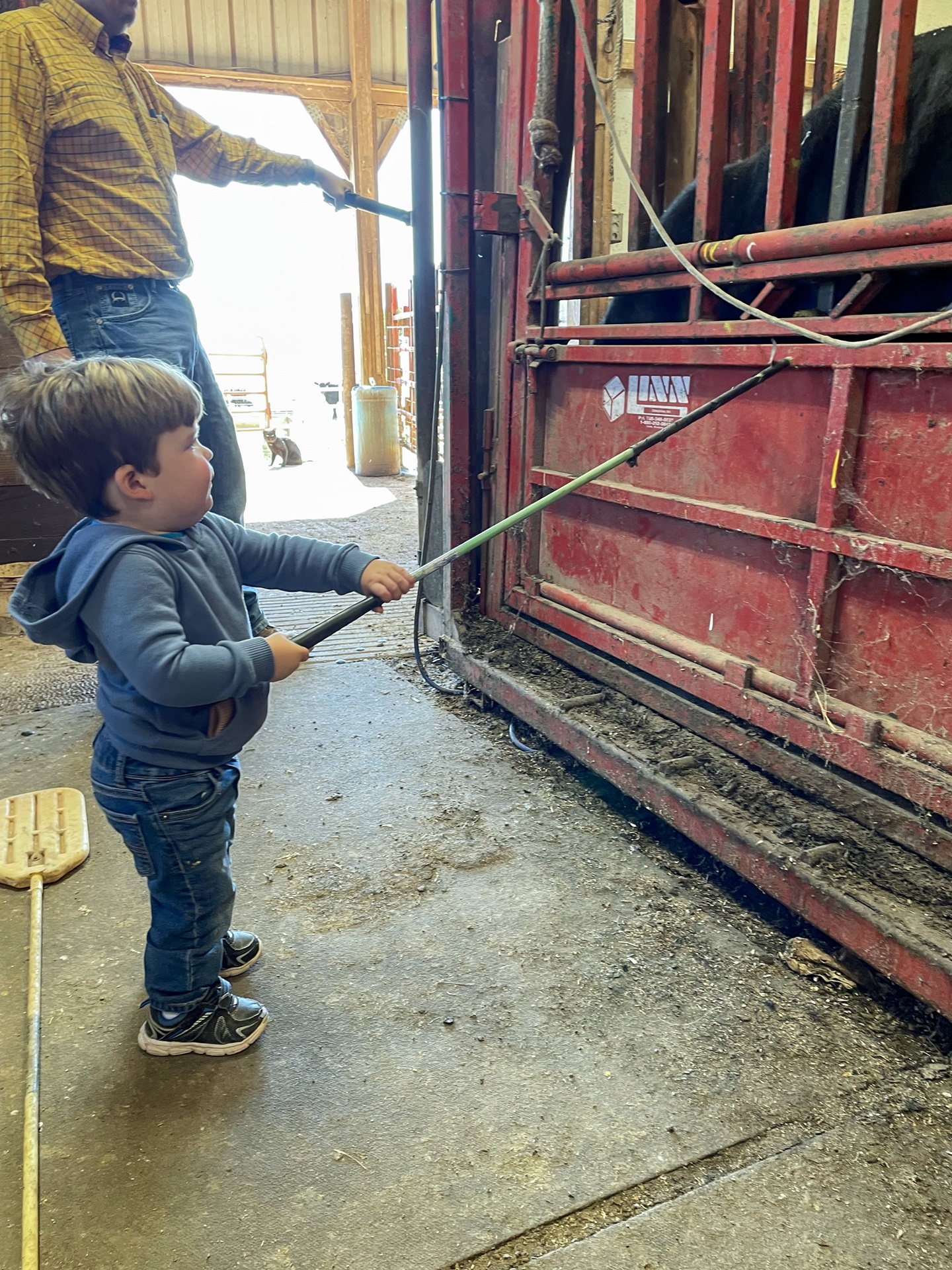
Jack

Within most of their facilities, the gates and the tubs and things, one or two people can handle the cattle, she says, noting that thinking through how cattle will move through a system with low manpower is something that can’t be overlooked.
“How many people are going to be there?” she asks. “A lot of our stuff, of course, was built before we had any extra help.”
Proper lighting has been incredibly helpful. Before retiring, John and Gaye were both educators. Long days in the classroom meant a lot of work on the ranch happened after dark. It didn’t take long to figure out they could light things up and that illumination made life a whole lot easier, says John.
When the opportunity presented itself to wire all the barns with fiber optic internet several years back, the Pfeiffers took advantage. Present day, that internet connection allows members of the team to watch calving from the house or off property when needed.
So what will life look like when their now-4-year-old grandbaby is calling the shots?
There will be more technology, says John.
“There’s going to be more electronic things. Our kids will use laptops at the chute. We still use the yellow legal pad and enter it in on the computer when we get to the house, but we’re old,” Gaye says, laughing. “They are guaranteed that it won’t still be that way. So, again there’s no way you’re going to do this without the right facilities.”
Topics: Equipment / Facilities , Management , Ranch profile , Success Stories
Publication: Angus Beef Bulletin
Issue: March 2026
Related Content


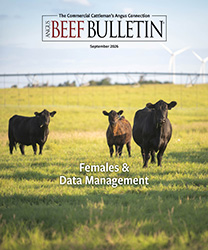
Current Angus Beef Bulletin
Our September issue focuses on the females of the herd and the records that validate them.