


A meat cutter at The Producer Partnership processes donated beef into a retail cut that will be donated to a local food bank.
‘Meating’ Needs
The Producer Partnership processes cattle free of charge and ships the beef to the charity of choice. A tax credit comes with every animal donated.
November 19, 2025
As a member of my local county Farm Bureau board of directors, a few years ago, I had an idea to purchase 4-H market animals and donate them to our local food pantry. After one phone call with the food bank, my great idea seemed pretty impossible.
While the director was grateful for my initiative, she couldn’t make the logistics work. The meat had to be USDA-inspected and packaged in a specific way. She didn’t have enough freezer space for a whole beef. How was she supposed to distribute steaks to one family and ground beef to another?
“It just doesn’t work well,” she told me. “How about you donate cash, and then I can just order beef from foodservice.”
That solution helped her cause, but it didn’t do much for the 4-Hers or for Farm Bureau’s mission. Well, my idea stopped in its tracks. Still, it hasn’t died, and a program called The Producer Partnership gives me hope donating beef instead of cash is a viable option for us all.
Finding a way
Matt Pierson, a cattle rancher located just outside of Livingston, Mont., wouldn’t let his good idea die. His tenacity pushed him forward, and he found a way to make it work.
Pierson manages an Angus-based cow herd and markets high-end replacement heifers. While ranching is his day job, people are his passion. He has coached soccer in Livingston for more than 25 years, immersing himself in his community’s needs.
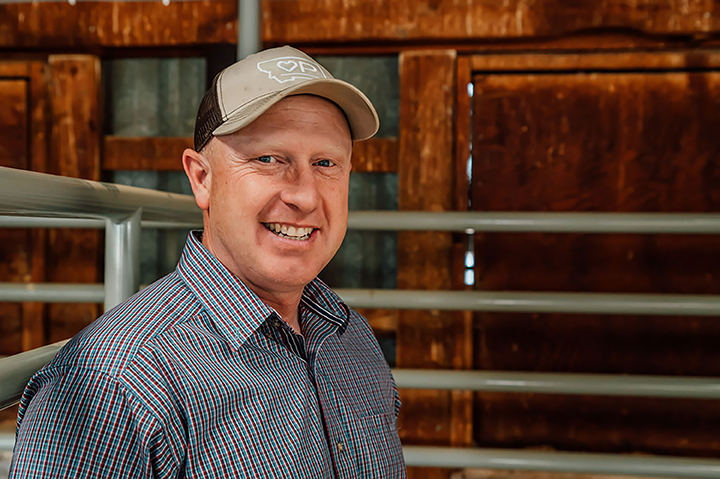
Matt Pierson started The Producer Partnership to help families struggling during COVID.

“When COVID hit, it was very clear what was happening to the families that we had in our area,” says Pierson of the immediate struggles he witnessed.
He decided to process some older cows and donate the beef to the Livingston Food Resource Center. He thought some neighbors would want to join him, so he made a few calls and had the first 800 pounds (lb.) shipped out the door within about five days, he recalls.
The Producer Partnership was born.
A big idea
Once word got out, the cattle came, and luckily so did some funds. It isn’t cheap to process cattle at USDA-inspected facilities. The Park County Community Foundation heard about Pierson’s big idea. They offered $3,500 to help pay for the processing. That number grew to about $12,000 within six days, he says.
Suddenly, Pierson found himself simultaneously running a ranch and a charity during a pandemic. We had about 10 days of free rein, he says. We received animals from everywhere, got them into local butchers, and got a bunch of work done — so much so the local food pantry called to say they were out of storage space for frozen beef and were going to ship it to other pantries in the region.
Then, the food supply chain issues hit, and custom beef processing came to a screeching halt.
Cattle were still being donated, but no meat cutters were taking them. Pierson now found himself operating a cull-cow rest home.
“I was calling everybody within a five-state region of us,” he explains. Finally, Yellowstone River Beef in Williston, N.D., agreed to take the cattle. It was an eight-hour drive one way, but Pierson did it and did it often. In the first year of The Producer Partnership program, 25,000 lb. of ground beef was donated to the Montana Food Bank Network.
Feeding and hauling cull cows to another state would never be sustainable. Pierson knew that from the beginning, but he didn’t think he would have to come up with another big idea to fix that problem.
“I had a whole bunch of cows here waiting to get shipped out,” he recalls. “I had to put one of them down because her health had just really, really gone downhill. I was really frustrated, so I called the [board of directors] and said, ‘OK, that’s it! We’re opening our own facility.’”
In February 2021, The Producer Partnership board unanimously voted to build their own processing facility.
They applied for federal inspection almost immediately, and possibly by providence, everything from fundraising for the facility and receiving inspection licenses fell into place.
By June 2022, the processing facility, built on a corner of Pierson’s home ranch, with much of the construction done by ranch hands, was operating and accepting everything from cattle to goats to bison.
Cattle in place of cash
After five years of operation, the non-profit 501(c)(3) live-animal donation program has grown immensely. It is currently the only USDA federally inspected, nonprofit-owned and -operated meat-processing facility in the United States.
Today, they can ship USDA-inspected meat to food banks throughout the region. They make customized orders for school lunch programs, and they host federal meat inspector trainings.
Montana ranchers can drop off cattle at the processing plant or have them picked up at central locations throughout the state. There is absolutely no cost to the rancher for the processing, and the rancher can select the food program of their choice to receive the meat. For instance, beef from Ranch A can go directly to Ranch A’s local elementary school and feed the children of Ranch A’s employees. It’s that local and that direct.
For every beef animal donated, the rancher receives a tax letter documenting they donated 400 lb. of beef to charity. They can take that tax letter to their accountant and receive a tax credit based on the market value of that beef, explains Jeri Delys, program manager at The Producer Partnership.
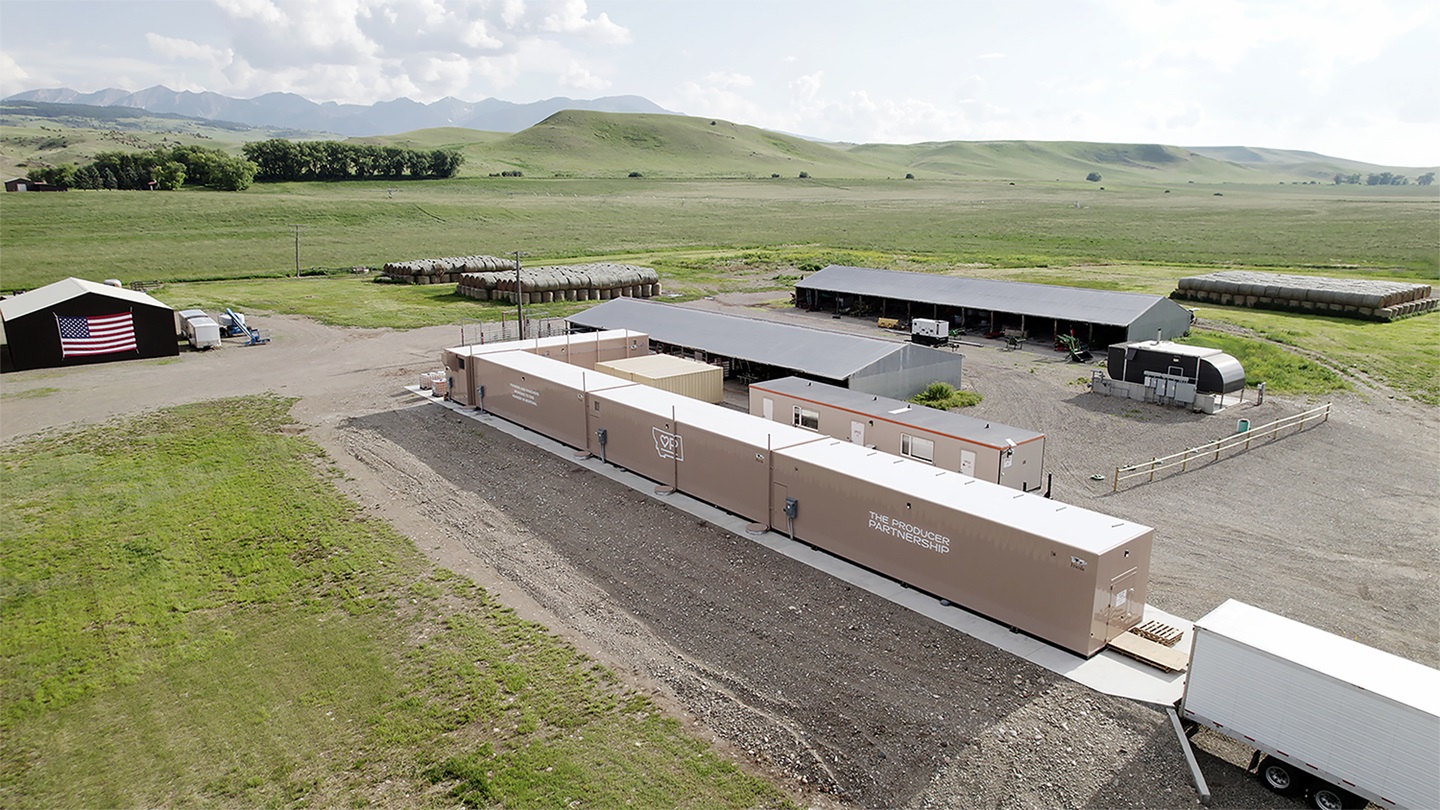
The Producer Partnership is currently the only USDA federally inspected, nonprofit-owned and -operated meat-processing facility in the United States. The facility was built on Pierson’s ranch, on land he donated to the project.

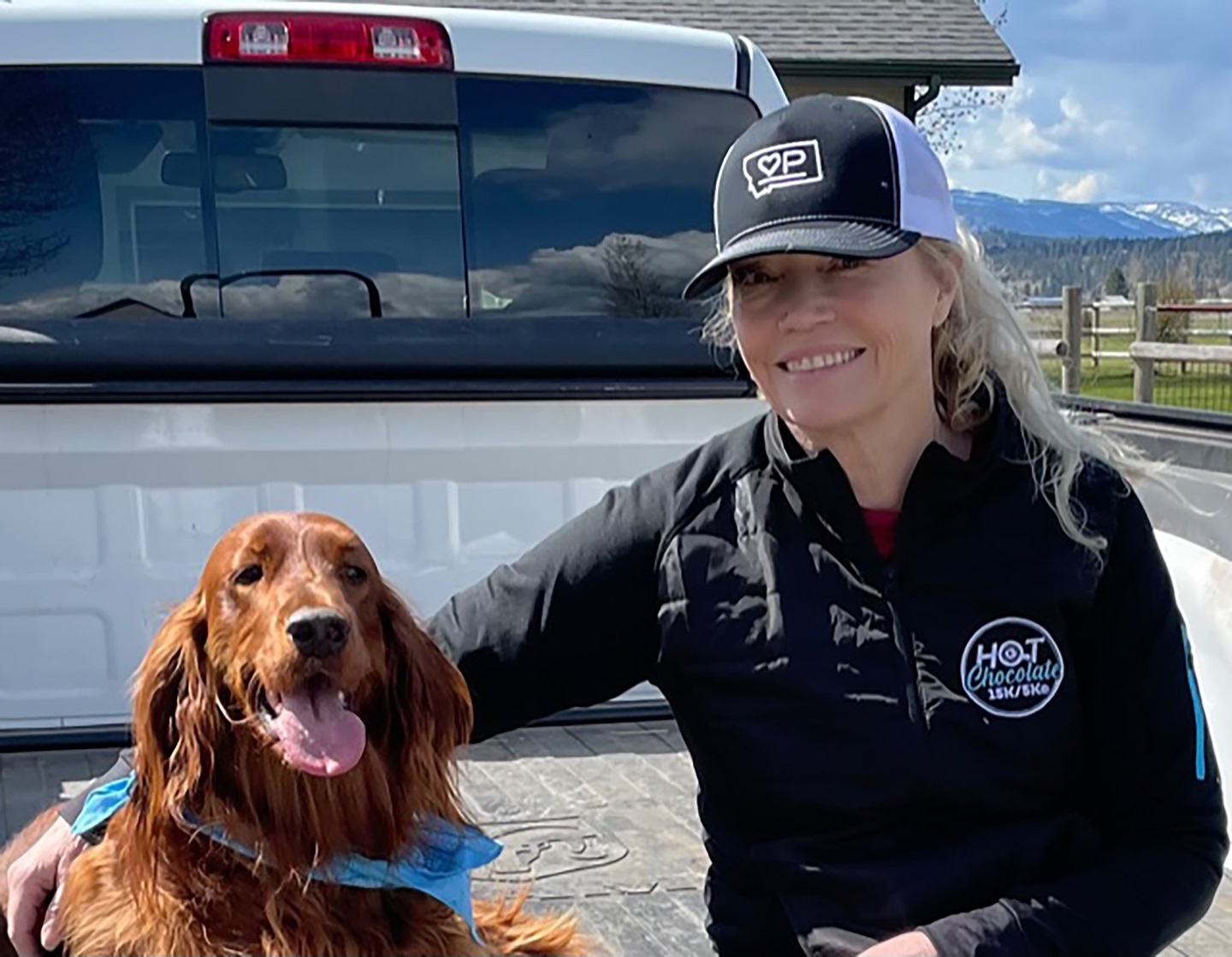
Jeri Delys

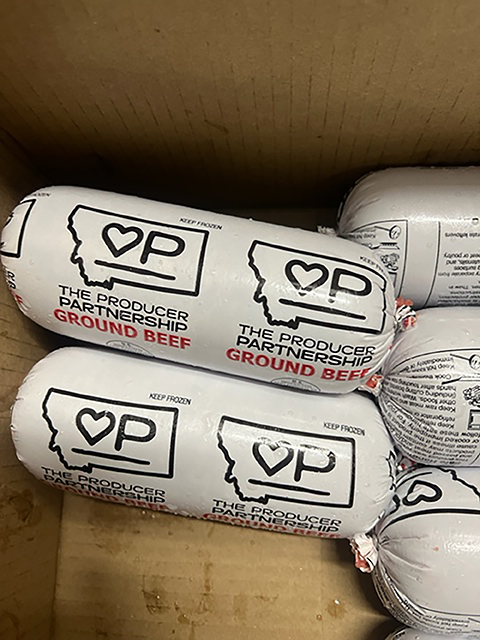
The Producer Partnership label and USDA stamp go on every package of meat processed by the program and shipped across the state of Montana.

Currently, the Partnership processes the equivalent of four cows per day, intending to increase to 12 per day as they find the staff and the funds to grow.
That’s because Pierson and Delys aren’t seeing any slowdown in the supply of animals or the needs across Montana.
Montana protein in Montana mouths
“We knew when the program started that we would be able to help Montana schools get Montana protein on kids’ plates,” explains Delys. “We knew that schools were facing budget challenges in meeting students’ nutritional needs. We knew that we were the answer to help address those challenges. We know now that those challenges have become even greater with the recent cuts to school meal programs.”
Schools wanted and needed the beef, but they often didn’t have the freezer space to take 400 lb. of beef at a time, Delys says. Yet, thanks to a lead grant through A&B West Foundation and others, The Producer Partnership is in the second year of a two-year, one-to-one matching grant for schools to get freezers.
In 2024, the Partnership awarded more than $42,000 in one-to-one matching grants. Six schools across Montana got new freezers to store their 18,600 lb. of donated protein.
As of August 2025, Delys is working with 27 schools and has gotten 25,000 lb. of donated protein at no cost to the schools. She says the amount of donated protein has saved schools close to $150,000.
Since its humble start with a few old cows, The Producer Partnership has processed 350,000 lb. of protein, which equates to 1.4 million meals.
“Because we’re seeing COVID-era funding go away, we’re going back to where we had to be years ago — which was leaning in and leaning on Montanans helping Montanans,” emphasizes Delys, “That’s actually the vision of how Producer Partnership was born.”
From rancher to humanitarian
In Joliet, Mont., the school’s secretary announces over the loudspeaker that today’s lunch is tacos, and the Johnson Ranch donated the ground beef. Bobby goes home and says, “Dad, the Johnsons donated beef to my school. How about we donate some beef, too!” That conversation now happens regularly throughout Montana because of The Producer Partnership, says John Patterson, the proud uncle of Matt Pierson and owner of 3210 Angus.
Giving back to the community is a family tradition Pierson inherited. John and his late wife, Pam, were longtime advisors of the Montana Junior Angus Association and were honored to be selected as national advisors of the year in 2005.
John donated the first beef to the school that his grandchildren attend in Joliet. Since then, the idea has sparked in the community.
“It’s a story worth telling and retelling,” smiles John. “I’m just so proud of Matt and what he’s been able to do for our agriculture community and our end consumer. I think we’re probably a portion of society that’s very poor at telling our story, and this opens people’s eyes to the fact that we’re not just businessmen. We’re not just ranchers. We’re humanitarians.”
John says working with the Partnership becomes contagious for ranchers because it’s a feel-good experience that offers a great way to offset some profit, especially during record-high cattle prices.
“Everybody has those animals that they scratch their head over and wonder how they’re going to dispose of them. This is a wonderful way to do it and makes life go full-circle for agriculture and humanity,” he notes.
“I think we’re probably a portion of society that’s very poor at telling our story, and this opens people’s eyes to the fact that we’re not just businessmen. We’re not just ranchers. We’re humanitarians.”
— John Patterson


For Pierson, seeing the generosity of his neighbors is evidence of something he always knew.
“The Partnership is able to draw such a more direct line from a producer to their own community, meaning that they can ship us an animal, and they get that animal back to whatever local nonprofit that they want to try to help … I get to see all of this and realize that the quality of people that do what we do every day [is] amazing. There is no comparison.”
Ultimately, Pierson’s biggest dream is to see programs like The Producer Partnership pop up throughout cattle country. One of his goals is to create a program that can be replicated anywhere, because everywhere we look, hunger is a problem.
To schedule a tour of the facility, learn about the program, or donate an animal/funds, contact Pierson at 406-220-7223 or email highlandlivestock@gmail.com. Contact Delys at 406-880-4080, or email jeri@producerpartnership.com.
Editor’s note: Paige Nelson is a freelance writer and cattlewoman from Rigby, Idaho.
Topics: Management , Marketing , Success Stories
Publication: Angus Beef Bulletin
Issue: November 2025
Related Content


Current Angus Beef Bulletin
Our September issue focuses on the females of the herd and the records that validate them.