


An Unforgiving Land
Means Ranch earns 2025 Certified Angus Beef Sustainability Award.
October 2, 2025
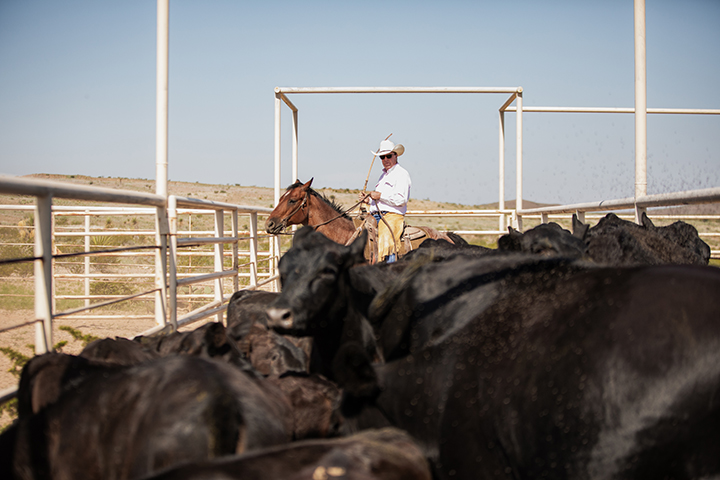
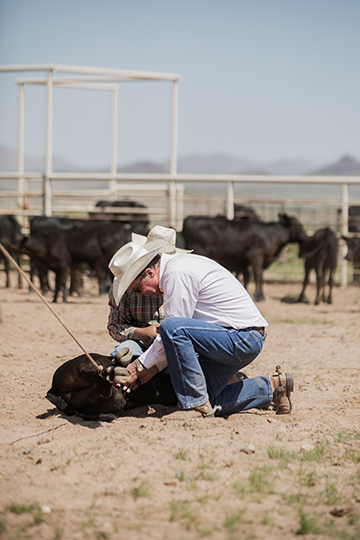
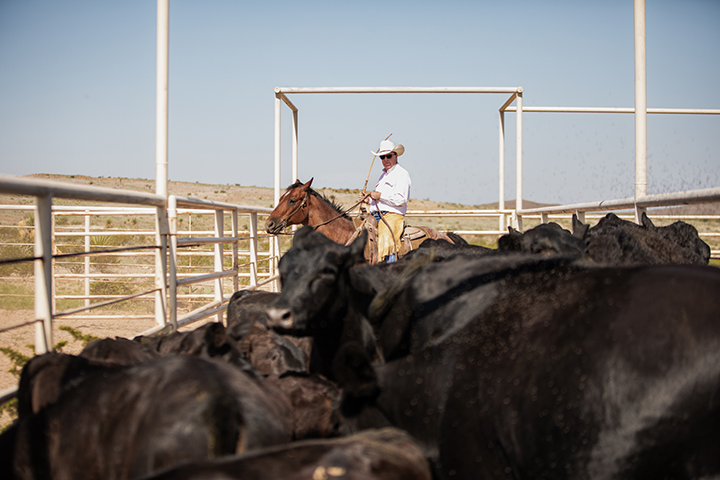
The horizon swallows the sky in every direction — miles of sparse grama grass and greasewood swaying under a pitiless sun, jackrabbits darting between cactus spines. Just over the foothills of the Davis Mountains, cowboys are horseback, driving a herd of Angus cow-calf pairs toward catch pens.
If you close your eyes, you can almost hear the first few notes of the Theme From Lonesome Dove. It’s the picture of ranching, romanticized.
Until you live it.
On the Means Ranch, beauty is a thin veil over a land that is barren and desolate. It’s unforgiving.
Every inch
Forty-six years ago, Jon and Jackie Means were married, and a new partnership was forged. Jackie, an El Paso girl, moved three hours east to the Moon Ranch, one of a few divisions of the larger company. Surveying the land, she remarked at how desert-like the terrain was.
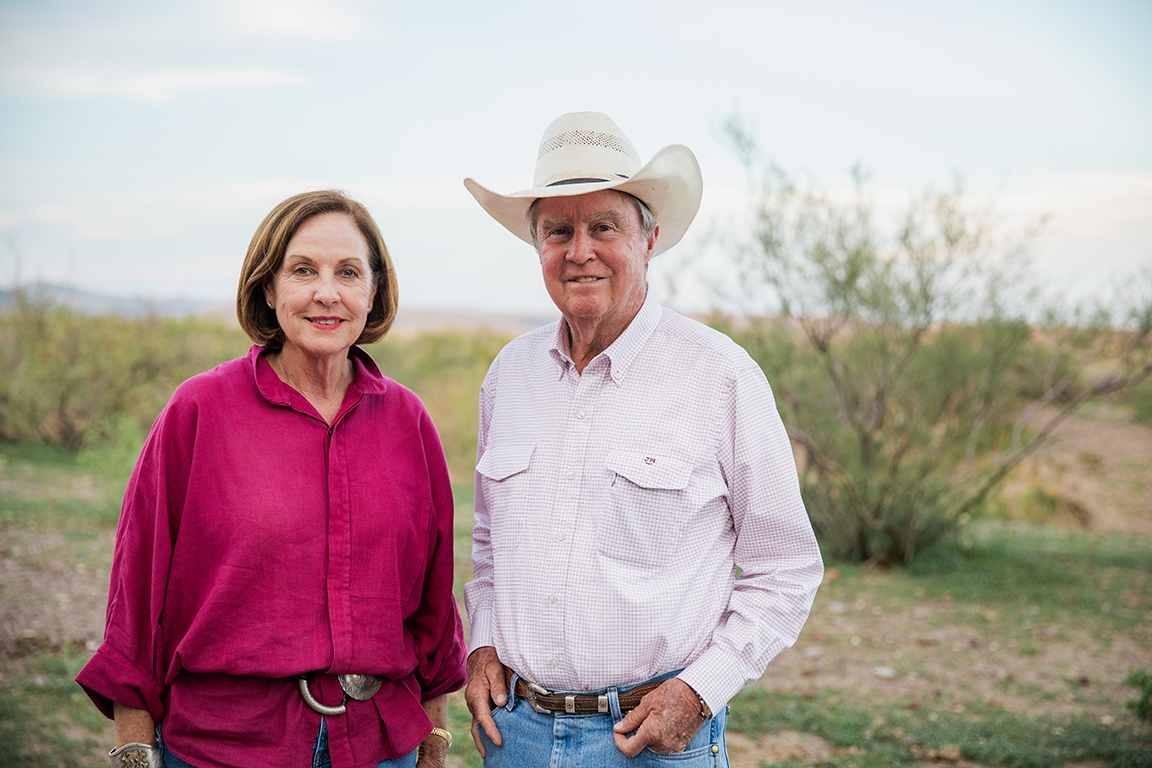
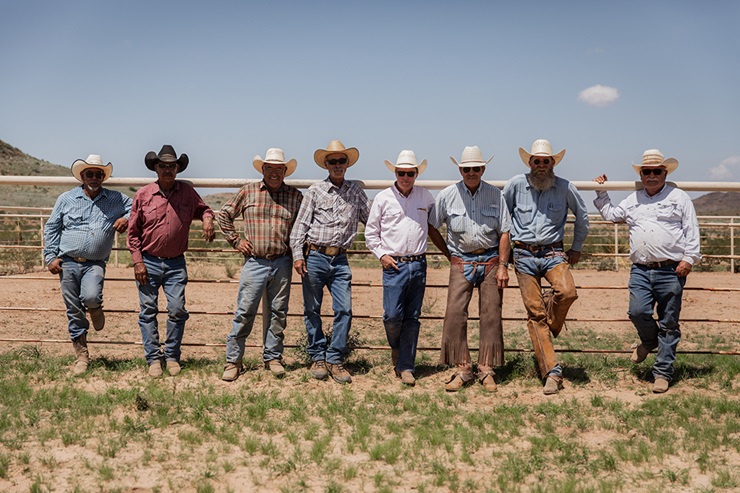
Jackie and Jon Means have ranched together for 46 years, but Jon’s family has been ranching on this same unforgiving landscape since the 1880s.


“Don’t call it that,” Jon had bantered. “It’s not a desert. We have grass.”
Together, the Moon and Chispa ranches span 90,000 acres — one big chunk of the Means Ranch Co., a decades-old enterprise the couple owns. The original Y-6 ranch, established by forebears in the 1880s, was split once, but all land remains in family hands.
“This land here is diverse,” longtime Means Ranch cowboy Clay Miller says, “and unforgiving.”
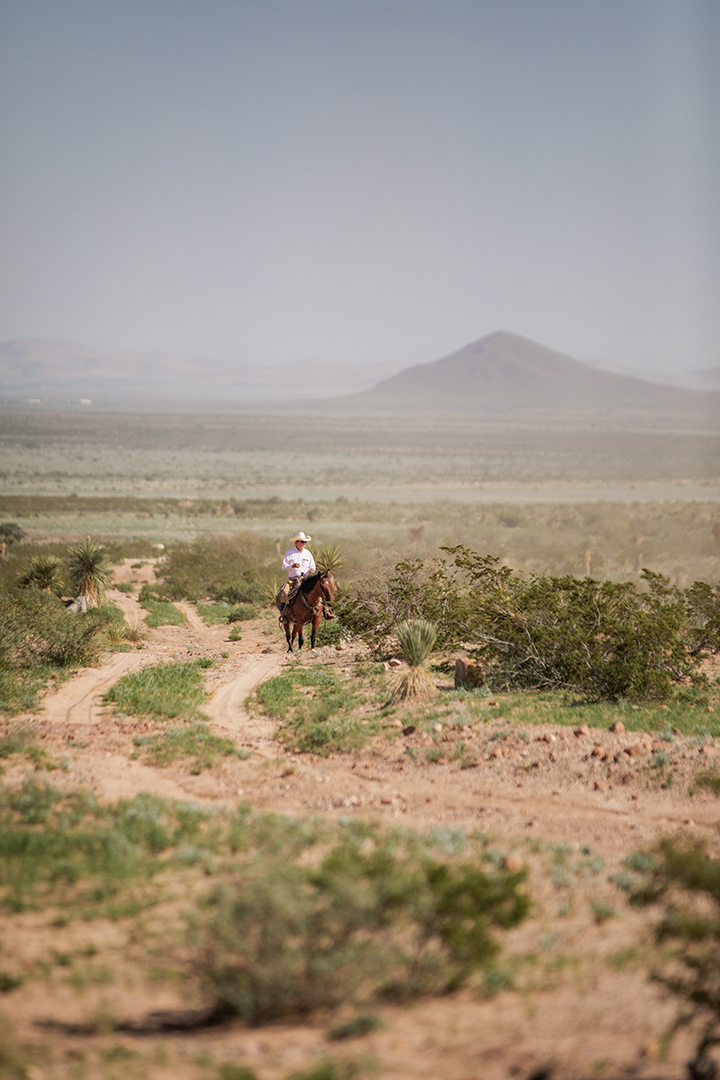
Gravel ranch roads wind through the wide-open space, bending around the Davis Mountains and leading to catch pens or camps housing ranch employees. To the naked eye, it all looks the same.
Framed plat maps line the walls of Jon’s office, but the self-proclaimed “map freak” doesn’t need them to describe the landscape or find his way. He knows the pastures like the back of his hand. He knows where and why the fence lines were drawn — shifted so a water tank could be shared with the neighboring Y-6 — or a property line bumped over to enable cows to access land on the other side of a mountain. Ranching revolves around the landscape.
Typically, the Means cow inventory is 1,200 head, but extreme and lengthy drought has thinned those numbers. They have managed to maintain most of a herd, a feat for the conditions. Jackie says, with their landscape and climate, running the ranch takes constant management and the diligence of “operating on the margins.”
Probably some faith, too, that they’ll get a good rain at the right time. While resilient in the face of drought, their 40 types of native grass still need some moisture to grow. Summer rains are the key.
Thirty to 40 years ago, the ranch would have an average annual rainfall of 10 inches. But Jackie cannot remember a year in the last 25 when they got that much. Multiyear stretches of drought have plagued the land, challenging natural resources like water and forages.
Rotational grazing and water conservation are necessities.
“We use every inch of this ranch as best we can,” Jackie says.
Jon says they’ve been deliberate with pasture use, careful to not overgraze and allowing time for the land to heal from extreme drought. A standard stocking rate is approximately 60 acres to one cow, but when necessary, they will supplement with range cake.
The Meanses don’t rely on groundwater for the cattle, and they’ve learned how to disperse what they have to water the herd. When Jon’s grandfather was growing up, the ranch (Y-6 and Moon Ranch, combined) only had six water wells. Today, the Moon Ranch has more than 150 miles of pipeline running water to troughs for cattle.
Over the years, windmills have been replaced with solar panels on all 22 wells. They have added covers to the water storage tanks, a conservation effort to prevent evaporation. In their own front yard, there’s no watering the grass. It’s artificial turf.
Their conservation efforts have expanded to include birds and wildlife, too.
By participating in various conservation programs, the Meanses have improved sustainability on the land. Nature didn’t establish any, but the couple planted multipurpose trees that offer shade for cattle and a habitat for birds. To keep the wildlife around, they feed the quail and deer.
Jackie says they want to make sure the land works for native wildlife, as well as for the cattle.
“How else would we use it?” Jon asks. “I think they go hand in hand; the land needs the cattle, and the cattle have to have the land to survive.”
Quality, no excuses
In the early 1960s, Jon’s father switched from the Hereford breed to Angus, one of the first ranchers to do so in their area. They have now been in the Angus business for 50 years, striving to breed hardy cattle that can handle the tough terrain. Their cattle must have good structure with sound feet and legs so they can travel long distances over the hills.
Through the years, Jon and Jackie have traveled the United States to find new genetics and expand their bull battery. In addition to phenotypic evaluation, Jon utilizes EPDs in his breeding decisions, looking closely at birth weight, fertility and carcass traits.
“We buy bulls that will work for us here first,” Jon says. “We’ve got to have a live calf and get that live calf to the feedyard.”
From sire to dam, fertility is critical. Jon diligently culls cows that do not breed back, and he pays close attention to the development of replacement females.
The Angus cow is dual-purpose, he says, placing value on mothering ability and terminal traits. To stay on the Means Ranch, cows must be thrifty, have nice udders and raise a calf that performs in the feedyard and on the rail.
After processing and weaning, they split steers and heifers. The steers are shipped to wheat pasture and the heifers are retained for replacements. At approximately 800 pounds, the steers are put on feed at Triangle H feedyard near Garden City, Kan. Typically, they retain ownership, but they will occasionally partner with the yard.
It’s the three P’s: predictability, performance and profitability.
“All of our cattle go through that program, and they do amazingly well,” Jon says. “We know what they’re going to do at the feedyard, and we know what they’re going to do hanging on the rail.”
They’re predictable. They show performance on feed. It all adds up to profitability. In recent years, Means Ranch Co. cattle have had a 53% Certified Angus Beef ® (CAB) acceptance rate, and 48% graded Prime.
“It always surprises us that our cattle can be as healthy, and big as they are, in a land that’s as arid as this,” Jackie says.
It’s a humble statement. Jon and Jackie do what it takes to raise high-quality cattle in a challenging environment — no excuses.
The definition of sustainable
What makes a ranch sustainable? To Jon, it’s simple: the same family, ranching on the same land, for the last 140 years. The Means family never could have done that without sustainability: responsible usage of water; caring for the land and its wildlife; and destocking their herd while the land recovers from drought.
Then building back with quality Angus genetics, geared toward grid premiums.
With Jon and Jackie at the helm, Means Ranch Co. has more than survived — it has thrived. For that, they earned the 2025 CAB Sustainability Award.
Editor’s note: Lindsay Graber-Runft is director of producer communications for CAB.


Topics: Association News , Award winner , Events , Feeder-Calf Marketing Guide , Management , Marketing , Ranch profile , Success Stories
Publication: Angus Beef Bulletin
Issue: November 2025
Related Content


Current Angus Beef Bulletin
Our November issue focuses on the females of the herd and the records that validate them.