



Feeder-Calf Marketing Guide
Raising The Steaks
The stocker segment is a chance to develop calves before feeding them out. Here’s why some cattle take the scenic route.
July 30, 2025
by Jayce Brandt
“Marbling is a lifelong event,” says AJ Tarpoff, associate professor and beef extension veterinarian at Kansas State University (K-State). “Everything that we do management-wise, every bump in the road, could potentially impact the final grade of a carcass.”
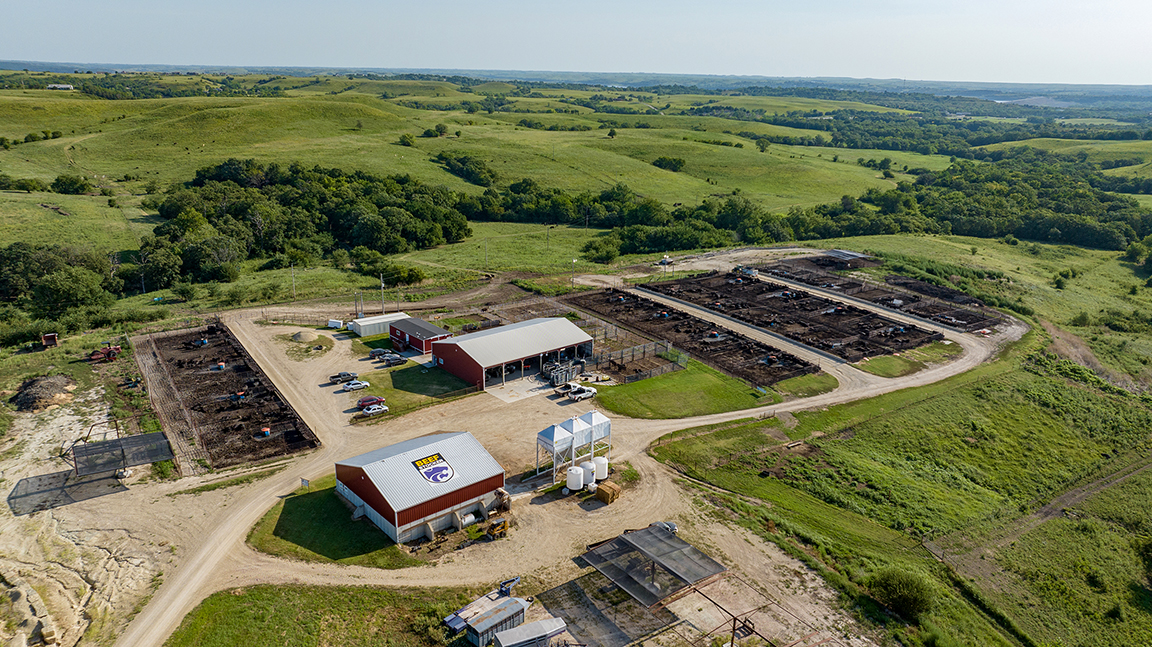
The KSU Beef Stocker Unit, currently grazing more than 500 head of Angus-Holstein cross calves, serves research and extension needs for students and producers.

He’s talking about the reality that genetics alone don’t produce a quality animal. Performance starts with genetic potential, and is then affected by each management choice or instance of sickness and stress. Producers can give their cattle a better chance, Tarpoff says, by turning them out after weaning in a stocker setting.
“To me, the stocker segment is one of the better ways to give animals the opportunity to reach their genetic merit,” Tarpoff says.
Yet, the stocker segment is not often talked about, says Troy Marshall, American Angus Association director of commercial industry relations. Understanding this phase of production could have great implications for the rest of the process.
Built-in buffer
“The stocker segment of our beef chain serves an immediate need for the management of calves postweaning, and I’m talking about nutritional development in preparation for entry into a feedyard,” says Dale Blasi, professor and extension specialist at K-State. He also serves as manager and director for the K-State Beef Stocker Unit.
Preparation for feedyards encapsulates the value of the stocker segment, which serves as a buffer between cow-calf herds and finishing yards. It allows time for the development of calves whose unfamiliarity with their new diet and underdeveloped immune system puts them at risk for disease and poor performance.
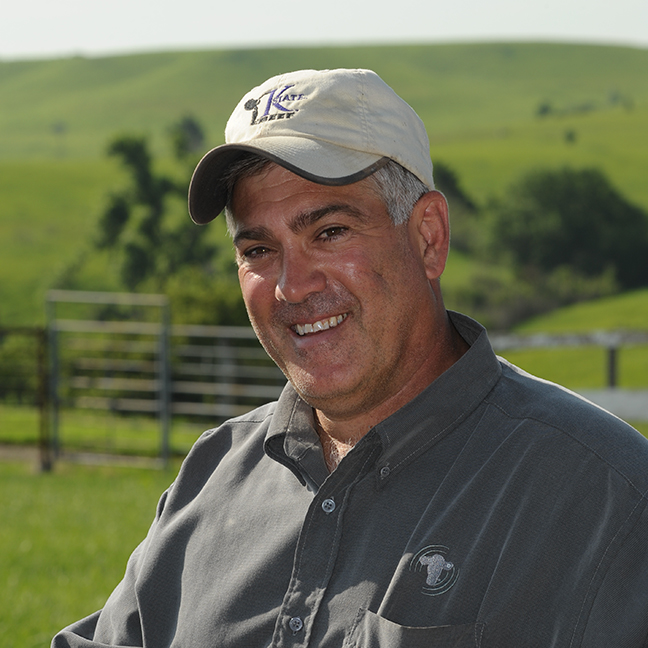
The stocker segment is fluid, says K-State’s Dale Blasi. “Its existence is owed to the dynamics of the purchase price of the calves, what feed costs are, and everything that a feedyard plans for the remainder of that calf’s life.”

“If calves have any designation of high risk ascribed to them, the stocker or backgrounding segment serves a role in getting those calves ready, getting them acquainted with the bunks and waterers, so that they can be loaded and directly moved into a feedyard environment,” Blasi says.
It’s also a stocker’s job to address problems unresolved by previous owners due to a lack of labor or facilities. Blasi gives the examples of calves that aren’t castrated or haven’t had their immunizations. These challenges are handled more efficiently in a stocker operation than at a feedyard, where a greater number of cattle means the labor density is more spread out, he says.
Stockers also allow for greater efficiency in the feedyard by grouping cattle into more uniform lots before selling.
“The typical stocker, they’re buying 5,000 head through the sale barn,” Marshall says. “They put them out on grass, grow them out, reduce the variation, then they sort those cattle up into uniform load lots when they go to sell them. So, they play a pretty vital role.”
As a result of this careful attention, calves can achieve what might sound too good to be true: more pounds for less money.
“The ideal end result is growing and developing that animal to a higher maturity and to reduce later days on feed, so we finish an animal at a cheaper rate and probably a heavier weight that marbles better than if we just would have put them straight into the feedlot,” Tarpoff says.
Many stocker operators have their hand in a cow-calf herd or feedyard, as well. In those cases, Tarpoff says, their backgrounding operation allows them to hold on to the genetics they’ve invested in for longer, gaining more value from them.
“I work with a number of folks that either background their own animals or use that as a custom business to be able to background cattle for others,” Tarpoff says. “Usually, they deal with more than one piece.”
This makes the stocker segment hard to track, as the number of operations in the country constantly changes. When the market or weather is unfavorable, they can simply choose not to have stocker cattle that year.
“It’s not like a stocker segment exists all the time,” Blasi explains. “Its existence is owed to the dynamics of the purchase price of the calves, what feed costs are, and everything that a feedyard plans for the remainder of that calf’s life.”
Ultimately, says Marshall, this buffer phase boils down to one goal.
“It’s mostly risk management,” he says. “It’s increasing your overall carcass weight, reducing your average cost of gain throughout the entire period by a percentage, which reduces your breakevens and, depending on the time of the year, gives you the ability to maybe target a more lucrative market.”
Beefing up calves
Wayne Carpenter, owner of Carpenter Cattle Co., Brewster, Kan., grazes stockers in the Flint Hills and a cow-calf herd of 1,300 cows in addition to his feeding operation, which is currently building up to a 20,000-head capacity. Every calf of his is backgrounded after weaning, and he prefers the rest of the cattle in his feeding operation are, as well.
“Turning them out just puts some age on them and builds frame, and they’ll come back in the yard and really perform,” Carpenter says.
Tarpoff also emphasizes the chance for cattle to grow in frame size at a less-hurried pace.
“The stocker scenario gives us an opportunity to effectively grow the frame of those animals, but maintain that normal growth curve as they develop, because we understand that marbling is the last [thing] that is deposited within that carcass,” says Tarpoff.
Some research suggests placing cattle on high-starch rations earlier in life can improve marbling, he acknowledges. However, he says, those calves finish at a lighter weight, which, depending on the market, may be a negative trade-off.
“You still have to sell pounds,” Carpenter says. “Pounds still pay the bills, so you have to have some growth. You have to have some size on them.”
In addition to weight, the stocker segment gives calves time to grow in maturity, which Tarpoff calls the “maximum benefit” of backgrounding.
“It’s a slower development, reducing stress, letting the immune system catch up with the productivity of that animal to ultimately allow that animal to reach that maturity and maximum marbling without any undue stress,” Tarpoff says. “We’re giving them the opportunity, with time, to grow larger carcasses.”
Preventing for pennies
For Carpenter, perhaps more important than pounds is preventative medicine. He heavily prefers cattle that have been through a good vaccination and mineral program. The risk of losing profit on cattle with weaker immune systems is just high.
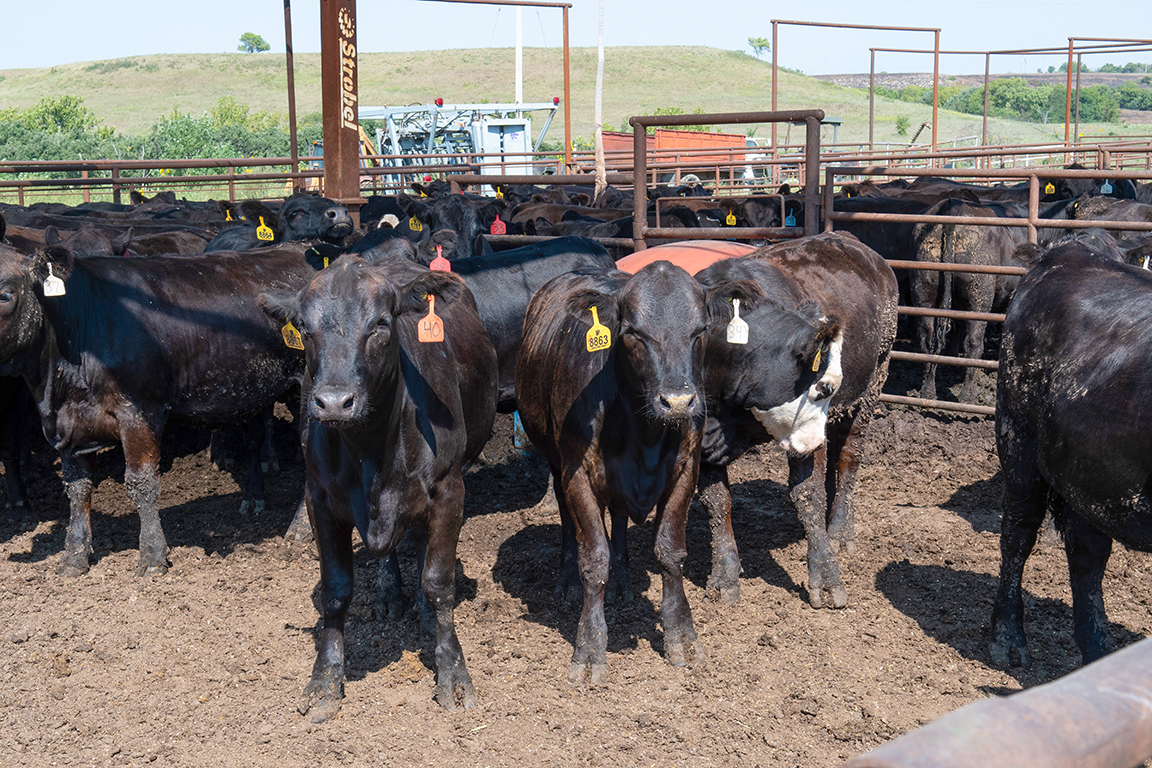
“Utilizing the stocker phase is an economic decision,” says K-State’s AJ Tarpoff. “There are periods of time when the cost of gain is such that sending directly to the feedlot and reducing overall days of production is the best call.”

“I’ve always said, you can prevent it for pennies, instead of trying to cure it for dollars,” Carpenter says. “Once you doctor one, your profit’s probably already gone. They’ll never perform normally. If you can buy vaccinated cattle off the ranches, it just pays back dividends.”
Allowing time for immune systems to mature is important to their ability to marble later on, says Tarpoff. “If we can strengthen the immune system before we send it to the next phase of production, we can give them the opportunity to reach that genetic potential.”
When it’s time for harvesting, Carpenter uses his carcass scores as a “report card” for the rest of his business. He says it has reinforced the importance of intentionally managing the health of his animals.
“If you’ve got health, it’ll show up all the way through the feeding period performance, and even how they hang up,” Carpenter says. “If you have a problem pen, you’ll see it in the carcass results. So health is huge.”
Stocker staycation
Feedyards function best at full capacity, Blasi says. Having pens spoken for while there are still calves finishing up their normal feeding period brings costs down and achieves optimum labor and equipment utilization. Unfortunately, this is difficult to achieve year-round.
“We still calve somewhere upwards of 70% of our cattle in a three-month window in the spring,” Marshall says.
This creates what Blasi sees as a true seasonal need for the stocker segment. At times such as the fall, when the market is saturated with animals, feedyards may not want them immediately.
“Feedyards are like hotels,” Blasi says. “They ideally would like to be booked out six to eight months in advance. All this forward planning is a function of how you can get calves locked in, and that brings us back to the stocker.”
Turning calves out as stockers allows a yard to reserve them to begin feeding at a better time. For this reason, many feedyards graze cattle in their own stocker operations, which Marshall estimates make up 40%-45% of all backgrounded cattle.
“They’re getting them staged, if you will, at various feed facilities in the surrounding perimeter of a yard, to where they can pull them in when calves are naturally marketed,” Blasi says.
The stocker phase provides flexibility for cow-calf producers, as well, offering them a “safety valve” against drought and moisture levels while retaining their investment in the genetics of their herd, Marshall says. They can choose to background all, some or none of their calves.
One size doesn’t fit all
Feedlots may prefer every animal to be backgrounded, but that doesn’t mean it’s a realistic option for every producer. The decision to run stocker calves or not comes back to where it always does: the market.
“Utilizing the stocker phase is an economic decision,” Tarpoff says. “There are periods of time when the cost of gain is such that sending [cattle] directly to the feedlot and reducing overall days of production is the best call.”

Zach Debord, then a graduate student, now working for Purina, helps process stocker calves at the KSU Beef Stocker Unit.

According to Tarpoff, there are two sides to this decision: health and weight. Different groups of calves are at varying levels of risk for illnesses like bovine respiratory disease (BRD). If one group’s risk is higher, the decision to stocker them can be made to improve their immune function before sending them to finishing.
“An example of this could be a group of calves that are otherwise healthy, but endured a long, harsh winter or came out of a drought-stricken region,” Tarpoff says.
The other consideration is frame size.
“Larger-framed animals can be effectively grown at a cheaper rate through a stocker phase than at the feedlot,” Tarpoff says. “Small-framed calves may not need that cheaper gain and may be ready for the feedlot at an earlier time.”
One tool available for Angus producers is the Genetic Merit ScorecardSM, which is designed to let producers know where they rank within the industry.
“Knowing the genetics you have and how they will perform gives you better predictions to make better decisions on when is the best time to market those cattle,” Marshall says.
The Scorecard also communicates that potential performance to buyers, according to Marshall, who says it “provides an objective way to describe your cattle so buyers can actually start to differentiate those cattle.”
Ultimately, making the right decision becomes possible with a clear understanding of the whole picture.
“It is always important to look at all opportunities available before making decisions,” Tarpoff says. “Just because it worked last year doesn’t mean it’s the best economic decision this year.”
Editor’s note: Jayce Brandt is a freelance writer and farm kid from Stafford, Kan.
Topics: Feeder-Calf Marketing Guide , Management , Marketing
Publication: Angus Beef Bulletin
Related Content


Current Angus Beef Bulletin
Our November issue focuses on the females of the herd and the records that validate them.