Feeder-Calf Marketing Guide
A Candid Conversation
Building a strong relationship with your local auction barn can bolster existing marketing plans.
July 31, 2025
An auctioneer’s chant rings through the barn as the sounds of laughter and conversation drift in the periodic silences. The background noise of livestock and the smells are unmistakable. If attendees are really lucky, the occasional whiff of a locally famous burger or chicken-fried steak wafts through the barn, enticing attendees in for a glass of iced tea or a hot cup of coffee.
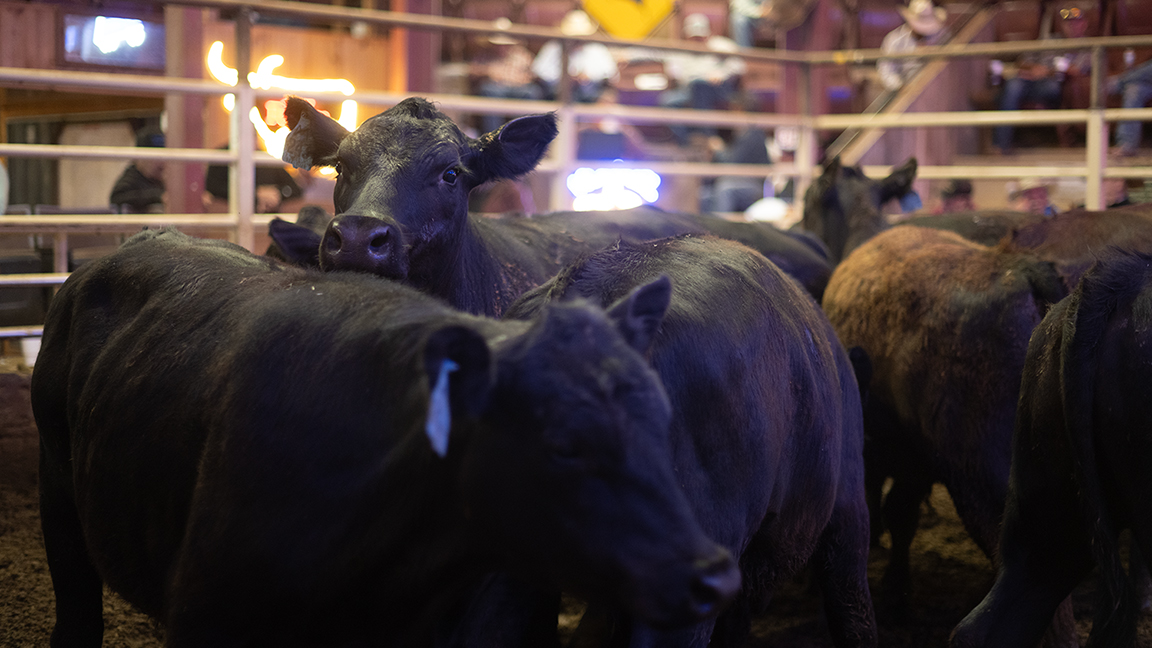
“The market is at an all-time high. We’ve sold probably 1,500 head for over $3,000 apiece at our barn,” says Jeff Slatten, owner of Beaver County Stockyards in Beaver, Okla.

No matter the location, the sounds and smells of a sale barn are uniquely entwined with the memories and relationships built in those stadium seats. According to American Farm Bureau Federation data, 69% of the cattle marketed in 2017 were sold through an auction barn. With those statistics, there’s a fair chance many cattlemen may recall days spent much like the one described — whether well in the past or much more recent.
While cattle quality has certainly increased and livestock markets have worked to create strong outlets for their customers, the question remains: What can cattlemen be doing to build a stronger relationship with their sale barn and increase the overall value of their marketed cattle? The answer: Success could come down to something as simple as opening a better line of communication.
Where the market stands
It should come as no surprise to readers that the cattle market is still high. Regardless of geography or the class of cattle being marketed, cattlemen are receiving prices previously unheard of in auction barns across the United States.
“Everybody knows this market is just unbelievable. Historic. None of us have ever seen cattle this high,” remarks Jim Akers, COO for the Blue Grass Livestock Marketing Network, noting that the large backgrounding industry in Kentucky is still purchasing calves to put back. “The big question on all producers’ minds is ‘How long is it going to last?’ Nobody knows the answer to that question, but the market is [currently] extremely good.”
Founded in 1946 and operating in seven physical locations across the state of Kentucky, Blue Grass historically sells 400,000-500,000 head of cattle per year. While Kentucky has a dense concentration of purebred producers, the typical customer looking to market cattle at Blue Grass is a commercial cow-calf operator with an average herd size of 28 head.
“The small producer is our bread and butter. Now, obviously we don’t sell half a million cattle a year and not deal with big producers, too,” explains Akers. “Our biggest customers would be 500-600 cows, but there are very few of those. A lot of customers fall in the 50- to 150-cow range.”
When the last cattle cycle really tanked, it tanked hard. As older producers exited the business and surviving operations culled underperforming or older animals, the quality of cattle went up — not because the top end got all that much better, but the bottom end of cattle were sent to market. Whether you’re a small cattleman or a large producer marketing semi loads, there is a sale barn willing to help you develop your marketing plan to capitalize on the current climate.
“The market is at an all-time high. We’ve sold probably 1,500 head for over $3,000 apiece at our barn,” says Jeff Slatten, owner of Beaver County Stockyards of Beaver, Okla. “As far as what our average producer looks like, we serve everyone, but we’re looking to attract larger producers to our barn in the future. We’ve had smaller herds for a long time because they haven’t had enough to put a load together. But as we continue to grow, we need to start getting the bigger producers here, too. There’s no other scene quite like a live market auction with buyers in the seats.”
Digital EXTRAs
- Listen to “A Sale Barn Perspective” with the Beaver Stockyards team.
- Listen to “Market Update” with Troy Marshall.
- Listen to “How Bull Selection Affects Your Feeder-Calf Prices” with Brian Bertelsen.
Purchased in 2013 by two local producers, Slatten and Jerald Radcliff, Beaver County Stockyards serves Oklahoma, Kansas, Texas and Colorado. In 2024 Beaver County sold 200,000 head through its single facility located in a town of less than 1,300 residents. In 2025, Slatten says, he expects to see 230,000 head run through the ring at Beaver, thanks to the relationships being built with local — and sometimes not-so-local — cattlemen.
Lines of communication
Imagine this: After putting in months of hard work, investing in enviable genetics and checking all the boxes when it comes to herd health, you surprise your local barn by dropping off calves they couldn’t properly market to their buyers ahead of time. Not the ideal situation.
While many local auction barns will go out of their way to ensure the success of their customers, proper planning can build strong professional relationships that enable auction employees to tell the story of an operation and truly market their cattle.
“Communication is probably the most frustrating piece of the business, because there’s nothing more disheartening than to sell a set of calves for a customer and they tell you that they didn’t quite get what their neighbor did. But [that seller] also didn’t tell us anything,” Akers explains, noting that having a story and management records can add value. “If they didn’t give you a story and the neighbor did, [that story] made the difference. What kind of genetics have they got? How [have the cattle] been managed? What’s the herd health program? That’s what sells calves on the high end.”
Involving everyone in your marketing plan from the very beginning sets up a solid foundation for selling cattle months or years down the road. While Blue Grass hopes to have a solid connection well in advance, the week leading up to selling those cattle is crunch time. For smaller producers, having a sale barn marketing your cattle with other similar groups of calves can yield favorable results when it comes to building load lots of like calves.
“Knowing we’ve got a particular set of calves coming gives us an opportunity to have more cattle there that day that fit our buyers. When we can tell the buyers, ‘You can put together a load of these today,’ they will be more aggressive and help those smaller producers increase value,” says Akers, noting that for organized groups of cooperating producers Blue Grass will put on commingled sales where calves are grouped into load lots. “Calves on a similar health program, sired by bulls from the same breeder and managed with the same guidelines have a higher level of consistency. Because of that, we can commingle those cattle and put together larger loads. Our customers have benefited from [this method] in a big way.”
The cattle business is smaller than it often appears. Remaining anonymous in our business could be a pro or con, but reputations are developed one way or another. Whether by how we treat others or how our cattle perform, reputation is something that has to be carefully cultivated.
Slatten has a spreadsheet he refers to when asked to compare the effect different management styles can have on cattle performance.
“One of my customers bought two loads of cattle that were weaned. They had been backgrounded. Let’s say they cost $2,000 per head. I think they weighed 620 pounds (lb.) and cost $3.00 per pound,” Slatten recalls. “That same day, another friend bought a whole bunch of cattle that weren’t weaned and hadn’t had any shots. Those calves ran $1,600 per head. The cattle that were weaned and had all the shots gained over 3 lb. per day, and he did not lose any of them. Their net profit was over $400 per head higher than the cattle that had all the health problems.”
Path to success
Success often directly correlates with communication, but reputation is just as critical to success.
“The way I describe it to customers is this: Every calf that goes into a feedlot is going to have a few things done to it before it hits a pen. It’s going to be castrated. It’s going to be dehorned. It’s going to have two rounds of vaccines. It’s going to be dewormed,” Akers rattles off. “The more of those things that you’re willing to do ahead of time, [those] are the very things that are going to make your calf more valuable to the person that’s buying. That’s one more thing [buyers] don’t have to do, while also minimizing the stress those animals experience in the marketing and transportation process.”
Cattlemen who are not giving two rounds of shots have calves that are probably bringing too much money, remarks Slatten, before adding that scenario needs to change.
“If you’re going to put the effort in, we’re going to try our hardest to reward you,” assures Slatten. “If not, we can’t reward you anymore and nobody else is going to, either. This is not the only sale barn that’s going to be this way, this just may be the only one willing to tell you the hard truth.”
Those numbers might be a little hard to stomach for some. According to Slatten, if a six-weight animal brings $3.00 per lb., that animal will gross $1,800. If a backgrounder or feeder is paying 10% interest on that animal, you can add an additional $120 to their breakeven cost. Cattle that don’t have any vaccinations see average losses of 6% from Slatten’s experience.
“I don’t care who’s taking care of those cattle from September through December. You will have a 6% death loss, and you’re going to have 4% that just aren’t any good,” Slatten says. “Right off the top, you’ve got 20% more in those unvaccinated animals.
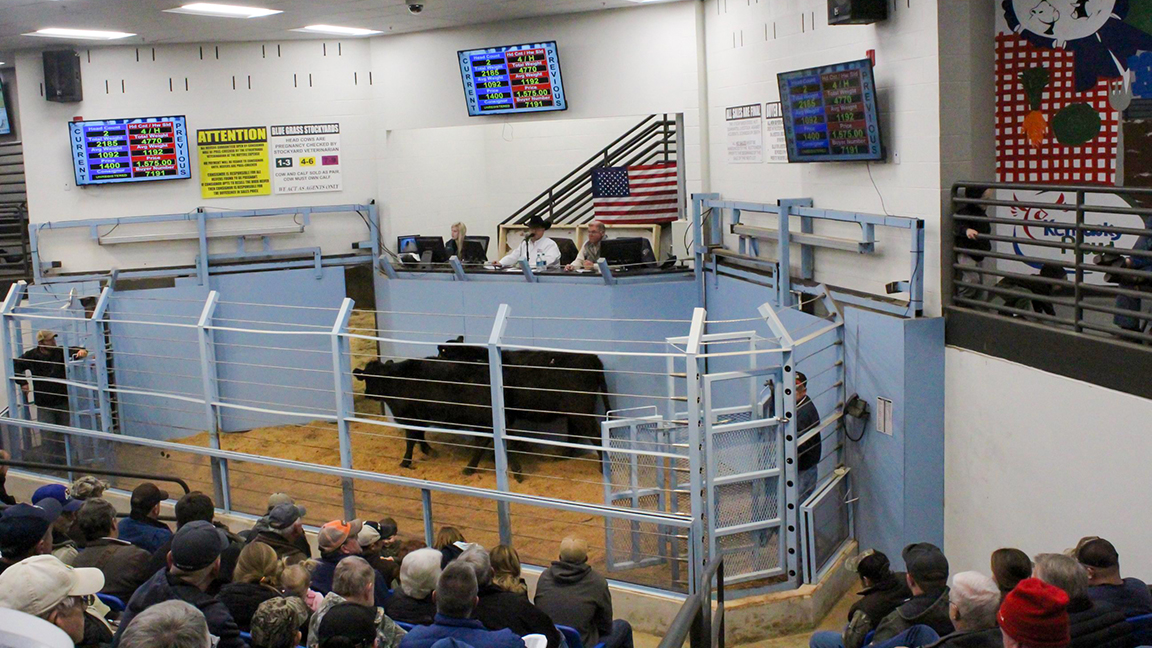
Customers who consistently put the most dollars in their pocket are customers who have invested in quality genetics, says Jim Akers.

“If you do the work before you get here, we’re going to work our butts off to make sure your cattle bring what they should,” he continues. “If you don’t do the work, I’m not sure we can help you as much as you’d like. We can’t be responsible for lack of institutional control at your place.”
On a brighter note, the customers who consistently put the most dollars in their pocket are the customers who have invested in quality genetics, says Akers. Those producers may not be buying $10,000 bulls, but they are buying $5,000-$7,000 bulls consistently.
Producers who consistently top the market are also typically weaning and backgrounding their calves for 60-100 days, he says. As a result, those cattlemen are coming to town with a 700-lb. steer instead of a 400-lb. steer.
Those calves are straightened up. They know how to eat, they know how to drink out of a waterer, and they’re ready to go to work for somebody in the feedyard. Those are the customers who consistently put the most dollars in their pocket, says Akers, with one caveat: There’s also a fine balance between getting those extra pounds, but also understanding that you’ve got to market a calf with condition that can go to work for the next person.
“We sell a draft of animals every 30 seconds through our barns. I’ve got two minutes to do business with that average cow-calf customer, and it’s their whole year. That’s why that communication, that relationship is so vital,” stresses Akers. “When I see his name pop up on the board and I see him in the crowd, it’s important to point him out. If I’m not in the sale ring, I’m going to go sit with that customer while his calves sell. Your story? That relationship? That is what sells the cattle.”
Topics: Feeder-Calf Marketing Guide , Marketing
Publication: Angus Beef Bulletin
Related Content


Current Angus Beef Bulletin
Our November issue focuses on the females of the herd and the records that validate them.