




Keeping the Family AND the Ranch
Donnell and Tucker Brown talk genetics, generational transfer and going viral.
April 28, 2026
From selling 50 bulls for an average of $750 apiece to today’s three-day sale event, the R.A. Brown Ranch has evolved over the years.
An 1895 ranch document details “selling a boatload of two-year-old grass-finished steers to Cuba,” said Donnell Brown, the fifth generation now at the helm. He and his oldest son, Tucker, recently joined The Angus Conversation to talk about the history and current day direction.
A lot has changed in the last 130 years, but one thing that hasn’t changed: the importance of working together as a family to help other families stay profitable.
“Through all the generations of our business, we’ve had diversification, and I think that’s really important and beneficial to our business,” Donnell says. “We’ve always had seedstock cattle as well as commercial cattle, and the commercial cattle help us validate the genetics of our seedstock cattle.”
Today both of Donnell and Kelli’s sons are back on the operation, adding to the equine and cattle enterprises in their own way.
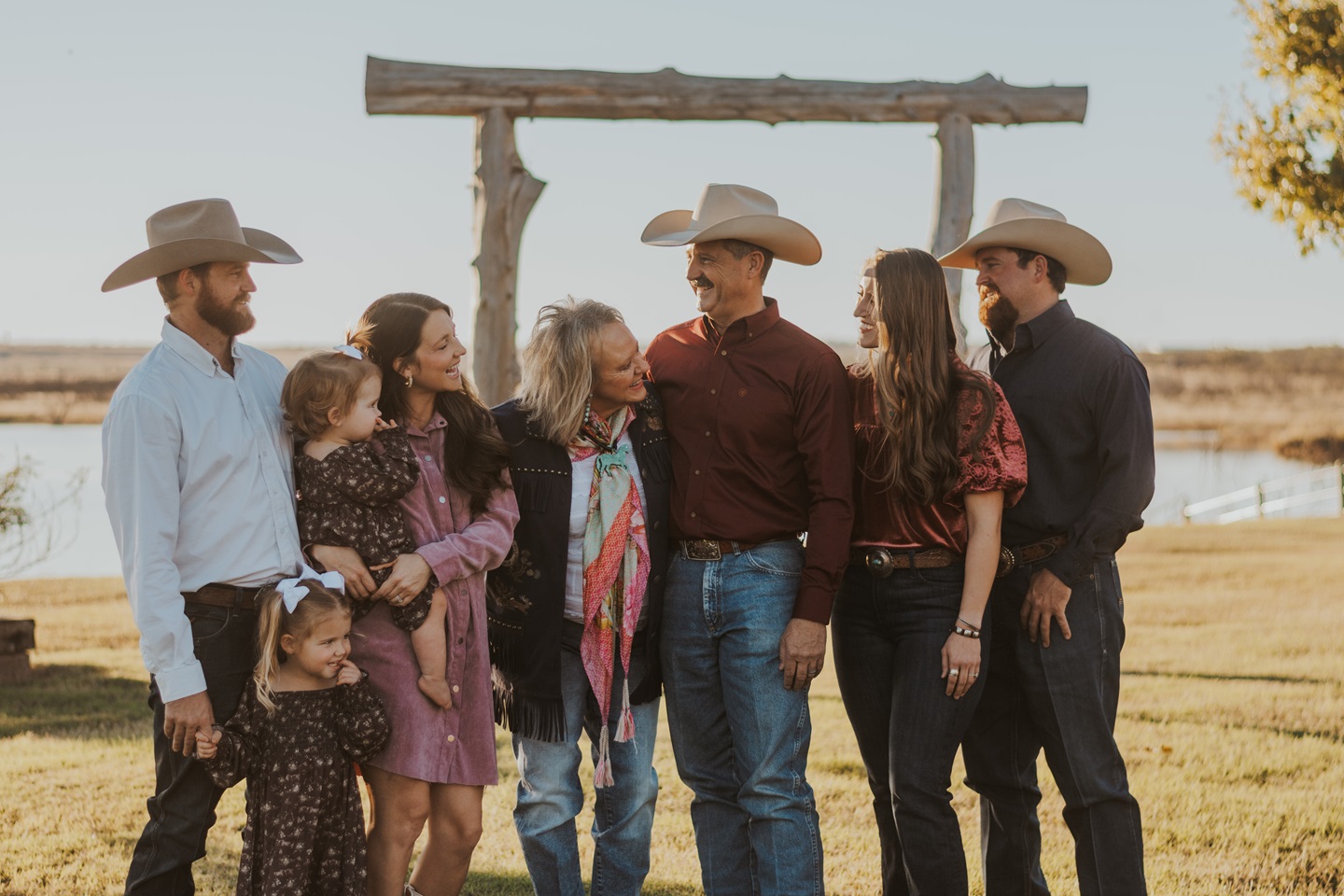

Tucker is the self-proclaimed ranch storyteller. Marrying his communication interests with a needed advocacy role, he shares ranch life with those inside and outside the ag industry.
“The best part is all I have to tell is the truth and show what I do every day,” he says. “And it’s been shown just over and over again that when the truth is told agriculture wins.”
The full episode takes a deep dive into their family’s approach to estate planning.
“We all know so many families who have had to sell half the ranch just to pay the estate tax, and that makes it really hard to keep that ranch in the family and the family and the ranch,” Donnell says. “Our family for generations has been very purposeful and intentional in working to do whatever could be done to avoid as much taxation as possible using available tools.”
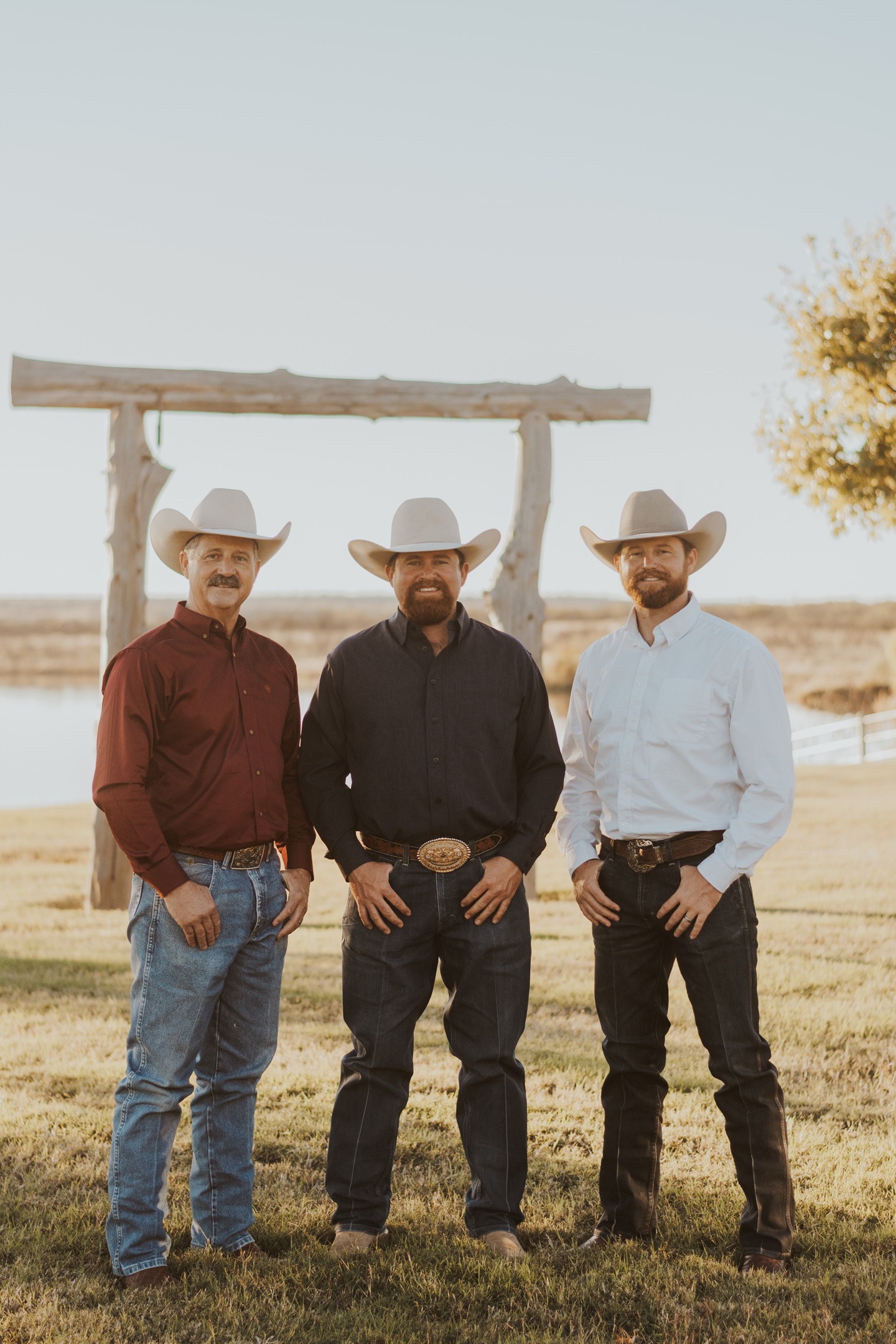

We all know so many families who have had to sell half the ranch just to pay the estate tax, and that makes it really hard to keep that ranch in the family and the family and the ranch. Our family for generations has been very purposeful and intentional in working to do whatever could be done to avoid as much taxation as possible using available tools.” — Donnell Brown
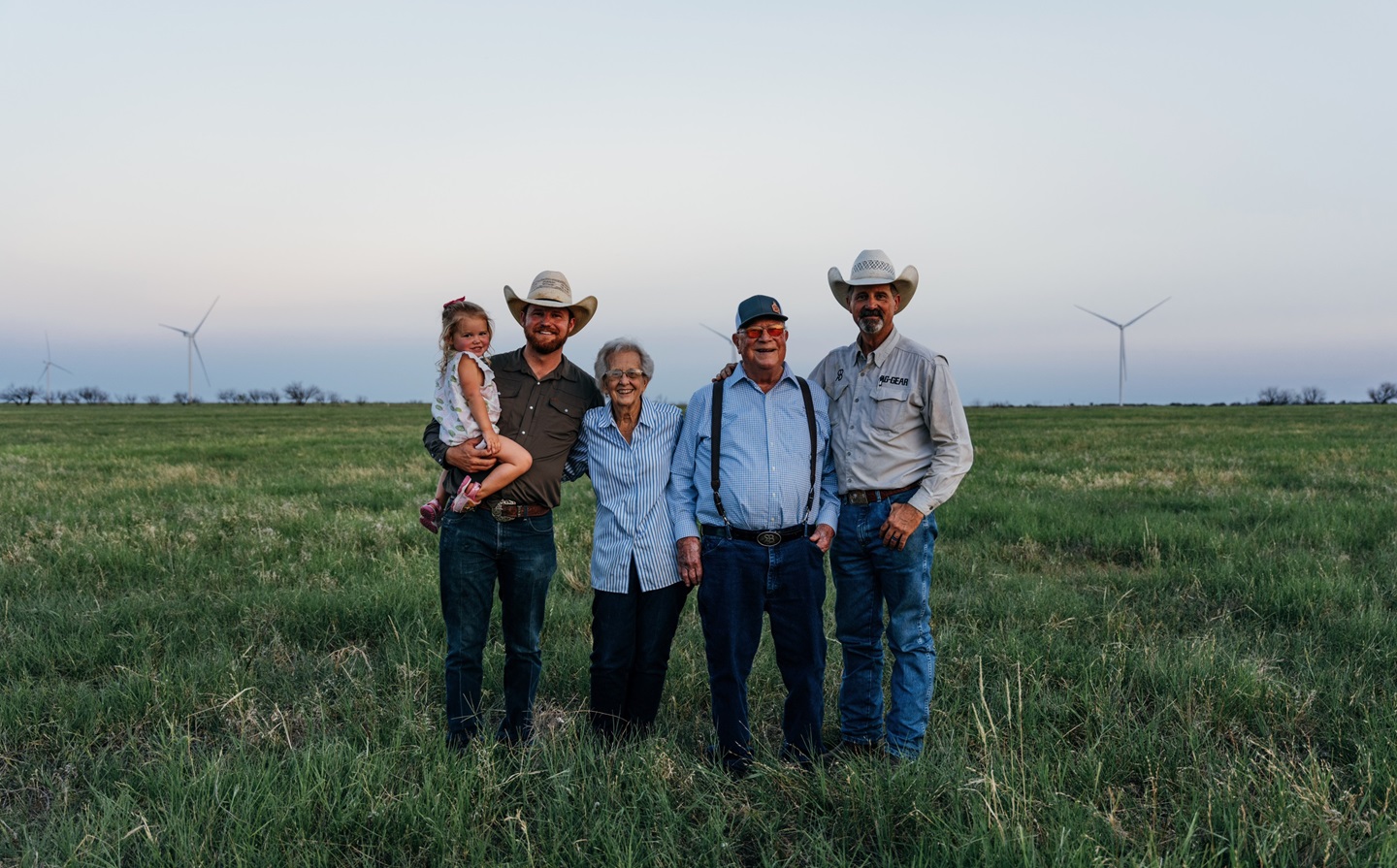

They also emphasized communication, and when they divided their parents’ ranch four ways, they came to a unanimous agreement.
“I think some of the keys are that our parents taught us four things: they taught us to work, they taught us to earn, they taught us to save and they taught us to invest wisely,” Donnell says, noting from an early age they also encouraged them to work together.
That’s now being passed on to the next generation. Tucker says it’s part of the reason he opted to make his career at the ranch when he started his own family, even though that wasn’t the original plan. The more Tucker thought of the life his parents gave him on the ranch, the more he felt called to come home.
“I was like, man, I would be a fool to not give my children the same opportunity to instill those same things in them,” he said.
EPISODE NAME: Keeping the Family AND the Ranch: Donnell and Tucker Brown Talk Genetics, Generational Transfer and Going Viral
The Brown family has always been growth-minded and goal-oriented, but each generation has left their own mark on the historic R.A. Brown Ranch. This episode covers a lot of ground, including how they think about cattle and horse breeding, ways they help their customers make use of all the data available, and why building a community matters to them. Take a deep dive into their family’s approach to estate planning and find out more behind Tucker Brown’s passion for “telling the truth” about ranching.
HOSTS: Miranda Reiman and Mark McCully
GUEST: Donnell and Tucker Brown
Donnell Brown and his wife Kelli are the fifth generation to own and manage the R.A. Brown Ranch in Throckmorton, Texas, a family business since 1895. They raise registered Angus, Red Angus and SimAngus cattle and sell 800 bulls in addition to 250 registered females and 1,200 commercial females in their annual auctions in March and October. They built a supply chain to help their customers earn more profits called Rancher’s Sustainable Angus Alliance.
Donnell and his wife Kelli both served as National FFA Presidents. They areblessed with two sons, Tucker and Lanham, that have joined them back in their family ranching business with their wivesand children. Together Donnell and Kelli are living their dream of raising cows, kids, grandkids and Quarter Horses.
Tucker Brown is a sixth generation rancher at the R.A. Brown Ranch in Throckmorton, Texas, where he and his family develop and sell 800 registered bulls a year. After graduating from Lubbock Christian University and Texas Christian University Ranch Management School, he returned home to do what he loves — working alongside his family. Through social media, he’s been able to share the truth about American ranching in a way that’s both educational and entertaining. He has earned 850,000 followers online, earning him the NCBA Beef Advocate of the Year Award and even a feature in Vanity Fair Expert Reviews.
Today Tucker and his wife, Karley, are raising the seventh generation of the R.A. Brown Ranch, working to keep the ranch in the family and the family in the ranch, while also making sure the world knows the real story of agriculture.
SPONSOR:
Angus Media: In the cattle business, print isn't dead. Your customers still enjoy the feel of a magazine in their hand. 98% of the Angus Journal's readers find it easier to recall ads they see in print publications. Be one of the names potential customers remember. Contact your regional manager to reserve your spot today.
Angus Media: A web address is just as important as a farm address. Angus Media can make establishing your online presence easy. We host more than 300 breeder websites each year, providing weekly EPD updates straight from the American Angus Association’s database. Follow this link to learn more.
RELATED READING:
Miranda Reiman (00:00:02):
Welcome to the Angus Conversation. I'm your host, Miranda Reiman with my co-host, CEO of the American Angus Association, Mark McCully. And Mark, as we think about news out of St. Joseph this week, we've got some exciting news if you're a user of our app.
Mark McCully (00:00:18):
Yeah. The Angus Mobile app went to a, I think many would know a couple years ago, we did a very, very significant remodel of angus.org, our website, of course. The Angus mobile app, which I know is something that a lot of our members use for both their, put calving records in, but also to keep up on news and events and sales and sale reports. That was built on pretty old technology and it was time, it had not had an overhaul in a while. And so the new app came out here this week, got rolled out. And I know the team really built it with the idea that, very, very familiar in terms of where things are at. And it's not going to feel probably a whole lot different, but just a lot of upgrades in terms of usability. And I think members are going to really like it.
Miranda Reiman (00:01:09):
That's right. I think that's the key is we didn't move everything around, but it looks a lot better. You should have some more visual.
Mark McCully (00:01:16):
I said, I want those buttons down at the bottom in the same way and I can rearrange them and that's all the case. That's all the case.
Miranda Reiman (00:01:23):
Absolutely. But the team did work hard on it and it's kind of fun to have it kind of match the look and the feel. So if you're going between the app and the website, hopefully things feel the same and you kind of know where you're supposed to go.
Mark McCully (00:01:37):
Yeah. And maybe not everybody knows we have a mobile app. So if you don't, go on out to the app store and search for Angus Mobile and download it and give it a whirl.
Miranda Reiman (00:01:48):
Absolutely. And of course, give us feedback too. If there's things that you want to see improved, let us know and we'll keep those and try to work on them. So speaking of continuous improvement and trying to work on bettering yourself, our guests today are definitely an example of that. We are headed down to Throckmorton, Texas. And Mark, after the podcast we got to talking. I've never been there, so I'm going to find a reason to go sometime, especially to their sale that sounds like a lot of fun. But we went to the RA Brown Ranch virtually here, but you first visited there probably 20 years ago.
Mark McCully (00:02:27):
Or more.
Miranda Reiman (00:02:27):
More. More.
Mark McCully (00:02:29):
Yeah, more. It was in my pre-CAB life when I was working for, at the time, Southern States Cooperative. And we had a bull financing program, a genetics financing program that we were working with producers. And I was actually working all the way over in Texas with the Northeast Texas Beef Improvement Organization. And we started working with the RA Brown Ranch. And so my first visit, a couple several visits were there to Throckmorton, buying bulls for guys and got to know just my ... That's really where I kind of got my first introduction to Donnell Brown and Kelly and the family there. And so it was fun. Of course, I've kept up over the years and we visit a lot and it was fun to get him and his son Tucker on the podcast to have a really, really good discussion about what they're doing and what's all going on in Throckmorton.
Miranda Reiman (00:03:26):
I think you're really going to enjoy this one because there were lots of just really good nuggets of wisdom, but then also, it's not just philosophy. There's a lot of good practical things you can take back if you've got aspirations of transferring your ranch between generations, or if you really are working on customer education and trying to help them understand the data, I think you'll get both the philosophy side of it and also good practical things you can take away.
Mark McCully (00:03:53):
In order if you want to become more of an advocate, Tucker's going to give some lessons.
Miranda Reiman (00:03:57):
Absolutely. So lots of variety in this one. I think you'll really enjoy it. Well, today on the podcast, we are headed virtually down to Texas where we have from the RA Brown Ranch at Throckmorton, Texas, both Donnell and Tucker Brown. And I guess we'll kind of let you guys ... Your story probably doesn't need a lot of introduction, but really a nationally recognized program, both with cattle and horses and started 19 ... Or excuse me, 1895. You've got the fifth and sixth generations there on the ranch, and of course, raise Angus, Red Angus, SimAngus™. And I think, Mark, you added this into it, developed the Hotlander™ hybrid back in the '80s. You're going to have to explain that one to me. That predates me. So thanks for joining us today, guys.
Donnell Brown (00:04:50):
Absolutely. We're glad to be here. Thank you for having us on.
Mark McCully (00:04:53):
Donnell, why don't you start out a little with your story? Maybe your roots all the way back and where you come from, but I think also unique, a national FFA president and your wife, Kelly, maybe also a national FFA president. That's got to be ... I don't know that's happened ever.
Miranda Reiman (00:05:08):
That's what we call a power couple.
Mark McCully (00:05:10):
Wow. You're homozygous FFA, Tucker.
Donnell Brown (00:05:16):
And the funny thing was a lot of people listening today will know Kevin Ochsner from Cattlemen to Cattlemen on RFD TV. Kevin and my wife, Kelli, were national FFA officers together. And when he came to our wedding, he had a one-page flyer made up for FFA embryos with EPDs for public speaking and leadership. Oh, it was hilarious. We've had a lot of fun ever since.
Miranda Reiman (00:05:42):
Yeah. That's great. I love that.
Donnell Brown (00:05:44):
But yes, so Kelli grew up in Nebraska. I grew up here in Throckmorton, Texas. Yes. Our oldest record of having Angus cattle was back in 1895. And our document that we have is selling a boatload of 2-year-old grass-finished steers to Cuba in 1895.
Miranda Reiman (00:06:07):
Yeah. Like a literal boatload.
Donnell Brown (00:06:09):
Absolutely.
Miranda Reiman (00:06:09):
I wasn't computing that.
Donnell Brown (00:06:12):
That is the official document we have from the 1890s. And so we've been doing it, but we've got a fair amount of experience and I'm thankful to be the fifth generation. Worked for 57 years, 56 years with both of my parents and now with both of our sons and love what we do in raising and selling seedstock cattle.
Miranda Reiman (00:06:41):
And so you were a Texas Tech grad and came right back to the ranch immediately following graduation?
Donnell Brown (00:06:47):
I did. I took a couple of years out during college and traveled all over the state as a state FFA officer and then took a year and traveled across the nation and around the world as national FFA president, just like my wife did two years previous to me. And so we've built some amazing relationships around the globe and around the country and are so thankful for that experience. But yes, came back to the ranch, kind of jumped in as the low man on the totem pole, but in charge of genetics because in 1983, I was in junior high when the first EPDs came out and my dad put me in charge of selecting sires and making matings when I was merely about a 14-year-old.
Miranda Reiman (00:07:29):
Wow. Wow, that's impressive. And I guess that's probably a nod into the, I can't leave your introduction without also mentioning how involved you've been in the Beef Improvement Federation, serving on the board, president, Continuous Service award member, I think in 2020. So I guess that's been a long-held interest in that side of the business.
Donnell Brown (00:07:52):
Genetics are an absolute passion of mine. Dr. Ronnie Green was my advisor in college. He was right out of University of Nebraska with his PhD and a long-storied history in genetics and animal breeding. He taught me how to use selection indexes back in the early '90s before any breed associations came out with them. So yeah, just an absolute passion for data, for genetic management, for planned matings and making the best cattle that we can.
Miranda Reiman (00:08:26):
Good. And of course, sitting right there to your right would be Tucker. So you mentioned sons back on the ranch. Tucker, it's your older brother that came back first, and then you've followed in his footsteps, I guess.
Tucker Brown (00:08:40):
Other way.
Miranda Reiman (00:08:41):
Other way. You're the oldest?
Tucker Brown (00:08:43):
I'm the oldest.
Miranda Reiman (00:08:44):
Oh gosh, I screwed it up.
Tucker Brown (00:08:45):
Yeah. So I would've come home first and then Lanham came back. We came back in different ways. Kind of the Brown rule is that you have to leave for two years after you graduate high school
(00:08:57):
And you can do anything. Go into the service, go to workforce, go to school. And I went to school. And then whenever I moved back, you have to come back in one of two ways. One, if there's a job available and you're the man or the gal for the job, or number two, if you brought back a business plan to grow the ranch to be able to pay for another family. And so I kind of did a combination of the both, which it's kind of made us a family of entrepreneurs and also not afraid to fail because most of the time the first thing you bring back, it kind of fails. We do a lot of things besides cattle and horses, but those two things are really where our hearts like to be.
Mark McCully (00:09:34):
Now, Tucker, you pursued a wildlife biology degree. Did I read that correctly?
Tucker Brown (00:09:39):
Yes. I went to a school that wasn't necessarily an ag school. I loved basketball and wanted to play a little bit of it, but fell in love with the school. After playing basketball for a year, I ended up staying at the school at Lubbock Christian and graduating from there. And I did love the wildlife side. That was something that I brought back to the ranch and wanted to grow. And I found out that I liked hunting more than I liked guiding hunting. Not that it failed, but-
Mark McCully (00:10:08):
I think guiding pays better than just hunting itself.
Tucker Brown (00:10:12):
Yeah, exactly. So it's something I still do today, but I don't necessarily do as much guiding as I used to.
Mark McCully (00:10:20):
Gotcha. Well, I did notice on your website, you guys, I love your titles that you've given yourself or someone has given you. I think Donnell, you're head honcho, I think Kelli is the keeper or the caretaker of the head honcho, I think was maybe what I read. But Tucker, yours was manager of wild animals and storyteller as your title.That's fantastic.
Tucker Brown (00:10:41):
Yeah. Whenever people ask my job description and I put that, it really doesn't answer any questions. It just brings up a lot more.
Miranda Reiman (00:10:48):
That's kind of the point sometimes though, isn't it?
Tucker Brown (00:10:50):
Yeah, true.
Miranda Reiman (00:10:52):
And of course you're married and have three daughters that are back on there that you're raising on the ranch as well.
Tucker Brown (00:10:58):
Yes. I met my wife in college and she's a farmer's daughter from the Texas Panhandle. And now we have three girls, my oldest being 5, and 5, 3 and 1. And man, it's awesome having the seventh generation on the ranch and my oldest old enough to finally be able to use the gate opener. My wife got me about five years ago, how I put it. So she's old enough to be able to come along with me and jump in. And it's cool to watch her love it as much as I do. Yeah.
Miranda Reiman (00:11:27):
Well, I have to say that you have good choice in picking out names. I saw the names of your daughters, and of course I have seven kids, six daughters, and two of your names match up with two of my daughters. So we've got a Brooklyn and Lila, so yep.
Tucker Brown (00:11:41):
Nice.
Miranda Reiman (00:11:41):
Yeah, love it. Good choices. Yeah. Obviously, I can't leave your introduction without mentioning that you've also got accolades of your own there with the National Cattlemen's Beef Association, naming you Advocate of the Year here a couple years ago. So definitely ... Yeah, go ahead.
Tucker Brown (00:11:58):
Yeah, that was an absolute honor and something, I'm glad that NCBA is doing something like that, just showing the importance of advocating for our industry. And that's really what got me into doing the social media that I do today. And I guess I've done it for almost five years now and grown a following of 850,000 and man, just sharing what I do on the ranch. And that's the best part is all I have to tell is the truth and show what I do every day. And it's been shown just over and over again that when the truth is told, agriculture wins. And I just like being a part of telling the truth. And I have the best job in the world of being able to share what I do. Everybody loves to talk about their cows. I just get to talk about them to a whole lot of people.
(00:12:48):
So it's the best.
Miranda Reiman (00:12:50):
Yeah, that's so cool.
Mark McCully (00:12:52):
We're thankful you do. And I mean, we're going to get into that a little later because I think that is such a great, one, kudos for what you're doing in the industry. Thank you for what you're doing. But I think you've really reached out there and I think would be absolutely considered an influencer. And man, that's how you got there in such a short period of time. I think what you just got done saying it's about being authentic and being real, but it's a fantastic story. So very cool. We'll get to it a little later.
Miranda Reiman (00:13:22):
Yeah, absolutely.
Mark McCully (00:13:23):
Maybe as we get going, as you said, I think on the front end, Miranda, I think most people know R.A. Brown Ranch, but maybe as you guys would talk about your ranch today, maybe just describe what you're doing there today and what your goals are, what you aspire to be.
Donnell Brown (00:13:40):
Sure, absolutely. I will tell you as far as what we aspire to be, I set some goals when I was in my early 20s to produce the most efficient beef cattle in the entire world that have superior flavor.That was in the early '90s when I set that goal and still an absolute passion of mine. We've got more tools to evaluate efficiency of feed conversion and efficiency of fertility and reproduction than we've ever had before. And I think it's just the tip of the iceberg of what's to come. But yeah, with that, we're learning so much more and I'm all about marbling. I mean, to me, money's in the marbling, Prime is where the premiums are. And I don't know of any downside. I don't know of any negative correlation to more marbling. Now, we may find one someday, but it is one of the few traits where I think maximizing has no downside benefit, where a lot of traits have a point of diminishing return or a sweet spot, I think we just continue to make better beef.
(00:14:51):
It's obvious with what Certified Angus Beef has done and what we've done through the Angus breed to make better cattle from a beef quality standpoint and marbling and flavor and juiciness and tenderness all through that focus has shown in today's world of selling cattle and beef at higher prices than ever before, it validates that the quality is the driver and so very important. But I think it also, that's not at no cost, right? I mean, we've tried some Japanese genetics as well with tremendous marbling, but they couldn't hold a candle to the efficiency and the growth and the performance of our Angus cattle of both colors. So that's what we're doing. We've been selling, this will be our 52nd annual sale. We have two sales a year in October and in March, always on the second Wednesday. And all in all, we sell a little over 800 registered bulls per year, and then we sell a lot of registered females and about 1,200 to 1,500 commercial bred females as well.
(00:16:02):
Primarily in those two auctions, that's where we sell nearly everything and we're able to focus those energies on that. We've been doing, every cow in the ranch gets bred AI or embryo transfer, has been since 1993. And we started doing artificial insemination the year I was born in 1969. So now we do breed two to three rounds of AI and embryo transfer and then turn out a follow-up bull. We don't use cleanup bulls because cleanup's what you do after you have a mess and we don't... So we use follow-up bulls.
Mark McCully (00:16:36):
Natural service. There you go.
Donnell Brown (00:16:37):
That's right. To get about the last 15% of the pregnancies made. But that's our strategy.
Miranda Reiman (00:16:44):
And you also sell horses at those sales as well, or at least at the spring sale.
Donnell Brown (00:16:49):
That is exactly right. So my grandfather was one of the original founders of the American Quarter Horse Association. R.A. Brown was his name. And then my dad served on the board after my grandfather passed away and was served as president in 1997, worked really hard in the five years he was on the executive committee to get EPDs and horses. Got a lot of research done for EPDs for different traits for horses, got it to the convention in 1997, and it got laid on the table and has not resurfaced since. Now, there's more and more talk about having genetic predictions in horses as of late and DNA testing as well. I think it's coming. And I can't imagine where we would be in horses today if we had EPDs since '97, like we are in cattle. I mean, they're such awesome tools to help us identify what is heritable to the next generation.
(00:17:48):
So that's what I love. My wife and our youngest son, Lanham, Kelli and Lanham love the horse side. They're doing awesome with our horse business. Yeah, we have a weanling sale with our October sale and we sell riding horses in our March sale and have a big one full day of horse, well, a day or a day and a half of horse events and competitions along with our March sale. So yeah, it's a combination of the two. And people really love it because they love to see us riding those really good horses and there's a lot of crossover. I mean, we have horse guys that buy bulls, we have bull guys that buy horses, and it really brings us synergy because that's one of the things we want. At our auctions, we want them to be more than an auction. We strive to produce an event, an event where people come to enjoy, to see people, to interact, exchange ideas, to be entertained, to see things they don't get to see every day.
(00:18:43):
And I will tell you, Kelli Brown, my wife has worked really hard to make that happen and hats off to her for that.
Mark McCully (00:18:50):
That's awesome. And such a unique perspective there. And at a time when it seems like more and more things are going online there, I talk to breeders. Do we even need to put the bulls through the ring anymore? Do we just video everything? I think one of the common things I hear is if we make this too easy to do merchandising and marketing of our animals without coming together in an event like what you're creating, maybe it's a slippery slope. And I think what you've been doing for a long time is being very intentional about that event and remembering this is a people business and people like to do business with people, right?
Donnell Brown (00:19:33):
Absolutely. I mean, at our March sale, we serve 2,300 free meals. And I mean, we don't have that many people, but we serve three meals a day for three days.
(00:19:43):
We had two days of horse events and then the cattle sale on Wednesday. So we develop a great following. We want people to come whether they plan or need or want to buy anything or not because it is that fellowship. It's like going to the Angus Convention. I'm not going to buy cattle. I'm going to be involved in the leadership and the decision making, but also to connect with other breeders, exchange ideas. And that's what we want our sale to be. Hey, I love the online platforms to be able to buy and sell cattle. And they are very important to our business. But yeah, one of the ways we have differentiated is having that event where people want to come.
Miranda Reiman (00:20:24):
Absolutely. Let's hold that thought for just a minute as we hear from Angus Media.
Speaker 1 (00:20:31):
In the cattle business, print isn't dead. Your customers still enjoy the feel of a magazine in their hand. 98% of the Angus Journal's readers find it easier to recall ads they see in print publications. Be one of the names potential customers remember. Call 816-383-5200, or contact your regional manager to reserve your spot today.
Miranda Reiman (00:20:59):
So you don't just get to two big sales a year and marketing that number of cattle overnight. Talk a little bit about some of those pivotal moments in your ranch history all along.
Donnell Brown (00:21:11):
Oh, sure. Yeah. I remember our very first sale in 1974. I was 5 years old. We sold, I think, 50 bulls and yeah, I think they averaged $750. So we have grown a lot since then, but it has been neat. Through all the generations of our business, we've had diversification, and I think that's really important and beneficial to our business. We've always had seedstock cattle as well as commercial cattle, and the commercial cattle help us validate the genetics of our seedstock cattle. We've always had equine. In the 1895, the letter said horses, mules, and polled Angus bulls. That was R.A. Brown and Son in 1895.
(00:22:01):
And we've also had farming enterprise. And so all four of those. Now, as the families have come back, Tucker with the wildlife side, Lanham is really growing the horse side of the business. We've gotten into ... Through my siblings and our generation, our parents gave us the same challenge that when you graduate from high school, you can go do whatever you want to do, but you're going to pay for it. And so we'll give you all the work you want to do, and we're going to encourage you to earn scholarships and work. And we all worked our way through school, and we all had that same possibility that Tucker talked about, come back and grow the business or work as an employee or some combination of the two. So it's helped us grow in a variety of stocker cattle and feedlot cattle. We developed a Rancher's Renaissance Alliance back in 1997. That was a 200,000-head supply chain.
(00:22:53):
And now we're doing that again. Just launched a year ago, our Ranchers Sustainable Angus Alliance, where again, we're striving to put together a supply chain of 200,000 head of cattle annually, spread throughout the year and go to retail with that beef. So those take a lot of work and a lot of effort, but it has been intentional to have that diversity.
Mark McCully (00:23:18):
Talk about 2013, as I think about your timeline here in recent, when Donnell, your mom and dad decided to transition. I think one of the things transitioning, talking about six, seventh generations, it's just so cool. Keeping the ranch in the family and the family in the ranch, right? All those things that you guys talk about and have really stayed intentional about. Talk about that. How did that happen? Maybe just talk about maybe just some of the key insights as you went through that transition, because I know so many of our listeners, that's a goal of theirs, is to be able to either have the, whether they're the next generation looking to inherit or the generation looking to make that handoff. What were some of the key learnings and insights or advice you have as you've gone through those?
Donnell Brown (00:24:08):
Generational transfer is so important in agriculture because if we have land, it's a wonderful asset and a wonderful blessing. Dividing up that land, dividing up the assets is tough both from a taxation standpoint. And thankfully, our current administration is helping us reduce that tax burden, yet when the other side gets in, they're going to try to get as much of it as they can. And we all know so many families that have had to sell half the ranch just to pay the estate tax, and that makes it really hard to keep that ranch in the family and the family in the ranch. I will say our family for generations has been very purposeful and intentional in working to do whatever could be done to avoid as much taxation as possible using available tools. And so we've worked with accountants to help us to try to find those ways to keep that.
(00:25:10):
Part of that is giving a little bit of the ranch away every year. That's what my parents did. We used a tool, but hey, before I go there, let me go back a couple of more generations in that my great-grandmother, she willed her portion of the ranch, what we had at that point in time. It's grown through the generations, but she willed her portion of the ranch three generations. So it went to her son and my grandfather and my parents through their lifetime before it came to us, they had a living estate, but never owned the ranch.
(00:25:52):
It was theirs to use, but therefore there was no taxation because they never owned the ranch. It was willed to our generation, which was a huge tax savings and we're very thankful. But my parents worked very aggressively starting back in the early '80s by giving away a little bit of the ranch every year, as much as they could without taxation. We would sign an agreement every year as the kids to say, OK, yes, our parents, we're accepting this gift, but we realized that mom and dad are still in charge, it's their ranch, we don't have decision-making powers and we don't expect any financial return from this. And that way they were able to keep running the business as it was. Now, thankfully they did pay enough dividend to pay for the taxes, the land taxes, the property taxes, so we didn't have an out-of-pocket expense, but by the time we got to 2012, they had over 90% of the ranch given away to the four of us in my generation.
(00:26:53):
And in that fall of 2012, my dad came to us and said, "All right, we're going to divide up the ranch." Now, Mark and Miranda, the picture that came to my mind was that we were going to get on the table, the map of the property and pencil-draw some lines of what we might get someday. But Mom and Dad said, "Nope, we are going to divide this ranch up. You guys, it's going to be yours to do with and manage each of you independently however you want to do it." So there's four of us in our generation. So there's four of y'all, all raised under the same roof with the same set of rules. There are 17 in the next generation.
(00:27:36):
And raised in their four different households eating meals around four different tables and we feel like it's best for ... Because God made each of us different. We think it's important to let you go and do what y'all feel called to do with your portion of the ranch. And we were like, "Wow, what an amazing gift." And they're like, "Yep, we have lived our dream and we're ready while we're enjoying good health. We want to watch you guys live your dream and see what you do with your kids." And man, such a blessing, that was over 13 years ago that that happened.
(00:28:17):
Well, and then my dad said, "Okay, oldest one, I think you should get X. And next one, I think you should get ... " And that's when my mom put her foot down and said, "Whoa, wait just a minute, Rob Brown. We're not going to do it that way. Then we're going to give this ranch to these kids. Let's let them decide who gets what. " And like any wise man, he said, "Yes, ma'am." And so they said, "Y'all can meet wherever you want to meet, just not at our house. Y'all meet away from us. We will be able to meet with any of you independently if you want help, advice, just somebody to bounce ideas off of." But I'm going to tell you, my mom, she bathed those meetings in prayer, like wearing out the holes in the knees of her jeans. And it was such a blessing.
(00:29:08):
We all got together and we agreed to divide up the property into four equal parts based on value. And because some parts of the property had more houses and buildings and facilities and others had more farm ground and so on, not all of them were worth the same per acre, but we came up over several months of meeting together as siblings, with four equal parts. We didn't get anybody to come help us valuate those or anything. We just, the four of us worked together and worked it out to where we compromised here and there and said, "OK, that's close enough, with the litmus test that we could number all four of those one through four, put numbers in a hat and draw out and be satisfied with whichever one of those four that we got."
Miranda Reiman (00:29:55):
That's why you actually did it? You actually drew out of a hat?
Donnell Brown (00:29:58):
We drew the lines that way. And then when we got done, then my older brother said, "Well, is there anybody have a certain thing that you want? " And my oldest sister said, "Yes, actually I'd like to have this part of the ranch." And our other sister said, "Yes," she would like this part of the ranch. And my brother said, "Well, I sure don't want that part of the ranch that you probably want, Donnell. I want that other one." And I got left with the headquarters that had all of the seedstock facilities and horse facilities on it. I got fewer acres, but ended up with the same value as my siblings. And it was just an absolute blessing how it all worked out. Yeah.
Mark McCully (00:30:35):
That's cool. And I appreciate, I probably asked that question getting into your business more than I should have asked, but I think I appreciate, I've heard you share some of that in the past. And I think just one, a testament to your family and a testament to the power of prayer and how important that planning and the work that was done on the front end, because without that, we might be having a different conversation today. Absolutely. Just thank you for sharing that. And I think I know our listeners will sure value it and learn from it most certainly.
Donnell Brown (00:31:10):
Well, glad to share because we want others ... We're not saying that's the only ... It's obviously not the only way to do it. It is a way to do it. But I will tell you, I think some of the keys is that our parents taught us four things. They taught us to work, they taught us to earn, they taught us to save, and they taught us to invest wisely. They also taught us to work together. My sister and I, we were closest in age at Marianne and our show calves. She owned half of mine and I owned half of hers. And that way we were incentivized to work together. And what we did with our boys growing up, when we would cook a big old sirloin steak, one of them got to cut it in half, the other one got to pick which half we wanted.
(00:31:59):
It was just incentivized to work together through the generations.
Miranda Reiman (00:32:03):
That's cool. Tucker, how much did that, watching that example and seeing how they did it factor into your comfort level and coming back to a family operation?
Tucker Brown (00:32:13):
Oh, well, I thought that's how all family operations did it. I thought that exactly just like that. But yeah, the older I've gotten to be able to meet more friends and have also those friends that lost their place because it didn't go so well has made me way more thankful of the way that my grandparents really lined it up and set it out and that each of our family members was willing to give up a little for it to work.
Miranda Reiman (00:32:41):
Yeah, absolutely.
Tucker Brown (00:32:42):
Knowing that's kind of instilled in us and is what also made me come back to the ranch because it wasn't exactly my plan when I left. When I left for college, I didn't have the plan to come back and move to Throckmorton. But as I started to get closer to the end of college and realizing exactly what was going on and what had happened and what the opportunity is and where did I see myself in five years with this pretty girl from the Panhandle that I loved. And I was like, man, I would be a fool to not give my children the same opportunity to instill those same things in them. So yeah, just that whole thing, did I learn it in 2013? No. And I don't think I've learned the whole thing yet, but I definitely have grown much more appreciative and interested in how that works. And also being willing to share how ours worked because not a lot of that's shared. And so I don't know, it makes it weird to talk about. The conversation you're kind of having is, so what do I do when you die? Nobody really wants to talk about that. But then whenever the whole family has that goal of passing it down, that conversation becomes much easier to have.
Donnell Brown (00:34:00):
And I think once you start the conversation, that seems to be the hardest part. So what I encourage families to do is start that conversation. And what worked well for us was on road trips where we were away from home, we weren't distracted by other things going on in our normal daily lives, and we were confined to the vehicle. And those create some pretty ... I can just ... So many of the great memories I have with my dad were road trips.
Miranda Reiman (00:34:32):
Yeah, that's a great point. Not distracted.
Mark McCully (00:34:35):
So Tucker, coming back, what advice do you have for the next generation that are coming back home, maybe sometimes with some big ideas of things you'd like to do different? How do you approach those ideas? Or you said earlier, you have a culture of some entrepreneurialship around there, so it's probably maybe naturally cultivated, but maybe in some places it's not. So what advice do you have for a young person coming back in with some big ideas and wanting to change?
Tucker Brown (00:35:06):
Yeah, that's difficult. I think our family does a really good job of taking the emotion out of our decisions and really using data. Like you've heard how much my dad loves data talking about it, looking at it, using it. And the way Peggy would say, keep the ranch in the family, family in the ranch, our decisions are made through that. And with looking through those binoculars, and when we can take the emotion out of that, it makes it really easy. It's like, here's the data, here's what it says, and this is why. And so that's been ... I mean, I'm so thankful for dad and my mom being willing to throw me enough rope to ... Whether it works or whether I hurt myself a little bit along the way. But yeah, for the next generation, whenever you can come back with a plan and some proof, and I think that's really where it can change.
(00:36:00):
I've also never been a guy to tell Tom Brady where to throw the football. So I really do appreciate and respect those who are above me, and I love sharing those ideas. Dad's a brainstormer and he likes to pull that out of people and out of other family members and out of me, but putting it into practice I think can be difficult for the next generation, but having the proof and the data behind it, I think make that way easier rather than an emotional tie to whatever decision that is.
Miranda Reiman (00:36:37):
Sure.
Mark McCully (00:36:38):
Great advice. So
Miranda Reiman (00:36:39):
When did you shift from ... You said it wasn't your plan for coming back, but when did you shift from it was just the family ranch to it's your responsibility?
Tucker Brown (00:36:52):
Gosh, good question. I remember when ... I mean, really it was probably whenever I had my first daughter is whenever that thought came about because then it was less about me getting the ranch and it became more about her having the opportunity to have the ranch. So that's whenever I was like, oh, I need to be treating this thing like it's mine because
Miranda Reiman (00:37:17):
... Because it's hers.
Tucker Brown (00:37:19):
Because it's hers. Right, right.That's the first time that I can really think of. I'd love to say that right when I got home, I was thinking that it was mine, but I'm new to the place, and it's mom and dad's, and running it like they want to. But that's when ... Yeah, I can remember bringing Rayley home and then having her out on the ranch and I was like, oh shoot.
Mark McCully (00:37:42):
Those darn children, they have a way of kind of putting things in a little different perspective or focus sometimes, don't they?
Tucker Brown (00:37:50):
Yes, they do.
Miranda Reiman (00:37:53):
This quick break is sponsored by Angus Media.
Speaker 2 (00:37:56):
A web address is just as important as a farm address. Angus Media can make establishing your online presence easy. We host more than 300 breeder websites each year. Our team provides weekly EPD updates straight from the American Angus Association's database to your site, and we're the only ones who can. Visit angusmedia.org or call us at 816-383-5200 to get started today.
Miranda Reiman (00:38:28):
Donnell, for you, was it harder to learn to let go or to know when to step in?
Donnell Brown (00:38:35):
Wow, Miranda, what a great question. It's definitely both, right? And there are ... I mean, one of the beautiful things is that Tucker has different goals than Lanham, our other son, and both of those, even though we have a lot of alignment on the core values and principles, we have different passions, different gifts that really drive us. So I think it's what makes our team really strong because man, Lanham's doing a great job with the horses. He's won several really big events and they're doing a wonderful job with the breeding program, and Tucker's doing an amazing job on social media and just really advocating for the industry because that's where his heart is. And I like how he's got a gift of ... I'm going to steal his term and share it. He calls it edutainment.
(00:39:30):
He's entertaining, but educating at the same time. And I think all of that has created an awesome synergy. But yeah, it's a balancing act. It was a balancing act in my generation as well and working with my siblings. But I will tell you now, our siblings, we get along better. I've seen all four of them this week. We talk and we work closer. We've always been close and we work closer now than ever before. Even though now the ranch is divided up into four parts and we're each doing our own thing, it's wonderful. But it does allow us to use our gifts and our calling.
Miranda Reiman (00:40:08):
Absolutely. Yeah.
Mark McCully (00:40:09):
Congratulations on that because I think that's, again, a testament of what was modeled in generations before that you learned from. I mean, I sadly, I talked to some folks that are 80 years old, just still concerned about handing over the reins to Junior who's 64, and you've had that modeled through all of the generations. And again, I appreciate you sharing that perspective. And maybe we turn the page here a little bit, because I know there's people tuned into this wanting to get into the brains of you guys of how you're thinking about, this is The Angus Conversation, but just breeding cattle in general. So maybe talk about how you would ... I know you use the slogan, "Cows that stay, and steers that pay." So I think about that. You've done a very, very nice job branding. And with that, I assume that pretty well encapsulates how you go about breeding cattle.
(00:41:03):
Maybe go another shovel or two deeper as you think about the breeding philosophy or what you want people to understand about the breeding philosophy of the ranch.
Donnell Brown (00:41:10):
Absolutely. Yes. Our mantra is cows that stay and steers that pay, and that's cattle that do all things well. Our number one goal is to improve the profitability and the sustainability of our customers in the business. So we want to do that with our genetics as well as our service. So as I look at it genetically, I just want what our customers want because I've found it's a whole lot easier to sell what the customer wants to buy than it is for us to just try to sell what I like to raise. And I will tell you, we have produced 17 different breeds and breed combinations in my lifetime on this ranch. We are constantly in research mode. We are focused right now on both colors of Angus and both colors of SimAngus, and they work extremely well. And we have been blending both colors of Angus together for 28 years, and those cattle are amazing.
(00:42:08):
So we are all about producing the best cattle that we can, and that has changed somewhat through the years as the market changes. And so we had a lot of Simmental cattle in the early '70s. My dad was president, one of the the early day presidents of the American Simmental Association. Membership number 79, still one of the oldest active memberships in the country today. But man, we've made them better by blending them with Angus, and those cattle are outstanding. As we go to, as SizeR® comes into play and reevaluating the yield grade equation and a more accurate method, I think we may see a drive to need to increase red meat yield, both within the Angus population and potentially with plant crossbreeding systems to bring in more muscle, more red meat yield. We've got the calving ease, the growth, the marbling. But man, I tell you what, one of the things I love about Red Angus cattle, for example, is the fertility and the longevity bred into those cattle.
(00:43:15):
And when we blend that with the amazing job that the Angus cattle and breeders have done to develop cattle that are born easily, grow fast and hang up an amazing carcass, we're able to blend all those traits together into one beast, and we're loving that. I think it's really good. I was really impressed when the Angus Association, gosh, Mark, when was that three years ago, made it to where any of these red cattle from a red heritage, as long as we got them to a homozygous black state, that we could bring them in just like any other homozygous black animal from a foreign Angus registry like Canadian Angus or Scottish Angus or Australian. And so we're bringing those cattle in. But yeah, our goal has been to make cattle that make our customers money. And Angus, as I look at the market today, we're a 75-year low in cattle numbers and cow numbers.
(00:44:16):
And because of that, we have grown these cattle in mature size a lot in an effort to make more beef per head. Well, the challenge with that is having cows that still fit the environmental resources that we have and making sure that our cows don't outproduce the given amount of resources we have to run them on. And those trades are more highly heritable than the fertility and longevity traits that we have, but we have focused on those as our niche because it's easy to produce high-growth cattle that have great carcass. Those are more highly heritable traits. The harder part, the thing that takes a lot longer to develop is cattle with functional longevity that lasts, combined with those other traits that we love. So we've decided to say, "Hey, let's get what we call a Goldilocks cow, not too big, not too small, but just right so that she fits our environment and to produce the most valuable calf possible."
Mark McCully (00:45:19):
You mentioned earlier, produce what the customer wants. Do you ever find yourself conflicted when what the customer wants is not what you think they need and when ...
Donnell Brown (00:45:29):
Yeah.That's the balancing act for sure because we've got to have enough leadership and foresight to see what's coming to produce what the market, what we're forecasting and believe the market is telling us that we need with what that customer wants. And so I try not to tell people what they need as much as provide for them what they want in a package that also has extras that are going to help them get to where they need, even if they're not looking that far down the road.
Miranda Reiman (00:46:08):
You're like the sneak in the cottage cheese into the scrambled eggs to get more protein.
Donnell Brown (00:46:12):
There you go. That's it. That's right. Good. Good word picture.
Mark McCully (00:46:17):
When I think and watch what you've done over the decades, Donald, I also think about just you've also done a lot of education with your customers and you are a self-proclaimed, your program is about data and numbers, but then helping your customers understand those. And maybe even talk a little about you've got a color coding system, and I always assume that is part of education, but then also maybe helping deliver a pathway that helps that customer with exactly what they need and help them find what they need without maybe you just helping you do a little bit of extra guidance in education along the way.
Donnell Brown (00:46:56):
Oh, Mark, absolutely. My grandkids call me Grandpa EPD. So I love EPDs, but there's such a mountain of information out there today. What we've tried to do is boil that information down and summarize it and present it in a way that makes it really easy to the people that may only look at EPDs once or twice a year when they're buying bulls. And so we started with a star rating system for calving ease, used to do growth and carcass. I combined those now into a feeder calf value because yeah, we sell them by the pound, but the price per pound is based on what they're going to do as feeder calves in the feedyard efficiency as well as carcass value, and then a maternal or a cow herd traits, and then an overall, like our $C is giving us that all purpose combination number of stars, customers love that.
(00:47:55):
But here just in the last couple of years, I have made public a color coding scheme that I've been working on for over 30 years. And let me tell you where part of that came from. So my dad, most people don't know, but my dad battled dyslexia. When he was a very young child, kids called him dumb because he struggled to read. But his second grade teacher who was just fresh out of college said, "Rob, I know you're not dumb, but there's something that's keeping you from reading." And when he was my age, in his 50s, he was watching a television show and about dyslexia and how using different colored lenses on your glasses or different colored overlays over what you're reading could really clear up the words and make it easy for people with dyslexia to read. And my dad got different... And so if you see pictures of my dad, he's got a yellow-amberish tent of glasses, and that's why. He began to devour books and loved reading after that point. We all have challenges. We all have things that we could be better at, or thorns in the flesh, or challenges; but those colors really helped make my dad transition his life.
(00:49:23):
I'll tell you, he was the first Brown to graduate from college, but the only reason he was able to graduate from college was two main reasons. One, he was an awesome auditory learner. He compensated for his struggle to read with his ability to listen and retain. The other reason is because my mom helped him get through all the other parts. But that deal of the colors gave me the idea of, how can I look at a page full of numbers and simplify it? And what I did is I created a red-light or a traffic-light type system where green is good, yellow is OK, and red is maybe I need to stop. And so on our website, we've got that printed in our last catalog, last two catalogs as well. And not just ... I have three different ones. I have an all-purpose color coding scheme, which is different from my terminal because I've got a lot of customers use Angus as terminal bulls and they're not going to keep any replacements.
(00:50:27):
That's a different set of targets and the different set of traits to focus on because we don't have to worry about the maternal function on those terminal animals. Then I've got one that's a combination of calving ease with all purpose and caving ease with terminal for those guys that are buying bulls to use on virgin heifers. So it works great. I love it. We've started using it in some of our advertising, but I will tell you, our commercial customers absolutely love it. And more and more seedstock guys all the time, especially new breeders into the industry, they're like, wait a minute, I thought top 1% was best for everything, when in all reality it's not. And so that has really helped people develop a target set of EPDs. And what I encourage people to do, take my color-coding spreadsheets and adjust them to hit your targets.
(00:51:17):
It makes it so much easier.
(00:51:22):
We're working on a way that we can color code those as a service to people. Don't have all the computations done on that to make it happen, pretty complex, but we want to make it as simple and easy... I had one guy call me and he said, "I've got to buy 80 bulls this year." And he bought every bull that fit his criteria from our program. He said, "Will you help me at other sales?" I said, "Absolutely." So I took the spreadsheets from others and color coded them, and he would go to those sales with those color-coded spreadsheets and buy bulls. And I get text messages from other customers doing that and I just love it. I think it's really helpful.
Mark McCully (00:51:58):
That's customer service.
Miranda Reiman (00:51:59):
Yeah, absolutely. Yeah. It's almost like the miracle on 34th Street where if they don't have it Gimbel's will or whatever, got all of them from there. Do you ever have the challenge where, or think about what happens when you put red lights on things and that's got a negative connotation? I mean, did you worry about that when you first-
Mark McCully (00:52:18):
You've got to sell those, too.
Miranda Reiman (00:52:19):
Put it out there? Yeah.
Donnell Brown (00:52:21):
Absolutely. Because so many people have used some color coding over the years or just printing percentile ranks if they met a certain criteria.
Miranda Reiman (00:52:29):
Right.
Donnell Brown (00:52:30):
Well, again, my challenge with color coding top 25% or top 35% or top 10% is that, that doesn't mean it's the best. It just tells what percent it's in. So I've made it to where some traits like milk and I'd rather have in more in the middle of the road. I don't want excessive milk like a Holstein and I don't want powdered milk. I want this happy medium in the middle. Mature size, I'd rather have maybe a little below average mature size. And so yeah, from a marketing perspective, I will tell you, my color coding scheme is much more a selection tool than it is a marketing tool because yeah, it shows our warts too because I haven't found the perfect animal yet. Every animal, every breed has strengths and every one has weaknesses. So it's a double-edged sword Miranda, and it's great that you bring that up.
(00:53:22):
I don't print it in my catalog, primarily because one, it sometimes looks like somebody spilled Skittles® all over the sheets of the catalog, and then the other is because not everybody has the same targets. So by putting the spreadsheets, the sortable spreadsheets on our website, then they can go and, "Well, terminal's what I want. So I'm going to use that spreadsheet or calving ease is what I'm looking for. " And they can select that spreadsheet. But you're right, that is a double-edged sword for sure.
Mark McCully (00:53:50):
Well, and I appreciate you sharing that because I do think it's, and I've admired you the way you've done it. And I think about it, especially as you're representing multiple breeds of a commercial customer coming in, buying multiple breeds, trying to think about the different currencies rate of, okay, 70 is good here, 70 is not good here. And to your point, we all see the advertisements, top 10% in over 15 traits. And it's like, well, that's not necessarily a good thing. And so, appreciate you giving those boundaries and guidelines for your customer. I'm sure they are appreciated, most certainly. Maybe, Miranda, I know we joke going into this, guys, and I think we told you on the front end, we've got probably enough questions to do nine podcasts here with you, but I would love to go more into breeding philosophy, but I know for sake of time, one of the things, Tucker, we wanted to get into a little was the social media influencer that you have become, and where did that come from?
(00:54:53):
How did it get started? What was the genesis of all of that?
Tucker Brown (00:55:00):
I do have a love for media in general. My mom, she's a fantastic photographer and I always loved communicating and speaking and doing all the speaking events growing up. And so media was kind of my outlet for that piece. But I started doing sports broadcasting 13 years ago, started my own online radio station and did high school sports. And that led me to a lot of things, called a couple games in AT&T Stadium where the Cowboys play for high school state championships and some at the Alamo Dome, some really neat places. But whenever I came back to the ranch, I wasn't able to travel as much and I couldn't leave the ranch during breeding season to go do a basketball game on Tuesday evening. That just wasn't working. And so I still wanted that media itch, but during COVID, whenever we couldn't go to as many conventions as we normally do, that social media was just kind of that like, "Oh, hey, we can't meet them. We've got to meet them on the phone." So I kind of jumped on there and mostly it was maybe a few ranch posts, but then I would do a few that were honestly making fun of my dad. That was just fun for me to do videos making fun of my dad and that were all in good fun.
Mark McCully (00:56:22):
Dad, did you think so too?
Donnell Brown (00:56:24):
Oh, I did. Yes. He did it in a classy way, but I knew they were jabs at his old man for some of the things I made him do through the years.
Miranda Reiman (00:56:34):
I mean, when we were trying to transition from the breeding to this, I was going to use a transition of, "Tucker, you must have some skills that you go from making spreadsheets look really fun on social media."
Tucker Brown (00:56:50):
Yeah, that's definitely ... Some of those first videos were now looking back, I would change them completely.That's kind of how it started. And I remember however I thought I was making, whenever I would make the ranch videos, saying what we were doing at the ranch, I got more questions from consumers than I did customers. And so, I kind of ran with that. But whenever NCBA, I remember going in '21, 2021 to NCBA, and maybe it was in San Antonio, and they gave that Beef Advocate of the Year Award, and they had given it to this young lady from California, and she had 12 Hereford Cows. She was a first-generation rancher, and she was sharing that story. And I was like, wow, she is like, that is awesome. And they're giving this award and she's able to go to a few of these things. And I was like, why am I doing nothing? I was just called out. I just felt so called out that I'm this storyteller. I know media. I have this really cool story to tell of family and ranching and cattle and progression and doing the right things. And I was like, and I have done nothing. And so that was just my fire to like, all right, I'm going to get, this year, I'm going to do all I can and I'm going to get that award next year.
Miranda Reiman (00:58:10):
And you did?
Tucker Brown (00:58:11):
And I did. Yeah, that was my driver. This is it, I'm going to do it. But again, as I had started advocating for the industry, I was also reaching our consumers, but we really didn't know how ... I'm sorry, I was also reaching our customers, our bull customers, but we really didn't know how many, and it kind of started to take up more time on the ranch. And what happened was they were like, "Hey, we like what you're doing, but pulling your phone out on the drive isn't necessarily what we like to do. You need to be watching," which is true, finding that line is really difficult. But we had a bull customer who buys 15 or 20 bulls a year and he came up after a sale to Dad and I, and went to shake hands with Dad and he went over and grabbed my hand and he was like, "Hey, I love your videos. You need to keep doing those." And my dad reached over and he was like, "I was just telling him that." So turns out, the whole family's kind of jumped in and maybe not in the videos with me, but they have definitely allowed me to do more of those, which I'm thankful for because it's taken me a whole lot of places and I really do love it because I get to join my passions of media and ranching. And yeah, when I say I've got the best job in the world, I mean it. I just get to do the things I love and share it. I get my media scratch. I get to still keep ranching and be around the people I love, and it's awesome.
Donnell Brown (00:59:41):
He has loved it. And yes, I have gained a greater appreciation as more and more customers. "Oh, I love Tucker's videos. I love them." But I will say, starting his podcast, I had to twist his arm a little bit, because he wasn't too sure that doing a registered ranching podcast was where he wanted to go, but I think he's done wonders with it as well.
Miranda Reiman (01:00:07):
Absolutely. The ROI in those things can be hard to measure sometimes. So having those just people come up to you afterwards. I mean, even Mark and I on a very small scale can feel that because you can see people are listening, but you don't really know if it's the people that you're wanting to talk to. And so whenever anybody comes up at a trade show or we're at a ranch or something and people say, it's like, OK, good. We are talking to our people. So it's a really cool example. Do you struggle with what to share? How authentic to be? Because I feel like, and I don't know you, but the Tucker we see online is Tucker. Is that true or is there a persona? Do you struggle with how much to share? How real to get?
Tucker Brown (01:00:57):
Good question because it is difficult of making what I make understandable by the consumer and intriguing enough for the rancher to want to watch it.
Miranda Reiman (01:01:08):
Right.
Tucker Brown (01:01:09):
And that's challenging, but it definitely is me. I just get to probably be more of me online than I am with a room full of customers wanting me to be very professional. And yes, I am Donnell Brown's son. Welcome to the RA Brown Ranch.
Miranda Reiman (01:01:26):
He can't be there to edit you, huh? Yeah.
Tucker Brown (01:01:28):
Yeah. So that is a challenge. And I'm still trying to find it and I probably fall on the side of being a little too goofy sometimes and being a little more serious than I should sometimes. But trying to find that line is interesting. So going to a non-ag school at Lubbock Christian really helped build what our consumers want to know and are afraid of, also. That has been interesting because there's a few things that I don't share a lot of, and then there's other things that I just share over and over and over again. And some things that can be really misunderstood in a scary way, like setting up cows for artificial insemination. That is not easily understood and more scary for our consumer than it is intriguing and interesting. So those are things that I'm very careful about when I share. Or if I do share it, I want to be able to share the safety and make sure that there's no fear of the unknown because that's extremely true.
(01:02:35):
The fear of the unknown is the scariest thing.
(01:02:38):
So that's really where ... But what I have found is the simplest things, like very, very simple. A lot of times you ask somebody about their cows and they want to do a video over it and they want to go over the entire thing. When in reality on social media, I go, "I have a bull that has pinkeye. Here's what pinkeye looks like. Here's what I treat it with."
(01:02:57):
And that is just so easily digested by people who are interested in our lifestyle. And again, that's only a piece of my content. It's not like that's all of my content. But that's the challenge I have and how much to share and what to share. I'm always needing more videos. So if you have more I need to share, you just throw those ideas to us.
Donnell Brown (01:03:20):
The cool thing is how it's taking him to greater places, Mark, because he was at the White House earlier this year.
Mark McCully (01:03:26):
I saw that. I saw that. That's fantastic and appreciate you doing that. Absolutely.
Tucker Brown (01:03:32):
Yeah, that was really unique. It has taken me to a ton of places and now I get to travel and speak about how I do it. That's even the best job in the world. Yeah, of course I'll come over there and talk to you about it. It's so fun. But in a world that is so hungry for communication, we don't have many communicators. And so that is why I think anyone that is interested ... I mean, communication can take you into any lifestyle that you want to go, even in agriculture where communication isn't necessarily our strongest thing.
Mark McCully (01:04:07):
Yeah. Yeah. Yeah, that's for sure. Well, I can't say that I'm a TikTok person, but I did go do a little TikToking last night just to get caught up on all the cool things you're doing.
Miranda Reiman (01:04:16):
That's his way of saying he researched you.
Mark McCully (01:04:20):
I've got to limit my social media influence and intake at some point. And TikTok was one I just thought, I think I'm just going to skip that one. But I was amazed, one, at your statistics. I mean, there was video, four million views. I mean, it was just incredible. But they were real and they were authentic. And I think you talk about what I think. I think our society's hungry for authentic communication. And I think what you do in an authentic way, yeah, I think sometimes it's hard to know how far to go in one direction or another, how much to show. But I think when you do it with that level of authenticity that you have, it comes through and it lands the way you want it to land. And so we, again, on behalf of the industry, we appreciate you doing that because it also, I'm sure there's some on here listening going, "Man, that is a big commitment. That is a lot of time." And I know you've been able to probably figure out a business model around that as well as those things take off. But the advantage, I'm sure from a marketing of your program, but then also the advocacy responsibility that you've picked up and carried is one, again, on behalf of the industry, we appreciate greatly.
Tucker Brown (01:05:32):
Yeah, thank you. It does mean a lot to me because I can't say an influencer is something that agriculture really thinks they need, right?
Mark McCully (01:05:41):
Right.
Tucker Brown (01:05:42):
But there's so many good things that come from it. And I'm still looking for a new word besides influencer. It kind of comes with a negative connotation. I keep searching for something else, but-
Mark McCully (01:05:52):
I hope I didn't offend you when I called you an influencer.
Tucker Brown (01:05:55):
Not at all.
Mark McCully (01:05:56):
I've never considered ... I don't know many influencers, Tucker, so I was just excited to be able to use the term.
Tucker Brown (01:06:03):
Yeah. Yeah. Gosh, it's so fun and it opens up a lot of doors, but it takes more than me to do it.
(01:06:10):
So I love that there are things like this that people can go and find us well, like this podcast and other media that Angus does and other agriculture places that do it as well because we need a story and other people have been telling our story for too long, but I think they need to hear it from us. And the guys who are wearing the hats and the boots and are getting manure on their shoes, that's who needs to be telling that story. And it's getting more important all the time because we've seen in other countries and in some states where laws are becoming really heavily regulated against agriculture, like the Colorado saying that they are-
Donnell Brown (01:06:48):
It is another country, isn't it?
Tucker Brown (01:06:49):
Yeah. It is another country.
Mark McCully (01:06:50):
Yeah.
Tucker Brown (01:06:51):
Colorado saying that they're wanting cattle to live for five years before going to harvest. Holy cow.
Mark McCully (01:06:58):
No palpation.
Miranda Reiman (01:06:59):
Let's talk about sustainability, right? Yeah.
Tucker Brown (01:07:03):
That would just destroy the cattle business of Colorado. It would be crazy, but it was on the ballot and never would we have thought that that would ever make the ballot, but here we are. And if we don't want that to come true, we have to do something about it.
Donnell Brown (01:07:17):
And Mark, you brought up a good point saying TikTok, I mean, Tucker has tried to diversify because more our generation is on Facebook, if anything, and he's got YouTube channel and Facebook and TikTok and Instagram and probably others that I don't even know about.
Mark McCully (01:07:33):
Yeah, absolutely.
Miranda Reiman (01:07:34):
Yeah. No, it takes a lot just to keep up too.
Mark McCully (01:07:37):
Yeah. So for those of our listeners that think the only thing of social media is Facebook, they need to do a little more research, right? There's a lot more out there. Yeah.
Miranda Reiman (01:07:47):
So we, like we said at the beginning, had way more questions than what we could possibly get to. Mark probably also watches me checking the clock because I've got kids running the 3,200 relay at two o'clock, so I'm going to wrap this up so I can get to town. But that said, we always ask a random question of the week. Is there anything you want to add before I ask my random question of the week?
Donnell Brown (01:08:11):
I would love to just share that we're all about the measuring a lot of traits, going back to the breeding philosophy. I think gathering those weights and measures and scores and phenotypes is more important than ever before. I'm all about we DNA test every animal. I want to use all the tools available to us and we have to have good, accurate measures to do that. We've been feed efficiency testing individual animals now for 10 years. We try to capture as much data as possible. And I think that's really, really important. We use a lot of embryo transfer, in vitro fertilization. So yeah, it's identifying the best cattle and then using the tools to mass multiply the best cattle and take care of the customer, provide what they need and help them from a genetics and service standpoint has been some of the secret of our success.
Miranda Reiman (01:09:04):
You've provided a road map there. Yeah, well said. OK. So my random question of the week, I'm going to take us right back from your breeding discussion to social media. I want to know, and each of you could have a different one if you want, but maybe something that you've put out there on social that has surprised you that it took off, like maybe something that went viral that you were like, "Whoa, didn't expect that one to do that well." Or maybe on the flip side, something that you were happy that it took off. It's like I'm trying to ask you about your favorite kid or something.
Mark McCully (01:09:41):
Can you predict the ones that go viral or the viral, whatever we call that?
Donnell Brown (01:09:45):
He does a great job of predicting mine that won't go viral.
Miranda Reiman (01:09:50):
Do you guys place bets on it? Are you like, "Dad, that one's not going to work."
Donnell Brown (01:09:55):
He's just like, "I'm not going to put that up, Dad. It's not going to get any views. People are going to hate it and it's going to detract from what we're trying to ... " OK, I understand. He knows it better than I do.
Tucker Brown (01:10:07):
Yeah, the only reason it's difficult is because I've kind of gotten a way of gauging my success based on the views. And so I don't keep up with that as much. I know the total, but for each individual video, do I go back and look at them? Yeah, sure. Yeah, there have been some videos, but I do have whenever I get this feeling of I get the idea and I see a piece of the video and I'm like, this is it. This is one of those that's going to be-
Mark McCully (01:10:37):
Got a good feel for it.
Tucker Brown (01:10:38):
Reach in the millions. But gosh, that comes with...
Miranda Reiman (01:10:43):
Yeah. Do you have any favorites? I mean, I do the same thing when I'm writing stories and I'm like, oh, "that's the quote" or we'll listen to this podcast and I'll already know what the pull quotes are going to be. So do you have any favorites that you-
Donnell Brown (01:10:54):
May I jump in? Yeah. There's two favorites I have. And one is, the Masters was on recently and he has one about grass management and poopology, analyzing cow patties to how are we doing on grazing management and he's tied it into the Master's golf tournament. I love it. And then another one about driving through the gate, "Yeah, leave it open. We'll be right back. Not a problem." And then the cow sees the gate open and it's a mad dash there to shut the gate. And those are two of my favorites for sure.
Miranda Reiman (01:11:30):
We've all been there.
Tucker Brown (01:11:32):
Exactly. Yeah. The gate open is one of my favorites, but it's one of my favorite things to join together what the world is trending in the world with ranching. And that was a trend of people in the high rises of Chicago that were showing how their animals reacted when they left their door open. And I was like, "Whoa, how can I make this trend ranchy?" And sure enough, I was like, "We do this way too often."
(01:12:02):
Yeah, whenever I can make fun of us, of me and make fun of ranchers in a way that makes us laugh is my favorite. Another one of my favorites was the feeling, I did one when I said where the feeling when you get bucked off and realize you're OK. And it's just me hitting the ground and feeling myself and breathing and then just being really excited. And that was one that did really well that was just making fun of me. Yeah, whenever you get bucked off, you're like, "Am I hurt? Am I OK?" But those are my favorites.
Donnell Brown (01:12:38):
And one of the things we try to do is also make it somewhat of a ministry to lead people to Christ. And that's a very important part of our family, of our faith, of our belief system. And so we try to include that in a way that draws people closer as well as a calling. So that's something we sure like to do as well.
Mark McCully (01:12:57):
Fantastic.
Miranda Reiman (01:13:00):
Well, thank you guys so much for sharing all of that with us. We'll be sure to put some links in the show notes so folks can find you, but you can also just Google them and it comes right up.
Mark McCully (01:13:11):
You're not hard to find.
Miranda Reiman (01:13:12):
Yeah, not hard to find. But thanks so much for taking a lunch hour here and chatting with us and thanks for all you do for the industry and your involvement well beyond your ranch. So we really appreciate it.
Tucker Brown (01:13:25):
Yeah, thank y'all so much.
Donnell Brown (01:13:26):
Yes, and thanks so much for what you all do. We're so proud to be members of American Angus and are excited about the future ahead of what this breed and breeders can do. And y'all keep up the great work. We're excited to be along for the ride with you.
Miranda Reiman (01:13:39):
Thank you.
Mark McCully (01:13:40):
We appreciate that. We appreciate you guys. Have a good one.
Miranda Reiman (01:13:45):
Thanks for listening today. For more stories on Angus Breeders or the latest news and programs in the beef industry, be sure to visit us at angusjournal.net. This has been the Angus Conversation, an Angus Journal podcast.
Topics: Business , Consumer , Management , Marketing , Ranch profile , Success Stories , Succession planning
Publication: Angus Journal
Related Publications


Current Angus Journal
Keep up on the latest stories of the people and programs in the breed.

Latest Podcast Episode
Don’t miss conversations with breeders and industry experts.