

From Rejects to Ration
Herr Angus Farms utilizes snack byproducts as cattle feed.
August 5, 2026

Too big. Too small. Slightly cracked. Sometimes, potato chips don’t make the cut for a customer; but that’s not the end of their story.
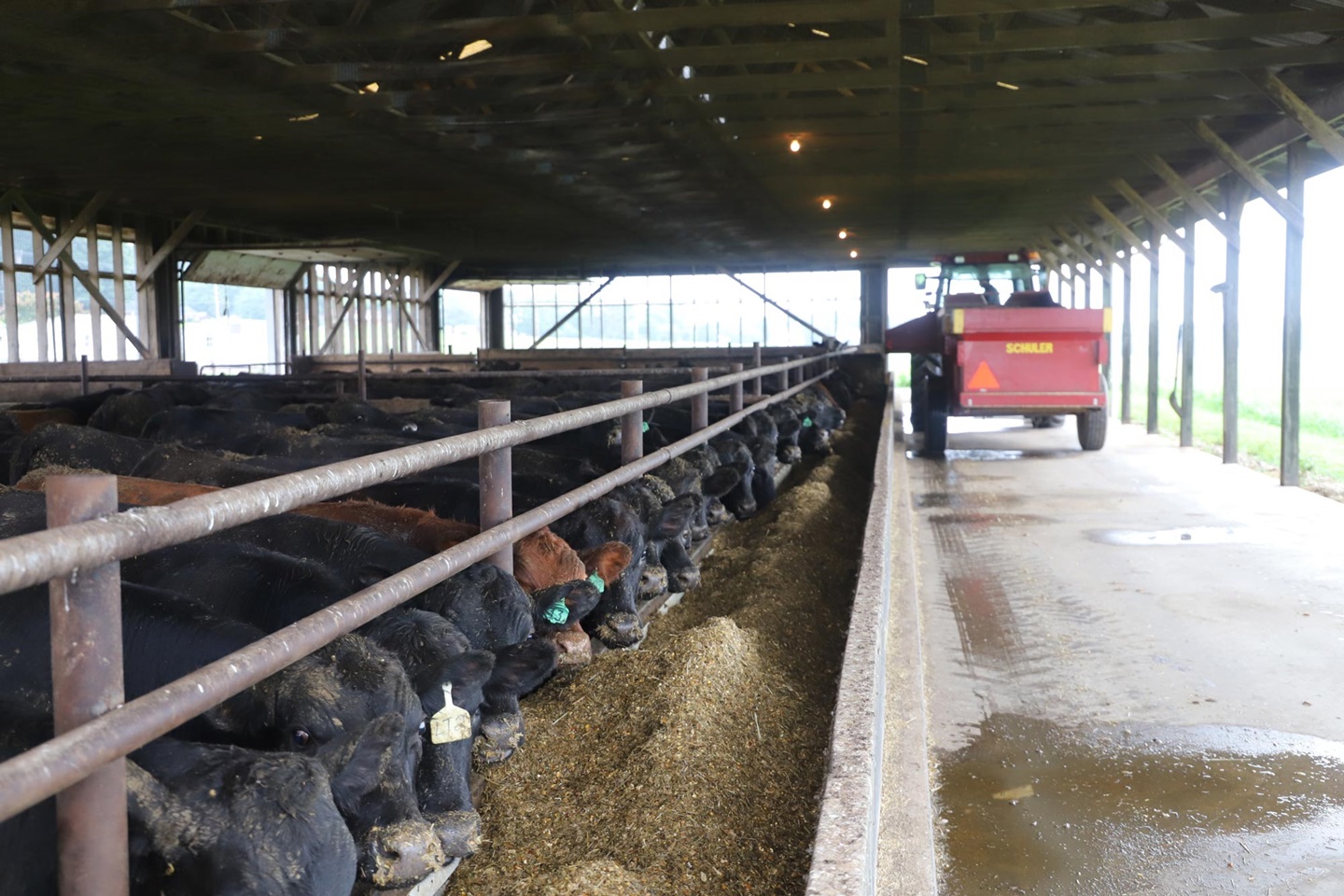
At Herr Angus Farms, those rejected snacks are repurposed into cattle feed or “steer party mix.”
That process is part of a larger system at Herr Angus Farms in Nottingham, Pa., a division of Herr Foods Inc., that began decades ago with a need to manage what didn’t make it into the chip bag.
As Herr Foods grew and expanded, so did the amount of waste. In the early 1980s, James “Jim” S. Herr, the company’s founder, recognized an opportunity for a more sustainable system.
“He had to take care of some of his waste product, and he couldn’t send it to the landfill anymore,” says Jim Longenecker, the herd nutritionist.
Longenecker began his role at Herr Angus Farms in the mid-1980s, when the division was first established as an avenue to repurpose the snack byproducts. That challenge pushed Herr to find an alternate use for the byproducts.
“He had this whole idea in mind, and he was into it before it was popular,” says Dylan Beam, manager of Herr Angus Farms. “I think that’s credit to him to have that vision.”
Beyond the processing line
About half of a mile up the road, Herr Foods processes potatoes into snacks under strict quality standards. The plant plays a key role in Herr Angus Farms’ feed system, producing thousands of pounds of product that doesn’t make it into the bag, but is not wasted.
Longenecker explains when potato chips are being processed, they go through a conveyor system.
“The conveyor has sensors for color and size and whatever their qualifications are, and if those chips don’t follow the qualifications, then they get removed,” Longenecker says.
Beam says the byproduct they feed to their cattle is safe for consumption but didn’t meet the requirements of the factory.
“It’s everything that doesn’t fit the specs to go into a bag,” Beam says. “A lot of people think it’s real waste or moldy or something, but it’s really a fresh product.”
After the product gets removed, around 3,000 pounds (lb.) of snack byproducts are transported to Herr Angus Farms each day. There, it’s mixed into the feed ration. If not used as cattle feed, the product would be diverted to a landfill.
“It’s very efficient, so I think it’s cool to turn that snack food into protein,” Beam says.
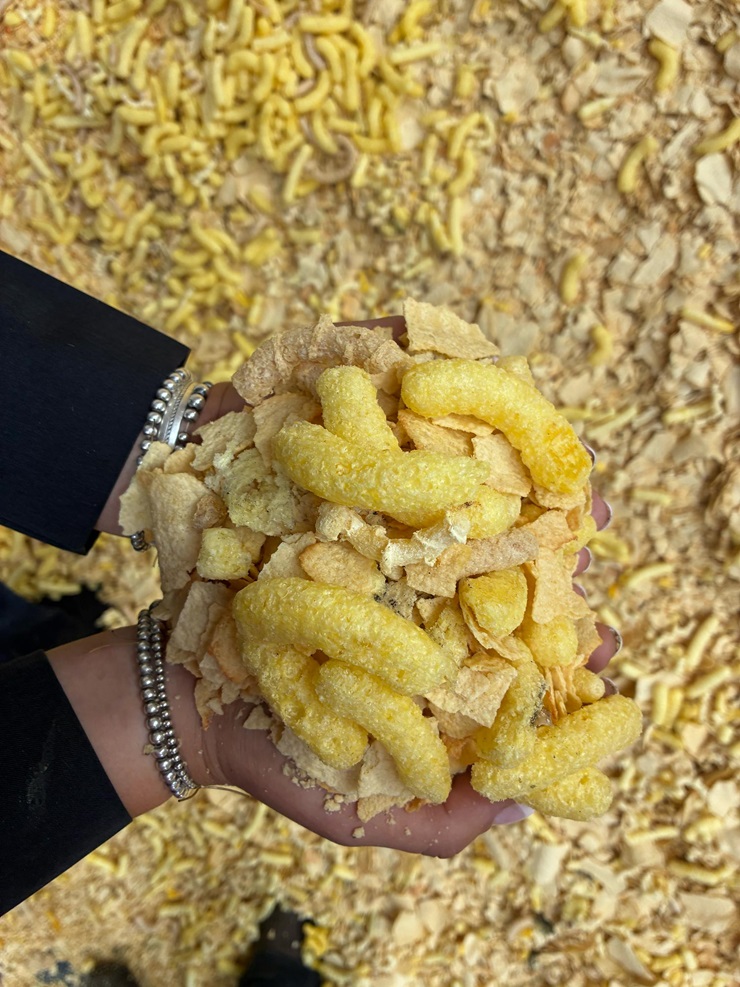
Known as "steer party mix" at Herr Angus Farms, this feed blend includes snack byproducts from nearby Herr Foods that did not meet size or quality specifications for packaging.
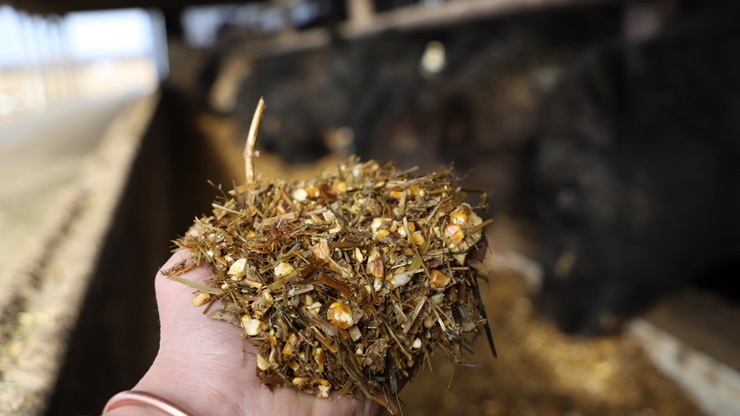
He explains Herr Angus Farms is sustainable with not only recycling their potato byproducts but also with water usage on the farm.
“All the water that comes out of the plant that washes the potatoes and cools down the systems gets put back into the hay fields,” Beam says.
Once the hay is cut, they put it into silos for haylage, and then the water goes back into the aquifer. The water used in the factory comes from a natural well.
“It actually is a full system of water that goes back into the aquifer, back into the well and then back into the plant, so it’s kind of neat in that regard,” Beam says.
The result? About 400,000 gallons of water gets recycled on the farm every day.
Balancing the diet
While sustainability drives multiple aspects of the operation, the byproducts are the center of attention. There are two types of chip byproduct they feed to the cattle in the feedlot.
“We get your regular potato chip that has the oil on it,” Beam says. “We could feed three pounds per head per day of that product, because of the oil being the limiting factor.”
They also feed baked products with no oil, including chips, cheese curls, puffs and popcorn.
“We can feed eight to 15 pounds per head per day of that; it’s a great product,” Beam adds.
Along with the chip waste, the operation receives about 6,000 lb. of potato peelings a day, feeding 12 lb. of potato peelings per head per day. Longenecker explains the potato peelings vary in nutritional content based on the location of where they were grown.
With nutrition as a top priority, Longenecker says the operation carefully manages the rations to account for ingredient variation.
“The one thing we try to do is obviously keep the diet as consistent as possible,” he explains.
They ensure this consistency by regularly sampling the ration and keeping records of consumption.
The yard isn’t the only place where these scraps get turned into a valuable resource. Herr Angus Farms also has a cow herd with an embryo transfer program and recently have implemented bull sales, which Beam says has been a highlight of his career at Herr Angus Farms.
“I would say one of the most gratifying moments was our first bull set, because we had a lot of work put into it.”
While much of the byproduct is used in the feedlot, Beam says the cows and bulls on pasture also get fed it, but in moderation. Beam jokes the byproduct mix helps the cattle gain weight easily.
“[There are] no skinny cows on Herr Angus Farms, that’s for sure,” he adds.
Finding value in waste
Feeding “steer party mix” — as the staff calls it — doesn’t just save waste from entering the landfill; it’s also an economically smart choice for Herr Angus Farms.
The combination of corn, soybean meal, baked chip product, oil chip product and mineral provides a balanced ration that incorporates traditional feed ingredients with the byproducts, ensuring the cattle receive the necessary nutrients while maximizing efficiency. By repurposing snack byproducts into feed, the operation is able to turn a potential disposal problem into a valuable resource and save on feed expenses.
The farm shares their secret recipes with other producers, too. They sell the feed to local cattlemen. Beam estimates that they sell up to 10 tons of feed a week, in addition to what is used on their operation.
The system in its entirety reflects a broader approach built on using every resource efficiently and not letting usable product go to waste.
“I think the thing that we’re most proud of is that we kind of dabble in every aspect of the industry,” Beam says.
That approach has helped drive significant growth.
“It’s been quite the experience to see the transformation,” Beam says, noting he’s watched it firsthand since 2017. “Back when I started, we had around 197 head in inventory … right now we have right around 1,400 head in inventory.”
For Longenecker, the possibilities for Herr Angus Farms only keep growing.
“The future of Herr’s, I think it’s very, very bright, as long as quality people are working with these systems,” Longenecker says. “I think Herr’s will be a leader in the industry for a while.”
Thanks to the chips that didn’t make the shelf, Herr Angus Farms has developed a system that not only prevents waste and produces good cattle, but also supports a growing operation.
Topics: Business , Feedstuffs , Feedyard , Management , Pasture and Forage , Ranch profile , Success Stories
Publication: Angus Journal
Related Publications


Current Angus Journal
Keep up on the latest stories of the people and programs in the breed.
Latest Podcast Episode
Don’t miss conversations with breeders and industry experts.