







Strong Demand, Tight Supply Shapes Cattle Market
CattleFax Outlook Seminar: Strong but volatile market conditions ahead as cattle cycle turns and herd begins slow rebuild.
April 8, 2026
Beef Supply and Demand
by Shauna Hermel, Angus Beef Bulletin editor
Last year marked the seventh year of mild liquidation in the nation’s beef cow herd. While a favorable weather forecast and record profitability in the cow-calf sector suggest it’s time to expand, CattleFax’s Kevin Good said many cattlemen would like to experience a couple wet years before trusting they are out of the long-term drought cycle. The increasing age of the average producer, land values and urban sprawl have also served as headwinds slowing the rate of heifer retention.
Herd expansion, Good said, will rely on confidence the markets will stay better longer than during the cycle turn of 2014-2015. Calling today’s market a demand-driven bull market vs. the supply-driven bull market of the last cycle, the vice president of industry relations presented a supportive outlook.
While cow numbers have declined, he said, beef production is up, driven by higher carcass weights and the influx of beef-on-dairy calves.
Cow slaughter this past year was down 600,000 head, with beef cow slaughter down 500,000. The culling rate of 8.6% would typically indicate expansion occurring as producers keep cows back for an extra year. CattleFax anticipates cow slaughter to be down again, with an 8.3% culling rate, in 2026.
While producers are retaining cows, they have not kept enough heifers to rebuild, Good reported, pointing to a much slower turn and tighter supplies through the remainder of 2026 and 2027.
Anticipating producers will retain more heifers in 2026, Good said the beef herd should begin to rebuild, albeit not to the peak numbers of the last cycle.
On the dairy side, the value of the day-old calf and salvage value of the cow are playing a larger role in dairy profitability. As cow numbers decline in New Zealand and the European Union, the United States will become a bigger player in milk exports globally, supportive of a larger dairy herd.
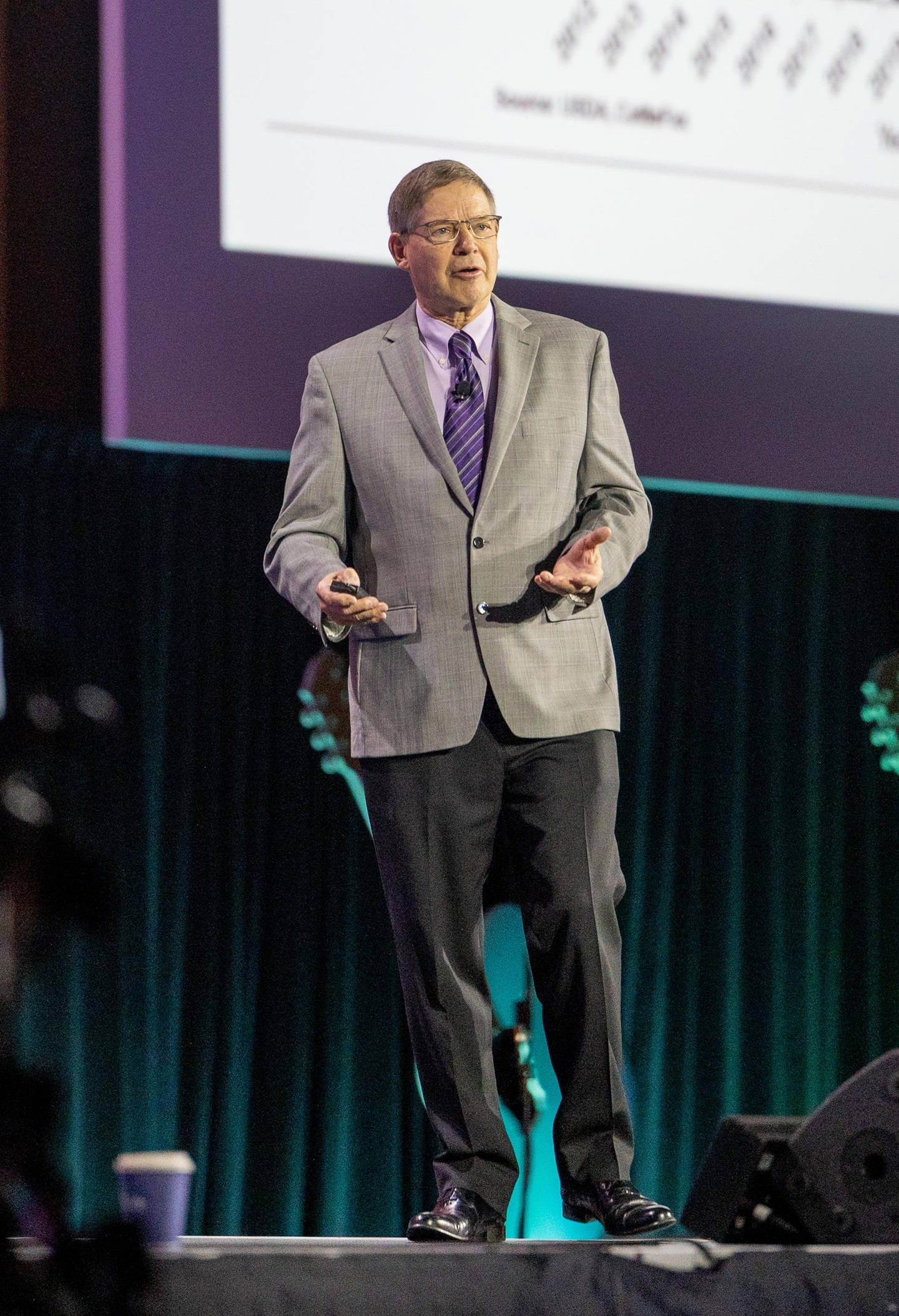
Kevin Good

The industry continues to lean heavier on dairy calves for fed-beef production, Good said. Almost 20% of cattle going to the feedyard this past year were either dairy or dairy-beef cross.
Domestic supplies will remain tight this year and next, Good said, adding the question is what will happen with Mexico. When the border reopens, it will add 1.0-1.2 million head to the supply pipeline.
While there is concern for feedyard expansion south of the border, Good reassured cattle are worth “a heck of a lot more” in the United States. CattleFax anticipates the border opening at some point late spring or summer 2026, adding cattle to the system that could be harvested in the fourth quarter and into 2027.
With placements down, the trend is to feed cattle longer.
“Even though your on-feed number appears to be somewhat elevated from a cycle standpoint compared to 12 years ago, it’s still, from a harvest rate standpoint, it’s very similar,” Good said.
CattleFax is predicting harvest rates down about 600,000 head this year.
When the Mexican border reopens, that will change the cycle trend for supply. CattleFax is suggesting bigger supplies beginning in 2027.
Beef heifer retention could potentially be offsetting, Good said, “but we would suggest it’s going to be a very mild uptick as we experienced this past year.”
Beef production will be a tale of two halves for 2026 — tighter in the first half, but close to even by the second half, Good said, as dairy cow slaughter picks up and carcass weights continue to increase.
For the last 50 years, carcass weights have trended about 5 pounds (lb.) higher each year.
“The last two years, weights have gone up, combined, 52 pounds,” Good said.
“That’s an offset of 2 million head of harvest cattle. So the last two years, we’ve killed 1.6 million less non-fed, 1.4 million less fed. That’s 3 million head. Weights have offset two-thirds of that,” he said. “That’s how we’re getting more with less.”
More days on feed equates to higher quality grades, but also more yield grades 4 and 5. As cattlemen are still paid on pounds, Good suggested the industry continue to push the envelope on weights going into next year.
Good said he anticipates beef production will hit the cycle low this year, increasing in 2027 under the premise the border with Mexico opens this year and carcass weights continue to increase.
As domestic production has fallen the last three to four years, imports have increased 2 billion lb. and exports have declined. With demand for 90% lean trim fueling a $4-per-pound price, CattleFax is anticipating imports to increase.
“If we’re not going to produce it, we’re going to import it,” Good said.
With flat per capita supplies and record-high prices, demand continues to be stellar, Good said. Even with the competition priced much lower, consumers continue to seek beef.
“We would suggest that demand is at a 40-plus-year high,” Good said, cautioning that beef prices may be reaching an upper limit, pushing the point of resistance.
“Since the low watermark in beef demand back in ’98, our prices have gone up 2%-plus faster than the rate of inflation,” Good said. “Those are real dollars in the system that can be spread all the way back down to the cow-calf operation.”
Strong Demand Supports 2026 Prices
by Julie Mais, editor
Cattle prices are expected to average steady to slightly higher in 2026, supported by strong demand and tight supplies. The second half of the year could bring increasing risk with a larger supply anticipated in 2027.
Cow-calf producers are expected to retain the strongest leverage as the cycle turns, supporting continued profitability for several more years.
Mike Murphy, CattleFax COO, forecast the average 2026 fed-steer price at $224 per hundredweight (cwt.), steady from 2025. All cattle classes are expected to trade higher, with 800-lb. steer prices expected to average $335 per cwt., and 550-lb. steer prices averaging $440 per cwt. Utility cows are expected to average $155 per cwt., with bred cows at an average of $4,000 per cwt.
Murphy said shifts in packing capacity are rebalancing leverage in the fed market. A loss in slaughter capacity would affect leverage in the market.
“There’s a lot of things that kind of go into this concept here, but a couple key points though are number one, a 600,000 change in slaughter is going to be worth roughly 1% in terms of that leverage,” he explained. “A 1% change in leverage is worth almost $4 to the fed cattle market. So you can start to see where we can get into some bigger swings relative to the market, just based on simplest things in terms of that leverage and what’s going on within the packing sector.”
2025 USDA All-Fresh Retail Beef prices are expected to average $9.25 per lb. Beef demand remains historically strong, but Murphy expects some resistance to continued price increase.
“No one’s talking about demand that’s weak,” he said. “We’re just talking about demand that’s being resisted, and we’ll see if that plays out, but that is our key assumption as we look at the market outlook for this year in 2026.”
Looking ahead, additional factors he’s watching closely are the potential threat of New World screwworm and the status of Mexican cattle imports.
“Volatility is so, so important to understand that it’s going to continue to be here,” Murphy said. “And at these higher levels, a five or 10% range from a higher level is a lot different than we would have been say three, four or five years ago when the fed cattle market, like in 2020, was at a dollar.”
Despite expected volatility, Murphy said strong demand and sufficient packing capacity support profitability for cow-calf producers as the industry moves through the cattle cycle.
Feed Grain Outlook
by Julie Mais, editor
U.S. corn production saw a record year in 2025, reaching 186.5 bushels (bu.) per acre, driving total output to 17 billion bu. from 98.8 million planted acres.
“That was the largest corn acres that we’ve had since 1936,” said Troy Bockelmann, CattleFax director of protein and grain analysis. “Corn farmers like to plant corn, and that’s exactly what they did.”
Bockelmann said demand for the increased supply came from all categories, including corn use for ethanol and growing exports, which reached more than 3 billion bu. for the first time in history. He noted growth in exports to Mexico and Columbia and expanding in Japan, South Korea and the European Union.
“Feed residual consumption to corn is expected to be record high, but we’re really not seeing an increase of animal units that consume grain. What does this do? This provides a little bit of a buffer as we go into the next crop year,” he said, forecasting corn acres down about three million acres in 2026.
Soybeans are expected to be 2.5 million acres, and he reported winter wheat seedings were flat.
Looking ahead, he expects demand exports to remain relatively stable.
“Demand is going to continue to stay strong, but we would expect to see [corn] stocks to use grow in the next marketing year because we bring the carryover with us and ending stocks with us and some readjustment to that feeding residual that you’re talking about the corn market with a 15% stocks to use,” Bockelmann said.
Turning to hay, U.S. production increased slightly in 2025 to about 123 million tons. Hay prices are expected to average around $145 per ton in 2026.
El Niño’s Awaited Return
by Megan Silveira, managing editor
When cattlemen heard the words “El Niño” during the weather report during the CattleFax session in Nashville, Tenn., early February, Matt Makens said it was almost like a reward.
But this isn’t the first time during National Cattlemen’s Beef Association (NCBA) CattleCon that he’s mentioned a potential for an El Niño fall before.
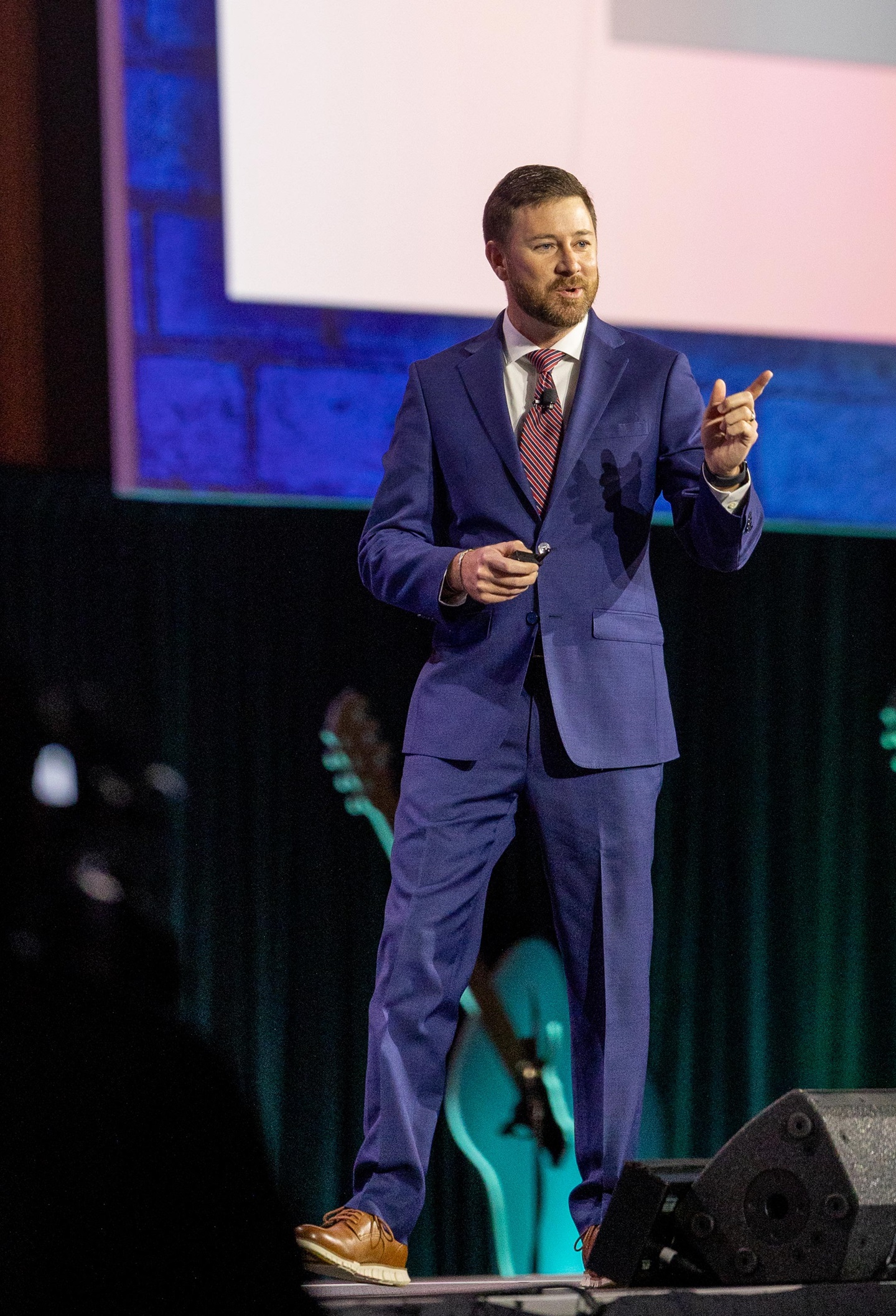
Matt Makens

“We did this in 2023,” he reminded listeners. “I ... said we’ve got an El Niño coming. It was brief, but we’re likely looking at that kind of scenario again for this year.”
While there’s an outlook for that shift in the later months, Makens said that’s not to say La Niña won’t have lingering effects this winter. Data indicates La Niña will dissipate by March, with neutral conditions probably through spring and early summer.
This lines up with El Niño’s usual patterns.
“El Niño typically kind of wants to make everything a little bit more moderate,” Makens said.
Spring will allow moisture to spread out, historically improving conditions for forage grow. Precipitation, however, is still expected to be average to below-average.
Spring will allow moisture to spread out, historically improving conditions for forage grow. Precipitation, however, is still expected to be average to below-average.
As that transition starts to occur, Makens looks to the ocean temperatures to gauge what comes next. Colder water says we’ll see the drought spread from Mexico to the rest of the continent. Rainfall will stay mostly in the northwestern parts of the United States, but dry conditions can be expected to continue, particularly in Oklahoma, Texas, central Mississippi and down across the southeast.
The strength of El Niño is still to be seen, meaning summer and fall predications are still uncertain. Makens urges producers to stay vigilant as the seasons change; updates will continue to tell them what to expect.
“As we take this dial, we try to lean it toward El Niño,” Makens said, noting he’s unsure of how quickly the new weather patterns will start to form this summer. “Once we hit this, if you’ve been dry, you start to get wet. If you’ve been wet, you start to get dry. That’s the basis of this event.”
The southwest is Makens’s biggest question mark. They’ll be the most dependent on the timing and strength of the pattern shift.
Though the light promise of El Niño likely gets cattlemen excited, Makens reminds them weather shifts aren’t instantaneous. Other environmental changes could come into play, too, adding another layer to future outcomes.
A monsoon could alter the strength and timing of El Niño.
“Even if the ocean changes today, it could two, three months before the atmosphere would respond to it,” he explained. “It’s going to be a gradual change throughout the course of a year.”
To read Randy Blach's summary from the CattleFax Outlook Seminar, held in February 2026 in Nashville, Tenn., click here.
Topics: Association News , Business , Feedstuffs , Industry News , Member Center Featured News , News , Pasture and Forage
Publication: Angus Journal
Related Publications


Current Angus Journal
Keep up on the latest stories of the people and programs in the breed.

Latest Podcast Episode
Don’t miss conversations with breeders and industry experts.
