






The Road Ahead
Randy Blach summarizes presentations from the CattleFax Outlook Seminar.
March 19, 2026

The last 12 months have certainly been cause for both celebration and frustration in the beef industry, but there remains cause for optimism when it comes to the future.
CattleFax CEO Randy Blach wrapped up his team’s outlook Feb. 5, during the CattleFax Outlook Seminar, hosted as part of CattleCon 2026 in Nashville, Tenn.
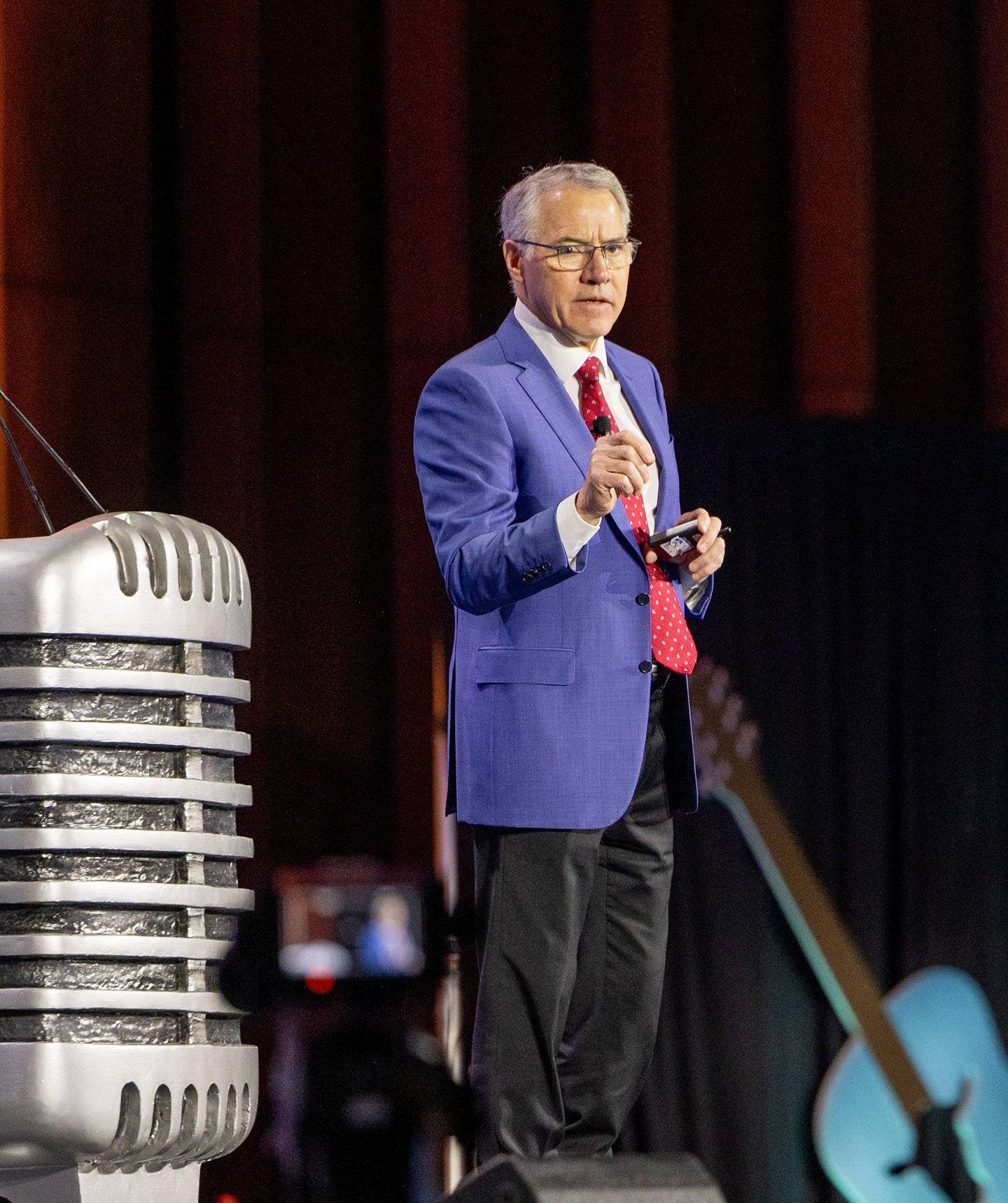
Randy Blach

Growing demand for beef
While demand is a hot topic, the question remains what it really looks like in the real world. Blach said our industry has moved from producing 55% Choice and Prime animals to 85% Choice or Prime. That, he noted, is significant.
“Look at [the percent changes] from a Prime standpoint — going from 61.5% Choice to 72.5%. This really has been the foundation of the demand growth that we’ve experienced in this industry,” Blach said, adding retail beef prices have gone up 4.6% per year (a trend that has been steady for the last 20-plus years).
What does that demand growth equate to per calf for a commercial cow-calf producer? According to Blach, the record-high cattle prices across all segments of the industry have been worth more than $1,000 per head.
It wasn’t that long ago that nearly half the beef produced fell into Select.
“One or two out of every four steaks we produced was not a quality eating experience, was it?” Blach noted. “That’s what the consumers told us. And, again, you all fixed it.”
Though the percentage of Select is now down, Blach said there is still room to improve.
He said the industry averaged nearly a $40 spread between Prime and Choice in 2025. Diving deeper, even with the increase in Choice and the decrease in Select, cattlemen still saw a spread of about $15.
“That tells you the market is sending a very, very strong signal. In spite of the increase in supply, [consumers are] willing to pay more for it,” Blach shared.
With all that information at hand, it can be easy to be optimistic moving into the remainder of 2026. Blach cautions against going overboard for the moment.
“You’ve heard me say this before: the market’s got a paddle big enough for everybody’s butt,” Blach joked, cautioning producers to not take themselves too seriously when trying to forecast market trends. “Just think about where we were yesterday and where we were this morning.”
Blach was referencing feeder cattle prices having a $10 range from the close of the markets Feb. 4 to opening Feb. 5.
At the time, live cattle prices saw a range of $8 from one day to the next, while feeder cattle moved $30 in just three days. But he said that’s not the case today.
“It’s very, very difficult —particularly with all these other outside moving parts — but as you look at where our industry is today, you’re looking at some incredibly high breakevens,” Blach said.
Moving forward
One potential consequence of the current market could be losses on some cattle coming out of the feedyards. Blach believes it’s important for cattlemen to recognize when that transition occurs.
“It’s been an incredible run, hasn’t it?” Blach questioned of the crowd. “You look at the amount of money that’s been made, record profitability at our feedyards. We’ve seen the same thing in our stocker operations, and we’ve seen the same thing in our cow-calf operations. Again, we do not need to apologize for this.”
Blach reminded producers in the room that many generations of cattlemen have worked to see this level of demand for quality beef, including their own families.
“You produced it and you’re being rewarded. That’s the way a market system should work,” he stressed. “Congratulations to each and every one of you.”
At the end of the day, consumers have choices when it comes to purchasing proteins and producers shouldn’t get complacent when it comes to outside market factors.
Exports are one area to focus on.
“Our team has talked about the Mexican border, but it wasn’t too long ago we had the Brazilian imports … with tariff levels at 76.5%. You roll the potential impact of those things together, and you’re talking about $30 per hundred,” Blach stressed. “On a positive side, if we get market access back to China and we’re exporting 450 to 500 million pounds of beef? That’s worth a positive $8 to $10 per hundred in this marketplace.”
One final caution from Blach regarded price discovery and government involvement.
As cattlemen focus on high-quality genetics, he feels cattle will continue to ring a bell on both grids and premiums.
“Fewer cattle trading into the cash market means we need to find a solution for price discovery as an industry,” Blach said. “The last thing we want to do is invite the government in to fix this problem for us.”
Topics: Association News , Business , Events , Feedstuffs , Genetics , Industry News , Labor , Member Center Featured News , News , Pasture and Forage
Publication: Angus Journal
Related Publications


Current Angus Journal
Keep up on the latest stories of the people and programs in the breed.

Latest Podcast Episode
Don’t miss conversations with breeders and industry experts.