Breeding Selections Affect Carcass Weight and Quality
Are cow-calf producers selecting for the wrong traits in today’s market?
February 4, 2026
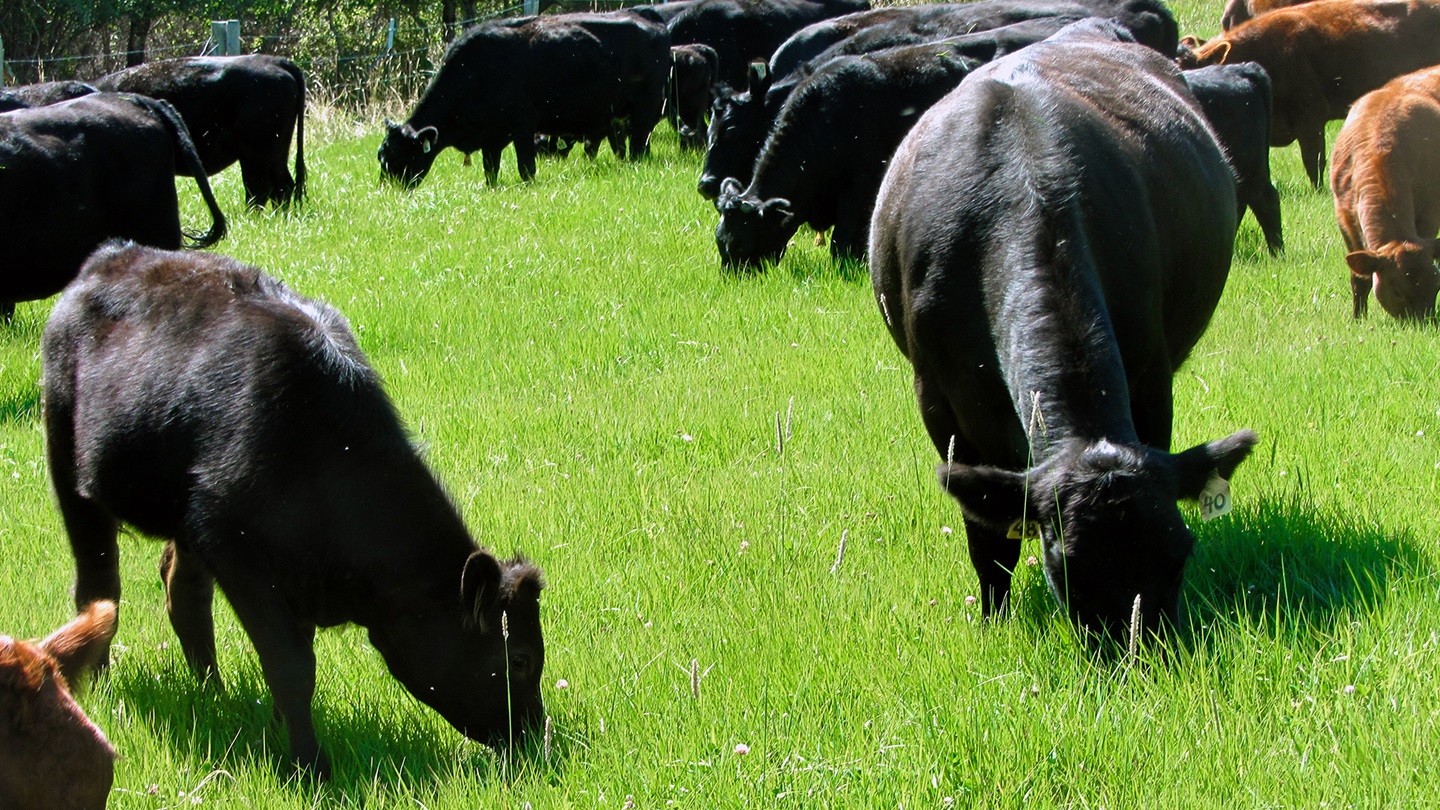
Cow-calf producers have invested the most in producing the larger cattle of today, paying more for genetics and cow maintenance, says James Henderson of Bradley 3 Ranch. [Photo by Heather Smith Thomas.]

James Henderson, an Angus breeder in north Texas, spoke at the 22nd Annual Holt Cat® Symposium on Excellence in Ranch Management in November 2025. After operating packing and processing plants for 35 years, he and his wife, Mary Lou, now manage the Bradley 3 Ranch.
Henderson said feedlot carcass weights during the last few years have increased by 46 pounds (lb.). Cattle slaughtered today are the result of genetic decisions by producers about eight years ago, on average. “We’ve been making cattle bigger, so how do we cut costs on the ranch?”
A bigger cow costs more money to produce. Cow-calf folks in the beef industry have invested the most money in increased weights, paying more for genetics, yet it’s costing more to run a cow.
“On our ranch, we began forage gain tests on bulls we sell, since forage is the food source for most cows. If you’re making cows, knowing they will perform on forage is important. I’ve heard cattle can do as well on forage as on concentrate, and about 25% do. If you don’t know which ones those are, you need help figuring that out,” he said.
“We’ve looked at what percent of her body weight a cow weans. We began weighing each cow when we took 205-day weights. We were weaning about 50% of the cows’ weight and wanted to increase that number.”
“We began weighing each cow when we took 205-day weights. We were weaning about 50% of the cows’ weight and wanted to increase that number.” — James Henderson
Last fall, his average calf weight was 58% of his average cow body weight. One cow weaned 80% of her body weight.
“If a cow weans 80% of her body weight and breeds back, which she did, that significantly lowers your operational cost,” he explained.
Henderson also tried to figure out how to get 3-year-olds to breed back during a short 45-day breeding season.
“Today we are 23 days into a calving season and 92% calved out,” he shared. “The quickest way to increase weaning weights is to shorten your breeding season.”
The cow herd not only has to be efficient to make money, but it also must produce high-quality carcasses. Henderson said COVID got consumers hooked on good beef. Beef was in short supply in the stores, but feedlots were backed up because they couldn’t get them slaughtered on time. Carcasses were heavier and more marbled, and consumers discovered they enjoyed that type of beef.
“We’re now producing as much Prime as we are USDA Select. Prime is bringing the biggest premium ever. We haven’t produced enough supply to meet demand,” Henderson noted.
He recalled his packing plant days when he tracked animals from herds all over the United States from all kinds of environments. He began to notice a trend that he didn’t understand at the time. The cattle that came from desert environments had higher marbling scores than cattle from good grass country. He began to realize that cows in desert country have very short time periods of optimum nutrition. They must store energy quickly while it’s available. The best place and most accessible place to store energy is as intramuscular fat. Henderson said he also wonders if when we select for marbling, we also select for fertility.
How quickly can a cow-calf producer recoup investment?
“If the genetics we’re buying — that the stocker, feeder and packer are reaping benefits from — if we can reap benefits on the production side, we can start to level the playing field,” he said.
“We’re enjoying good prices right now, but our responsibility to the consumer is to make breeding selections that will affect their buying decisions down the road.” — James Henderson
Cattle producers have selected for ribeye size because it’s one of the four components of Yield Grade, Henderson said. However, meat scientists say the correlation from ribeye to muscle is anywhere from 0% to 20%. We constantly hear that ribeyes are too big, yet we continue to use a selection tool that has little correlation to muscle, which is what we are selling.
“We’re enjoying good prices right now, but our responsibility to the consumer is to make breeding selections that will affect their buying decisions down the road. As we move forward, selecting cows and trying to rebuild the national herd, we’ve got math to do. There are measurements we probably don’t know how to do a very good job of tracking within our operations. We’ve got to keep the consumer in mind, and there are probably some bonuses to make that happen. The opportunities for our industry are infinitely bigger than we’ve ever dreamed because of what we can do,” he concluded.
Editor’s note: Heather Smith Thomas is a freelance writer and cattlewoman from Salmon, Idaho.
Angus Beef Bulletin EXTRA, Vol. 18, No. 2-A
Topics: Management , Marketing , Reproduction , Selection
Publication: Angus Beef Bulletin
Related Content


Current Angus Beef Bulletin
Our September issue focuses on the females of the herd and the records that validate them.