



What Is a Good Bull Worth in 2026?
As the 2026 bull-buying season kicks off, Mark Johnson estimates what a bull should be worth and the factors to consider.
January 6, 2026

by Mark Johnson, Oklahoma State University Extension
With Cattlemen’s Congress taking place in Oklahoma City Jan. 4-14, the spring 2026 bull-buying season has officially started. The full schedule of sales during Cattlemen’s Congress can be found at https://cattlemenscongress.com/sales/. Bull-buying season will continue into the spring months in Oklahoma and across the nation, with progressive seedstock operations offering yearling bulls. Accordingly, it’s time to revisit the age-old question: What is a good bull worth in 2026?
As a student at Oklahoma State University (OSU) in the mid-1980s, I was taught: “A good bull is worth the value of five calves he sires.” It is a good answer and a good rule of thumb. The problem is it doesn’t exactly narrow the range. As always, we need to define “a good bull,” check current market reports, answer some questions about how we intend to market future calf crops, and do some cowboy math to arrive at a more precise answer.
What is considered a good bull?
For this discussion, qualifications to meet good bull status are:
- A bull that sells with a registration paper, which includes pedigree information and a complete set of genetic values [including expected progeny differences (EPDs) and bio-economic indices] to be considered in the selection process.
- A bull that has passed a breeding soundness exam (sometimes referred to as a BSE) and sells with a breeding soundness warranty (terms will vary).
- A bull that will add value to calves sired because he fits your breeding objectives, production system and marketing plans.
Valuing the calves he’ll produce
So, what is that good bull worth? When are we marketing our calves? What is their value?
Using the end of year market prices for 2025 from Derrell Peel’s article in the Dec. 29, 2025, issue of the Cow-Calf Corner newsletter:
- 500-pound (lb.) weaned steer calves were worth about $4.80 per lb. for a value of approximately $2,400 per head. Therefore, if my future marketing plan is to sell weaned steers, $2,400 x 5 = $12,000 is the answer.
- 800-lb. yearling steers were worth about $3.50 per lb. for a value of $2,800 per head. Therefore, if my future marketing plan is to sell yearling steers, $2,800 x 5 = $14,000 is the answer.
- 1,500-lb. finished beef steers were worth $2.29 per lb. live for a value of $3,435 each. Therefore, if my future marketing plan is to retain ownership through finishing and sell fed cattle on a live-weight basis, $3,435 x 5 = $17,175 is the answer.
So, in the current market, a good bull is worth somewhere between $12,000 and $17,175 to a commercial cow-calf operation. Where exactly in that range depends on your marketing plan and the market conditions at that time. It’s not an exact number because there are many variables in play.
One key point illustrated here is that the longer you own the offspring before marketing, the greater the value of the bull to your operation. Retained ownership gives you more time and opportunity to capture the value of your investment in genetics.
It is noteworthy that we haven’t considered the value added to replacement females a bull will sire. Bulls used to sire the next generation of cows have an even greater long-term economic effect on the profit potential of your operation and should be valued accordingly.
I encourage cow-calf operations to consider their breeding goals, production system and marketing plan. Doing so should dictate where to apply selection pressure. Genetic values pay when you purchase bulls capable of improving genetic potential for the specific traits that will translate to added value at your intended marketing end point.
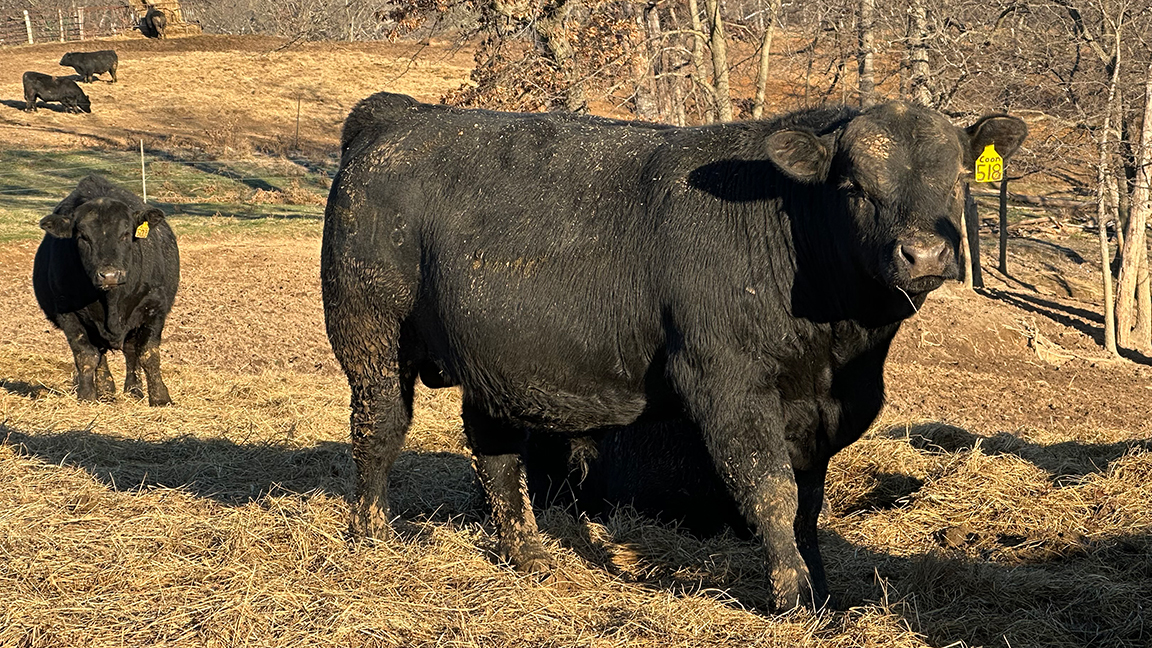
Editor’s note: Mark Johnson is a beef cattle breeding specialist for Oklahoma State University Extension. [Lead photo by Shauna Hermel.]
Angus Beef Bulletin EXTRA, Vol. 18, No. 1-A
Topics: Management , Selection , Sire Evaluation
Publication: Angus Beef Bulletin
Related Content


Current Angus Beef Bulletin
Our September issue focuses on the females of the herd and the records that validate them.