



Why Do I Have So Many Open Cows?
A look into the causes of reproductive failure in beef cattle.
December 17, 2025

by Bethany Johnston and Rick Funston, University of Nebraska Extension
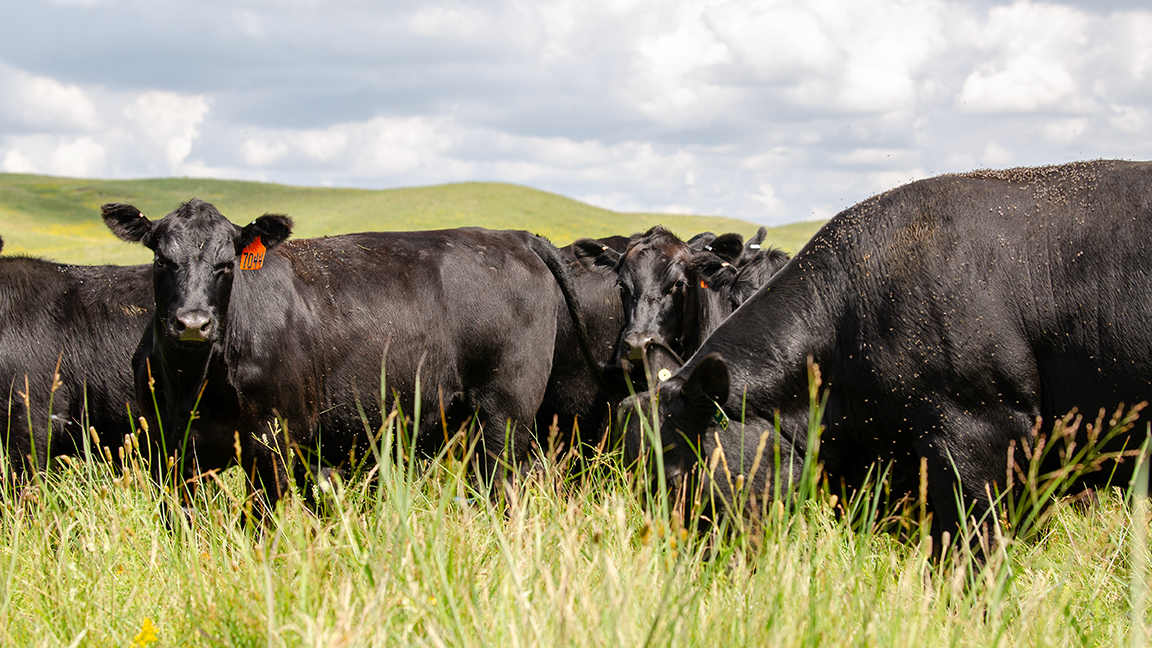
With calves weaned, veterinarians crisscross the country conducting pregnancy checks, or preg-checking, cow herds. The veterinarian calls out and marks an “O” on the hips of “open” cows (those not pregnant). Producers figure the herd percentage bred by dividing the number of pregnant cows by the total cows exposed. Armed with these numbers, the question can arise: “Why is my open rate so much higher this year?”
While several factors can play into a herd’s reproductive success, management is usually the key. Nutrition, bull management, vaccination protocols and handling of early pregnant animals can greatly influence the herd pregnancy rate.
A change in management can have a ripple effect. For example, one management decision on calving could affect pregnancy rates. If you push back your calving date from March to May, the breeding season is pushed back to August. This can result in more open cows.
Let’s dig deeper into some of the individual causes of reproductive failure.
Nutrition
As I interviewed specialists, veterinarians and nutritionists, they all agreed nutrition is normally the biggest cause of reproductive failure.
“If you think of building a wall, nutrition is the bricks. If the bricks are missing, the wall is going to fail,” says Mary Drewnoski, University of Nebraska–Lincoln (UNL) beef and forage specialist. “Protein or energy are usually the big rocks that are missing, especially in young animals that may still be growing.”
Heifers and cows should be on an increasing plane of nutrition during the breeding season, as established through years of research.
Breeding in late summer or fall. In our previous example, a March-calving herd in the Sandhills would breed while grazing grass in June, which is increasing in protein and energy. However, if I changed that herd’s calving date to May, that herd is now breeding in August on grass that has matured and is dropping in the available protein and energy. In the Sandhills, this herd would be breeding on rangeland that is decreasing in forage value.
To solve this nutrient deficiency, the heifer calves and first-calf heifers in the May-calving herd at the university research ranch (Gudmundsen Sandhills Lab) receive 0.3 pounds (lb.) of protein per head per day (or 1 lb. of a 30% distillers’-based cake supplement per day) two weeks prior to breeding and for 30 days into the breeding season. A bull is turned out with these young females for 30 days.
Another rancher who has a May-calving herd starts supplementing two weeks prior to breeding and feeds three weeks into his breeding season. By supplementing, the plane of nutrition is increasing, even though the grass forage value is dropping, which should boost the pregnancy rate.
Rick Funston, UNL beef reproductive specialist, says the kind of protein you are feeding matters. Distillers’ grain products are higher in bypass protein, which the animal can use, and the young animals in the May herd receive 0.3 lb. of protein per head per day. However, if feeding alfalfa hay, which is lower in bypass protein, Funston suggests feeding 0.5 lb. of protein per head per day.
Wet years with lots of mature grass. In wet years with higher-than-normal precipitation, producers are often surprised when they have more open cows than usual. Remember, that mature grass is lower in protein and energy because the rigid stem and seedhead are less digestible.
“But those cows were belly deep in grass!?” is a common response. That “washy” grass was providing a declining plane of nutrition during the breeding season, which could lower pregnancy rates.
On the flip side, producers are often surprised at good pregnancy rates during lower precipitation years. While grass production is lower, the grass may lack the rainfall to produce a seedhead, resulting in a higher forage value.
Thin cows. Research shows that cows that are thin, or body condition score (BCS) 4 or less, are less likely to breed back. Thin cows are also milking during the breeding season and will need more protein and energy to gain weight. The environment is telling the cow she can’t support herself, so why could she support the extra nutritional needs of a fetus? After calving and heading into the breeding season, cows should be in a good body condition score, or thinner cows (BCS 4) should be gaining body condition.
Young animals are still growing. Young heifers and cows are growing and may need a higher diet of protein and energy. Often producers will sort off these young animals and manage them differently than the older cows. The young herd is often fed more protein or energy to compensate for growth.
If second- or third-calf cows have lower pregnancy rates, consider the genetics you have been selecting for and the herd’s environment. If you are selecting for higher weaning or yearling weights, cow size and milk production may also be increasing. More open young animals could indicate your environment and genetics no longer match. Energy and protein may not be meeting the needs of these young, growing and milking females.
Other nutrients. Vitamin A and dietary phosphorus are important to reproduction success. Vitamin A does not store well in the animal, and levels differ drastically in feeds, so vitamin A should be a consideration. Dietary phosphorus drops in grasses as plants mature, so it may need supplemented in mineral if cattle are grazing dormant winter range. However, distillers’ grains are high in phosphorus, so if supplemented, phosphorus may not be needed in the mineral.
Bulls
Bull power. Females are just one part of the equation. Don’t forget about bull management.
If running multiple bulls in a herd, ensure there are enough bulls. Recommendations for the cow-to-bull ratio depend on the age of the bulls, terrain and size of the pasture, and other variables. For older bulls, 25 cows per 1 bull is suggested. For a yearling bull, the number of females should be equal to the bull’s age in months. For example, a 15-month-old bull could cover 15 females.
Breeding soundness exam, or semen-testing. Bulls should be tested four to six weeks prior to turnout. Bulls may be subfertile or infertile. Lindsay Waechter-Mead, veterinarian and Beef Quality Assurance (BQA) coordinator, says sperm production is a 61-day process, so injuries that occur earlier in the spring may not show up during a breeding soundness exam (sometimes referred to as a BSE) if the exam is done too early.
Check bulls often during the breeding season. The exam is just a “snapshot” in time, so check bulls often during the breeding season to ensure bulls are “sound” all season. Bulls can injure feet, legs or hips. Check for swelling around the sheath and scrotal areas. Remove injured bulls and replace with a healthy “spare” bull.
Early embryonic death loss
When heifers or cows are first pregnant, the embryo is small and fragile. If you are synchronizing and utilizing artificial insemination (AI), either move animals immediately after breeding (within five days of breeding) or wait until 45 days to transport. Waiting to transport will reduce embryonic loss, which will increase pregnancy rates.
“Preg-checking should also wait until after 50 days of breeding to reduce the amount of embryonic loss in pregnant animals,” suggests Funston, who worked with large sets of ranch data that studied the relationship of the timing of pregnancy checking herds.
Infections
Keeping infections or diseases out of herds may be the first thing you think of when you have a lot of open cows, but in Waechter-Mead’s experience, “diseases are rarely found and it’s usually a management issue.” If management or nutrition deficiencies have been ruled out, work with your local veterinarian for diseases that could affect reproduction.
Based on risks and benefits, each herd will have its own vaccinations or health protocols, again working with your veterinarian. However, the American Association of Bovine Practitioners (AABP) recommends core vaccines of IBR (infectious bovine rhinotracheitis), BRSV (bovine respiratory syncytial virus), BVD (bovine viral diarrhea), PI3 (parainfluenza-3 virus), and clostridial species. The rest should be based on risk/benefits specific to each vaccine.
During the semen-testing, samples for trichomoniasis tests can be taken. Virgin bulls should not need a trichomoniasis, or trich, test.
Conclusion
Funston says the established herds he has worked with achieve 90% or greater pregnancy rates on cows and 80% or greater pregnancy rates on heifers. If your pregnancy rates are significantly lower, reach out to your local veterinarian, as each is evaluated on a case-by-case basis. By asking the right questions, a solution can be found more quickly and at less expense.
These may be a few questions asked:
- Did anything drastically change during the breeding season?
- Was there drought or overgrazing of pastures?
- How long is the breeding season?
- When do the cows calve? If the cows are breeding on a declining plane of nutrition, that would suppress pregnancy rate.
- Did you test your feed/hay? Or change who you bought your feed from?
- How much and when did you supplement extra protein or energy to the heifers/cows?
Editor’s note: Bethany Johnston is Nebraska Extension educator, and Rick Funston is Nebraska Extension beef cattle reproductive physiologist with the University of Nebraska. [Lead photo by Shauna Hermel.]
Angus Beef Bulletin EXTRA, Vol. 17, No. 12-B
Resources
- Impact of Pre- and Post-breeding Supplementation on Performance of May-born Heifers (2025 UNL Beef Report)
- Should I Trich Test My Mature Bulls?
- Many Beef Cows and Their Calves May Not Be Getting Enough Vitamin A in Their Diets
- Core Vaccines Recommendations by American Association of Bovine Practitioners
- Troubleshooting Cattle Reproductive Problems
Topics: Female Foundations , Management , Nutrition , Reproduction
Publication: Angus Beef Bulletin
Related Content


Current Angus Beef Bulletin
Our September issue focuses on the females of the herd and the records that validate them.