



Don’t Let Winter’s Cold Open the Door to BRD
Manage bovine respiratory disease this winter with cold stress management and animal husbandry.
November 19, 2025

by Boehringer Ingelheim
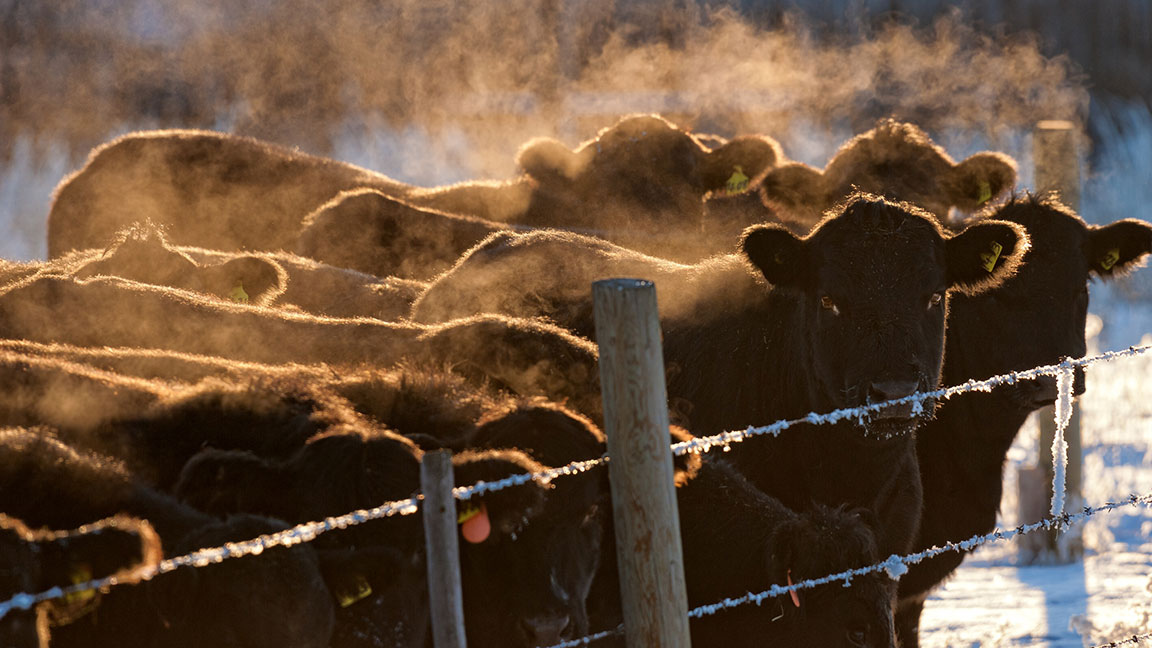
Winter weather isn’t just tough on producers — it’s tough on cattle, too.
“There are reasons why we see more BRD challenges in cold and damp conditions,” says Nathan Meyer, veterinarian with Boehringer Ingelheim. “It really comes down to stress. When animals are stressed, they’re less able to fight off infections as effectively as they would under more ideal conditions.”
“It really comes down to stress. When animals are stressed, they’re less able to fight off infections as effectively as they would under more ideal conditions.” — Nathan Meyer
Bovine respiratory disease (BRD) remains the costliest disease affecting U.S. beef cattle.1 The brisk winter months are the perfect time to reevaluate management practices to improve animal health, comfort and BRD control.
Prioritize husbandry during winter
Good animal husbandry is a crucial component of cold stress management.
“Muddy, cold and wet conditions can really draw heat out of an animal,” Meyer says. “Not only does mud make it harder for cattle to stay warm, but it also increases their nutrient needs, because it takes more energy just to move around, eat and drink.”
When cattle are putting a lot of energy toward staying warm, they become more susceptible to disease challenges. Windbreaks, plenty of quality bedding and clean, dry areas can minimize the effect of the damp and cold temperatures.
Maintaining appropriate stocking density can also reduce the risk of disease spread. BRD is a communicable disease, and it is easily transmitted from animal to animal. Giving animals the room they need slows down fast-spreading illness and keeps animals more comfortable.
Support cattle through nutrition
Providing a balanced diet that meets or exceeds nutritional requirements is critical during extremely cold conditions. Nutritional support keeps animals warm and supports their overall health and immune function.
For every degree below an animal’s lower critical temperature (LCT) — the lowest temperature they can comfortably experience — their energy requirements increase by 1%.2 Depending upon body condition score (BCS) and thickness of winter coat, cattle may have an LCT around 18°-20° F.3 Providing extra feed and ample bedding during a storm or cold snap will set cattle up to better handle the added stress.
Access to sufficient quantities of clean water is one critical nutritional component to keep in mind.
“Keep an eye on recharge rates, and break ice when necessary,” Meyer emphasizes. “Testing water periodically is also important to ensure there are no high levels of minerals or harmful bacteria.”
The importance of monitoring both water quantity and quality cannot be underestimated, as deficiencies in either can compromise cattle health.
Detect BRD early for best outcomes
Even with the best prevention and husbandry measures in place, BRD can sometimes bypass defenses. When it does, early detection and treatment intervention is essential to minimizing long-term lung damage and production setbacks.
“I’m a fan of the DART acronym when it comes to identifying early signs of sick cattle,” Meyer says. “Depression, low Appetite, abnormal Respiration and high body Temperature are key indicators caretakers should watch for,” Meyer says.
Correctly identifying sick cattle within a group can require a trained and experienced eye. He encourages managers to provide routine training for employees to help them recognize signs of illness and evaluate whether BRD treatment is needed.
“The sooner we can intervene against BRD, the more likely we are to have successful treatment,” Meyer says. He notes not all antibiotics are created equal, and producers should collaborate with their veterinarians to select products tailored to their herds’ needs. Meyer recommends choosing a fast-acting, long-lasting antibiotic with broad pathogen coverage to effectively combat BRD infections.
“Working with your veterinarian to establish a health plan is vital,” concludes Meyer. “They bring valuable insights from working with multiple operations and have access to the latest research to help tailor effective strategies for your herd.”
Editor’s note: Article and lead photo provided by Boehringer Ingelheim.
Angus Beef Bulletin EXTRA, Vol. 17, No. 11-B
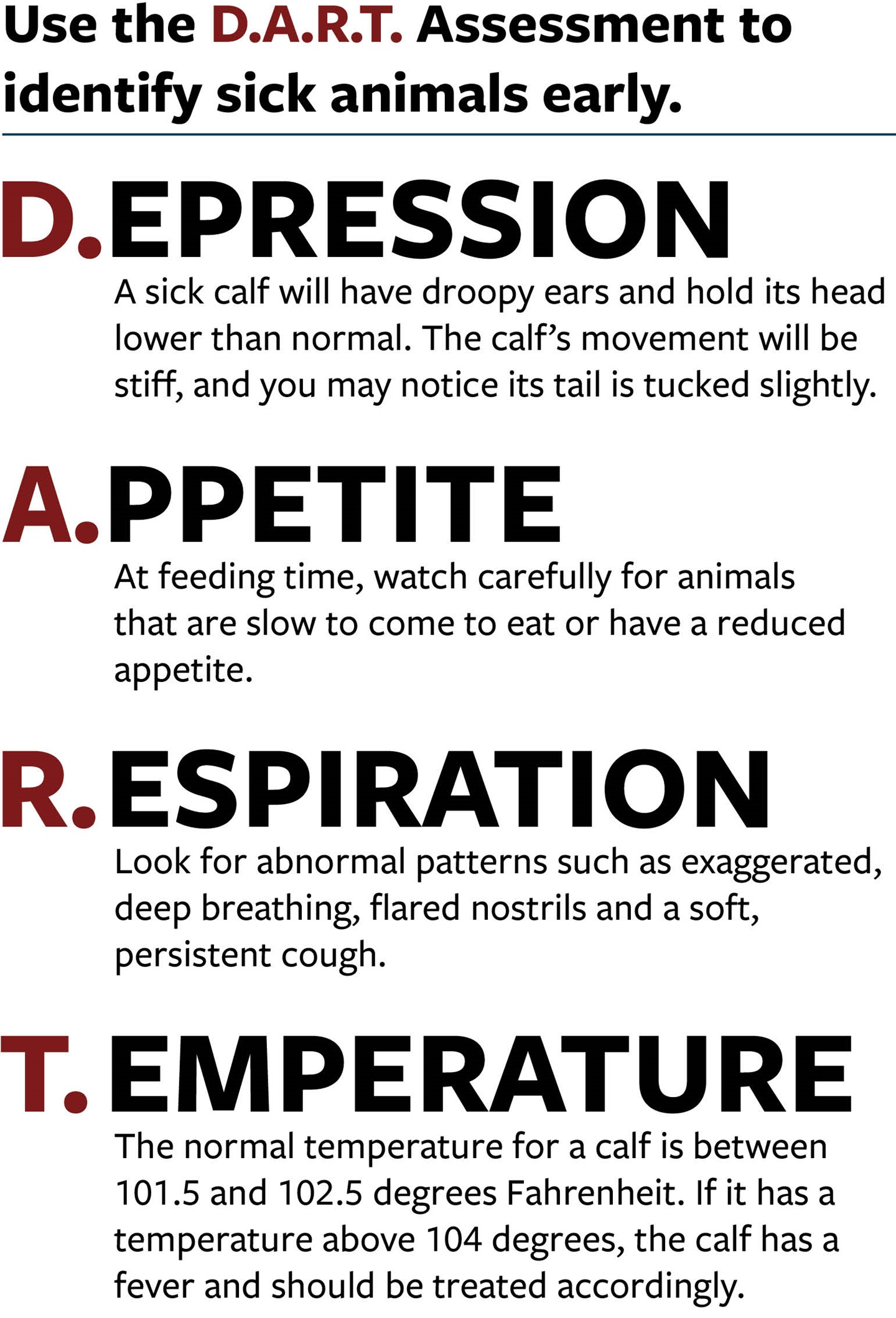
Fig. 1: To minimize long-term lung damage and the production setbacks of BRD, look for early signs of illness in your cattle: depression, low appetite, abnormal respiration and high body temperature.

References:
1Taylor JD, Fulton RW, Lehenbauer TW, et al. The epidemiology of bovine respiratory disease: What is the evidence for predisposing factors? Can Vet J 2010;51(10):1095–1102.
2Wyffles SA, Dafoe JM, Parsons CT, et al. The influence of age and environmental conditions on supplement intake by beef cattle winter-grazing northern mixed-grass rangelands. J Anim Sci 2020;98(7):skaa217. doi: 10.1093/jas/skaa217.
3Hartman D. “Cold stress and beef cattle.” Penn State Extension. Accessed January 6, 2025. https://extension.psu.edu/cold-stress-and-beef-cattle
Topics: Health , Management
Publication: Angus Beef Bulletin
Related Content


Current Angus Beef Bulletin
Our September issue focuses on the females of the herd and the records that validate them.