Best Practices for Managing Newly Received Feeder Calves
Tips to make the transition from calf origin into the feedlot or backgrounding yard as seamless as possible.
October 21, 2025

by Jessica Sperber, Nebraska Extension feedlot specialist
As we near the fall run, and cattle are newly received into the feedlot, there are key considerations to keep in mind to achieve best cattle performance.
The goal of a receiving strategy is to make the transition from calf origin into the feedlot or backgrounding yard as seamless as possible. The first 14 days upon feedlot arrival are critical in calf development and set the performance trajectory of the calf for the remainder of the feeding period. The main goal at receiving is to help with any bovine respiratory disease (BRD) concerns and improve upon the health of the calf.
Goal upon feedlot arrival
Get cattle to consume feed and to drink water.
Consuming feed
Offer calves familiar feedstuffs in the first seven days to “bunk break” cattle.
- Long-stem grass hay. High-quality forages are essential to get adequate energy into the animal while their intakes are depressed.
- A natural protein source that is adequate in rumen undegradable protein (RUP) content to support calf protein requirements. The most likely source (and presumably cheapest) is distillers’ grains, which are approximately 30% protein, with 65% of that protein as RUP. RUP is required most in rapidly gaining, young animals.
Target 16-18 inches (in.) of bunk space per head.
Low intakes on newly received calves are common and generally improve in the weeks following receiving.
- In Week 1, cattle will generally consume 1.0% to 1.5% of body weight (BW) on a dry-matter (DM) basis. Stressed calves may consume less than 1.0% of BW and exhibit signs of anorexia.
- Target intake to reach 1.5% of BW (DM basis) by Day 14 to reduce morbidity/mortality.
- By Week 3, calves should be consuming 2% to 2.5% of BW on a DM basis.
A 21- to 28-day transition, or “step-up,” period is often required to get cattle to consume greater than 1.5% BW and to transition calves from a high-forage to a high-grain diet. A low-energy-density diet (high-forage diet) improves rumen health early in the feeding period.
Water intake
Water intake drives feed dry-matter intake.
Target 1-2 in. of linear water space per head. This recommendation assumes no heat stress at time of receiving.
Calves may need to be oriented to where the water tank is located. For example, allow the water tank to run over for a short period of time to attract calves to the water source.
Newly received cattle will walk the perimeter of their pen, so a common thought is that cattle will find the water tank if placed around perimeter. Consider placing additional water tanks around the perimeter to encourage drinking if the pen waterer is in the center of the pen.
Ensure water tanks remain free from algal growth and feed residue.
Initial processing
Allow cattle 12 to 24 hours after delivery before processing. Some operations have adopted days of interval between delivery and processing if the cattle are considered low-risk.
Processing may include vaccination, parasite control, identification (feedyard tag), implantation, weighing (to determine initial BW) and initial sort.
Vaccination protocols are critical and should be discussed with your veterinarian. Veterinarians will consider what is appropriate to each operation and will determine whether and when to administer five-way viral, seven-way clostridial, and a dewormer.
Although sorting cattle improves uniformity in the pen, keeping cattle from similar origins together for the first few weeks on feed may reduce disruption of hierarchy in the pen and reduce health challenges from commingling.
Additional considerations
Low intakes coupled with feed and water deprivation during sale and transport compromise the immune system, resulting in reduced performance and greater risk of illness and death.
Offering an initial receiving ration that has higher energy density (more grain) and lower roughage inclusion may improve performance, but at the expense of increased morbidity rate.
Preconditioned calves have improved feedlot performance. Preconditioning refers to cattle that arrive at a feedyard having previously been processed/handled including one or more of the following procedures:
- weaned;
- adapted to eating from a feedbunk;
- possibly implanted; and
- vaccinated.
Research results show preconditioned calves have a lower percentage of treatments and improved growth performance compared to nonconditioned calves.
Control for coccidiosis upon arrival is advised, which can include feeding an ionophore (e.g., Rumensin® or Bovatec®), Deccox®, or in severe cases, treating with Corid®.
Assessing risk of the newly received calves
Animal origin and perceived risk of cattle affect the way in which feeder calves are received. It is important to feed and manage cattle according to their risk, whether they are classified as high-, moderate- or low-risk.
Geographical source of cattle, hours spent on a truck for transportation, knowledge of cattle history, and preconditioning should drive receiving strategy.
It is a misconception that all early-weaned calves that are light weight (350 to 400 lb.) are high-risk. Early weaning is likely lower stress on receiving than conventional weaning, but interestingly, many calves still appear challenged at approximately 7 months of age.
Having a standard operating procedure for checking calves, and any BRD (or other ailment) treatment plans clearly outlined for animal health crews is essential.
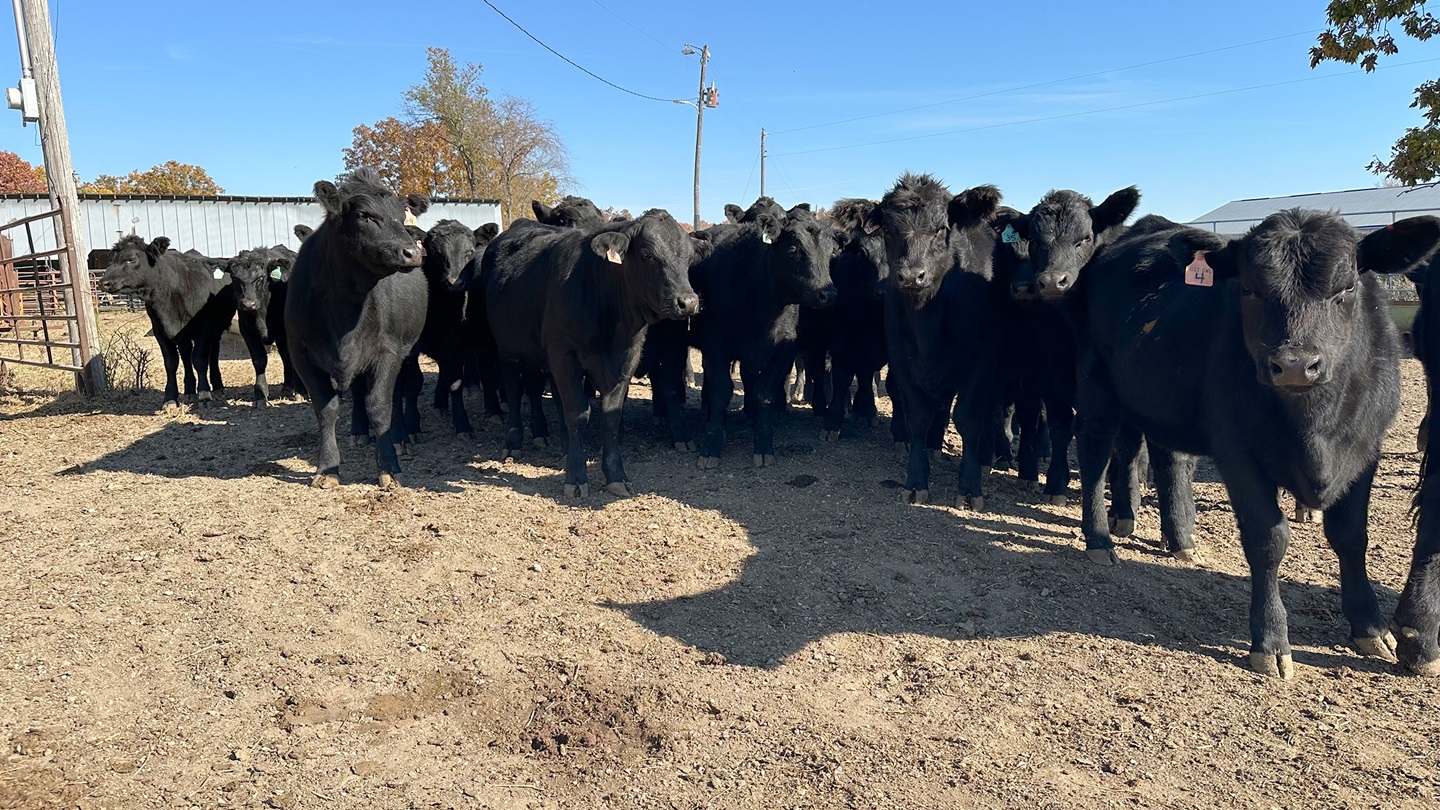
Editor’s note: Jessica Sperber is a feedlot specialist for Nebraska Extension. This article is reprinted with permission from the BeefWatch newsletter. Subscribe at http://go.unl.edu/Beefwatch_subscribe. [Lead photo by Shauna Hermel.]
Angus Beef Bulletin EXTRA, Vol. 17, No. 10-B
Topics: Feeder-Calf Marketing Guide , Health , Management
Publication: Angus Beef Bulletin
Related Content


Current Angus Beef Bulletin
Our November issue focuses on the females of the herd and the records that validate them.