



Tips for Selecting Replacement Heifers
Start on Day 1, says longtime South Dakota rancher.
August 6, 2025
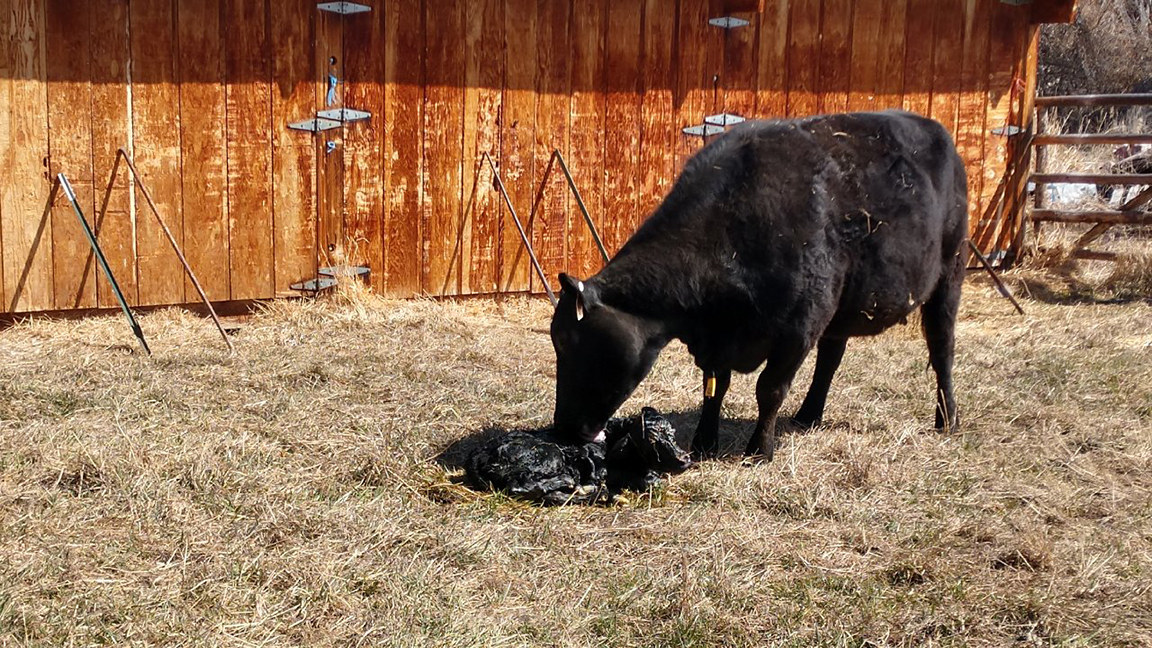

John Sides has been raising cattle a long time on his ranch near Smithwick, S.D. He has developed a cow herd that requires very little labor or input costs. Part of this success is due to the way he selects replacement heifers to be efficient and trouble-free cows.
“We pick replacements when they are 1 to 2 days old,” he says, acknowledging most cattlemen select heifers at weaning or when they sell calves.
Sides says there are many reasons to select replacements at birth. It’s the best time to see the cow, to know if she has any traits you don’t want to perpetuate in a daughter. You get a clue to her disposition and can also see what her udder is like when she calves. For spring calvers, almost every cow has nice teats in the fall, because the calf has been sucking them. When she calves, however, she might have big, fat, too-long teats that a newborn calf would have trouble latching onto. You also know if she calved early, at the start of calving season, rather than late.
Some cows might be too big, Sides says.
“We bought some cows several years ago that made our cows look small. We still have a few of those left. They are good-quality cows, but I never keep a heifer from them because they are too big,” he says. Getting a good look at the cow when she calves is the best time to evaluate everything about her, including her conformation.
A day-old calf is very easy to evaluate, because there’s not a lot of fat covering her skeletal structure. You can readily judge leg angles, slope of the pelvis (tipped up or down), back line, etc. When that calf is older, with a lot of baby fat, it’s harder to evaluate actual conformation.
You can also look at her little udder to see if she will have long teats or if she has extra teats.
“A person can eliminate a lot of problems by evaluating and selecting heifers at birth. You can see these things and tag that heifer calf as a possible keeper,” Sides says.
He makes his first selection at birth, choosing about 10 more than really needed. They evaluate the heifers again at branding, tagging the ones they want to keep.
“Then, when we sort the calves at weaning time, we know we already have our replacements,” he explains.
“I’ve helped many people work their cattle, over the years. In the fall, when they wean and sort, invariably they pick their biggest, fattest heifers to keep. Then they wonder why their cows are so big. This is one reason cow size keeps creeping up.”
A person can graze nearly twice as many small cows as large ones, Sides says, because they don’t eat nearly as much, and you have a lot more total pounds of calves to sell in the fall.
“My dad always said that when you put the same amount of hay out to a small cow and a big one, there will be hay left over in the small cow’s pile and the big cow will eat hers up and be looking for more — and get skinny,” he recalls.
Also, when selecting heifers at weaning, those nice fat heifers with a lot of baby fat (from a good-milking mother) are often a disappointment as cows. They have so much fat deposited in the udder that it displaces much of what would have been mammary tissue, and those young cows don’t milk very well when they calve.
Editor’s note: Heather Smith Thomas is freelance writer and cattlewoman from Salmon, Idaho. [Lead photo by Heather Smith Thomas.]
Angus Beef Bulletin EXTRA, Vol. 17, No. 8-A
Topics: Female Foundations , Management , Selection
Publication: Angus Beef Bulletin
Related Content


Current Angus Beef Bulletin
Our September issue focuses on the females of the herd and the records that validate them.