

Don’t Let Problems Heat Up for Fall Calves
Challenges of the beef calf born in July, August and September.
August 6, 2025

by Karla Wilke, University of Nebraska–Lincoln
While there are advantages to having a late-summer/fall-born beef cattle herd, there are challenges to be addressed just as with a spring-born herd.
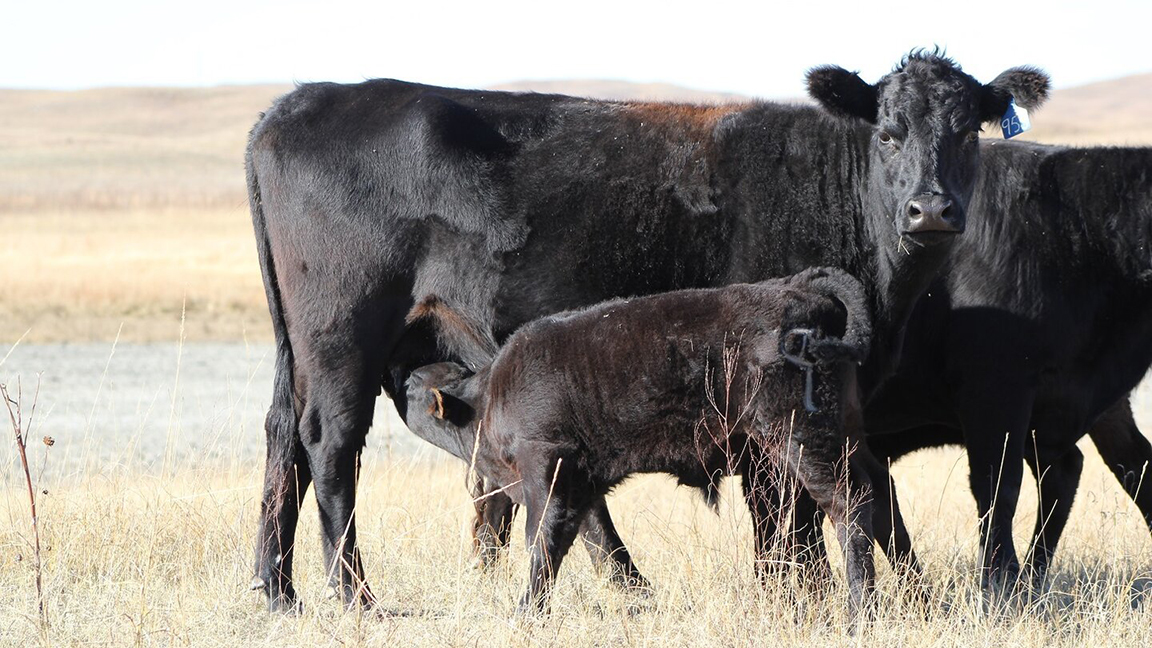
Heat and the baby calf
While summer/fall calving can be less labor-intensive than winter/spring calving at times, calving cows in the heat can be just as challenging as calving in a snowstorm. The body weight of a baby calf is about 75% water, similar to a human baby. Therefore, dehydration is a serious concern.
A 2-day-old baby calf enduring the second day of 100° F ambient temperature is likely experiencing some dehydration. These calves often cannot reach the water tank and may need to be administered electrolytes. A stressed calf can quickly become an ill calf who then experiences an elevated body temperature from a fever in addition to stressful ambient temperatures.
An 85° day with 30% relative humidity may seem nice to humans, but it starts to cause heat stress in cattle.
An 85° day with 30% relative humidity may seem nice to humans, but it starts to cause heat stress in cattle.
A shady area with some air flow specifically for the calves can reduce heat stress potential in a young calf. A very young calf struggling with the heat may need to be manually moved to a cooler area. Just as a calf born in the cold may have to be moved to a house or barn to recover from the cold, a calf suffering heat stress will also benefit from a few hours in a cooler environment and fluids.
Cattle work vs. farm work
Just like spring-born calves, summer/fall-born calves need to be on a proper vaccination schedule. This typically happens at 2 months of age and at 5 or 6 months of age.
If the operation is an integrated operation with crops and livestock, or both a spring- and fall-born herd, this can be a very busy time for other farming and ranching operations. Planning out a schedule and prioritizing calfhood vaccinations can alleviate a lot of issues later in the calf’s life and increase the market value of the calves when sold.
Nutrition quality and the growing calf
There are many reasons producers decide to have a summer/fall-calving herd and many positive outcomes to those decisions. However, depending on the region of the country, fall and winter feed resources may be very low in quality. The young nursing calf will generally eat approximately 1.5% of its body weight on a dry-matter basis of feed in addition to milk consumption.
When forage quality is low, passage rate is slow, and intake is reduced. This reduces the nutrients available to the calf and can result in lower average daily gain than would be expected in a spring-born herd grazing summer grass.
Additionally, the poorer-quality forage can affect milk production in the cow, also reducing the nutrients available to the calf. A supplementation program for the cows can help meet their nutrient needs. Accounting for the intake of the calf and providing that with the dam’s feed or providing a creep area for calves to access feed independently of the cow can improve the nutrient intake of the calf.
From summer’s heat to winter’s arctic blast
The fall-born calf may only be 3 months old when the snow starts to fly and windchills hit subzero temperatures. Windbreaks and bedding for the pairs can keep the calves from being extremely stressed during these winter events. Increasing the feed provided during cold snaps can increase the heat of fermentation in the rumen, and an increase in energy density in the diet can help combat the colder temperatures.
Summer/fall-calving herds can be advantageous for producers with the right resources and marketing strategies. However, as with all agricultural endeavors, there are pros and cons. Evaluating what issues might arise and developing risk-mitigation strategies ahead of time can head off many problems before they arise.
Editor’s note: Karla Wilke is cow-calf systems and stocker management specialist for University of Nebraska Extension. Article provided via UNL’s BeefWatch newsletter, available at https://beef.unl.edu/beefwatch/. [Lead photo by Troy Walz.]
Angus Beef Bulletin EXTRA, Vol. 17, No. 8-A
Topics: Health , Management
Publication: Angus Beef Bulletin
Related Content


Current Angus Beef Bulletin
Our September issue focuses on the females of the herd and the records that validate them.