



Does Weaning Method, Forage Source Matter?
K-State nutritionist shares insights from research.
August 19, 2025

by Phillip Lancaster, Kansas State University
Weaning and preconditioning is a stressful time for calves, but it’s a time when a lot of value can be gained with the right management. Preconditioning can allow calves to get over the stress of weaning, train to eat from a bunk and gain weight — all of which add value to the calves at the time of sale.
At weaning calves often spend a considerable amount of time walking the fence bawling and, more importantly, not eating. During this time, they can lose weight, which means for preconditioning to be cost-effective, the calves must regain the lost weight and gain additional weight.
A recent study evaluated three different weaning methods and three different forage sources on preconditioning weight gain. Calves were weaned abruptly, fenceline weaned, or nose-flap weaned. Within each weaning method, calves were fed cool-season grass-clover baleage, Bermuda-grass hay, or grazed a pasture with a mixture of crabgrass, pearl millet and forage soybean for 60 days.
The crude protein contents of the baleage, hay and pasture were 14.9, 12.8 and 10.6%, respectively. The estimated total digestible nutrients (TDN) of all forage sources was approximately 55%. All calves were fed dried distillers’ grains at 1% of body weight.
There was no interaction between weaning method and preconditioning diet. Calves weaned using the fenceline method gained 1.85 pounds (lb.) per day compared with 1.76 lb. per day for the nose-flap and abrupt weaning methods during the first 30 days.
There was no difference in weight gain among weaning methods for the second 30 days or overall.
Calves fed hay gained faster in the first 30 days of the preconditioning period, but much slower in the second 30 days than calves fed baleage or pasture (see Fig. 1). There was no difference in gain between baleage and pasture groups in the first or second 30 days.
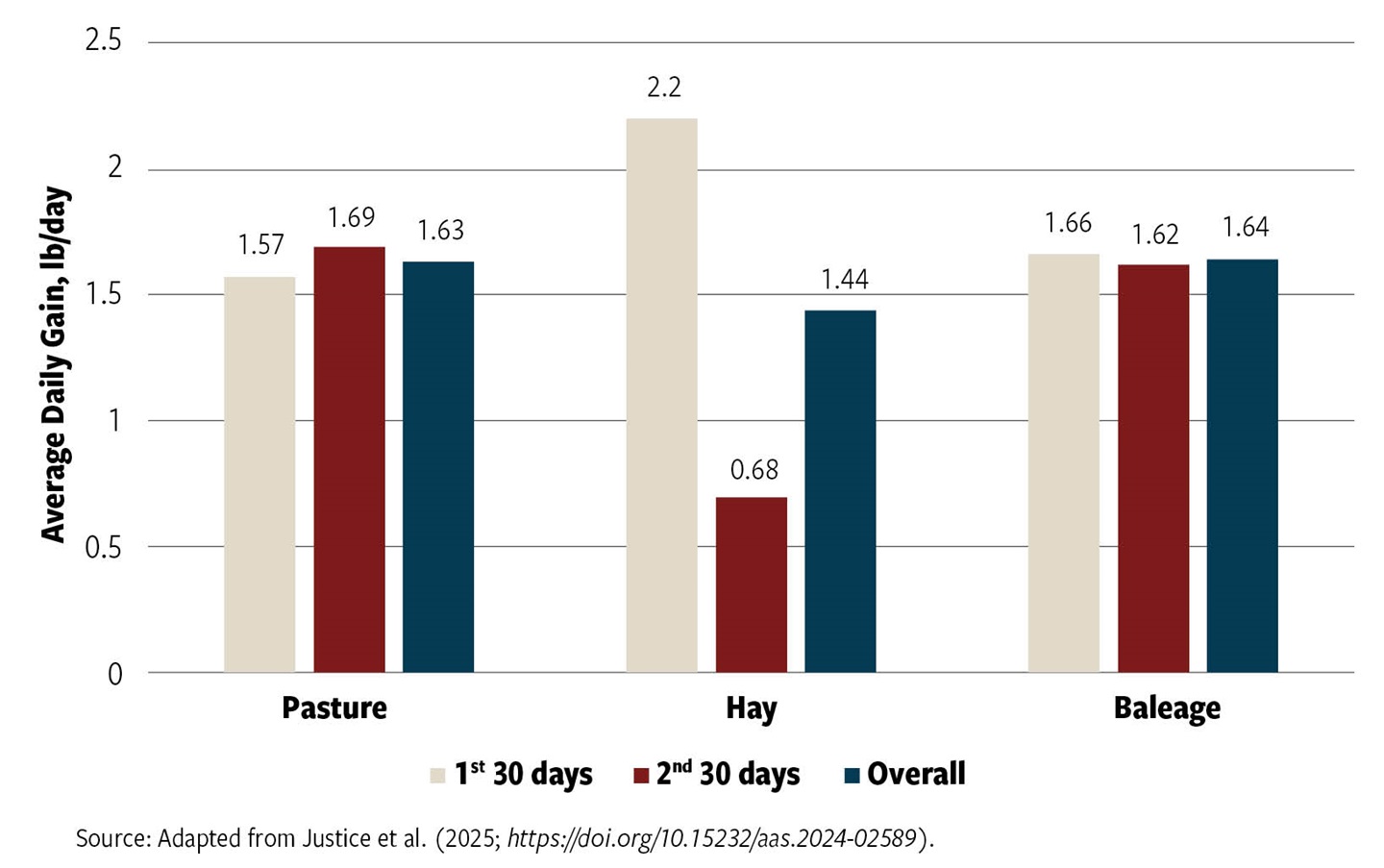
Fig. 1: Avg. daily weight gain of calves grazing warm-season, annual pasture mix, fed Bermuda-grass hay in drylot or fed cool-season grass-clover baleage in drylot. All calves were fed dried distillers’ grains at 1% of body weight.

Over the entire 60 days, calves fed hay gained less than calves fed baleage or pasture.
Weaning method and forage source can affect weight gain in the first 30 days, but more important economically is the weight gain of the overall preconditioning period. In this case, weaning treatment did not affect overall weight gain, but forage source did.
Editor’s note: Phillip Lancaster is a clinical assistant professor specializing in nutrition at Kansas State University’s Beef Cattle Institute. [Lead photo by Shauna Hermel.]
Angus Beef Bulletin EXTRA, Vol. 17, No. 8-B
Topics: Animal Handling , Equipment / Facilities , Feeder-Calf Marketing Guide , Industry News , Management , News , Pasture and Forage
Publication: Angus Beef Bulletin
Related Content


Current Angus Beef Bulletin
Our September issue focuses on the females of the herd and the records that validate them.