




Stable Flies on Pastured Cattle
These methods can help producers mitigate the effects of stable flies.
June 19, 2024
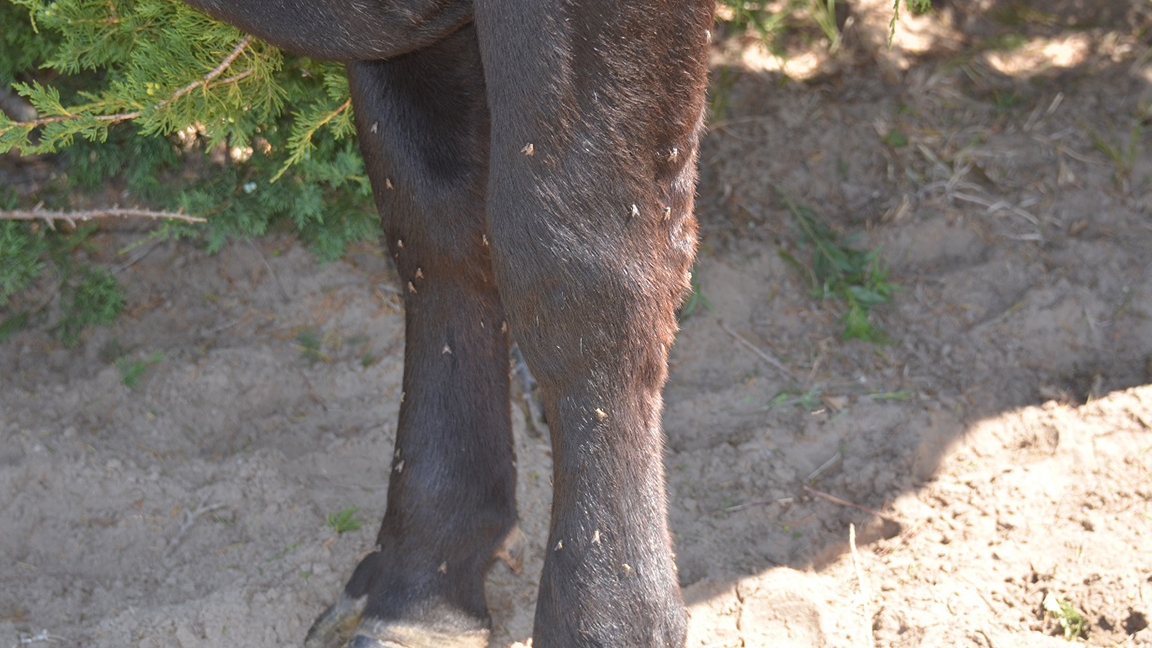
Stable flies affect weight gain on both pastured and confined cattle.

Story & photos by Dave Boxler, University of Nebraska
Stable flies aren’t just an annoyance. They cause reduced average daily gain, and it may take as few as four flies per leg to cause economic injury. Animals bunching to fight stable flies damage forage, and on fragile soils may create blowouts.
How do you know when you’re dealing with stable flies?
Animals fighting stable flies may display a variety of behaviors, including
- tail flicking;
- skin twitching;
- leg stamping;
- lying with their legs tucked underneath;
- standing in water; and
- bunching in corners of pastures.
Controlling stable flies
Animal sprays are the most common option for controlling stable flies on range cattle. Control products include
- coumaphos (Co-Ral®);
- permethrin (many brand names);
- natural pyrethrins (many brand names); and
- phosmet (Prolate™).
These products can be applied using a low-pressure sprayer or mist blower sprayer. Weekly applications are required to reduce fly numbers.
Another option is to target stable fly resting sites. On warm days, especially in the afternoon, these resting sites could be sprayed with a low-pressure or mist blower sprayer targeting the foliage, using permethrin or natural pyrethrins. Avoid spraying water tanks and water sources, and follow label recommendations.
Another option is to reduce stable fly larval development by cleaning up spillage and waste around hay rings. If sanitation is not possible, a larvicide, such as Neporex®, could be applied to the larval development site.
The last few years we have been evaluating stable fly traps. A promising trap, the Knight Stick® Trap (Fig. 3) has shown positive results. Additional studies are being developed to determine the number of traps required, pasture location, and the use of chemical attractants for improving trap effectiveness. The Knight Stick Trap is commercially available at https://bugjammer.square.site/.
Stable fly studies
Stable flies affect weight gain on both pastured and confined cattle. Research conducted at the University of Nebraska West Central Research, Extension and Education Center saw a reduced average daily gain of 0.44 pounds (lb.) in three, 84-day trials with cattle not receiving an insecticide treatment compared with cattle that did. An economic injury level (EIL) of five flies per leg has been suggested, and is often exceeded in normal pasture conditions. The EIL may be less based on the results from the above study, where stable fly numbers averaged 3.6 flies per leg.
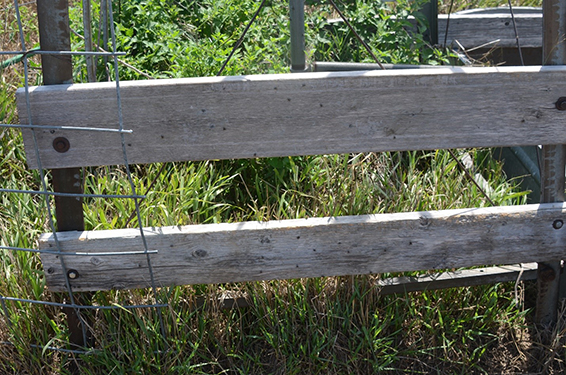
Fig. 1: Stable flies resting on shaded sides of board near a windmill.

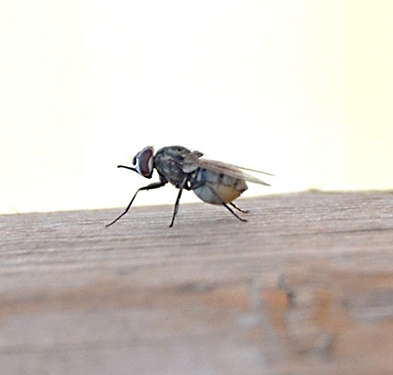
Fig. 2: Stable fly resting on a board, piecing/sucking mouthpart protruding in front of the head.

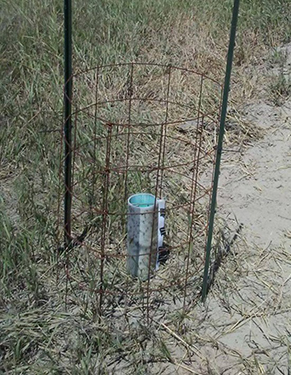
Fig. 3: Knight Stick Stable Fly trap located in a pasture near a cattle loafing area.

Stable fly anatomy and behavior
Both sexes of stable flies require a blood meal, usually twice a day, depending upon the weather. They prefer to feed on all four legs and the belly area of pastured animals. After feeding, the stable fly will seek a shaded resting site to digest the bloodmeal. In pastures, this could be windbreaks (coniferous or deciduous), walls of structures, windmill towers, and water tanks (Fig. 1).
The stable fly is similar in size to the house fly, but is dark gray and has dark irregular spots on its abdomen. The proboscis (mouthpart) protrudes bayonet-like in front of the head (Fig. 2). The larvae are typically whitish in color. The pupae are chestnut brown and about ¼ inch long. The complete life cycle from egg to adult is 14-24 days in Nebraska, depending upon weather.
While the source of early season flies is not well-understood, some develop from native overwintering larvae. Other early-season flies may migrate from southern locations, but definitive evidence is lacking. However, we do know stable flies can move 10 miles or more. The female deposits eggs in spoiled or fermenting organic matter sometimes mixed with animal manure, moisture, and dirt. The most common developing sites are in feedlots or dairy lots, usually around feedbunks, along the edges of feeding aprons, under fences and along stacks of hay, alfalfa, and straw. Grass clippings and poorly managed compost piles also provide ideal larval developing sites. In pasture settings, winter hay feeding sites where hay rings are used can often be a source to develop stable flies through the summer if moisture is present.
Editor’s note: Dave Boxler is a Nebraska Extension educator. The information given in this article is for educational purposes only. Reference to commercial products or trade names is made with an understanding that no discrimination is intended and no endorsement by the University of Nebraska–Lincoln is implied. This article first appared in the UNL BeefWatch newsletter. Subscribe here: http://go.unl.edu/Beefwatch_subscribe.
Angus Beef Bulletin EXTRA, Vol. 16, No. 6-B
Topics: Health , Management
Publication: Angus Beef Bulletin
Related Content


Current Angus Beef Bulletin
Our November issue focuses on the females of the herd and the records that validate them.