


VCPR Pays in More Ways Than One
A veterinarian-client-patient relationship yields significant marketing benefits for a South Dakota producer and fosters a long-term friendship.
November 3, 2025
‘We’re selling 30 extra pounds per head. On 1,500 cattle, that’s 45,000 extra pounds. That’s like selling an extra load of cattle,” notes Ross Wientjes, of Wientjes Ranch near Mound City, S.D.
That kind of marketing benefit, plus increased health and conception rates, all stem from the move to using one product. At the outset, it was a risk to switch. He had confidence to take the chance due to his trust in his veterinarian and their strong veterinarian-client-patient relationship (VCPR).
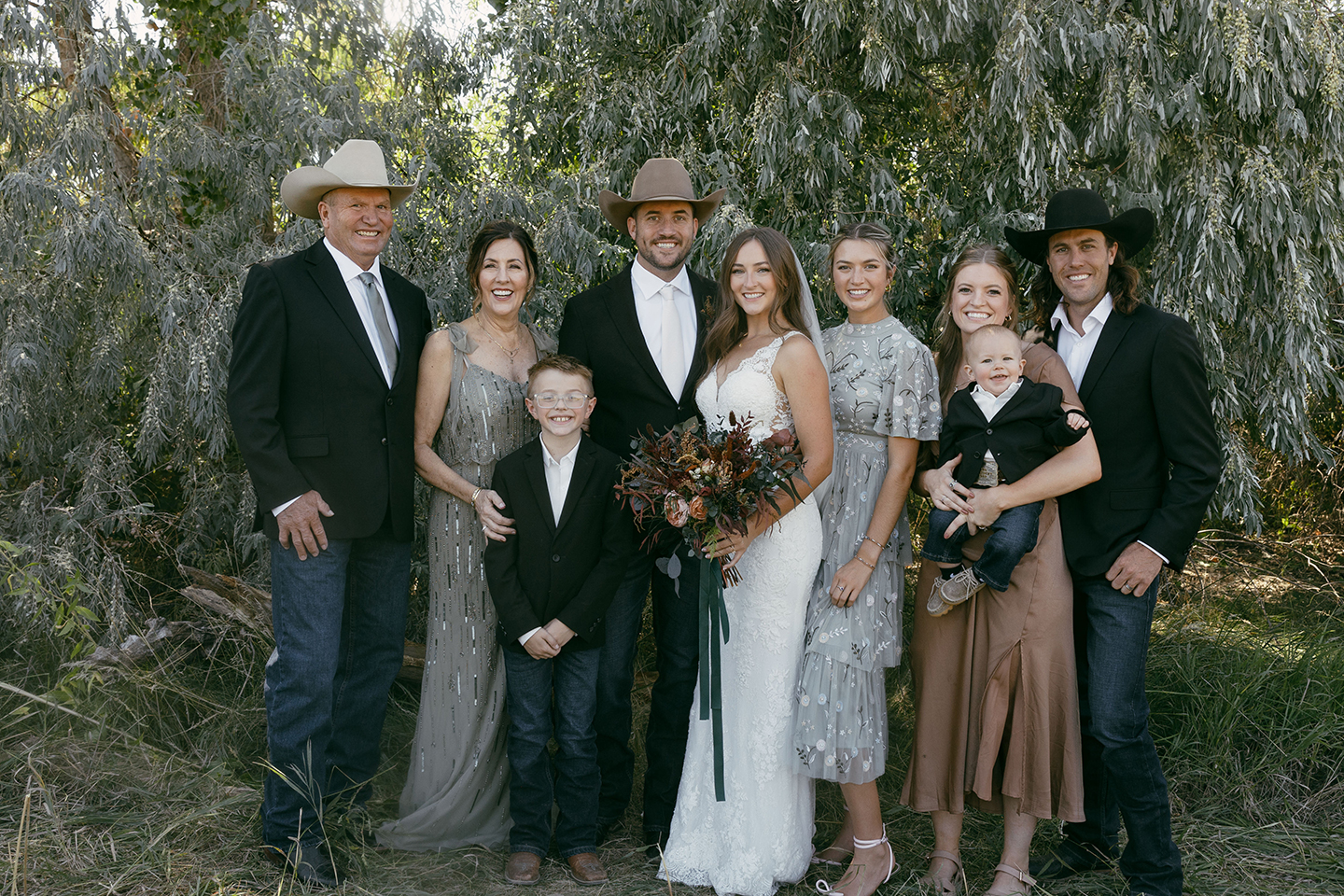
Relationships drive Wientjes Ranch, which is operated by (from left) Ross, Keri, Creed, Pearson, Cassandra, Channing, Cassidy, Wilder and Reece Wientjes.

10 years earlier
In 2014, veterinarian Holly Roe-Johnson read about a new extended dewormer that looked intriguing. She dug into the research studies and decided to try it on her own cattle.
“We were using it on the cows and replacement heifers before we turned them out [to] graze for the summer. We ran out of the product when the last five were going through the chute, so we just decided to go without on those girls,” she explains.
“You could absolutely tell a difference in those five cows at the end of the season,” she continues. “They had rough hair coats, and they were thinner. You could pick them out easily.”
She was sold.
If this product worked so well on her own cattle, it could help her customers and friends, too.
“My favorite part about being a veterinarian is the producers — the farmers, the ranchers. They become the people you socialize with, the ones you spend time with, and they become part of your extended family,” she says.
To help ease the discomfort of using something new, and knowing labor is often an issue, she overcame the obstacle by providing chute help with her veterinary clinic staff.
One of those producers to try the product in 2015 was Ross Wientjes, and he’s been using it ever since.
Relationships drive Wientjes Ranch
Right along the north-central border of South Dakota, Ross’s father, Jim, built Wientjes Ranch (pronounced like winches). With Ross and his Texas bride Keri at the helm, it’s grown into a cow-calf and stocker operation, while finishing some of their own cattle, as well.
“I’m most excited to pass it on. I can’t wait to see this place go more generations after my dad built it,” Ross says.
Of their four children, two are actively involved in the operation with their families. Pearson and wife Cassandra; and Reece, wife Cassidy and son Wilder are part of the current operation. Their younger sister, Channing, is at school studying nursing. Their oldest brother Payton’s memory is carried on through his son Creed and memorialized in Wilder’s name, because it was Payton’s middle name.
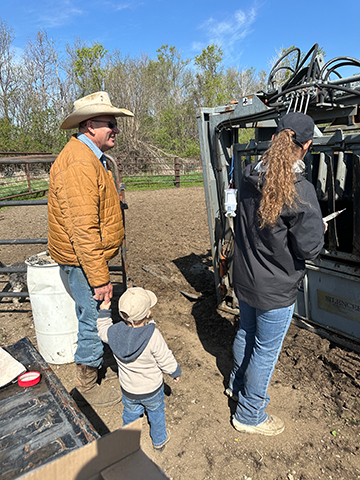
The long-standing working relationship between Ross Wientjes (left) and veterinarian Holly Roe-Johnson has developed into a firm friendship between both families, including Ross’s grandson Wilder.

It’s easy to observe that close relationships drive Ross. It’s in the crinkle around his eyes as he talks about Reece recently coming back full-time. It’s in the break in his voice as he talks about passing the operation on. It’s the gentleness of his hands as he lifts his grandson onto his lap during lunch.
Those relationships extend to his veterinarian. Roe-Johnson has worked with the Wientjes family closely for many years, especially while spaying their Angus-cross yearling heifers. That work sparked a firm friendship.
They both understand the joys and frustrations of raising cattle, and they each admit they call each other nearly every other day.
Ross laughs as he says, “I’ll usually call and say, ‘Whose turn is it to vent?’”
When Roe-Johnson suggested they try this new product, knowing the parasite load of their pastures along the Missouri River, he was open to it despite the sticker shock. A key to maintaining an operation in the current environment is staying abreast of new technologies, he says.
In time, they’ve seen yearling calves grow more efficiently on grass with the extended-release dewormer, and replacement heifers grow and conceive more quickly due to lessened parasite load. When he was selling a load of calves last fall, he was approached several times because of how good the calves looked in both body condition and hair coat, and prices reflected that admiration.
That trust he put in his veterinarian 10 years ago is still paying dividends.
Side by side with customers
Roe-Johnson grew up on a cow-calf operation in eastern South Dakota in the late 1980s. It was expected that her younger brother could come back to the farm, but there likely wouldn’t be room for her, especially during the Farm Crisis. So, to stay involved in the industry she loved, she went to veterinary school.
After school, she started working at Aberdeen Livestock Sales Co., where she met Billy Johnson, a livestock manager. They married and started their own operation, Johnson Cattle Co., near his hometown of Hosmer, while Holly started Roe Veterinary Services.
While she was renovating the old lumberyard into her clinic in downtown Hosmer, right under the water tower on Main Street, she sold supplies and vaccines for area cattle producers out of her and Billy’s garage. Producers would get the key from the local gas station and return it.
Trust in a small community is high, especially when you understand your customers’ needs.
Her clinic and her family have grown, with two sons — Caleb and Gabe. Roe Veterinary Services now includes Hosmer Veterinary Clinic, Wetonka Veterinary Service, Eureka Veterinary Service and Bowdle Veterinary Clinic.
She knows labor is an issue for livestock operations because she works side by side with her customers. When she asks her customers to try new things when she thinks they’re warranted, she and her team are right there to help.
She’s hosted an annual Rocky Mountain oyster fry in January for 22 years and hosts another annual customer appreciation event in September.
Even though she didn’t grow up in this community, she and her family are an active part now. She knows a VCPR is important, because to her, her customers have become an extended family.
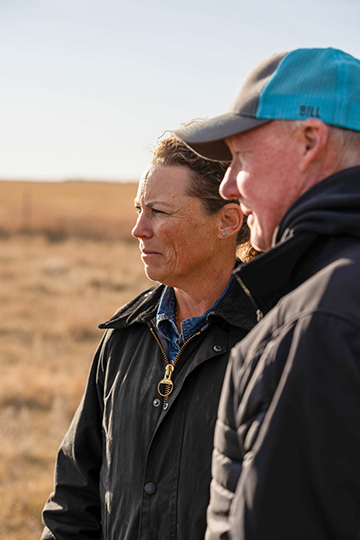
Holly Roe-Johnson (left) and husband Billy Johnson, with sons Caleb and Gabe, operate Johnson Cattle Co., so she understands customers’ cattle needs firsthand.


Not every new suggestion is going to result in an extra truckload of weight, but when a VCPR is already strong, those chances of success are far more likely.
Editor’s note: Kasey Brown is a freelance writer and Angus enthusiast based in Saint Joseph, Mo.
Angus Beef Bulletin EXTRA, Vol. 17, 12-B
Related Content


Current Angus Beef Bulletin
Our November issue focuses on the females of the herd and the records that validate them.