



Misconceptions About Calf Implants
Not implanting growth implants at branding may be leaving money on the table, says SDSU feedlot specialist.
August 1, 2025
“Non-implanted calves are worth more,” is one of the most common misconceptions in the cow-calf world, says Zach Smith, associate professor of ruminant and feedlot nutrition and management at South Dakota State University (SDSU). He estimates only around 30% of cow-calf operations are implanting their calves during the suckling phase.
Smith says that is far too low a number, considering the industry has used this technology since the 1950s.
“They work,” he states. “You don’t know about it till the calves run across the scale, but an implant will generate an extra 18-20 pounds (lb.) of weaning weight. There’s no good reason not to implant suckling calves,” he adds.
Why, then, is there hesitancy about using low-estrogen growth implants during the suckling calf phase?
Smith says there is a stigma associated with growth implants.
- No. 1, producers perceive implanted calves receive a discount on sale day.
- No. 2, producers are nervous about affecting the quality grade of their calves.
- No. 3, consumers raise questions about added hormones in beef.
Smith maintains there are several reasons to use a growth implant during the suckling calf phase, addressing each hesitancy:
1. Profit potential
The notion that non-implanted calves are worth more on sale day is wrong, says Smith, referencing work done by Ken Odde and Glynn Tonsor of Kansas State University (K-State). “When they look at data from calves sold on Superior, the implanted calves bring more per pound.”
In 2024, Tonsor and David Renter of K-State compiled data sets on 898,500 calves sold through Superior Livestock from January to December 2023. The cattle averaged 571 lb. at the time of sale.

Zach Smith

Jessica Sperber, Nebraska Extension feedlot specialist, used Tonsor and Renter’s findings to calculate the difference in revenue per head between implanted calves and calves enrolled in the Non-Hormone Treated Cattle (NHTC) program. Using the national average price for 2023 of $2.63 per lb., and considering implanted calves gained an average 23 lb. of additional gain, implanting calves brought additional returns of $59 per head, while qualification as NHTC earned $37 per head.
Western Video Market sales data from 2014 to 2017 revealed no statistical difference in sale price between implanted and non-implanted cattle. However, there was a numerical difference in favor of implanted cattle. Data analysis from Superior Livestock sales for 2014-2018 also showed no difference in sale price.
Smith says when buying calves, a sale lot documented as having an implant lets him know those cattle have also been vaccinated.
“There’s some management attributes that come through whether calves were implanted or not,” he says.
There’s more benefit than just the extra 20 lb. at weaning. Smith contends that 50% of a beef animal’s live weight is carcass weight. An additional 20 lb. at weaning from an implant is an extra 10 lb. of carcass weight at harvest.
“Today, that’s $32 of value you added just by giving them a $2 implant,” Smith says.
Connor Kelly, part owner of Swan Valley Farm and Ranch in Swan Valley, Idaho, worked at two different ranching operations before returning to the family operation last year. Both of his former employers managed a cow-calf enterprise and a feedlot. Kelly noticed they were using implants in their suckling calves to prepare them to enter their feedlot phase.
“They were really trying to market their calves for themselves. I never thought it was a bad idea to actually market calves to your buyers,” says Kelly. So, for the first time, Swan Valley Farm and Ranch implanted their steer calves at branding.
Kelly says he is hoping to see at least a 15-lb. increase this November, but mostly he’s trying to design his calf crop to fit his buyers’ criteria. He is also adding a preconditioning program.
“I’m trying to get my calves bigger, so by the time they enter the feedlot they can be really efficient,” he explains.
He estimates that giving each steer calf an implant took him an extra two to three seconds.
“It’s relatively inexpensive if you can put on an extra few pounds, especially in a cattle market like this,” he notes. “I think the feedlot guys definitely see a pretty good difference with it, and I just don’t know that cow-calf guys have thought about it much.”
2. Pounds and quality
The Food and Drug Administration (FDA) regulates the use of cattle growth implants. Implants are strictly labeled for use during specific phases of the cattle growth cycle: suckling, growing and finishing.
Follow the label, Smith advises, and find an implant expert who will guide you through the implant process. It can get complicated as an animal progresses through the growing and finishing phases.
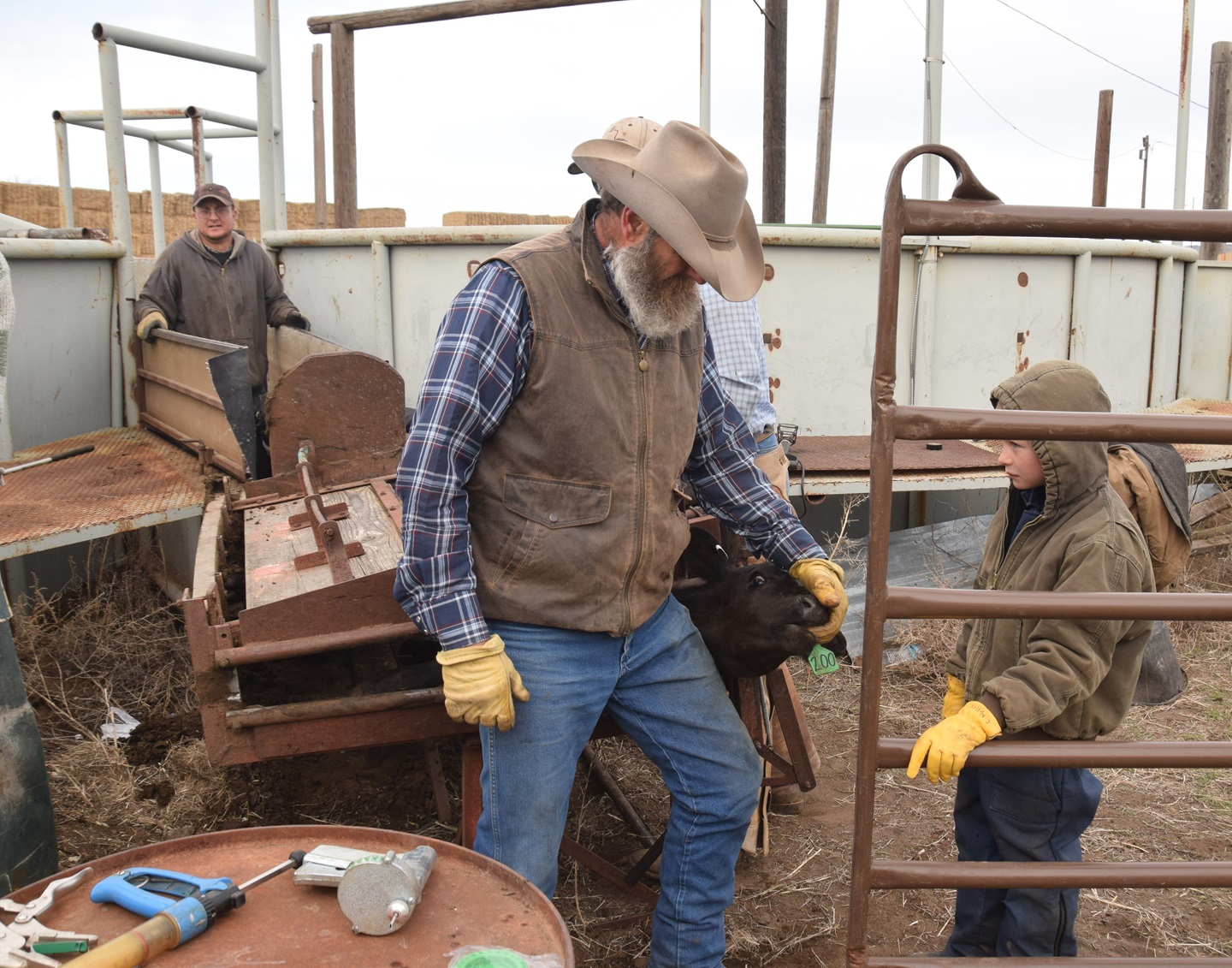
Implanting steers and feeder heifers at branding time with a low-dose estrogen implant adds an average of 18-20 lb. of weaning weight.

There are two traditional suckling calf implants: Synovex® C by Zoetis and Ralgro® by Merck Animal Health, with Component® E-C from Elanco as a newer option. Synovex and Component are labeled for calves older than 45 days and weighing less than 450 lb.; Ralgro is labeled for calves older than 60 days.
The age designations fall within typical branding schedules, so using Synovex as an example, Smith says, if he were planning to implant at branding, he would consider two things: age of the dam and sex of the calf.
“We actually manage calves based on the age of their dam differently. If we’ve got mature cows, over 4 years of age, that implant, around 45 days of age at spring branding, is going to work because that dam will be producing milk when that implant is paying out,” he explains.
For cows younger than 4 years old, Smith advises waiting until late summer to implant.
“Give them the implant during fall preweaning processing, and you’ll still get the weaning weight response,” he says.
Heifer calves, specifically replacement heifers, have typically been left out of the implant program. It was thought that an estrogen-based implant could be detrimental to future fertility. But, Smith says, today research is being done to disprove that theory.
Estrogen implants cause bones to grow, making a larger-framed animal and one that costs more to maintain later in life. That is a concern, he admits. However, implants allow heifers to capture a breeding weight more rapidly and breed up better than their non-implanted counterparts. A feeder heifer will benefit just as much as a steer from an implant. It’s about carcass weight, says Smith.
Smith cautions that implants are all based on feed intake. If the cattle aren’t consuming enough calories to maintain themselves and put on weight simultaneously, implants don’t work.
“If we give implants at any time in the life of a critter, and they’re not at an adequate intake level to support the enhanced accretion of muscle that’s being brought about by that implant, the first thing to [be affected] is intramuscular fat, or marbling,” he says. “Now, if we use this technology at the appropriate time, the appropriate doses — don’t give one that’s too potent too early in life — we can produce the most efficient and high-quality product in the world.”
Smith estimates that more than 90% of all beef cattle finished today are implanted at some point during their lives, yet we continue to set new Prime and Choice records year after year.
3. Consumer concerns
Beef consumers delight in having more high-quality beef options, and they have yet to push back significantly against rising beef prices. However, they do care about how their beef was raised. Growth hormones, antibiotics and genetically modified feed sources are hot topics among consumers. They want to know why these things are part of their food supply.
The best way to answer any of these questions is to be confident, accurate and relatable.
“All growth technologies, whether an implant or a beta agonist, undergo a very intensive FDA safety determination. They classify different growth promotants to have certain effect levels. That might be an increase in the size of an organ, or it might be that it causes an increase in blood pressure. Then they take that and divide it by 100. That’s the minimum amount that could ever be in a residue based upon normal consumption,” is one way Smith answers questions about added hormones.
Growth implants are primarily made of naturally occurring hormones, Smith says. They are not orally active, meaning they get degraded in the human gastrointestinal tract. The hormones that are not naturally occurring are quickly metabolized by cattle into non-biologically active material. When humans consume that material, it doesn’t have a biological effect on us.
Overall, Smith urges cow-calf producers to consider what an extra 20 lb. is worth in today’s cattle market.
“It’s literally the easiest way to get an extra 80 bucks in your pocket,” he says. “It’s the most valuable time you spend. You don’t make that much money per hour doing anything else.”
Editor’s note: Paige Nelson is a freelance writer and cattlewoman from Rigby, Idaho.
Topics: Management , Feeder-Calf Marketing Guide
Publication: Angus Beef Bulletin
Issue: November 2025
Related Content



Current Angus Beef Bulletin
Our November issue focuses on the females of the herd and the records that validate them.