




The Next Best Thing Vs. the Long Game
Alan Miller on making good genetics and building a brand.
March 17, 2026
Alan Miller, Prairie View Farms, has raised many of the show winners, judged some of the Angus greats and helped move the breed forward.
He recently shared his experience on The Angus Conversation podcast.
The third-generation Gridley, Ill., cattleman worked with his family to grow their small cow herd into the well-known show cattle operation it is today, while he was also juggling work at the University of Illinois.
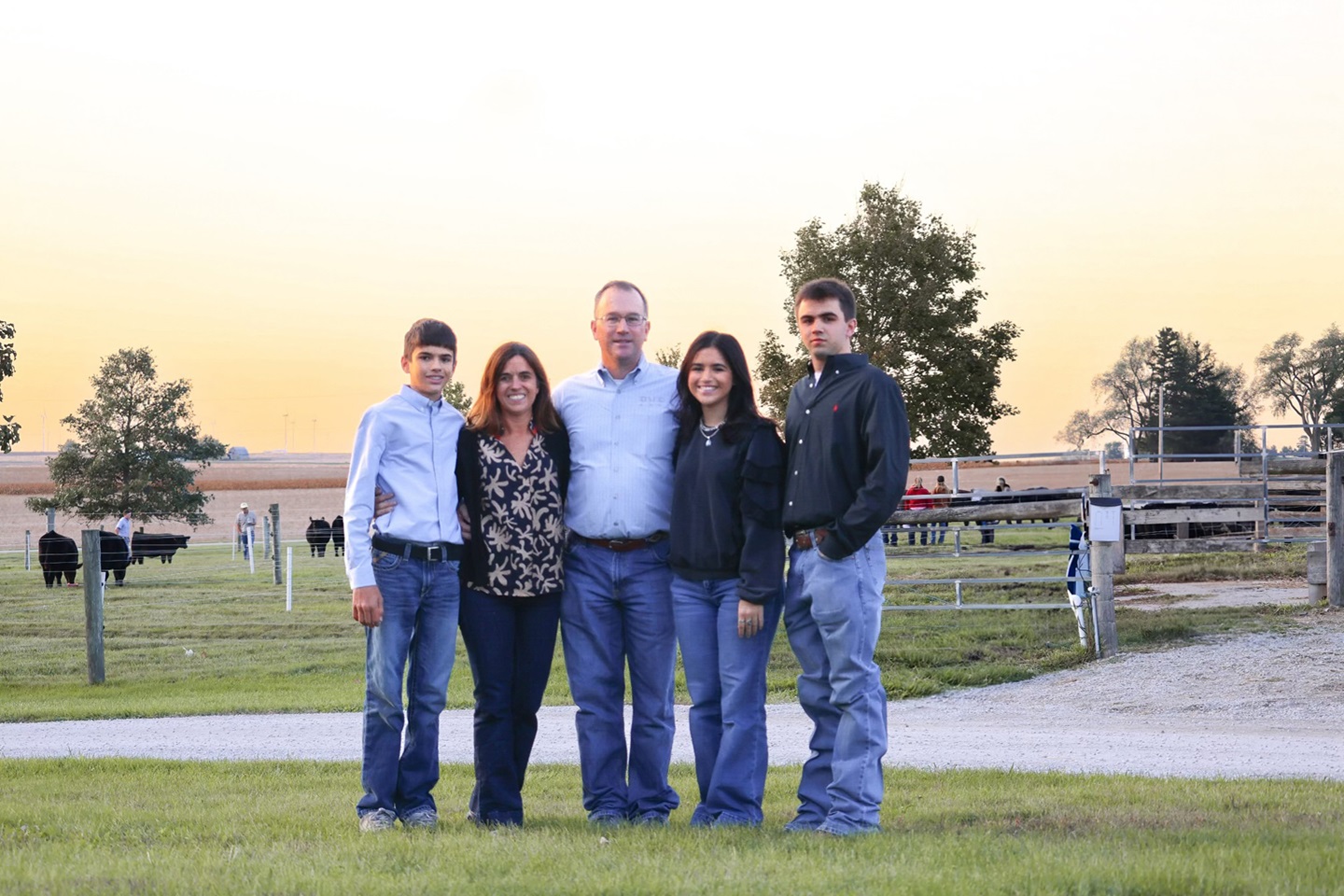

“I was fortunate to have a dad who told me early on that when it came to the purebred side of things, if we were going to grow that, the marketing and the public stuff, that was going to be on me,” Miller said. “But he’d be more than happy to stay home and feed cows and tend to things.”
Today, Miller operates PFV with his wife, Theresa; their three children; and his sister and brother-in-law.
Upon earning his undergraduate, master’s and doctorate degrees there, Miller’s primary focus was running the SPA/IRM program at the university, which gave him good insight into the business side of the livestock production.
There he saw the clear path for him to make the herd a full-time gig was to lean into their show focus. They moved back to Gridley in 2007, and have been selling the feeling of a winning banner ever since.
“Our family's tried to be such big supporters of youth programs in the beef industry because that is the launching pad, in our opinion, for so many industry leaders and for so many people that become engaged in the industry later on in life,” Miller said.
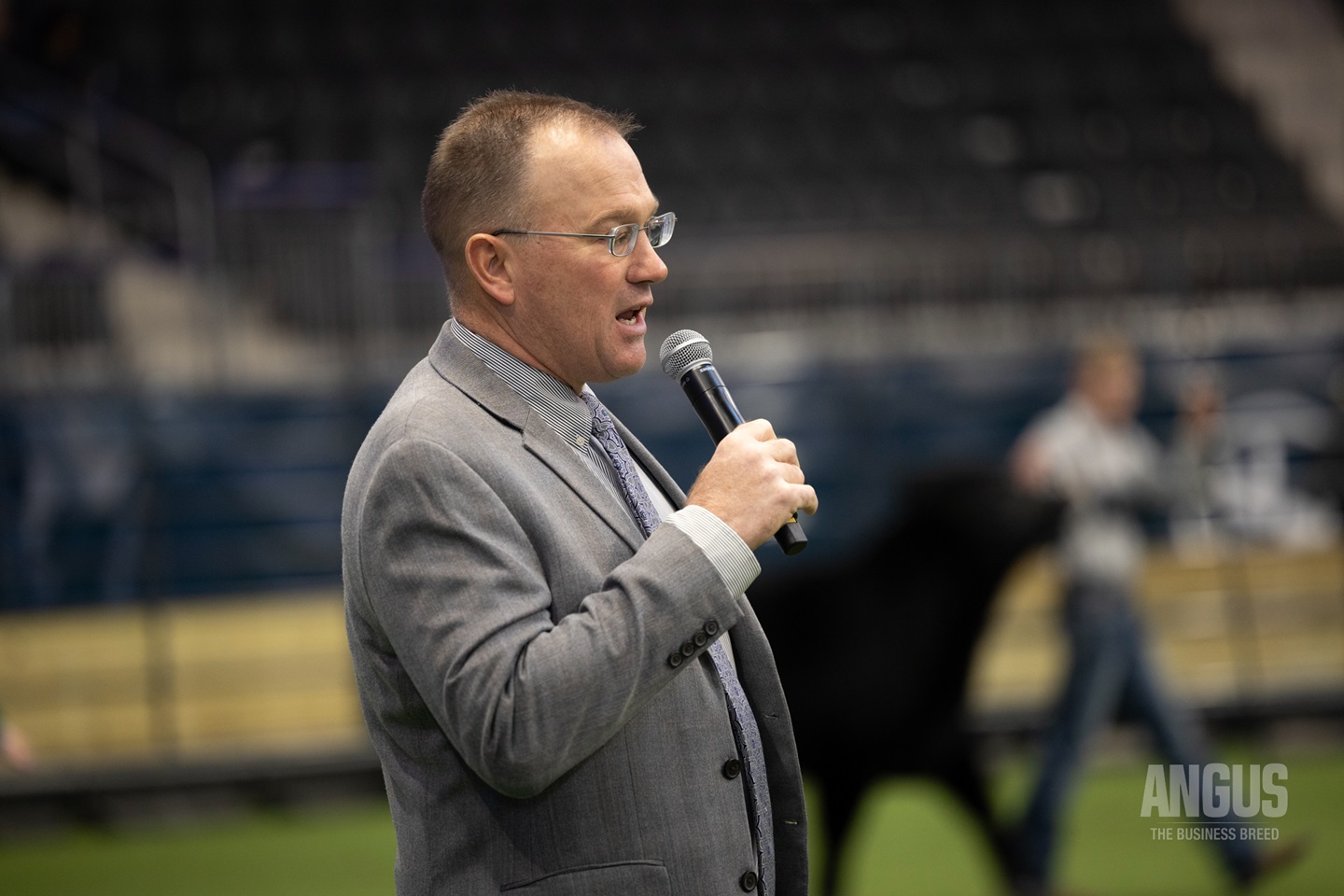

The duality of his experience — both commercial and show ring — gives him a unique perspective on the future of the beef industry, including the use of IVF to develop a program and trends he’s watching.
Miller said one of the biggest strengths of the Angus breed is the way it’s adapted over the years to accommodate all types of breeders with multiple different goals.
“We should just be thankful that we’re a breed that’s big enough to do it all well and have a diverse enough set of programs to accommodate it all,” he said.
EPISODE NAME: The Next Best Thing Vs. the Long Game — Alan Miller on Making Good Genetics, Building a Brand
Alan Miller has a long list of Angus champions associated with his Prairie View Farms prefix, but the roster shouldn’t be mistaken for a simple overnight success. He’s a third-generation Angus breeder who, along with his family, grew the small cow herd of his childhood into a premier show cattle operation near Gridley, Ill. At the same time, Miller was helping beef producers across the state in a position with the University of Illinois. The duality of his experience — both commercial and show ring — gives him a unique perspective on the future of the beef industry, how to serve a breed with multiple end targets and the importance of recruiting youth back into agriculture. In this episode, Miller shares everything from his judging philosophy and use of IVF to his favorite herd animals over the years.
HOSTS: Miranda Reiman and Mark McCully
GUEST: Alan Miller, Gridley, Ill., is a third-generation Angus breeder. His grandfather, Adam Schlipf, began an Angus cattle herd in the late 1940s and was active in the purebred Angus business through the 1960s. Forty-plus years ago, Miller’s parents, Orlan and Carol Miller, began revitalizing the Angus herd and named the operation Prairie View Farms (PVF). Alan and his wife, Theresa, operate PVF in close cooperation with their three children, Amelia, Adam and William, and Miller’s brother-in-law and sister, Brandon and Cathy Jones.
Miller graduated from the University of Illinois in 1995 with a degree in animal sciences. He went on to earn his master’s and doctorate from Illinois in ruminant nutrition. He worked for 15 years for the University of Illinois Extension running its SPA/IRM Program. Miller is a former member of the American Angus Association Board of Directors, where he served as Angus Genetics Inc., (AGI) chairman.
SPONSOR:
It's a great time to be in the cattle business, and it's the perfect time to invest in genetics that will move your herd forward. You’re invited to Deer Valley Farm’s Spring Bull Sale, Saturday, March 28, at noon near Fayetteville, Tenn. It will feature 90 service-age bulls ready for heavy service, including sons of Statesman, Craftsman, Commerce, Gettysburg and many more. Visit https://deervalleyfarm.com/ for more information.
Miranda Reiman (00:00:02):
Welcome to the Angus Conversation. I'm your host, Miranda Reiman with my co-host CEO of the American Angus Association, Mark McCully. And Mark, we are, I would say, halfway through the spring bull sale season or maybe even three quarters, depending on what you want to measure it at and getting all kinds of good reports from the guys out in the field.
Mark McCully (00:00:23):
Yeah, the reports have been, I think most probably know the story. If you're listening to this podcast, you know that these sales are, for those of us who've been around this business a while, we see these sale reports and they're almost a little surreal. I mean, the demand across the country is just pretty incredible. We're seeing sale averages. We always think in terms of fiscal year, so that would be October through here, the end of February. And we're seeing bull sale averages up $2,500 and a little more. And that's with more bulls being sold than last year.
Miranda Reiman (00:01:01):
You're going to take my data point, Mark. I was going to tell people that Levi just told us that we've sold a thousand more bulls than we had at this point last year. That's the one data point I remember. You can't steal that from me.
Mark McCully (00:01:14):
I'm sorry. No, but again, quite the story, really coast to coast, border to border. We're seeing incredibly strong demand for sure.
Miranda Reiman (00:01:23):
Absolutely. And with that increase in demand from the commercial sector, we also see strong numbers coming in for the association too. Of course, one of the measures that we look at is number of registrations.
Mark McCully (00:01:37):
Yeah. I mean, it's been pretty much of the same story. It feels kind of year over year. But in a time when cow numbers are down and we kind of expect registrations to maybe be down with that, that's not the story. That's not our situation. We've actually got ... In February here, we saw another positive month of year over year registrations. And so for the first, actually, again, through October through February, we're up almost 6,700 registrations, which is about 4.5%. So I think that's pretty incredible really. We see it in both heifers and in bulls when we see it. It does tend to be, if you look at it regionally, it does tend to be kind of in probably the Dakotas, Montana. Those would be some of the states that we probably see it a little bit stronger, probably based on some of the liquidation that happened in that part of the world a handful of years ago.
(00:02:38):
But no, maybe contrary to what folks would think because of cow numbers, registrations are up in a pretty significant way. Same time, we're always talking about the importance of the phenotypes that our breeders continue to turn in and submit that fuels the genetic evaluation. And we're seeing that up. Just weights in general, we're up over 4% from turned in, number of records turned in from where we were last year. So incredibly strong commitment. I do think, as I talk to breeders and members, our program, the data-driven herd recognition program, I think has been received positively. We see breeders that are excited that there's another recognition beyond obviously improving the genetic evaluation, improving accuracies to give credit to those that are out there collecting data. And we've even had some examples of some breeders said, "I'd maybe doing udder scores, but I hadn't turned them in. This was maybe what gave me the extra carrot, I guess, to go ahead and turn them in." That's showing up in the data.
Miranda Reiman (00:03:47):
So it's typical with us, Mark, you gave me four data points. I'm going to make sure I got the story right here. So we've got sales are up, registrations are up, data being submitted is up. Participants in our Data Driven participants in, I guess, our inventory reporting are up, and really that probably tells the story of the faith that breeders have, that commercial breeders have in the Angus genetics and Angus breed as a whole. And I guess to me, that story is really closely related to the story that we get to tell today with Alan Miller at Prairie View Farms, where we kind of talk about some of that vision for the future, and we get to talk about some of the things that he's been excited about being involved in the Angus breed.
Mark McCully (00:04:36):
Yeah, I think it was a great conversation. And I think for those that know Alan, many people know of Alan and a lot of people know Alan, but many people know of him in terms of their very, very prominent program in terms of show ring. For maybe those that don't know Alan as well, they may not know that his time in academia, his mind and interest in the genetic evaluation, served two terms as chairman of Angus Genetics Incorporated and really thinks about this industry in a very big way.
Miranda Reiman (00:05:10):
I think people are really going to enjoy this one. Today on the podcast, we're headed to Gridley, Illinois, where Alan Miller and his family own and operate Prairie View Farms. So thanks for joining us today, Alan.
Alan Miller (00:05:23):
Thanks, Miranda. It's a pleasure to be with you guys.
Miranda Reiman (00:05:26):
So we know that many people know you, third generation operation, which you operate with your wife and kids, and also sister is involved too, I guess, on that side of the operation. So Cathy and Brandon Jones. Yep. So why don't you just give us a little bit of the lay of the land of your operation. If somebody says, "What's Prairie View Farms?"
Alan Miller (00:05:48):
So the Angus history in my family would go back three generations. My grandparents, Adam and his brother, Carl Schlipf, had Angus in the '50s back in Illinois. I sold bulls and we're very, very active Angus breeders. And we have had Angus cattle ever since. My dad's generation were probably, I'd say, more into the farm, it would be safe to say. And we had a handful of cows growing up, 20, 30 cows, 4-H project, junior Angus project for the kids and those sorts of things. And then in the last, I guess, 25, 30 years, my generation has expanded it and grown it back into the Angus operation that it is today. And there was a lot of other steps along the way, I guess. I spent a lot of time, as I said, I grew up showing Angus 4-H and National Junior Angus programs, had the pleasure serving on the Junior Angus board.
(00:06:49):
Went to the University of Illinois where I ended up spending a lot of time. I got my undergrad degree there, participated in the judging teams and all those sorts of things. And then I probably was typical, I guess, of a lot of kids, a senior in college, probably hadn't totally thought through what I was going to do with the next steps and maybe thought I'd try to come home, but pretty small farming operation, a handful of cows at that time, just kind of coming off the 80s farm crisis. I don't know if it was realistic or not, but Doug Parrett sat me down one day and offered me an opportunity to go to grad school at the U of I in ruminant nutrition, maybe help with the 4-H judging teams and things like that. And it seemed like too good of an opportunity to pass up.
(00:07:33):
So I ended up staying on and doing graduate work there at the university. My wife and I got married during that time, started having kids eventually. The running joke around here would be how long it took me to complete all my degrees there at the U of I, but I had a lot of opportunities during that time. We did some research, did some extension work, ran some different extension programs, most notably probably the financial analysis program that NCBA was doing at the time, a lot integrated resource management, standardized performance analysis program, which was an awesome education for me to get a chance to sit down with commercial cow herds and study cost of production and study profitability of cow herds throughout the Midwest and work hand in hand with those. And I think a lot of that kind of shaped the direction that we chose to take Prairie View Farms as we grew it.
(00:08:23):
I was fortunate to have a dad that was, well, he told me early on that when it came to the purebred side of things, we were going to grow that, the marketing and the public stuff, that was going to be on me, but he'd be more than happy to stay home and feed cows and tend to things. And so he was pretty important in all that as we built Prairie View Farms and eventually turned it into something that my wife and I are involved with full-time now and have been for 15, 20 years at this point, I guess.
Mark McCully (00:08:52):
So was the goal to always stay in academia or was it ultimately to get back to the farm?
Alan Miller (00:08:58):
Probably the goal to get back to the farm, but as I said, a lot of different opportunities at the university. At that time in Illinois, there was a multimillion dollar research pool called Council for Food and Ag Research. I spent a lot of time writing grants for, and that's what funded my part-time position with the IRM SPA program and all the stuff, work we did with that. But I had a lot of different hats where, like I said, I helped coach a 4-H judging team a couple of times. I did some little bit of teaching, did some research, did some extension work. And the interesting thing about that position was a lot of it depended on where we could scrounge money up to find it. And I think they kind of reached a point in time where I sat there thinking, I'm spending all my time writing grants and trying to figure out where it all fit and where the money was going to come from, those sorts of things.
(00:09:47):
And so on the side, we were having quite a bit of success with Prairie View Farms and it growing. And I kind of had the fortune, I guess, of the best of both worlds. I almost never had a actual full-time funding at the university. So I had time to kind of work on building PVF. And my wife and I, it's funny, we were actually visiting the other night how, I guess in our view, we kind of allowed the growth of PVF and the growth for our customer base to dictate when the timing was right for us to maybe come back home and maybe turn this into more of a full-time deal. We lived and had our first child born in Champaign. Then we spent five years living in Leroy, which is halfway between the farm and the University of Illinois. And then eventually came back to the farm full-time in 2007 and a couple of years after that, I gave up my university hobby for good.
(00:10:36):
And a few years after that, my wife, Theresa, she gave up her university position as well to come back. And as we joke about, take the worst job she ever had in her life being assistant to the CEO of Prairie View Farms.
Miranda Reiman (00:10:50):
No, we did invite her to be on this and defend herself there, but-
Mark McCully (00:10:54):
So Alan, I know Teresa well, and I know she's an incredibly vital cog in the PVF wheel there. So maybe talk a little bit about how you guys divide and conquer the different roles and all the things that she takes on.
Alan Miller (00:11:07):
So I was fortunate, as many people joke about, but I think anybody that knows our relationship knows I'm true, I definitely married well above myself in a lot of areas. And Theresa's, I think her just personality and people skills and communication skills and all that, I think blends so well with what's needed here at the farm. And she had a lot of experiences before coming back. She actually started out in farm broadcasting, had opportunity to manage communications for Illinois Soybean Association, and then had several roles at the University of Illinois in the Ag Econ Department with international studies and a number of different things and has degrees in communications. And so she just fit so well, I guess, with what my weaknesses were. And she obviously, she manages all of the advertising, all of the promotions that way. We joke about her being on here, but I tell you what, when it comes to most of the tour group hostings, all the FFA groups, 4-H groups, I would say that's 100% in her wheelhouse more so than mine.
(00:12:09):
And so she certainly does more than her share of all that type of stuff. And she manages, quite frankly, she manages all the books, whether it's all of the association stuff, but I'm sure so many of your staff down there have dealt with her on a lot of that stuff or everything from that to the accounting around here, that's absolutely her handling that
(00:12:31):
Without a doubt.
Mark McCully (00:12:32):
You guys are a great team. Yeah.
Alan Miller (00:12:33):
Well, I appreciate that. It has its moments where it works pretty well sometimes, it seems like.
Mark McCully (00:12:38):
She's a saint.
Alan Miller (00:12:39):
Yeah. Without a doubt.
Miranda Reiman (00:12:42):
Yeah. I also know that probably keeping things straight as you've had a busy schedule as you're often a sought after judge and travel a lot on that circuit. Maybe tell us a little bit about some of your favorite places that you've judged and some of those experiences you've had.
Alan Miller (00:13:01):
I don't know, that's a great question. And I had an opportunity probably when I was younger and fresh out of school to do quite a bit of judging, eat up an awful lot of time doing that. And one thing we talked about a few years back when I had the opportunity to run for the national board is that was simply going to be a shift in how we traveled where we spent our time and give up some of that judging and some of that sort of stuff. And as any of you guys realize with kids and our kids are all teenagers and college age and so forth now, how much time we have to actually just do everything together as a family or so forth that kind of sometimes is divide and conquer and chasing kids while I'm doing my thing or she's doing hers or whatever.
(00:13:50):
But yeah, we had a great opportunity to do some traveling together to do some things like when I was on the board or some judging stuff. We've had a few international trips in Mexico or Canada to do some judging that's been pretty interesting. But she's definitely kind of selective on where she's going to go to with me anymore. No more county fairs in Western Illinois or whatever that she's going to travel with. But hey, we get a week in Durango, Mexico, or something. Sure, she'll come give it a whirl. So yeah, it's enjoyable that way and fortunate to have a lot of opportunities that way.
Mark McCully (00:14:23):
But also two terms on the American Angus Association Board, a couple back-to-back years as chairman of Angus Genetics Incorporated, which I do know for some that maybe know Alan Miller as the show guy. They maybe were surprised that you were chairman of AGI, but I think those that also got to know you and those that served with you also knew you've got a big perspective on this business and you think about this business an awful lot. And I think did just a fantastic job in those leadership roles. Well,
Alan Miller (00:14:53):
I appreciate that, Mark. And I do think the 15 years that I spent in the University of Illinois was in my grad work or as a part-time employee there, I mean, I had the opportunity to see an awful lot of things and do an awful lot of things. I spent my share time in packing plants, gathering data on research farms and this and that, and more than my share of statistics classes and all that sort of fun stuff. And so while yes, on one hand, my direct day-to-day income wouldn't be terribly well impacted by AGI type activities. I guess a lot of my background and training I think gave me a pretty good perspective for what was needed and I did, that was definitely one of the highlights of my time on the board was the time I had to spend on AGI and working on some of the new programs that we worked on at the time.
Miranda Reiman (00:15:44):
We didn't talk much about your program in that introduction though. Talk a little bit about the kind of cattle that you create, talk about who your customers are, what your market is.
Alan Miller (00:15:56):
Yeah. So as I kind of mentioned, when we grew up, 20 or 30 cows through high school, and it was without a doubt, somewhat of a hobby operation, but we did have a lot of show experience. That was our passion for me and my siblings when we were growing up and showing, that's where I met so many of the people that I met in the business and the industry was through the show and in the junior program activities. But I definitely think, and I guess taking out of context, maybe this will sound weird that the university gave me a real world perspective, but I think in particular the programs that I mentioned when I had the opportunity to really see the insides of the finances of commercial cow herds and on that side of the industry and really learn more about what kind of grow, the Illinois beef production business, it didn't take long to understand that here in Illinois, as I said, we kind of grew up right here in Gridley, Illinois, is just kind of the heart of corn and soybean production.
(00:17:00):
We're right on the McLean Livingston County lines, which are, McLean County consistently ranks as one of the highest corn and soybean producing counties in the country, but we absolutely, as I said, we're kind of a small farm that built as finances and clientele and marketing allowed. And a lot of times they get that question, well, why in the world did you build a place here in Gridley? And had this been just a start from scratch with millions of dollars to build an operation, yeah, we probably would have chose a different location, but as we kind of built it, you reached a point where all of a sudden, well, can't relocate it now, it's here and the cows are here. And as I said, most of, as we got done showing, most of our clientele was more show related, but there is no doubt that I considered strongly going more of a bull marketing, bull production route.
(00:17:49):
But at least at that time, as we looked at our market, and I think Mark can attest to this from what he saw in Illinois when he was young, so many of our bull customers would be the guy that just went up and down the local farm paper calling around till he could find the cheapest bull. And then we'd do the same thing in four years when he'd need another bull. And in some respects, it made sense because that's such a majority of the producers in this part of the world have such small herds that it doesn't make a lot of sense to invest a ton in bulls. And so from a marketing perspective, you sit there and you think you look, okay, do I build a business around trying to sell a bull for maybe a few dollars over cost of production once every four years, or do I build a business around marketing a show heifer for a premium that if that person is successful, beaten up on their neighbor at the county fair, they're going to probably come back and pay even more for another one the next year.
(00:18:47):
I guess I kind of joke that it was a little more of a business built on human nature and margins rather than on necessarily the nuts and bolts of the beef industry. But that was the reality, I guess, of if we was going to stay in Illinois, if we were going to stay where the family was at, where the home farm was at, that was going to be the potential that we had to build a business that could support a family and raise kids and be financially sound.
Miranda Reiman (00:19:17):
And we're going to pause right there to take a quick 30 seconds from our sponsor.
Jonathan Perry (00:19:23):
It's a great time to be in the cattle business, and it's the perfect time to invest in genetics that will move your herd forward. I'm Jonathan Perry, and I'd like to personally invite you to our Deer Valley Farm Spring Bull Sale, Saturday, March 28th. The sale starts at noon at the farm near Fayetteville, Tennessee. We've got 90 service age bulls ready for heavy service. We're selling sons of Statesman, Craftsman, Commerce, Gettysburg, and many more. Hope to see you at the farm Friday, March the 28th.
Miranda Reiman (00:19:57):
That's really interesting to me that I think about in marketing, we often talk about that you don't talk about the product. You've got to talk about what it is you sell. You could have a whole marketing campaign around selling that feeling of winning a banner of that's really what you're talking about there.
Alan Miller (00:20:13):
Oh, 100%. Absolutely. And those are the sorts of things. When I was younger, I used to joke about, I never saw a kid just getting all excited and doing back flips when the once every six months the new sire summary came out and see what the new EPD ... But yet we'd see them get awfully off excited when they'd walk out of the ring with a blue ribbon or any ribbon for that matter. And then there again, it's back to the human nature side of it, I guess. And that's where obviously our family's been, tried to be such big supporters of youth programs in the beef industry because that is the launching pad, I guess, in our opinion for so many industry leaders and for so many people that become engaged in the industry later on in life, it's through activities like showing cattle. Absolutely.
Mark McCully (00:21:04):
So you guys today operate two production sales and then some frozen online sales as well. That's kind of expanded a marketing opportunity for you.
Alan Miller (00:21:15):
Yep, absolutely. Absolutely. We started, as I said, I guess about 2010 would've been the first year full-time back at the farm with no university attachments of any sort, anything like that. And I think it was about 2008 when we actually hosted our first online sale way back in those days, the old horse race closing styles for some of the listeners maybe that remember clear back to that. But then we actually fairly quickly transitioned. I guess we're about to host our 16th spring production sale. So about 2010, we would've hosted our first production sale on the farm. We started that a little bit-
Mark McCully (00:21:58):
Is that the one the tent blew over?
Alan Miller (00:22:00):
Yeah. Yeah, it would've. Yeah. I still remember Rance Long standing on a picnic table taking bids and all of a sudden he disappears as the tent blows away, but he pops right back up in the middle of. So yeah, no more tents after that first sale, but that's exactly right.
Miranda Reiman (00:22:17):
I was just going to ask if you learned anything. Well, I guess that-
Alan Miller (00:22:20):
We absolutely did. Yeah. We absolutely learned that we can fit as many people as we need to into a 40 by 40 garage, so to speak, to have our auction. No more
Miranda Reiman (00:22:34):
Did Rance come back, is the question?
Alan Miller (00:22:36):
Every sale since. So absolutely.
Miranda Reiman (00:22:38):
Yeah.
Alan Miller (00:22:39):
Yeah. And so that was our first spring production sale. We chose to go a little different route at that time. Everybody was selling cattle in the fall, had a fall production sale every Saturday. There was a production sale somewhere in the Midwest, and a lot of them focusing on show heifers. And so we kind of chose to try to go a little different route and focus on those fall-born heifers that we'd sell in the spring. Nobody seemed to be doing that at the time, could sell a few bulls that time of year, a few cows, and continued to do the private treaty thing. I mean, we private treaty'd cattle for so long, and that honestly, I think taught me so much when we just work with people one-on-one to pick out the calves for them and try to find what they needed, but eventually it got to the point where we did have enough clientele built up that we felt comfortable starting a production sale and then eventually moved into having a fall sale as well.
(00:23:33):
And yeah, we've covered the gamut of live onlines, traditional online sales and all those sorts of things.
Mark McCully (00:23:41):
I'm curious, Alan, do you think as things have changed, and this thing has changed from so many options online, I'm just thinking about how that dynamic has changed to where I literally could sit out here and buy embryos and put in my commercial cows to potentially get your genetics that way. I can shop every night online across the country. That's added this enormous amount of pressure on your marketing and pressure on your program, and yet you guys continue to succeed and excel and grow each year with sales getting better. So it's just to me, a pretty fascinating dynamic when you think about that it would be almost some would think, well, I shouldn't be selling these embryos because that's protecting my genetics a little bit more and yet we have a very different marketplace out there today.
Alan Miller (00:24:35):
Yeah. And it's interesting, we just had another live online embryo sale here last week, and I actually had a customer kind of visiting with me about that same sort of thing. And I was warned early on that's dumb to let your genetics out for somewhat cheap price and that sort of thing. But we switched almost exclusively to IVF for the purposes of sexing things 18 years ago, I guess, honestly, which is a whole 'nother story to kind of ... That was kind of the plan of how to create that first batch of cast for that first production sale when we weren't running but about 70 or 80 cows at that time. And so I guess my point with that being that the expense and the cost of IVF and of all that production somewhat necessitated that we had to kind of develop a market for the members quite frankly to help pay the bills.
(00:25:30):
But I think the other thing that we've learned over the years is buying the embryos and putting them in a cow is part of the battle, but
(00:25:40):
It does take a lot of work and a lot of thought, I guess, to kind of put the whole system together, so to speak, to have them raised appropriately, to have the health program right, the feed program right. In a lot of our embryo clientele, we'll be buying those for building blocks, for cow herds or some to show or something. So I don't know that we've ever found where it's really hurt our live animal market whatsoever. It's just been a very nice supplement, a very nice additional revenue stream, I guess, to offset the bills that come with all that IVF production, as well as hopefully provide a little extra on top of that.
Miranda Reiman (00:26:16):
It kind of reminds me of, Alan, how you have sometimes there'll be restaurants that give out their secret recipe for a famous dessert or something like that. And I think people will try it once or twice at home and then they realize it's just easier to let the restaurant do it when you want to have the dessert.
Alan Miller (00:26:32):
Yeah. Yeah. Or along the same lines when you can buy that same roll or that same particular item with that label at the grocery store. You don't have to go sit down in the restaurant to get that, but it's still not the same experience. And I think that's what we hope that when somebody buys that live animal from PVF, we hope we provide that experience and all that education, all that extra that comes with that live animal purchase as well. And I think kind of to Mark's point, I think that kind of helps force us to continue to get better, continue to improve, continue to change how we do things and innovate as best we can.
Mark McCully (00:27:09):
Alan, talk about the cows, maybe the bulls that really you would say put you on the map and put PVF kind of to the next level. I guess I think about the Proven Queens, the 601 and 602.
Alan Miller (00:27:23):
It's interesting you bring up the Proven Queen history there because that actually traces all the way back to my time on the National Junior Angus Board. And the original foundation, Proven Queen 3026, her dam was actually born in northern Illinois, Dekap Angus, Duane Kruse, probably remember him, had been purchased by Eldon Krebs. And then the calf inside that cow that was purchased by Eldon Krebs was the original Davis Proven Queen 3026. And I was actually on the National Junior Board with Ashley Davis when he had called and said, "Hey, I've got this heifer that I think could be really good," so forth and so on. And I would've bought her, would've been my last year of being eligible for junior showing. She was a unique beast, but one of her unique traits was she wasn't the friendliest one that was ever around. So they actually offered to give me my money back on her, never did.
(00:28:14):
We turned her into donor, kind of bred around that for a while, the 601 and 602 daughters that you mentioned were Rito 9FB3 daughters out of that original Proven Queen 3026. And that cow family now would be, I think we counted the other day, we've got about eighty generations beyond those two. We actually had an interesting footnote that I think the last six generations have all been division winners at the National Junior Angus Show. And it's been an incredibly successful cow family for us, but probably one of the things that I guess I appreciate most is kind of the breeding side of it. And we've had a couple of other cow families, the Missies and the Blackbirds and some of those that have been developed for the most part kind of right here on the farm or go back to some of the very original ones that my family would've owned with Tree Lane farms in El Paso decades and decades ago, the Lucys that originated out at the Thomas Ranch in Oregon.
(00:29:11):
And my wife and I was still there for a little bit on how the original Lucy family originated. I'd actually got a call to go to Oregon to look at a cow that was selling on Holiday ranch sale, I believe is where it was. And we did a little Oregon tour and Rance Long happened to be working at Thomas's at the time and we stopped in there and spent some time with Rob and Lori. And I'm 90% sure that it was lot 207 in the sale. At the time, Thomas's would sell the cows and retain the calves back off of these cows. And as we're going through all those cows, we see this heifer calf out there. And Theresa claimed she was the first one to see it. I don't know if that's true or not, but she was really, really unique. A 004 daughter heifer calf.
(00:29:51):
And we talked to them, talked to them, "Would you price? Would you sell it? " Well, next thing I know, all of a sudden it becomes a sale feature, this little heifer calf that they added in. I'm judging the South Carolina State Fair and I get done judging that night. I'm on the phone in South Carolina talking to the folks in Oregon as the sales going and this calf comes in the ring and Tom Burke proclaims were the greatest female ever born on Thomas Angus Ranch and so forth and so on. Luckily I guess-
Miranda Reiman (00:30:20):
We kept that on the down low, I guess. Yeah.
Alan Miller (00:30:22):
I mean, I guess when I get to bid and luckily I don't like to lose and I did persist to get her bought. And we had a great partnership with Ward Brothers on the Lucy cow over the years, but that was the foundation of that cow family was an acquisition we had on all those little husband-wife trips that you alluded to earlier in the discussion.
Mark McCully (00:30:42):
That's cool. What about some of the bulls? New Horizon?
Alan Miller (00:30:46):
Yeah, those would've been some of the foundation. Bulls, New Horizon, Raptors, some of those at the time. But obviously probably the first one that really saw widespread use was the Insight Bull. And that was, I thought, a really interesting story too. Insight was actually part of our Denver pen. And he had a full brother named Radiance that a lot of visitors of the farm ahead of time probably liked better in a lot of regards, but he actually got really sick that week out there in Denver, didn't look very good. But I never will forget how we're getting ready to show that pen that year and we're tied up there by the old exhibition building there. And Jarold Callahan is kicking through, and he was young. He was just an April bull calf. It was a younger pen. And Jarold and I got to visit and he got to admiring him.
(00:31:33):
And we worked out a deal for a piece of the bull and possession right there before we walked in to show that pen and Express Ranches became our partners on Insight. And that was a great partnership. They did an unbelievable job. And honestly, I think part of the reason that Insight saw this widespread use he had was just we were blessed and fortunate enough to have a partner that at that time, Insight ran cleanup and they actually were using, I guess to speak of the value of data collection, even on the show ring cattle, a bunch of the Insight progeny happened to go through a sire evaluation program that they were running and actually get carcass data collected on them, live carcass data. And I still remember to this day, I was pulling into the Iowa Preview Show that summer and I get a phone call, somebody wanting Insight semen explained to me just how great his numbers were.
(00:32:22):
And I honestly wasn't even aware that they were getting carcass data collected. And lo and behold, when the data all came in, we blew the doors off for ribeye area and some other carcass traits. And actually, I think at one point was the high ribeye bull in the breed for a little bit. And none of that would've happened had we not had Express for a partner and had they not used him in such a way that they could get a complete set of date on him and really see what was what. And quite frankly, since then, it's been many descendants of him, Blacklist and Marvel and on, Kingpin and Capone, now grandson, the great-grandsons of Insight that have been some of our most widely used bulls here lately.
Mark McCully (00:33:06):
That's a cool story.
Miranda Reiman (00:33:08):
So if you go look at your guys' website, you've got your champions. There's so many that you have to have separate pages for each year of the number of champions that have come out of your program. Do you have anyone that is a favorite? Could you pick a favorite, or is that like asking you to pick a favorite kid? What's the most special one that's won?
Alan Miller (00:33:27):
Oh, I've got a favorite kid, but.
Mark McCully (00:33:33):
I hope Amelia's listening.
Alan Miller (00:33:35):
Yeah, exactly. Exactly. It depends on the day. They all have their moments.
(00:33:42):
I don't know. I probably shouldn't mention any because probably come to, forgetting some. But the PVF Missie 4149, she wasn't our first National Junior Show champion, but I guess she was our second. But one that we owned with the McCabe family, obviously Esther on staff now would have showed that female. And to win the National Junior Show with family like that involved and then to have one to go on to produce as well as she's produced and leave us so many great daughters and granddaughters and things, that one was pretty unique. And you don't want to ever take anything for granted, one of those original Lucys, the 1052 that was reserve at Denver, was a very successful female that we built a lot around here. But I think probably for me, some of those that really stand out are that the victories where it's not only maybe the cow, but the kids and the partners that you're involved with to make the whole experience really as special as it is in some cases.
Mark McCully (00:34:46):
Yeah, that's cool.
Miranda Reiman (00:34:48):
Yeah. That's a good place to pause for just a few quick seconds as we hear from today's podcast sponsor.
Jonathan Perry (00:34:55):
At Deer Valley Farm, we're the home of superior Angus genetics. We'd like to help you find the right addition to your herd. Come see why we're known for bulls with rapid growth, performance, and unsurpassed carcass traits, along with structural soundness, all in the same package. Join us at our spring bull sale, Saturday, March 28th at the farm near Fayetteville, Tennessee. Lunch will be served prior to the noon sale, and each bull comes with the first service breeding season guarantee. Visit deervalleyfarm.com for more information.
Mark McCully (00:35:30):
So when you think about the genetics behind the Angus show ring industry today, obviously the heifer calf is so highly marketable and kind of the goal. And we have IVF and sorted semen to make that happen. And so as a result, we kind of have this almost narrowing of the gene pool today and probably bulls aren't intentionally being made for show sires, but yet you've put quite a few show sires out there in a very prominent way. Is that your intent? Are you concerned about some of this narrowing that's going on in Angus show ring genetics today?
Alan Miller (00:36:10):
Yeah, absolutely. And I hear that not only in our breed, but I hear that in other breeds. And often IVF, sexed semen, and a lot of that is blamed on. And absolutely, that is the simple answer for why we aren't having enough bulls. But I think part of the root of the challenge that I really don't know how you get around, and I'm not saying it's a negative or a positive, but I think so much ... The show ring and the changes in the show ring have sped up so much and the marketing has sped up so much that it becomes a lot of a challenge for a breeder to step back and have a multigenerational approach to really viewing something, creating something different. And I guess what I mean by that is so many of the leaders in show ring are probably similar to what I was not a whole lot of years ago.
(00:37:10):
I mean, we're trying to market things as high as we can, as fast as we can to pay the bills, to build a business. And with the internet and online sales and embryo marketings and all of the different avenues that we have to market now that maybe didn't exist 20 or 30 years ago, the pressure to continue to sell these things and continue to make them winnable or produce sibs to stuff that won, it really makes it challenging, like I said, to just step back and say, "Okay, I know this mating's not going to be perfect, but this meeting could produce the next generation and actually hold onto those for enough generations to really keep something different," if that makes sense. And so I think it's partially a function of the technology with the IVF and the sexed semen, but I think it's also a function of the marketing and the pressures to win and the pressures to produce things that can win rather maybe than to produce breeding pieces, so to speak, because those don't necessarily pay the bills in the short term.
(00:38:13):
And that's, I think, what most of us first and foremost have to produce what's going to pay the bills, and that's going to be what, short term first. And so
(00:38:25):
I think that will continue to be a challenge as so much of the show ring is driven by people involved in a lot of different breeds, people that have some Angus, but not necessarily ... There again, not meaning to be critical, but not necessarily a well-rounded Angus breeding program. And there are fewer and fewer people out there who are really breeding for multigenerations of Angus.
Miranda Reiman (00:38:53):
Do you feel like that's also the case though? I mean, we were talking specifically to show programs, but I would think that other breeders might feel a little bit that way too, that they're trying to ... With as quick as generations are turning over and things like that, that to always have the next best thing, it's probably also hard for them too.
Mark McCully (00:39:13):
Playing for the long game. Absolutely. Yeah.
Miranda Reiman (00:39:15):
Yeah.
Alan Miller (00:39:16):
100%. 100%. And quite frankly, and I think about that a lot in reference to Insight. That bull was born in 2010, and so it wasn't that terribly long ago when he was being marketed and not that terribly long ago when he was being used by quote unquote show guys and guys that were more focused on some of the numbers. And I think just as fast as the show ring has maybe moved one direction, obviously those that are really chasing some of our EPDs and dollar indexes, those things have moved just as far the other direction just as fast. In 15 short years, basically, it's spread apart tremendously. But I think anybody that sells show type cattle would tell you that anybody can sell that really, really good one, but selling those middle of the road ones is harder and harder all the time. And I think I assume people probably tell you that on the female side at least of the numbered livestock.
Mark McCully (00:40:16):
So bridging, kind of bridging those worlds, Alan, you were on the board when phenotype and genotype, PGS, was established. And I'll brag on you a little bit. You've become the phenotype, genotype judge of choice, I think. I don't know how many you've done here in the last couple of years, but you've done a fantastic job. I know being able to go out and evaluate the cattle and then also explain the numbers and be able to teach at the same time. So I know you've been a highly sought after judge for those types of shows, but maybe talk about, is PGS, I guess, is it developing into what you had hoped it would be as you were sitting on a board and thinking about it that regard? And then maybe from where you sit today, what do you think the future of that merging, if you will, of show ring and genetic information?
Alan Miller (00:41:08):
Yeah, I think personally, I think it has probably exceeded, at least in participation and interest where I maybe thought it would go. I do think that some of my fears as far as the mechanics of it and how to keep it moving at a pace that fits our attention spans and keep it interesting and keep it intriguing and keep it a fit within the schedule of show. I think all of those kind of challenges we still have work to do to get those sorts of things ironed out. But I'm very encouraged by the number of breeders that have kind of taken that as an avenue to get out, to participate in an event, to bring the type of cattle that they like to raise, that are very real world in a lot of respects. And so I think it's provided just another reason for people to come to our shows and participate and get involved with those activities.
Miranda Reiman (00:42:08):
Discuss your approach when you get asked to judge one of those shows. How do you do it?
Alan Miller (00:42:19):
I guess it's my biggest thing, I mean, obviously the phenotype stuff, that's things I've done forever. And the number side of it, evaluating that, I guess I was very fortunate to start doing a lot of that right after coming off of a couple years of chairing AGI and serving on that board for a long time and really being deep into the mechanics of how these numbers are built and these index are built and all those sorts of things. And so I guess I was in a position to understand it good enough and with my university background, hopefully explain it a little bit, but I guess I probably spent a lot more time than I ever thought I would actually trying to analyze all of the numbers before I go into the show. And part of the reason why, at least when I was on the board, we made the decision we were just going to give what we perceive to be the eight most important numbers.
(00:43:14):
And now since I got off the board, somebody's brilliant decision to give them all 30 or 31 or whatever we're up to now.
Miranda Reiman (00:43:20):
Trying to make your job harder. Or
Mark McCully (00:43:22):
Who are we to decide what's most important?
Miranda Reiman (00:43:24):
Yeah, that's right.
Alan Miller (00:43:25):
So when you literally have a class eight or 10 head with 30 some numbers and all of the accuracies and all of the percentile ranks, and you've got several hundred numbers on any one class to kind of whittle through. And then quite frankly, to make sure I've got things straight enough in my mind that I can give an intelligent set of reasons and hopefully a little education and a little information in the class. I spend quite a bit more time on the number side of things than I probably ever would have who I thought I would. And we even joked, I think there was only 17 or 19 or 20 or something at Denver, but it was still several hours probably of trying to dissect through all of that stuff just to make sure everything was what I thought it was, I guess.
Mark McCully (00:44:09):
Is it easier to do an Angus phenotype genotype than in some of the other breeds that you've done just because of familiarity with the numbers or ...
Alan Miller (00:44:17):
Yeah, somewhat it is.
Mark McCully (00:44:19):
Or do you have a breeder bias that creeps in on the Angus set?
Alan Miller (00:44:23):
Yeah, and not so much, quite honestly. I think probably because it doesn't necessarily drive our program day in and day out. So I think I could be pretty unbiased to looking at the numbers. I think it depends. When I did the Shorthorn Junior National last summer, there's so much more spread in their numbers or what was being exhibited anyway, that that fell together fairly logically. But on those shows, I probably spend more time maybe before I even get the data on just making sure I understand what their indexes are and what they're trying to accomplish and make sure the purpose of all the different numbers that they do give. And I've had differences to some of those breeds and stuff. I get the data ahead of time, longer, week, whatever, where I have time to sit down in the office versus maybe just getting it the night before in a hotel room or something.
(00:45:14):
So there's some differences in the mechanics of how each breed runs or shows. But yeah, it is encouraging too to see how many of these other breeds have started to adapt something similar.
Mark McCully (00:45:27):
We've talked about a lot of change that's happened in the show ring from obviously the focus on the junior projects, now the introduction of phenotype, genotype, and just some of those things. What do you anticipate to be maybe most different maybe when Adam's back running PVF down the road or however this all sorts out for PVF and you guys, but just in general, what do you maybe anticipate being most different or most similar?
Alan Miller (00:45:56):
I think what'll be interesting is where breed identity, I guess, falls within all of this because I think we went to and hopefully are still in an era where even as so many other breeds gain numbers and gain steam in the show ring, Angus was still kind of the foundation of what so much of the other percentage cattle were built on and those sorts of things. But as we already talked with IVF and with the rapid pace that we can multiply these genetics, is Angus always still going to be the cornerstone of these multibreed cattle and of some of these other breeds. And I think you and I visited at one point here not terribly long ago that Angus had such a headstart. I think you used the term we laid out a roadmap for how some of these other breeds could build successful junior programs and they followed it to a T and maybe they've even, you could argue they've had the luxury of not being bogged down with history and haven't been as scared to innovate or do some things different where we've maybe drug our feet to change some of the things that we've done the same way for 40 or 50 years and we're slow to let up on it.
(00:47:14):
And so that's where I guess I spend a lot of time trying to think about where will a traditional Angus breeder, I still consider myself that anyway, really fit in the next generation if there is a place for something like that. One of the most valuable things that we've done is I made the decision a long time ago that it was, and some people pulled it off fine. I'm not saying this to criticize anybody else's decision, but us personally, we made the decision our kids weren't going to show against our customers. They can show bred-and-owned Angus, but they won't enter a show ring with potentially competing against our customers. And so as they grew older and grew more interested, we've purchased some other breed cattle for our kids to show. And I think that's helped us in several different ways. I mean, one, from the standpoint of when we are out and the shoe's on the other foot, so to speak, and we're spending money and we're buying from other people, it's good for us, I think, to see how we're treated and see other people treat their customers and see if we're missing things or things we could do.
(00:48:24):
And then the second part of that is then as those other breed cattle become cows and see how they do and look at mating options with them. And so it's still a very, very small part of our cow herd. But I think some of those kids' project has given us a different perspective on what's going on with other breeds and what's going on with the breeding programs and things like that. And so I think that's been very, very healthy for us anyway.
Miranda Reiman (00:48:49):
You talk about wanting to change and being a little slow to change sometimes. I kind of have to laugh at that a little bit, but is there things that you don't want? Is there traditions that you hope the next generation holds onto or things that you hope we don't ever get rid of?
Alan Miller (00:49:04):
There's a lot of days I've kind of made the comment that I think if it comes to shows to junior programs in general, if it was in place before the advent of the internet, we need to just get rid of it and forget it. It's irrelevant. And there's days I even wonder if you couldn't apply that to pre-COVID just because things are changing and because there's nothing wrong with tradition and history and having a healthy understanding of all that. But I think often we forget when it comes to some of our programming, kids' everyday lives are just so much different. And I have a different perspective after raising three, our youngest is 16 now, and we're still learning things. And I think Theresa, we still by no means have it all right. We have a very different perspective than maybe did when our kids were young.
(00:49:53):
And I think if we're going to continue to have kids involved and youth involved, we just have to not be afraid to continue to evolve our programming, to understand kids have lots of opportunities, kids have lots of demands on their time, family has the families have tons of demands on their time and on their finances and on their resources. The showing's part of it, but I think that getting them engaged in junior programs in general is part of it as well.
Miranda Reiman (00:50:20):
That's great perspective.
Mark McCully (00:50:22):
So Alan, I appreciate that perspective. And I know that a lot of the conversations you and I have had over the years of that balance of the traditions, yet staying and challenging some of those things. And I know not always understanding sometimes there are sacred cows and some of the most dangerous words out there, we've always done it that way. And I always appreciate you're willing to kind of challenge that and think about how we respectfully balance that tradition, but yet make progress.
Alan Miller (00:50:51):
Absolutely. Yep.
Miranda Reiman (00:50:53):
Speaking of the future, as we kind of look toward the future of your farm and of the Angus business in general, how was your time that you spent on the board? How did that shape maybe your perspective as you look toward the future or things that you maybe learned that have changed either what you do on your farm or just how you look at the industry?
Alan Miller (00:51:13):
I think one of the probably best, I'll refer to it as a speech, maybe there's more appropriate terms for it, but I heard in the boardroom was referred to basically the luxury Angus has of having a diverse enough membership, a diverse enough gene pool that we can do so many things right for so many different people, whether it's raising show cattle, raising high dollar seed cattle, raising just solid range or providing cattle for the CAB. I mean, you name it, a breeder or member can go so many different directions with their program. And one of the challenges maybe sometimes was making the full on membership. And I think that was this board member's point in his discussion was we need to be respectful of the idea that we are big enough to do it all well, and we need to make sure our tent's broad enough to encompass all of that.
(00:52:10):
And so I thought that was a great perspective for us all to try to keep in mind just because my particular niche may have been more to do on the show ring and the junior side of things and understand maybe the guy chasing the 400 to 500 $C animal, that's not our type of thing, but if it works for them, so be it. And we should just be thankful that we're a breed that's big enough to do it all well and have a diverse enough set of programs to accommodate it all.
Mark McCully (00:52:36):
And I think when you sit in that boardroom as a board member, whether you come in with that mindset, you quickly have to probably get there to recognize the priorities of this organization are diverse. The members we serve are diverse and you have to ... And I think that's sometimes candidly where we get ourselves in some, whether it's disgruntled folks of, well, you're prioritizing this and not prioritizing that. And as a board member, you have to sit and look at the whole and appreciate the role that the association has is to serve that diversity and figure out ... I'd say I talk about it all the time that diversity is our biggest strength, but simultaneously it can be one of our biggest dividers if we're not careful and don't approach it with the right perspective. So I think in a boardroom, what I saw and what you just articulated was exactly that.
(00:53:30):
You've got to come at it with what's right for the whole, what best serves the breed in an industry where there's so many different ways to be successful, which that's a good spot we're in, good spot
Alan Miller (00:53:44):
We're in. Yep, absolutely. Absolutely.
Miranda Reiman (00:53:47):
So as you think about your program and the future of your program, where do you think you are in 10 years, 20 years?
Alan Miller (00:53:53):
That's probably one of the things that, I guess I would say as our business has matured, that's one of the things that probably makes me as restless as anything. I guess I always felt like even 30 years ago as we kind of had the goals of building the program and doing this and that, I guess I always felt like I had visions and ideas on where the next steps were, whether it was when 25 years ago we switched to trying to use sexed semen and then few years after that to IVF stuff and the marketing right towards the very front end of online sales and then trying to kind of go some different routes with some of our production sales and matching up the live online and all of these different things that have evolved and now setting up the systems with the embryo herds and the producing the calves to populate these sales and all this stuff.
(00:54:48):
But now as we've kind of got to a little bit to where I guess I always envisioned as being, that's probably the thing that I spend the most time trying to figure out. And probably sooner or later, just have to come to realization that that's the thing that if there's another generation to follow at PVF, they'll figure that out just like I did hopefully 30 years ago because I do think we are fortunate to raise cattle that have had success, but I think also cattle that are functional, that we can do some different things with them if we choose to. Part of the reason that we have worked so hard at DNA and everything for the last 10 years and turning in data on these cattle is not to try to raise the next $400 C one, but try to ratio cattle that also were functional and useful.
(00:55:37):
And the time does come where we do different or adjust some of our marketing, so to speak, that we have cattle that can do more than just collect a banner, hopefully.
Miranda Reiman (00:55:50):
Well, we've probably taken exactly the hour of our time that we've promised you that we'd take. Is there anything, Mark, that you want to ask before I go to random question or anything, Alan, you wanted to add before I ... We always end on a random question of the week.
Alan Miller (00:56:04):
I was actually warned about that, but no, I'm happy to. The longer we talk, I'm not sure I have a whole lot of better things here on my agenda ... The way you two are tripping over each other with questions there for a while, I thought this might go for-
Mark McCully (00:56:21):
Well, it just proves we're not scripted because, I do have more questions, but only because it's a reflection of I've had the privilege of knowing Alan for a long time. We've had a lot of conversations that I've always enjoy and value, and I always respect the way you think about things and candidly, the way you challenge things that need to be challenged. And so I always enjoy those conversations. So there's probably more topics that we could try to unpack and get your thoughts on, but we probably better land the plane, huh, Miranda.
Miranda Reiman (00:56:52):
That sounds good. Yeah. Usually if I give Mark a chance to ask another question, then it'll take another 10 minutes or something, Alan.
Alan Miller (00:56:59):
Very good.
Miranda Reiman (00:57:00):
Okay. So random question of the week.
Mark McCully (00:57:03):
This is an easy one.
Miranda Reiman (00:57:05):
Is it an easy-
Mark McCully (00:57:05):
Unless you changed the question.
Miranda Reiman (00:57:06):
Oh, I was going to change it. Okay. Nevermind. Mark is going to ask the random question.
Mark McCully (00:57:12):
Yeah, go ahead.
Miranda Reiman (00:57:13):
No, you go ahead.
Mark McCully (00:57:14):
Okay. Here's my random question. How far will the University of Illinois go in NCAA tournament? How far are you going to take them?
Alan Miller (00:57:25):
We thought it was an incredible opportunity. Well, actually, I'll call him out of here because it was so nice of him. Jeff Dameron offered us his Illinois tickets the other night from Michigan, and maybe he just had that much better perspective on how that game was going to go.
Mark McCully (00:57:39):
Yeah, I watched that game with my brother, of course, an Illinois fan, but we did it behind a TV, but not a good game for the Illini.
Alan Miller (00:57:46):
If you'd have watched that, you'd have said we're going to be lucky to get out of the first round. But I think we've had other moments where we've looked awfully, awfully good. So I don't know that a final four is totally out of the question, but I'd say realistically, we probably ought to be happy with the sweet 16 appearance. So we'll see.
Miranda Reiman (00:58:03):
Okay. Okay. You know, Mark, I was maybe going to skip that question because by the time this airs, I think we'll already know how it turned out. So I guess we'll see if we've made a liar out of you or not when this goes live, Alan.
Alan Miller (00:58:16):
Well, any Illinois sports fan knows you better just be optimistic, I guess, and hope for the best. That actually brings up another real quick story. Actually, last time Illinois was in the final four and the final game. My wife will laugh because I was still a graduate student and Illini pride at that time was all points based and this and that. And I've been a graduate student for so long that we actually had alumni pride tickets-
Mark McCully (00:58:40):
You sat on the bench. Yeah.
Alan Miller (00:58:41):
In the front row with a kid in tow and Theresa pregnant with our second child. And it was an amazing season, but actually Adam was born in April. So Theresa was pretty far along when the final four rolled along, but as we joke, it was our second child. So I went ahead and went to St. Louis for the final four and she waited another week or two to have Adam. But yeah, that was the last time Illinois got that deep. So we'll see.
Miranda Reiman (00:59:07):
And Adam is how old now?
Alan Miller (00:59:09):
20, about to turn 21. So maybe by the time this airs, he will be.
Miranda Reiman (00:59:13):
Yeah, you've been waiting a while then. Very
Alan Miller (00:59:17):
Good. Yeah, absolutely.
Miranda Reiman (00:59:18):
Well, thank you so much for taking the time to visit with us today and for sharing your insight and more about your program. And it's just been fun to have you on. And thank you for your service and leadership and for all the times that you show up after having already known what it's like to have to dig through all of those numbers and then go judge a PGS show. The fact that you keep saying yes, we appreciate that too.
Alan Miller (00:59:42):
No, I appreciate you guys and all you do and I enjoyed it. So thank you very much.
Mark McCully (00:59:47):
Thanks for coming on. Always enjoy it and we'll see you down the road.
Alan Miller (00:59:52):
Very good. Thanks guys.
Miranda Reiman (00:59:54):
Thanks for listening today. We are about halfway through season eight, and if you've missed in any of the conversations from earlier in the season, I encourage you to visit us on the web at www.theangusconversation.com or be sure to subscribe to us on your favorite podcast platform to make sure you never miss an episode. This has been the Angus Conversation, an Angus Journal podcast.
Topics: Association News , Business , Industry News , Management , Marketing , Member Center Featured News , Ranch profile , Seedstock Marketing , Success Stories
Publication: Angus Journal
Related Publications


Current Angus Journal
Keep up on the latest stories of the people and programs in the breed.

Latest Podcast Episode
Don’t miss conversations with breeders and industry experts.