




ANGUS ADVISOR
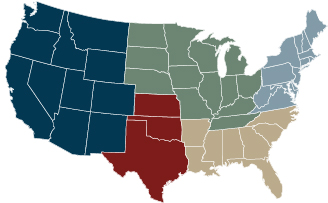
Angus Advisor: Southern Region
Our team of Angus advisors offer regional tips for herd management.
October 21, 2025
Success on a cow-calf operation can mean many things, but ultimately it is profitability driven by reproductive efficiency, which is largely supported by a focus on providing proper nutrition and herd health management. To go further, an often-overlooked part of herd health and nutrition is soil fertility and forage management. Here are a few examples of issues that sometimes get overlooked.
First, soil pH is the crucial building block for all things forage management. I’m not a soil scientist, and won’t pretend to be. Soil testing is something that can be carried out by using local resources such as a county extension program.
They often have the information, labs, and sometimes the collection tools to aid producers in getting a handle on current soil pH and overall soil fertility. A cattle operation’s focus on stabilizing soil pH is paramount to the success of the entire operation.
Can soil pH affect fertility in the herd? Can soil pH affect lactation, calf growth, disease and cow cost? Ponder that for a few moments. Soil pH is not the only factor, but it is the foundation for proper herd nutrition in the form of grazing and stored forages.
Many forages grow best in soils with a pH from 6.0 to 6.5, but can vary slightly based on the forage being produced. With proper soil pH and adequate nitrogen, phosphorus and potassium (NPK), the forages in question have an optimum chance for production if the weather cooperates and grazing is managed properly.
Overstocking and/or overgrazing often result in a steep downhill slide into reduced herd health and lower quality herd nutrition with increased cost. No matter the pH and fertility of the soil, overgrazed forages are simply unable to provide adequate nutrition for females to do their job. Adding pain to misery, cow cost goes up as commodities and stored forage are often used to patch nutrient gaps. Short pastures in some environments also bring on heavier loads of the invisible production killers known as internal parasites. The equation of poorer nutrition and greater parasite loads is not pleasant to observe.
This situation can sneak up on those not focused on forages. No one ever intends to allow this to occur. However, about the second or third year of overgrazing, pregnancy checking ends with a 40% artificial insemination (AI) conception rate or a herd pregnancy rate of 75%. Circling the wagons, we ask, “What happened? Was the bull bad? Is my artificial insemination (AI) tech slipping? Are my minerals not working?” Growing grass is difficult to replace with respect to its quality and price.
One key to reducing overgrazing and lengthening the number of grazing days is rotational grazing. The UGA forages team often reinforces the phrase, “Grass grows grass.” Focusing on grazing height and developing a grazing strategy can make all the difference in a herd’s fertility, productivity, health, profitability, and, yes, even the product on the rail. Lastly, submitting correctly gathered forage samples to obtain information such as % CP (crude protein), % TDN (total digestible nutrients), RFQ (relative forage quality) and nitrate levels is essential for the success of a fall or winter breeding season.
by Jason Duggin
University of Georgia
jduggin@uga.edu

Topics: Animal Handling , Business , EPDs , Equipment / Facilities , Feedstuffs , Foot score , Genetics , Health , Management , Nutrition , Pasture and Forage , Record Keeping , Reproduction , Sire Evaluation
Publication: Angus Journal
Related Publication Articles


Current Angus Journal
Keep up on the latest stories of the people and programs in the breed.

Latest Podcast Episode
Don’t miss conversations with breeders and industry experts.