





Made to Last
How generations of intentional selection at Van Dyke Angus Ranch built a cow herd focused on fertility, longevity and consistency.
March 3, 2026
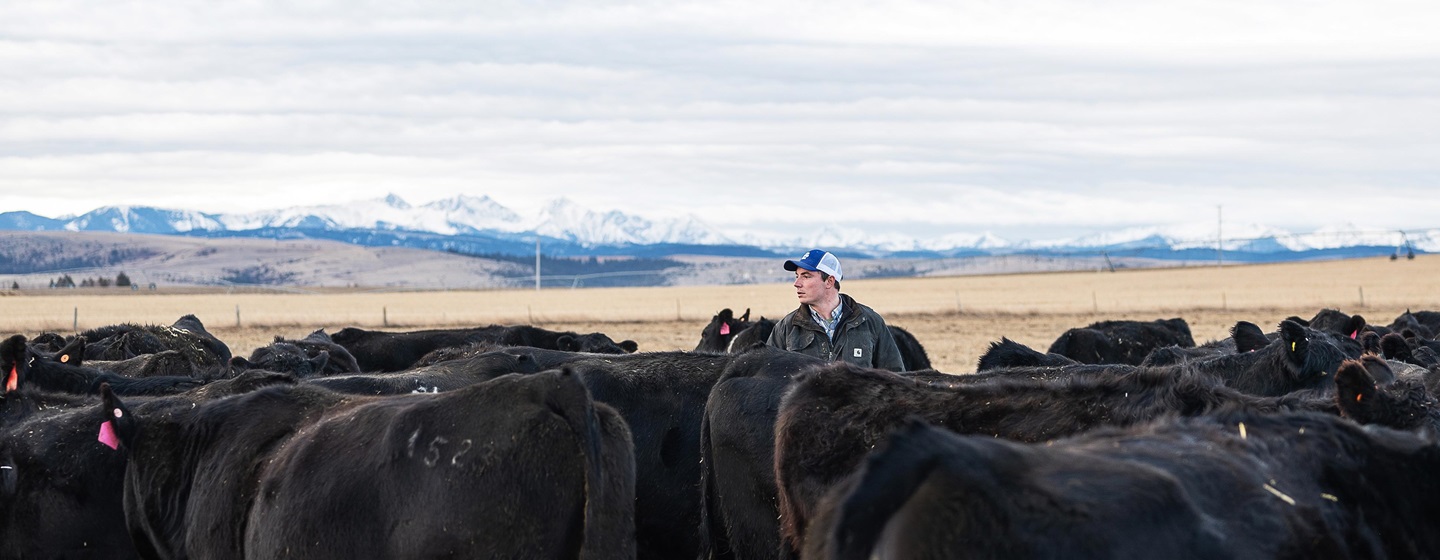

A brand marks identity, signifying what an operation stands for. When the VDAR prefix leads off on a registration paper, you can guarantee there are generations of intentional selection behind it.
At Van Dyke Angus Ranch (VDAR), this identity shaped decades of deliberate maternal focus, where fertility, longevity and functional cows guided breeding decisions well before those traits carried formal definitions.
Clarence Van Dyke, the patriarch of this historic herd, blazed a path which defined a multigenerational way of thinking about Angus cattle.
“He was very progressive,” explains Tim Crabtree, who has served as ranch manager since marrying into the family. “He was involved as a test herd for ABS in the late ’50s and early ’60s and one of the early people to really bring in AI (artificial insemination) across the herd.”
Clarence’s early willingness to adopt new technology laid the groundwork, but it was the next generation that began shaping the herd around discipline and consistency.
As the operation naturally evolved, his son, Lee Van Dyke, took the reins alongside business partner, Tom Wulff. At the time, the operation calved over an extended window, a byproduct of years when markets were high and the replacement structure shifted.
Facing Montana’s harsh winters, Lee wanted a more manageable calving season, so he decided to shorten it to a one-month window.
Crabtree emphasized his father-in-law’s sentiments saying, “It makes it a lot more doable when it feels like we just need to get through the next 30 days, then we’re about done.”
This decision marked a pivotal shift. Fertility became nonnegotiable, and the herd began sorting itself accordingly. It’s a framework Crabtree has carried forward and refined as ranch manager today.
Clarence’s vision, Lee’s operational discipline and Tim’s refinement have established them as one of the breed’s forward-thinking seedstock operations.
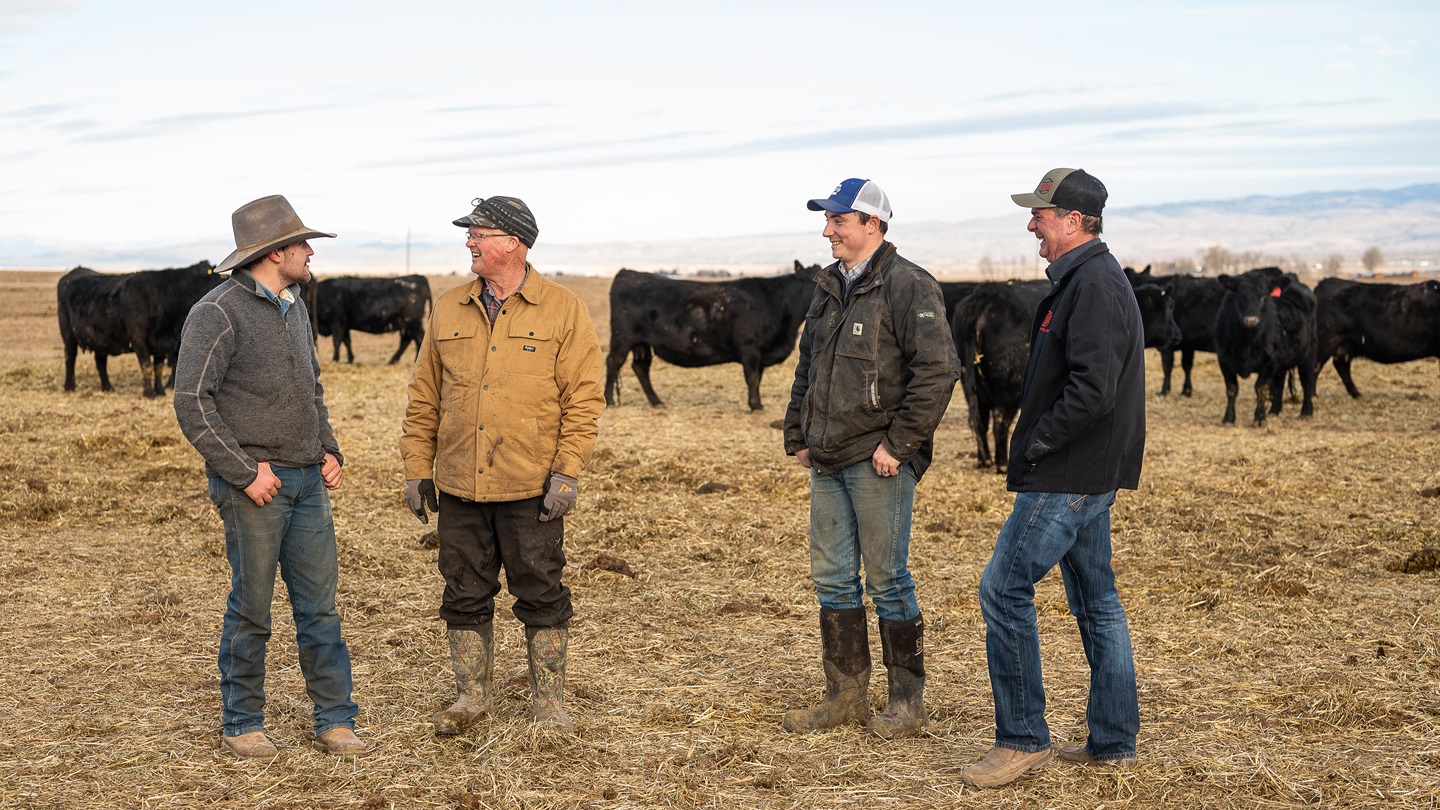

build a better cow."
— Tim Crabtree
The making of VDAR philosophies
Early on VDAR emphasized performance. Growth mattered. Ratios mattered.
But as the herd improved, priorities shifted.
“Over the years, we moved from really trying to improve the amount of performance that we got out of the cattle, to a point where we were happy with the level of performance,” Crabtree says. “That allowed us to focus more on just the cow.”
That transition marked a turning point. Once performance thresholds were established, the family began placing greater emphasis on fertility, longevity and consistency — a focus that has led to decades of success.
Those decisions still show up in old records.
“It’s fun to be able to go back through these cattle and be able to look at what some of these lines have done for 70 years,” Crabtree says. “We’ve got our Elluna cow family, which goes back to the very first cows Clarence bought; and they’re still quite prolific in our herd.”
Through generations, the guiding principle remained steady, shaping every breeding decision and every calf that joined the herd.
“I think one thing that’s definitely stayed the same is just commitment to breeding a better cow and trying to build a better cow,” Crabtree adds.
This enduring commitment set the stage for the standards that define the herd today.
Tightening the standard
Maternal strength at Van Dyke Angus is now driven primarily by fertility.
Crabtree proclaims that the best cows roaming the Montana-based operation “bring us a good calf, and do it on time every year and do it for a long time.” This philosophy has guided their breeding program for the past 20 years.
It became even more concrete in the early 2000s, when the ranch opted to adjust to a 42-day calving window. In recent years, they have pushed further, operating primarily on a single-cycle window.
“We’ll keep cows for two full cycles, but generally we don’t keep very many in the second cycle. We haven’t had to,” Crabtree says.
Holding cattle to that expectation does more than improve reproductive efficiency.
“When we hold them to a really tight standard for fertility, it’s sorted a lot of the other things to fit our environment quite well,” he says.
Structure, frame size, milk production and mobility all tend to align when fertility is the main objective.
That discipline extends across the entire herd.
“Just continuing to even up the herd across the board and really have less and less outliers and more and more predictability for ourselves and our customers,” he says, highlighting the long-term payoff of strict selection.
The approach lends to the predictability of calving season and consistency. With most cows calving early in the window, the workload feels more manageable, allowing the family to focus on a defined stretch of intensive care before wrapping up calving season.
Traits that travel
The operation markets their bulls in an annual sale every February and sells bred heifers private treaty in the fall. Although based in Big Sky Country, VDAR cattle are marketed nationwide.
“I believe as far as maternal traits go, what makes a good cow in Montana still makes a good cow wherever we send them,” he says.
Balancing maternal strength with performance still requires firm thresholds.
Crabtree says, “For us, it’s really been about figuring out what criteria across the board we need everything to hit, and then being disciplined about holding the cattle to it.”
VDAR sets minimums for sale bulls, requiring 600-pound (lb.) adjusted 205-day weight and 1,000-lb. adjusted 365-day weight.
“If we have anything we don’t believe is hitting the criteria as far as growth and performance, we get rid of them,” he explains.
But fertility remains the primary gatekeeper. Its emphasis shows up in the numbers, with roughly three-quarters of the cow herd ranking in the top 10% of the breed for the Functional Longevity (FL) expected progeny difference (EPD).
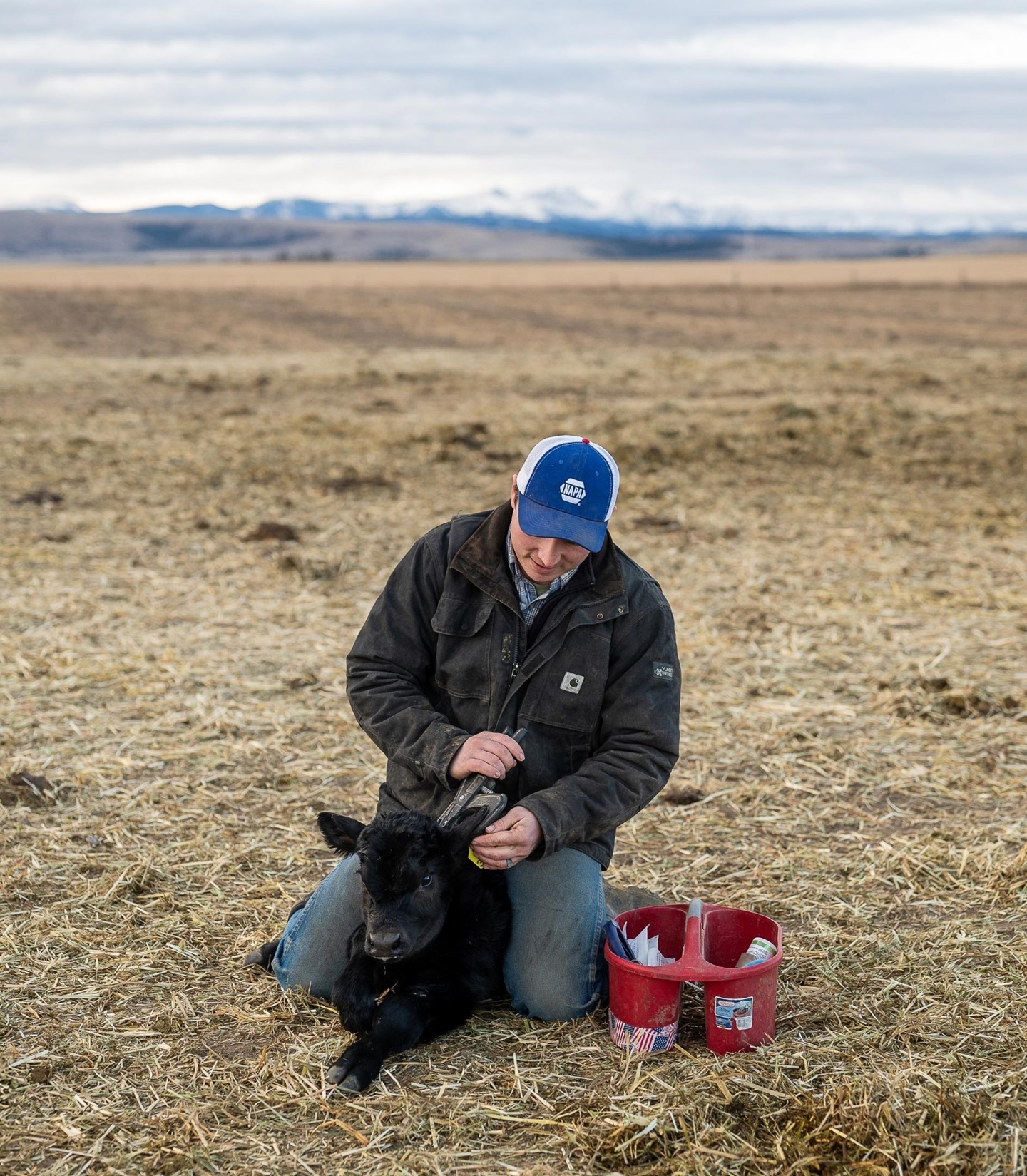

FL: A name for what they were already doing
When the American Angus Association introduced the FL EPD and the expanded maternal trait suite, it gave breeders a way to measure what many seedstock operations had long valued.
Esther Tarpoff, director of performance programs for the American Angus Association, explains FL is not just about how long females remain in the herd on paper, but their ability to produce calves every year.
“Functional Longevity predicts how many calves a sire’s daughters are expected to produce by 6 years of age,” Tarpoff says. “This gives producers a way to select for those who will remain productive year after year.”
Crabtree sees the newly released EPD as less of a new direction, and more as confirmation.
“We were pretty excited for it to come out because, in our minds, we thought we should rank really well,” he says. “That’s been our program really for the last couple of decades, we just didn’t call it that.”
Crabtree says the value of the FL EPD shows up after the cattle leave the ranch. Cows that stay productive through 6 years of age are more likely to pay long-term dividends in their customers’ herds.
“When you’re looking at whether a cow had a calf on time every year to 6 years old, what that really measures is if this animal going to be profitable in the commercial side of the industry,” he says. “That’s the biggest reason we’ve placed so much importance on it in our herd, for our customers to be successful.”
For VDAR, the FL EPD simply puts structure around the idea seedstock producers have long understood. Cows that stay productive longer create more profit.
“It’s not a fluke that our herd ranks so well in it because that’s been our program [focus] for such a long time,” Crabtree says.
Alongside FL, the full suite of maternal traits — including heifer pregnancy, udder suspension, teat size and milk — helps quantify the very traits VDAR and Angus breeders across the country prioritized for generations.
“These tools give producers a common language to measure and compare maternal traits, reinforcing decades of on-the-ground experience with objective, breedwide data,” Tarpoff adds.
When cattle calve every year, it’s a measure of “if this animal is going to be profitable in the commercial side of the industry,” Crabtree says.
The introduction of FL didn’t just highlight the operation’s selection criteria, but also underscores their culling choices. Looking back at cattle that weren’t up to snuff strengthened Crabtree’s faith in the data.
“When we looked at bulls over the years whose daughters didn’t stay in the herd as well as we wanted, as a whole, those bulls scored pretty poorly on [the EPD],” Crabtree says.
While phenotype still drives many purchasing decisions, Crabtree views EPDs as a way to sharpen selection, especially when sourcing outside genetics. The addition of new tools and EPDs helps VDAR make more informed decisions. For years, longevity and fertility guided every selection decision.
Still, Crabtree says, “It made it a challenge for us to find outside bulls and have a lot of confidence in them, simply because there wasn’t a bank of data to pull from for that information.”
He also acknowledges the value in submitting data, further strengthening those tools for everyone.
“All of these tools and even for that matter, all of the data, the more of it that’s there, the more meaningful and useful it becomes,” Crabtree says.
Tarpoff echoes that perspective from the Association side of things.
“By submitting performance data to the Association, producers have the opportunity to refine EPDs and the suite of maternal traits for the entire breed, strengthening selection decisions far beyond their own operations,” she says.
Sustaining success
While data and discipline shape today’s herd, Crabtree says the long view still matters most. He hopes one day his own children will walk the same pastures, tracing cow families back through decades of records and remembering the females that helped define the program.
“That’s the purpose of doing all of this, is to be able to hand it off to the next generation and not have it end,” Crabtree says.
For him, breeding cattle is about more than numbers on paper. It’s about predictability, trust and the responsibility to cattlemen who depend on VDAR genetics.
“That’s really the way that we view breeding cattle,” Crabtree says. “Our job is to breed for and select for cattle that are profitable for our customers who have bought cattle from us for the last 30-plus years.”
That mindset drives every decision, from tightening calving windows to leaning into new Association tools. The result is a cow herd built to last; grounded in fertility, longevity and consistency; and shaped by generations of intentional selection.
For VDAR, maternal focus is a commitment carried forward across generations, reinforced by modern tools, and grounded in the belief that profitable cows create sustainable operations. Each decision, from calving windows to trait selection, reflects a commitment to improving their herd and the commercial cattlemen who rely on it.
Editor’s note: Photos by Cate Doubet, video specialist.
Topics: Animal Handling , Association News , Business , EPDs , Management , Member Center Featured News , Ranch profile , Reproduction , Seedstock Marketing , Selection , Success Stories
Publication: Angus Journal
Related Publications


Current Angus Journal
Keep up on the latest stories of the people and programs in the breed.

Latest Podcast Episode
Don’t miss conversations with breeders and industry experts.
