




Wrestling With the Balance
Patterson and Barnard on new technology, practical application and tradition.
March 3, 2026
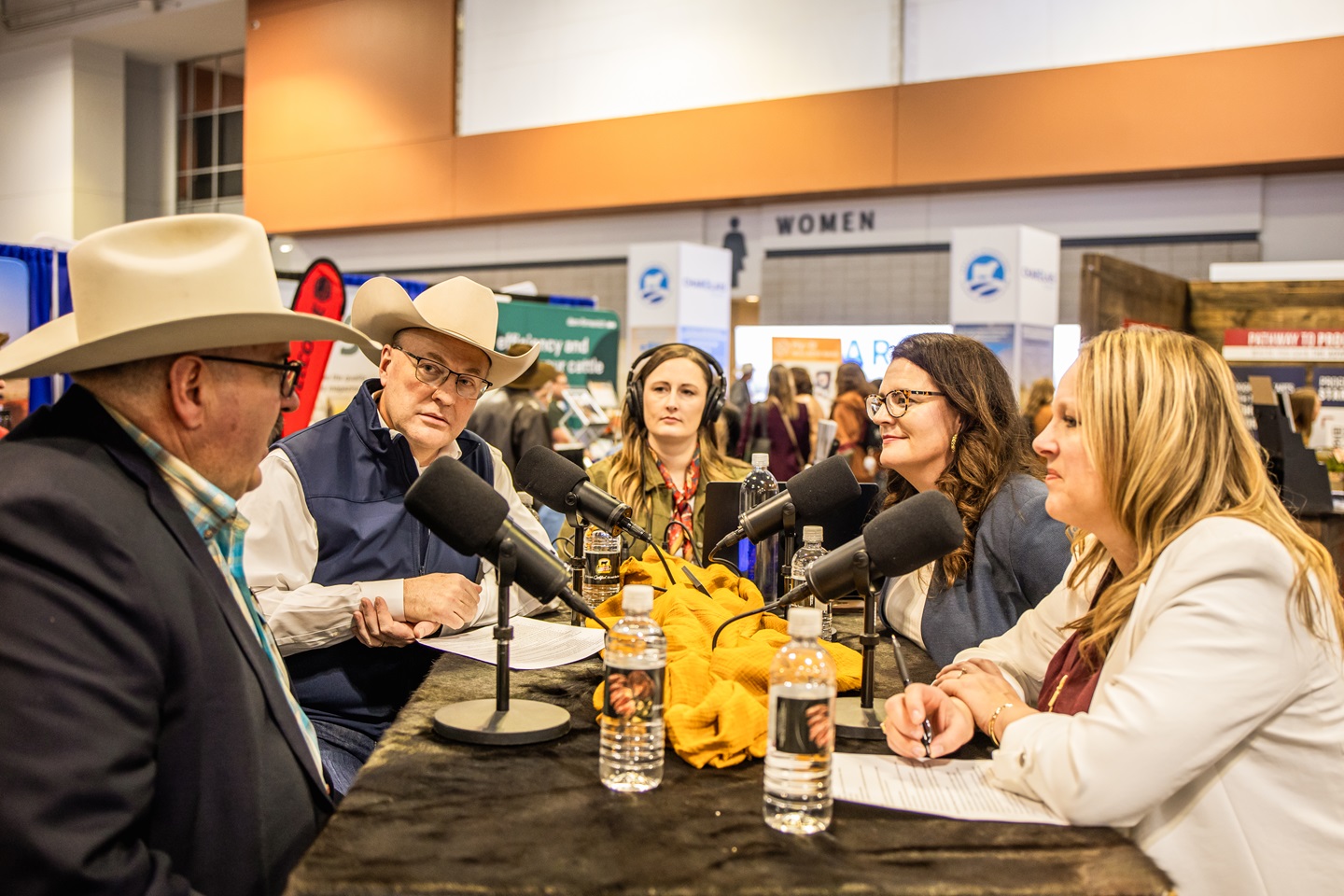

What technology should I embrace? And when? What tasks should I leave to tradition, and which would benefit from a retool?
These questions often challenge cattlemen, no matter the size of their operation.
On a recent episode of The Angus Conversation, Trey Patterson, Padlock Ranch, and Janette Barnard, Merck Animal Health and founder of Prime Future, share how they think about what’s next in the beef industry.
Every day there are new technologies being introduced and new ways to collect data that’s been hard to get at before. Yet without a plan, none of that is very useful, Patterson said.
“You can waste so much time collecting data that you never use to make a decision,” Patterson said. “We’ve been guilty of that.”
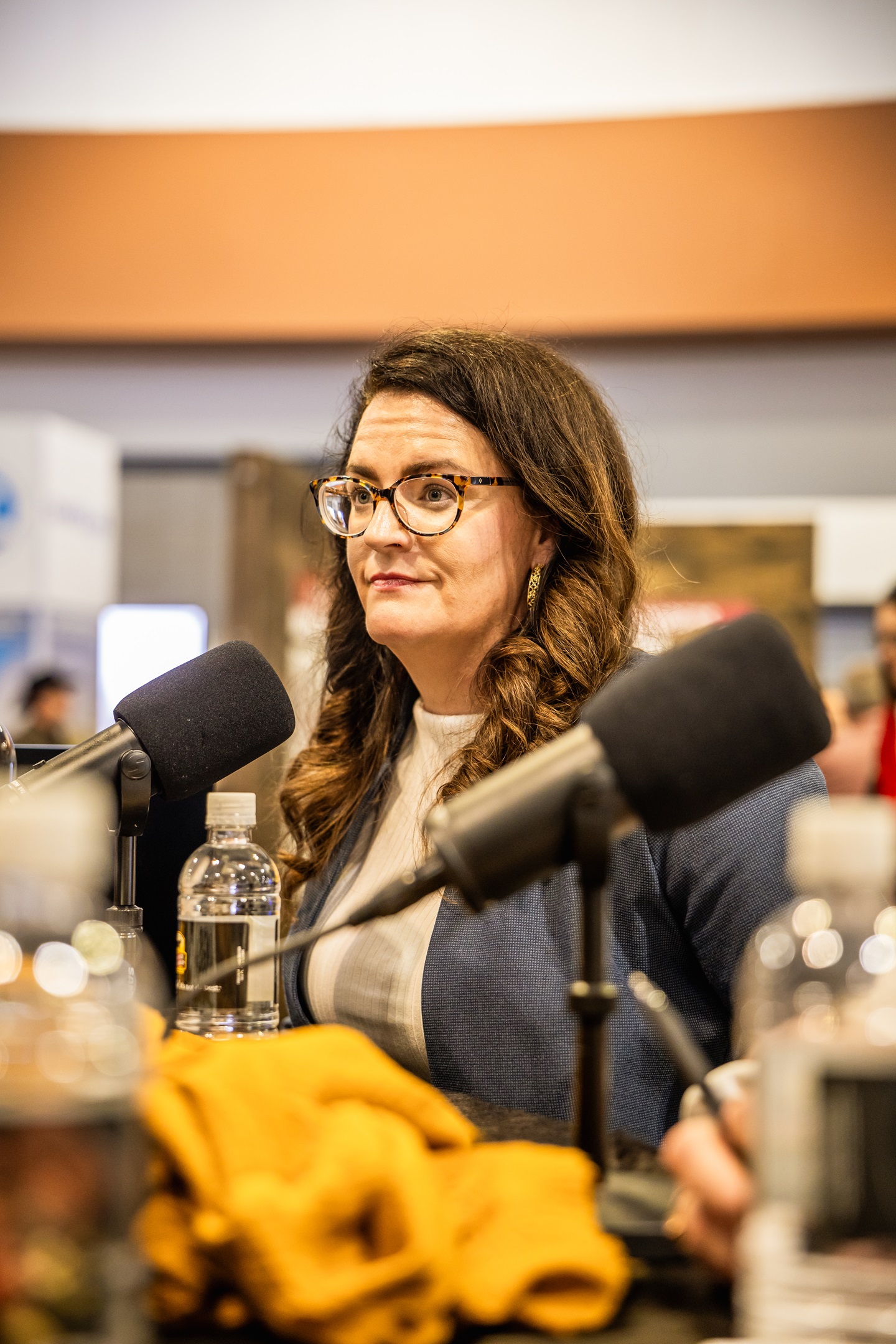
Janette Barnard
Merck Animal Health and Prime Future

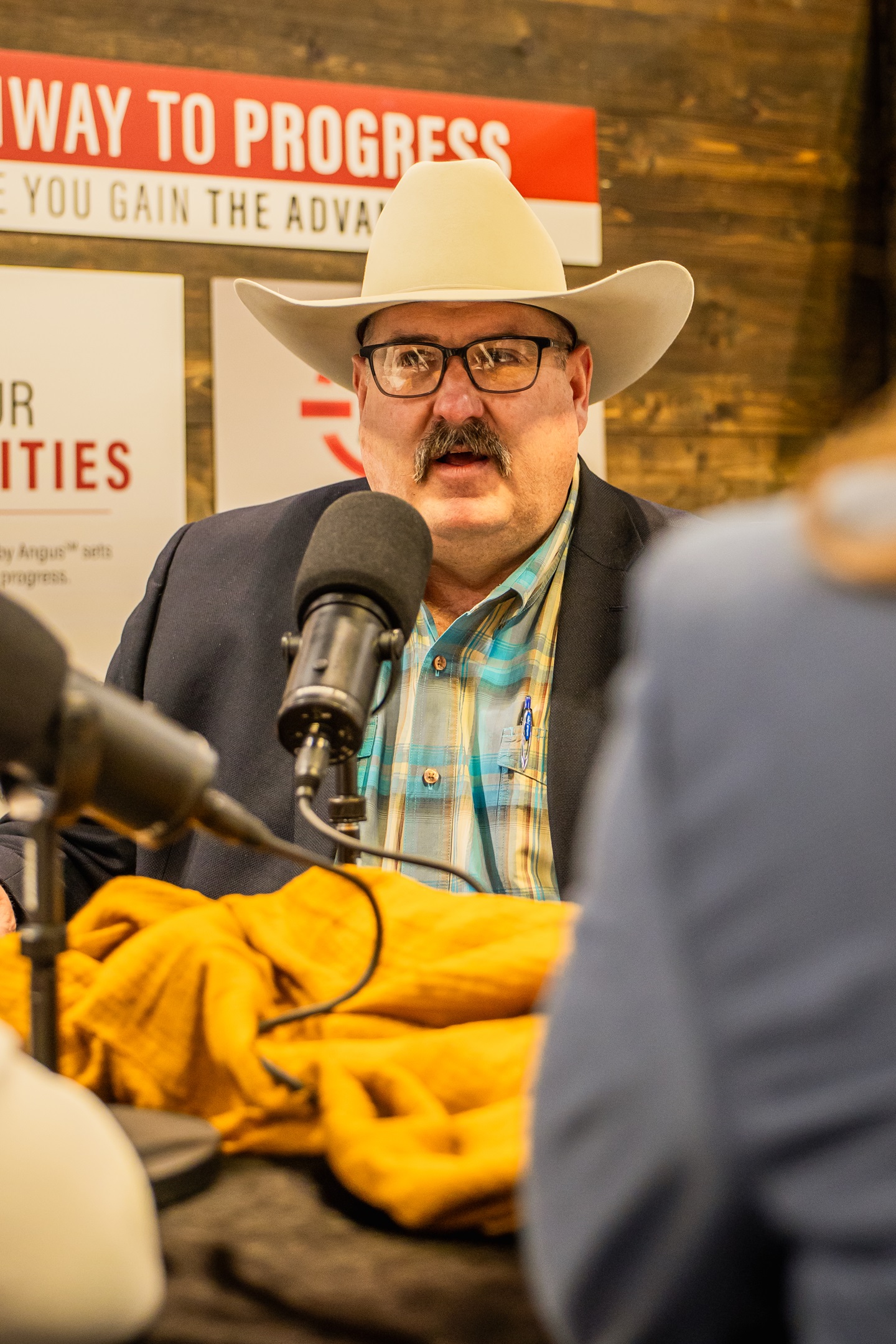
Trey Patterson
president and CEO of Padlock Ranch Company

With new tools and new information usually comes the need to divert from business as usual.
“The technologies that are going to have the most impact on the business are typically technologies that are going to require some change in how we manage,” she said.
“Sothere’s this change in management piece within the people and the systems and how we measure success.”
Yet, with more information and a faster pace, it’s more important than everto have guiding principles or goals, Patterson said.
“We’ve got to be careful in business that we don’t get too distracted,” he said. “We’ve got to stay the course and be disciplined about being able to synthesize information in a very efficient way, and I think that’s going to be important to our sustained success.”
“We’ve got to stay the course and be disciplined about being able to synthesize information in a very efficient way, and I think that’s going to be important to our sustained success.” — Trey Patterson
Covering everything from artificial intelligence for decision-making and virtual fencing to genetic progress and new marketing methods, the duo discussed practical application of data.
“Maybe the question really isn’t, 'What are the emerging technologies?’” Barnard said. “It’s more of, how do we drive adoption of the existing technologies that are available?”
EPISODE NAME: Patterson, Barnard: Wrestling With the Balance of New Technology, Practical Application and Tradition
The beef industry is a beautiful blend of long-standing traditions and forward-thinking innovation. How much technology to embrace, when to use it and for what purpose — those are questions that often challenge producers, no matter the size of their operation. Trey Patterson, Padlock Ranch, and Janette Barnard, Merck Animal Health, share how they think about the future of the business. Covering everything from artificial intelligence for decision-making and virtual fencing to genetic progress and new marketing ideas, the duo talks about how to focus on practical application of data and the need for more advancements vs. greater adoption of current tools.
HOSTS: Miranda Reiman and Mark McCully
GUESTS:
Janette Barnard is bullish on the future of animal protein, and passionate about the intersection of animal agriculture and innovation. Janette currently leads the Vence business within Merck Animal Health and is the creator of Prime Future, a weekly newsletter for innovators in livestock, meat and dairy that draws on her background across agribusiness (Elanco, Cargill, McDonald’s Global Supply Chain) and the startup ecosystem (The Poultry Exchange, DecisionNext, Merck Animal Health Ventures).
Trey Patterson, president and CEO of Padlock Ranch Company, received a bachelor’s and master’s in animal science from Colorado State University and a doctorate in ruminant nutrition from the University of Nebraska. He served as an Extension beef specialist for South Dakota State University for five years, where he led statewide extension and research programs in beef cattle nutrition and management. Since 2005, Trey has been with Padlock Ranch Company, a multigenerational and diversified family-owned agribusiness with operations in northern Wyoming and southern Montana. Trey now holds the position of president and CEO. In 2008, he was listed in the Top 10 Industry Leaders Under 40 by Cattle Business Weekly. Trey and his wife Amy have five children and reside near Ranchester, Wyo.
SPONSOR:
Angus Media: Are you ready to level up your herd’s genetics? With the Angus Bull Book: Spring 2026 Angus Sire Directory, you can find your next great sire. The spring issue went live in March, but you’re able to view the book online all breeding season. Live EPDs will help you pair the right bull with your breeding objectives. Search the Angus Bull Book here.
Angus Media: A solid herd starts with the cows. Commercial cattlemen need to know that your foundation is built on maternal traits. Tell them in the Female Foundations special section published with the September Angus Beef Bulletin. Get an advertisement, feature and social post all in the same package. Contact your regional manager or our advertising team to learn more. Find them at www.angus.org/angus-media/about/contact-us.
Miranda Reiman (00:00:03):
Welcome to the Angus Conversation. I'm your host, Miranda Reiman with my co-host and CEO of the American Angus Association, Mark McCully. And Mark, we just recorded an episode that really, I mean, focused on that blend of tradition and technology. And that's something that I think, I mean, we all struggle with in this business, but it was a topic that I think wherever you sit on that continuum of wanting to never change to loving and change, I think you'll get something out of it.
Mark McCully (00:00:31):
No, absolutely. And I think something I always try to think about at the Association, we have this incredible heritage and this incredible tradition that you want to honor. And yet I always say- And
Miranda Reiman (00:00:41):
That's why we do the things we do.
Mark McCully (00:00:42):
Exactly. Right. And then I also always kind of think, well, you know what? Innovation is our heritage of doing better and thinking ahead and trying to predict where we need to be and adopting change when it makes sense. And I think for a lot of times for ... And I tend to be overwhelmed by it sitting here in a trade show like we are, that so many companies in here with new products, new services, new technologies, new whatever. And I think for probably many cattlemen walking around, it's like, OK, which of these do I need to be thinking about? Which of these can help me advance my business? I think we kind of wrestled with that topic a little bit today.
Miranda Reiman (00:01:18):
Absolutely. I think also something that was interesting is that our guests talked a lot about the history and you mentioned the history of our Association is innovation. It's easy to romanticize in like this nostalgic like, oh, the past and the ... But if you read the history, like the Angus history book, if you read some of the historical accounts of agriculture, it was always changing even when we're ... So that's kind of the cool thing to
Mark McCully (00:01:44):
Think about. We tend to don't probably think about it that way.
Miranda Reiman (00:01:46):
Yeah. Then it was scary, too
Mark McCully (00:01:47):
...kind of as a static time, but it really wasn't, right?
Miranda Reiman (00:01:50):
Right. And one thing that one of our guests brought up was barbed wire. And one time I heard that as one of the greatest disruptors in the cattle business was barbed wire.
Mark McCully (00:01:59):
Absolutely. It's barbed wire.
Miranda Reiman (00:02:02):
Right.
Mark McCully (00:02:02):
Yeah. It's very simple technology, but one that was incredibly impactful.
Miranda Reiman (00:02:06):
Absolutely. So you're going to hear from two folks that have different perspectives on change in the beef industry, and I think you're going to really learn a lot. Today on the podcast, we're sitting here in the trade show at the Cattle Industry Convention in Nashville. And we have two guests that are going to help us kind of stretch our mind to think a little bit about the future of the beef industry. So Jeanette Barnard is here, creator of Prime Future, also with Merck. Give us a little bit of this background here. You grew up in a cow-calf operation.
Janette Barnard (00:02:39):
Yeah. Yeah. In Southeast Arizona. So my background, I spent my whole career in the animal protein space, started out in animal health with Elanco Animal Health. Then when I was in business school was, I don't know if you guys remember this, but it was about the time when Monsanto bought Climate Corp. Do you guys remember that? Which was really-
Miranda Reiman (00:02:57):
I do remember that.
Janette Barnard (00:02:59):
Yeah. And the social network movie came out. Startups were the cool thing. And so I started looking at, all right, how do we apply tech to animal ag problems? That was really when I got sucked into the startup world and the tech world. And then started a company, joined a venture backed company, la la la la la, fast forward. And now I'm at Merck Animal Health and run the Vence business. And that's my daytime job. And then my hobby is writing Prime Future. Yeah.
Mark McCully (00:03:28):
Okay. Well, I interact most with you through Prime Future, and I'll put in a plug for you. Look it up. It's really one of the things I always look forward to hitting my inbox. And it really is a great read. One, you're a great writer and it's very fun to read, but always stretches your brain a little bit and makes you think. And so I would highly recommend it. Highly recommend it. So good stuff.
Janette Barnard (00:03:51):
Thank you. I think you just became the number one sales guy for it. So well done, you.
Mark McCully (00:03:54):
All right, good. Good.
Miranda Reiman (00:03:57):
And through that venture, you've got experience working with a lot of Fortune 500 companies all the way up to the White House?
Mark McCully (00:04:04):
Oh, that's right You had a little stint at the White House.
Miranda Reiman (00:04:07):
Yeah.
Janette Barnard (00:04:08):
So okay, let's just-
Mark McCully (00:04:09):
The internet's a funny thing. There's all sorts of things out there.
Janette Barnard (00:04:12):
So okay, let's just call it the all roads lead back to FFA, right? So I was a national FFA officer and then the year after there was someone in the White House. So this was in the Bush administration, George W., the second administration. And there was someone in the White House that was in the office of public liaison and they were the ag liaison, right? So they were the person that was liaising with all of the ag groups. And anyway, through that connection was able to get the opportunity. So I spent a semester doing really cool, important things, like holding the door open for the president's cabinet one time. So that was probably the highlight. But yeah, great experience. Yeah, great experience. So love the-
Mark McCully (00:04:53):
Amazing, yeah.
Janette Barnard (00:04:53):
Interested by the policy side, but I just love the business and in the industry side of things more. So yeah,
Mark McCully (00:05:01):
Definitely. Awesome. Awesome.
Miranda Reiman (00:05:01):
So well, we're looking forward to hearing from you more. And also we have across the table from me is Dr. Trey Patterson, president and CEO of Padlock Ranch out there in Wyoming and Montana. So thanks for joining us.
Trey Patterson (00:05:13):
Oh man, I'm glad to be here. Yeah, it's amazing that it is colder in Nashville than it is on the Montana-Wyoming state line. No,
Miranda Reiman (00:05:23):
What the heck?
Trey Patterson (00:05:24):
Yeah, I come from a family-owned operation. I am not a family member. I grew up around agriculture and had a stint in academia as a beef extension specialist at SDSU after I finished my graduate work. But I've been with Padlock for 20 years and now serving as the CEO of the company. But we're a family-owned business. We operate in Wyoming and Montana, really a diversified cow-calf farming feedlot operation. So we're really involved in all sectors. We produce some of our own bulls or most of our own bulls and retain ownership all the way to harvest on some animals. So we're involved in a fairly big segment of the industry.
Miranda Reiman (00:06:05):
Yeah, absolutely.
Mark McCully (00:06:07):
So your time, and that's where I wrote a first met you Trey, when you were at ... I thought you were gonna do like a "go jackrabbits" when you put the SDSU piece in there.
Miranda Reiman (00:06:13):
We'd already done that earlier.
Mark McCully (00:06:15):
Oh, OK. OK. But how long were you in Extension?
Trey Patterson (00:06:18):
Five years.
Mark McCully (00:06:19):
So how did that get you ready to go do what you're doing today?
Trey Patterson (00:06:22):
Oh my goodness. I tell you what, somebody told me one time that the smartest day of your life is the day that you graduate with your PhD and then life humbles you from there. And I think about that all the time now. I think about the things I used to think that I knew a lot about. I realize now I didn't know very much about. So it was just a huge learning curve, being able to work with so many different producers, meet so many different people in the industry. I think it really prepared me for management. I always had this passion to be in production agriculture and to be in the management. I didn't know if God would open that door or not, but I loved what I was doing. I loved extension, was building a research program, but that door opened for me to go into production ag and haven't looked back.
(00:07:09):
Very
Mark McCully (00:07:10):
Cool. Most would know Padlock Ranch at one of really the storied ranches in the country. Maybe give us just a little overview of maybe the history of the Padlock Ranch.
Trey Patterson (00:07:19):
Yeah. So it was founded in 1943 by Homer and Mildred Scott. Homer was out there building roads with Kiewit Construction, and bought a place on the Tongue River near Dayton, Wyoming, and named it the Padlock. And just it grew from there and started buying and leasing land into Montana. And the Scott family today still owns the ranch. They're involved through a board of directors. And so we have a board that's made up of family and non-family members. I'm one of the non-family members. So they're involved through a governance process, but super passionate people about doing good business and keeping the ranch and the family for perpetuity. And we talk about that a lot. And so this is maybe more than you want me to say on this, but it's just something I get excited about. So when I decide what I do and how I make decisions and my role in the company, it's really guided by five elements of purpose. And these were established through parallel planning with the family and the business.
(00:08:25):
And those five elements are human excellence, number one, natural resource stewardship, number two. Three is financial excellence, profitability. Four is being a positive member of our community, and that's our local communities where we live and work, but also the greater beef industry and being able to help people and work with that. And then finally being an emblem, keeping the ranches an emblem for the family. So in our way, we think if we've got good people, we're good at natural resource stewardship, we're profitable, we're helping our community and our neighbors, and we keep the ranch of something the family can be proud of. That's our definition of sustainability.That's how we will be here for perpetuity. So that's the world that I live in.
Mark McCully (00:09:12):
That's awesome. And very well articulated. I think you gave a presentation to BIF maybe a couple years ago on those guiding pillars of what you guys do. So that's awesome. That's awesome.
Miranda Reiman (00:09:22):
So what does your day-to-day role look like at the helm of all of that as the CEO of the operation?
Trey Patterson (00:09:28):
Oh my. Every day, every day is different. I am fortunate to have a really good staff and we got a strong management team in place and I'm very much a delegator. And so I like to get good people around me and help make them successful. And when they're successful, our company's successful and I'm successful. So that's kind of the management style, but I'm involved in everything from finance to HR to land related issues. I spend quite a bit of time in marketing and then just in systems development, but also amazingly, kind of going back to my extension background, I spend a fair bit of time in education. And so we've got a family that's now in the fifth and sixth generation of ownership. And you think about the second and sometimes the third generations that have sweat equity on a ranch, that makes you love a place.
(00:10:23):
When you've sweated there, you've bled there, you've put your life into it, but if you grew up in Denver or Billings, maybe not so much and you don't know as much about it. So I spend a lot of time talking and teaching about our industry and what we do in our ranch and that's really exciting. We've actually started some initiatives like we do a monthly podcast for the family called Behind the Brand. And we started an initiative called the Padlock Learning Academy where we put on educational events just to teach people and help them. We really feel like you have to understand to be engaged. I think that's kind of similar to our industry and that we want to reach out to our customers and we're trying to help them understand what we do, but mainly how much we care. I work in a lot of different areas.
(00:11:14):
I'm trained as a nutritionist, and so I do the nutrition work for the ranch. And I tell people that's maybe the only part of my job where I really think I know what I'm doing, but I do work in a lot of different areas. It's super fun.
Janette Barnard (00:11:29):
Yeah. Trey, I have a question. So I have this philosophy that the best way to understand the future is to understand more about how we got where we are, right? Understand the past, understand history. So I guess my question is, so you're running this storied business, ranching business. What were the one or two or three things that were done early on that led to the Padlock's success over time?
Trey Patterson (00:11:51):
Oh, what a great question. I think one of the first things, and going back to some of the interviews with the founder, with Homer, is one of the things he would say was, "We're not out to be the biggest ranch, we're out to be the best." And so it's just really creating this culture of excellence, I think was one of the big things. And then just having the entrepreneurship and the risk tolerance to grow and reach out and get into some debt to help the ranch grow and expand and then just creating relationships, I think in the areas where we operate with our community, I think those have all been really, really important. We have a significant portion of our operation is on the Crow Indian Reservation. And so relationships within the reservation system with the Crow people are really, really important to our success.
(00:12:46):
So those were some key things I think that were initiated. I can't get past this culture of excellence idea. We talk about it all the time and I don't know how to articulate it. It's just this kind of unrelenting desire to be better tomorrow than we are today. And I think we try to carry that through with our business now.
Miranda Reiman (00:13:06):
That's really good. That's fantastic. Really good lessons even outside of the cattle business, for anybody running a business. Well, that's a great springboard, I guess, to have these kind of varied experiences in the industry for us to kind of talk about the future of the business. So if we want to just start broadly, what are you most optimistic about the future of the beef business and what gives you pause?
Janette Barnard (00:13:31):
I'm going to take the easy one. The obvious one is just the fact that I think if you look like five years ago, so I've spent the last 10, 12, 13 years in the ag tech space, right? So if you looked five years ago at where venture capital was going, it was going into alt protein to replace our industry. And there was a lot of fear around that. And fast forward to today, and it's very obvious that cellular cultivated meat is a long ways off if it's going to be a thing. And if it's even going to be a thing, they're going to run into a problem because it turns out people like eating beef,
(00:14:09):
Shockingly enough, right? And so I think the fact that to me, just the state of the market, the state of if you look around the bigger world and how the protein craze is upon us, right? You go into Starbucks and you're seeing protein foam, like, what in the world are we doing? So perhaps the pendulum might be swinging too far, but I think it just bodes well for the macro environment from an industry perspective. So that's the ... I stole the easy, obvious one, but I think that's the number one thing to be excited about from an industry perspective.
Trey Patterson (00:14:40):
Yeah. And this protein craze is super interesting, but it is so fascinating that beef comes to the top of the list. People are wanting our product. I think that really speaks a lot to what we've done in the industry in the past and all the work that we've done, the genetic progress that we've made, the progress with technologies. It's just incredible, the product that we're putting out there. And what you'd be here in Nashville and you Google steakhouses, there's high end steakhouses all around this place.
Miranda Reiman (00:15:13):
And we tried to get into some of them and couldn't get reservations.
Trey Patterson (00:15:16):
And they're full. And they're 80 to $100 steaks and people-
Mark McCully (00:15:19):
It's not all cattlemen that are there.
Trey Patterson (00:15:21):
People are buying them all day long. So I agree. That is super exciting. I would add one thing, maybe from being a little selfish from the cow calf industry, I think there's real opportunity in the cow calf side. It seems like over the years, and I haven't necessarily ascribed to this mantra, but that the cow calf was kind of the stepchild of the industry. We're the low margin, we produce the cattle and that kind of thing. I've never really thought that was true, but I think there's going to be tremendous opportunity on the cow calf side. Every time we've seen these cattle cycles, the last few cattle cycles, when we come out of that supply dip, we're not building back to the levels we were. Now, we're getting more productive, right?
(00:16:06):
Bigger carcass weights, more productive cattle, but you still need the number of animals. And we're the ones that produce that. I think there's tremendous opportunity, and I'm really bullish on the cow-calf industry moving forward.
Mark McCully (00:16:20):
And there's some margin and profitability, right? And you think about folks walking around here that a little more optimistic in terms of whether it's their generation or another generation being able to come back and make a living doing this. A good living doing this. Absolutely.
Miranda Reiman (00:16:34):
So what gives you pause?
Trey Patterson (00:16:36):
Well, I'll take a stab at that. Just again, kind of looking at it from this cow calf production level, one thing that is just a concern, it's not a worry, but it's a concern, is that we're seeing more and more ranches that are leaving traditional production at, more family businesses that are exiting, and you can't blame them, right? I mean, especially the cattle are worth a lot, this ranch land's worth a lot, but I worry about that or not, I'm concerned about that. I said I wouldn't worry. I try not to worry. I do. I'm a liar. But I'm concerned that we're taking some of this productive ranch land and it's being bought up more as amenity ranches or recreational properties. We have to be able to maintain our infrastructure and the industry and the ability to service our industry. Now there's opportunity in that in the short term, right?
(00:17:38):
If we keep supplies just a little bit tight, there's more profits in it. I want that for our business, but we have to look beyond the now into the future. And I think being able to sustain our operating base is something we need to have on our radar. Yeah,
Janette Barnard (00:17:54):
Yeah. I would say what gives me pause is that when I hear a producer talk about excellence culture, and I heard someone earlier talking about how they are collaborating with other ranchers in the area to get to fabricated scale, right? There are people who are thinking outside the box, super progressive, forward thinking, that segment of producers, they're going to be fine, right? They're going to be great. That's going to be who pulls this industry forward. I think what gives me pause is that not everyone is thinking that way,
(00:18:24):
And that's what makes me nervous. I try not to be nervous, so let me walk that verbiage back. But I think that's what gives me pause is those who want to continue to run the business the way that the business has always been run, I don't know that there's a significant place for that in the future. I think you're going to have to have the mindset of how do we do this with excellence? How do we either get bigger or get better? One or the two. And not that it always has to be bigger, but we've at least got to be getting better if we're going to not get bigger, right?
Trey Patterson (00:18:55):
What other industry doesn't evolve with time? And we are very rooted in tradition and tradition is so important and we want to hold on to the traditions of our ranch, but we also want to innovate
Janette Barnard (00:19:08):
That's right.
Trey Patterson (00:19:08):
Change and grow. And so much of it is in just knowledge and growing and changing. But I agree with you 100%.
Miranda Reiman (00:19:17):
And with that, we're going to take a quick timeout for this word from Angus Media.
Speaker (00:19:21):
Your bull is worth the hype. With the Angus Bull Book Spring 2026 Angus Sire Directory, your customers will know it too. The Angus Bull Book will be mailed along with the March Angus Journal reaching 27,500 readers. It will also be published online through Pasture to Publish with live EPDs updated weekly. Give your bull the attention he deserves. Secure your advertising spot today. Contact your regional manager or Rachel Hunter at 816-383-5226.
Miranda Reiman (00:19:57):
How do you keep the tradition? Well, I just heard you on a video that I watched on Padlock Ranch. Talk about that and I was like, yeah, that's really cool, but how do you decide what's a tradition worth keeping, and what's no longer a tradition? You've got to move past it.
Trey Patterson (00:20:13):
Yeah. Sometimes tradition is just holding on to your roots, number one, being proud of where you came from and where you started. But in our case, we still operate in old school, Western ranch, all cattle are moved horseback, good cowboys, good cattle handlers. What those cowboys don't often think about is all of the cows that they're moving are electronically identified and we have an inventory of them by age, by unit, keeping pasture records and so on. And so there's a way to hold on to some of those things that are special. And man, you talk about a mistake you could make and say, well, just changing for the sake of change and losing some of that tradition. And for us in our business, I think that really helps us maintain an employee base because there's still a demand. The line for 18-year-old cowboys that want to come work for vittles and live in a bunkhouse really isn't there anymore, but there's a number of people and good quality human beings that still want to live that Western lifestyle, that want to throw a saddle on a horse every morning, and we provide that opportunity.
(00:21:27):
So that holds onto it, but at the same time, these cattle we're making genetic progress with, we're using a lot of data and information. You can have your cake and eat it too there.
Janette Barnard (00:21:37):
It's funny you say that because in my new role as Vence product manager, so Vence is virtual fencing, right? We're really focused on 10-state Mountain West, those large ranches, extreme terrain, like a lot of mountainous type country, rough BLM forest service type country. But one of the things that we see is those producers, they have those traditional ways of working and now they're incorporating virtual fencing. And so we're still on horseback going to get cattle, and yet instead of gathering taking three weeks at the end of the season, it's taking a week because we know where the cattle are. And so it's that merger of technology.
Miranda Reiman (00:22:17):
You haven't replaced the human.
Janette Barnard (00:22:19):
That's exactly right. Yeah. It's how do we use the tools that are available? And what I always tell our team is that the funny thing is that virtual fencing is a technology that we're competing with a 150-year-old technology, which is barbed wire. So think about how disruptive that was at the time and how that completely changed the culture of the trailing industry, like the Goodnight Trail and all of the things, right? So I think what you're describing, Trey, of just that culture and how do we hold onto the pieces and yet adapt and move forward is just, that is the challenge ahead of the beef industry, full stop.
Trey Patterson (00:22:52):
And my goodness, think about the amount of information that's out there today. It requires another level of information management to be able to decide what do we adopt? How do we listen? And you could get so distracted. Goodness, I've raised five children and I watched them with their phones, just the distraction at home, but we got to be careful in business that we don't get too distracted, right? We got to stay the course and be disciplined about being able to synthesize information in a very efficient way. And I think that's going to be important to our sustained success.
Mark McCully (00:23:29):
So when you guys think about, and I hadn't really thought about it, we have early adopters in every technology, right? Do you feel like the gap is growing wider between the early adopters and the laggards?
Miranda Reiman (00:23:41):
And the non-adapters?
Mark McCully (00:23:43):
It feels like it to me. And maybe I just get myself sped up on some of these things, which I know I can do, but do you see that happening?
Janette Barnard (00:23:52):
So I'll say two things about that. One is that what I find really interesting, somebody was asking me earlier today if with Vence, what we see is like the really, really, really innovative producers are the only ones using it. And I said, no, we have actually a lot of what I would call normal typical producers. And I don't say that in a negative way at all, right? I think that's such a positive thing. So I think there are some of those, the middle, if you will, the 80% middle that are considering alternative options. But I think the other thing is this, is that technology is, it is creating a competitive advantage, right? So we're kind of seeing this situation and this is, I'm going to, I have this written up but not published yet, Mark.
(00:24:35):
So this is coming in Prime Future, but it's this idea that like in the past you have scale that was in and of itself created the competitive advantage because you're getting the efficiency, economies of scale, all of that. But what you also see, and you can see this all the way going back to like Miller & Lux in the 1800s in California, right? But what you see is the scale enables them to adopt technology that then creates additional competitive advantage, right? So there's the efficiency that comes with scale and then that creates margin then for additional technology adoption, which then creates additional competitive advantage. And I think we're seeing that across a lot of segments of animal agriculture where different types of technologies, whether that's on the genetic side, digital, whatever it is. But to your point, I think it does create a separation between the innovators and the laggards.
Miranda Reiman (00:25:25):
Could it also though be a chance to like have an equalizer if you're a smaller producer that then implements the technology?
Janette Barnard (00:25:32):
Also that, that's the flip side of the same coin. Yeah. Absolutely.
Trey Patterson (00:25:36):
Yeah. There are some diseconomies of scale, right? That it's harder to implement, especially some of the newer, maybe more expensive on the front end kind of technologies with more scale-
Miranda Reiman (00:25:48):
Over thousands of cattle instead of hundreds.
Trey Patterson (00:25:50):
One thing that I just think we ... A concept that I reject is that you have to be a large ranch to be profitable. I think there's a lot of ranches that wouldn't be necessarily considered large that are adopting new practices and they can be profitable. It's going to take a new way of thinking though. And I do think there is a segment. I don't know how large it is. There's a segment of the industry that are just holding on to the way we did it. And the '60s model, the '50s model, I don't think it works anymore. And so we have to adapt and change. Well, that doesn't mean that you have to wear motorcycle helmets and riding your horse with some kind of different saddle, but it does mean that-
Mark McCully (00:26:37):
I have a mental picture of that now though.
Trey Patterson (00:26:41):
But it does mean that we have to be able to adapt. And I think marketing is one way that you really have to be adaptive because it's changing.
Mark McCully (00:26:49):
And I think at times we could get lulled into, we're selling cattle for more money, I'm bringing in a bigger check than I've ever brought into my operation. So clearly I'm doing everything right. I mean, I've heard folks say they feel like we've even gone backwards in castrating bull calves and-
Miranda Reiman (00:27:03):
Our previous podcast.
Mark McCully (00:27:04):
Because it's like, well, why take the risk and let's just ... So we've got to be careful. I think at some of the short term success and profitability and prosperity in our business that we don't let that, don't lose sight.
Miranda Reiman (00:27:16):
You've still got to be hungry, even though
Mark McCully (00:27:19):
Don't have to be on the bleeding edge of these things.
Miranda Reiman (00:27:21):
Yeah. So what are some of the big trends you're watching right now or things you're thinking about as you approach business?
Mark McCully (00:27:28):
Or things you just find really interesting.
Miranda Reiman (00:27:30):
Yeah.
Trey Patterson (00:27:32):
Well, I think that the trend that I mentioned earlier of some of these ranching operations really exiting traditional production ag, I think that's a trend that we monitor. And I certainly want to keep our eyes on this trend of demand and how we can celebrate where we're at today, but I think that's a metric we want to continue to watch because that's one that we don't want to become complacent in. So those are really important ones to me.
Janette Barnard (00:28:08):
Yeah. A trend that I'm obsessed with and have been for quite a while is just seeing how the producers that are really moving the needle forward, how they are thinking with a partnership mentality. And even just this week and different conversations that I've had, I've seen that play out, whether that's their thinking in terms of how am I thinking differently from a marketing perspective and who my customers are and how I am then orienting around creating value for them, or whether it's thinking about their peers from a ranching perspective or their partners in public lands or whatever it is, but just that there is a difference in that collaborative instinct versus the independent instinct. And I know that the independent instinct runs deeply in our industry and it
Mark McCully (00:28:56):
Very, very, deep
Janette Barnard (00:28:57):
Very deep. And it has served many people very well for a long time, but I think there is those with the collaborative instinct, and I shouldn't use instinct because that implies it can't be learned, and that's absolutely not true, but I think it's those that are looking for, how do I build the right partnerships? They're going to increase the profitability, increase the resilience of the business, those types of things. I think that's a trend we're going to continue to see more of.
Trey Patterson (00:29:25):
I like that. And this may be just a little bit controversial to some, and I don't want to be controversial on your podcast, but-
Mark McCully (00:29:33):
It's okay.
Miranda Reiman (00:29:35):
It gets clicks.
Trey Patterson (00:29:37):
I love the word partnership. I agree. We need to collaborate. We need to look for ways to create partnerships up and down the chain. I'm starting to see just a little bit of indication of this complete vertical integration like our competitive proteins have been through, like poultry and pork. And I think building those partnerships and relationships across the sectors is important, but I think it's our independent spirit, the individual thinking. And you come to the Cattleman's Convention, the Cattle Con and you sit in through NCBA meetings and so on, you hear a diversity of ideas and thoughts. So yes, I am really a proponent of data sharing, supply chain management, but I would sure hate to see it move in the way that there are just a few players that control the system all the way through.
(00:30:37):
I think our independence, I'm just ornery that way.
Miranda Reiman (00:30:42):
I think all of us that work in this business would probably have that same ... That's why we do it because we get to work for a diversity of people and we have that same feeling,
Mark McCully (00:30:53):
Right
Miranda Reiman (00:30:53):
Mark?
Mark McCully (00:30:53):
And I've heard it said that at times you got to give up a little independence to maintain all of the independence, right? Or that doesn't make sense. But to give a little in the spirit of a partnership, in the spirit of a collaboration, to really maintain-
Miranda Reiman (00:31:10):
To then be better together, to maintain your ability to-
Mark McCully (00:31:12):
It tends to run a little counter to how we think and operate. We're very segments, adversarial segments, that I got to beat you up to get the best price. And the only way I can win is if you don't win. And I do see that hopefully starting to maybe change some thinking out there. And I think it's imperative that we do.
Janette Barnard (00:31:33):
You said we can be a little bit provocative though?
Mark McCully (00:31:35):
Occasionally.
Janette Barnard (00:31:36):
Okay. So here's what I would say. I mean, my thesis on this, I feel like I hear this often of, ah, we don't want to be like the poultry and pork guys. I have a hard time imagining a scenario in which that would happen, just given the capital costs from a land-based perspective that are required for this industry. So in my mind, as you play that out, it's like, okay, I hear that. I don't think we want that either. And I don't think there's a scenario. I'm
Mark McCully (00:32:00):
Not sure how it works.
Miranda Reiman (00:32:02):
Yeah. Yeah. Or it's long centuries off.
Janette Barnard (00:32:05):
Yeah. The four of us are not sitting around talking about it by the time that happens. Yeah. Right.
Trey Patterson (00:32:09):
Absolutely. But you see some of the land ownership demographics changing. You could see some partnerships between five or six large landowners with an entity that would control a substantial amount of acres. Is that a substantial number of cattle? Probably not. I hear your point, but it's just something that's kind of on the back end of my radar a little bit.
Mark McCully (00:32:35):
Yeah. When you walk around in a trade show like this, and obviously everybody's, it's a show and tell, right? What are the technologies? What are the ideas and solutions that you're seeing that get you most excited? Obviously you're in this space.
Janette Barnard (00:32:49):
I know.
Mark McCully (00:32:49):
But I know you think about it in a really big way.
Janette Barnard (00:32:51):
Yeah. I mean, just in general, I would say the broad buckets that I'm excited about are, let's just call it the bucket of precision technologies, right? Which inherently brings us back to data and analytics and getting to Trey's point of how do we make sure that all of those technologies are supporting a decision, an actionable outcome that a producer can take. So to me, it's like the genetic space, there is so much potential there. We're already seeing that just from a precision technology perspective, just in terms of land management. I come back to my virtual fencing world, right? So land management, obviously a big thing. How do we manage cattle in a more precise way than what we have been able to manage the land and forage in a more precise way than what we've ever been able to than what barbed wire has afforded us for the last 150 years. But I think even then when you think about, all right, as we move down the path of more precision technologies and we have more data available for analytics, how do we then bring to bear the power of AI and translating that into better insights? I mean, I think that has been the Achilles heel of the entire ag tech space, if you will, the last 10 years is there's been a lot of technologies that maybe haven't driven a high enough ROI on the decision that they enabled or the value of what that data and analytics was.
(00:34:09):
So there's some technologies that I think are going to have the staying power because they do overcome that ROI hurdle.
Trey Patterson (00:34:17):
Yeah. I think about that quite a bit with just the amount of information. And I said earlier, I think we need knowledge, we need information to make good decisions. There's a consultant in Idaho, his name is Dick Whitman that we've worked with some, and I don't know if he coined the phrase, but he calls it the management information system. And that is how you collect and disseminate information to make management decisions. That could be in the production space, but it could be in the accounting and finance space as well. So it's about, I agree, you said the word precision. We're doing that in farming. I mean, we've got self-guided tractors and precision planning, precision fertilization, and I think we're heading in that direction in ranching too. And it's precision in our nutrition and health programs, but it's precision in the way we collect and utilize information.
(00:35:15):
And that's a big deal. And I think there's technologies that are emerging. Some are here, some are emerging, and more to be developed that will help us make those kind of leaps into data collection. You can waste so much time collecting data that you never use to make a decision. We've been guilty of that. I'm a data nerd, right? So I love data. And I sit there on a Saturday reviewing a bunch of data we collected and think, "Oh, that's interesting. Who's it interesting to, me? Am I changing?"
Mark McCully (00:35:48):
Can they make a decision because of it?
Trey Patterson (00:35:50):
Changing a decision on that? No. But I think that'll allow us more precision in the data we collect and expediate the analytics of it to help us with decision aids.
Miranda Reiman (00:36:01):
Mark's nodding his head because sometimes he'll send us out data as a management team and PowerPoint charts and it's crickets. He thought it was interesting.
Mark McCully (00:36:11):
It was interesting.
Miranda Reiman (00:36:14):
It didn't spark discussion. I'm telliing on you, Mark. Sorry.
Mark McCully (00:36:16):
No, I can also get pretty ... Go down some rabbit holes and I love the Power BI tool, but man, it can pretty soon you're looking at this and looking at that and back to, okay, what's the goal and objective? And that kind of ties over. You said it earlier, you think about all these technologies and I sit here in a trade show and I just always think about it. I look around, I literally can turn my head 90 degrees and I see lots of new and emerging kind of technologies. How do you decide? You said you've got to be disciplined in your decision. How do you do that? How does a producer do that today?
Trey Patterson (00:36:48):
Yeah, I think it's a great question. I think you have to be very careful about it. And I am looking at it through this lens of if we adopt this technology, obviously you have to understand what the cost is, but how is it going to change my business? And I have to be able to draw that connecting line to an improvement in our business before we'll adopt it. There are times it is so tempting to be able to come to these meetings and say, "Hey, we're doing this." And people are like, "Wow, you're on the leading edge."
(00:37:21):
I've been very cautious about getting too excited about those that will not have a measurable impact in a timely manner on our business.
Mark McCully (00:37:33):
In a timely manner, what's in a timely manner?
Miranda Reiman (00:37:35):
Yeah. In a business that takes three years to get from one to the ...
Trey Patterson (00:37:40):
Well, I think we always need to be ... I think we need to be looking long term, but I don't want to invest in something that it's going to be a 10 year turnaround before we realize any benefit from it. You'd like to be thinking in two to five years, we're going to start getting some return on this decision.
Mark McCully (00:37:59):
Yeah. How do you think about it? Is it key to have also some goals and objectives of what you're striving for? I think about your guiding principles and pillars. I mean, I see a lot of operations that maybe don't have that. They don't have the discipline and decision making because they don't have that roadmap of where they're maybe trying to even get to.
Janette Barnard (00:38:17):
Yeah. And I think to your point, Trey, the technologies that are going to have the most impact on the business are typically technologies that are going to require some change in how we manage. So there's this change in management piece within the people and the systems and how we measure success. There can be a lot of elements associated with that. So making sure that culturally we're ready for technology within a business before we adopt it, I think is really important. The other thing I see a lot is that sometimes there's just a precipitating event, right? We can sit back and do all the math on ROI, but then sometimes there's a precipitating event that says, "We need to adopt this now."
(00:38:54):
And I'll give you a Vence example. So again, in that mountain western United States, mountainous areas, public lands, what will happen often is you'll see a wildfire come through. Part of the allotment will burn. And so the forest surface through BLM says, "You have to stay off of the burned area for X number of years." Well, maybe only 10,000 of the 50,000 burned. We don't want to put up permanent fence there. What are we going to do? Okay, well, hang on. Now I've got a situation where maybe I'd been thinking about virtual fencing, but now I have a situation that demands it, right? And all of a sudden that theoretical ROI looks very different because I got different ...
Miranda Reiman (00:39:33):
Because you don't have to build fence.
Janette Barnard (00:39:34):
Yes. And so the math looks very different now. And I think you can extrapolate that same principle to whether you're talking about genomics or whatever, that sometimes there's that precipitating event that then kind of bumps the analysis up a little bit in urgency.
Trey Patterson (00:39:49):
Yeah. And I think some of the traceability things that we talk about in the industry is another example of that where we're there or getting to a point where you're going to need a manifest of animals to move them across state lines with electronic identification number. And so you could sit there and fight that and think, "Crud, why do we got to do that? " But it's also an opportunity to say, "Okay, we're going to need to do this. If you're a producer that needs to move cattle, even sell cattle across the state line with a private treaty deal or graze them out of state, how else can we leverage that for information and things like that? " So I agree with you.
Janette Barnard (00:40:28):
I like that.
Trey Patterson (00:40:30):
There's events that help propagate that along a little bit.
Miranda Reiman (00:40:33):
So you talked about the needing to culturally be ready for the change. I think that's super important even as we've tried to make change in teams and things in our own shop. How do you prepare? I mean, you guys are obviously excited about change and look into the future, but how do you prepare larger communities?
Mark McCully (00:40:51):
Not everyone listening to this is excited about a change.
Miranda Reiman (00:40:54):
Yeah, that's right. Yeah.
Trey Patterson (00:40:56):
Well, I think of the younger generation coming into our business. And let's just take the cow calf industry, for example. I think we've, not routinely, but there's a segment of that population that has just resolved that this is just a grind. It's 365 days a year. We're going to work our butt off. We will make a little money some years and we'll lose some. Thank goodness we don't have to pay a lot of taxes. My goodness. How's that going to excite a 25-year-old to come back into the business? And so I think creating this culture of change and innovation is one way to kind of drive some new energy back into our industry.
Miranda Reiman (00:41:44):
And they can be part of that change.
Trey Patterson (00:41:44):
They can be part of it. Again, we don't want to change just for the sake of changing, but that could really excite young people to be able to come back. I mean, our ranch, we have a social media manager. Why in the world does a ranch need a social media manager? We do most of our hiring and advertising via social media. We're doing industry outreach that way. We're doing outreach to our shareholders that way. It's really, really important. Well, that's excited some young people and it's creating some additional interest around our business because of that. And that's just a very simple example, I think, of trying something different.
Miranda Reiman (00:42:23):
And with that, we're going to take a quick timeout for this word from Angus Media.
Speaker 2 (00:42:27):
A solid herd starts with the cows. Commercial cattlemen need to know that your foundation is built on maternal traits. Tell them in the Female Foundations special section published with the September Angus Beef Bulletin, which will reach more than 137,000 readers. Get an advertisement, an article about your herd and a social post all in one. Reserve your spot by June 1st. Call your regional manager or call us in the office at 816-383-5200 to learn more.
Mark McCully (00:43:02):
Real quick, I'd like to talk a little about just kind of some big things you guys see in play, maybe even, I don't mean to be negative, but maybe even blind spots that as you guys look across the landscape of our industry, what are some things we need to make sure, whether it's some structural changes, maybe some things that you guys have very, very unique vantage points, some things that maybe to producers listening that maybe don't have the ability to maybe get out and see all of the things that you guys see. Are there some things that you would say, "Hey, make sure we're really watching X, Y, and Z."
Trey Patterson (00:43:35):
Yeah. I think one thing that I think about quite a bit is on the revenue side of our business and markets. Okay? So we're going to continue to have a cattle cycle and there's going to be higher supplies and lower markets and vice versa, but it is not as simple anymore as supply and demand, fundamentals. There are all of these geopolitical things going on that can impact our markets. My goodness, who would have though-
Mark McCully (00:44:08):
A tweet out of the White House.
Trey Patterson (00:44:09):
Who would have thought six, seven years ago that a human disease could have as much impact on animal protein business as it did? Unbelievable to me. And so we have got to be in tune to these things that are going on around us. And the real structural change, Mark, that I think is the amount of risk that adds back into the system, high capital outlay to be even involved in the business today and the risks that are associated with that.
(00:44:39):
And you can say, "Well, we're at the bottom of the cattle supplies or the top." Fair enough. That gives us maybe a trading range, but the idea that we're just going to shoehorn ourselves into a two week window of the year to bet our whole year's work, our whole revenue on scares the heck out of me just because of some of these ... They could be black swan events, but I think we're-
Miranda Reiman (00:45:06):
We're getting a lot more of black swans.
Trey Patterson (00:45:08):
I think we're starting to overuse that. We're seeing them every week. It's a headline anymore.
Janette Barnard (00:45:13):
Right. I think for me, the thing that I would say is that it can be easy to overlook is that as an industry, we need the entire value chain to be functioning and profitable over time. And I think sometimes we miss that in the midst of the cattle cycle and obviously-
Mark McCully (00:45:32):
Who's got leverage, who doesn't?
Janette Barnard (00:45:33):
That's right.
Mark McCully (00:45:34):
Not liking the one that has leverage.
Janette Barnard (00:45:35):
That's right. The conversation is different in 2026 than it was a few years ago here at NCBA. But I think just as a principle, cow-calf producers cannot be in business without feedyards in the US and feedyards cannot be in business without cow-calf producers and packers. And packers cannot be in business without retailers and foodservice companies buying from them and them buying from the feedyards. I mean, there's just so much interdependence. And you mentioned it, Mark, of sometimes that can be an adversarial relationship between those different segments. But I think just keeping that in mind of cow calf producers need feeders, packers, and retailers and foodservice companies to be profitable over the long run. Yeah. Oh man,
Trey Patterson (00:46:14):
What a great way to say that. You're absolutely right. I think we want a bigger pie. Yes. There's going to be times when our piece of that pie is smaller, but I would rather a small piece of a big pie than a small piece of a little pie. And so this leverage is going to shift just with the dynamics of a commodity market. But I agree, we need to be in lockstep in creating that total value throughout the chain, all the segments included.
Miranda Reiman (00:46:46):
What have you guys seen in other industries that you're watching that maybe we could apply over here that would help you think about things differently over here?
Trey Patterson (00:46:55):
One thing is you look outside of our industry at successful businesses is they're always innovating on their message and continuing to innovate on their products. So I look at where we're at today, high quality, high demand product, and we've made some real strides with that. I don't think it's unreasonable to think that we've got to be careful that we just keep setting the bar higher and there's going to be some externalities that affect our industry in the future. And so it's just a constant rebranding, innovating in marketing and the message, innovating in the products that we're putting out there. And you say, "Well, how many products we put out there? We put out beef." We've helped increase demand with a lot of the checkoff work that's happened over time. And I look at what we're doing now with Beef Quality Assurance as part of that.
(00:47:55):
It's really gone from a producer oriented program to now we're making it consumer interfacing that we're saying we're changing the message, we're giving the message. And I think we have to continue to do that. I do not think we want to be complacent. We don't want to be the Kodak example, right?
Janette Barnard (00:48:16):
Yeah. I think about, so a friend of mine that farms in Iowa and in the '80s, their parents were, they had like 80 dairy cows and let's call it a thousand acres, right? Now they're farming about 25,000 acres with a pathway to 50,000. And so I asked the question, I was like, "Okay, what are you doing differently than your peers?" You're getting different outcomes, so what are you doing differently? Do you have different access to capital? Do you have a different business plan? Do you have a different marketing plan? What is it? And his response was, "Some of the things that we're doing is that we are managing the business like any small business would." That isn't unique in most small business world, but in agriculture, that can be unique. And when you think about from a financial management perspective of what percentage of cow-calf producers, especially in that mid-size range, how many of them know what their actual, what is their cow cost? What is their actual profit per calf? I mean, to me, that's the ... I don't want to call it low hanging fruit because I understand there's a lot of cultural and financial practice and a lot of change that has to happen in order to make that shift
Miranda Reiman (00:49:23):
and work.
Janette Barnard (00:49:24):
Right. But that, I also just have to call it low hanging fruit, right? That feels like a lot of opportunity from an improvement standpoint.
Mark McCully (00:49:32):
And I think it's age old. I mean, it is a business. I mean, we tend to like it as a lifestyle in a lot of ways, but it is ... We're talking about business fundamentals and not knowing your cost of production, that's kind of a low hanging fruit if you're looking at advancing a business.
Janette Barnard (00:49:48):
And again, just another place where if you've got an excellence culture, these are not blind spots for you. I think that's when you get into that next segment of where there's a lot of opportunity and how do we do the business differently than what we have done in the past includes how do we manage the business differently?
Trey Patterson (00:50:06):
Yeah. And can we create some strategies to deal with some of these plausible scenarios that could play out in our future? Now, markets are really good right now, obviously, but I was going to say I made the mistake. It's not a mistake. It was part of a, business analytics. I went back and looked at today's cost of production in our business against the lows of the last cattle cycle, and it doesn't look real rosy.
(00:50:41):
Our costs have risen significantly. So we're starting to think in our business, trying to use examples of others, back to Mark, your question, of are there some no-regret moves that we can make now that will help us weather that storm? If those prices do go back to the level they were before this dip in supplies, I imagine we'll be in a new trading range. Am I going to bet our business on it? Absolutely not. And so let's get out in front of this and let's be thinking about how to move forward. And that's about strategic planning.
Janette Barnard (00:51:18):
What are some examples of what you would call no-regret moves to get out in front of that market low?
Trey Patterson (00:51:23):
Yeah. One of the things that we're doing is looking for opportunities right now to expand. We've made some modest expansion here to getting out, we're looking at alternative income streams, and that is maybe going to be a little slower developing, but we're looking at ... Here's the deal. I mean, like in the cow calf thing, throughput's a big deal. And so is there opportunity to take advantage of some good times right now to set yourself up better to have more throughput? It's really hard in our business because land is very, very expensive. There's other ways to expand beyond land. There's ways to look at outside income opportunities, whether it be through recreation or agritourism, those type of things that you have to at least consider. And to me, those are examples of no-regret moves. And also, I think now too, not only in the cost, but one no-regret move is that a big one for us is let's invest in ourselves.
(00:52:31):
Let's invest in ourselves. Let's make our existing entity more productive by water development, fence development. It goes back to your fencing examples. How can we increase throughput and carry capacity on our system? So it doesn't have to necessarily be leasing or buying another place. It's investing in yourself for improvement.
Janette Barnard (00:52:53):
Might I I suggest virtual fencing, Trey?
Miranda Reiman (00:52:58):
That's two plugs in the same podcast. I don't know about that. Yeah. Very good.
Mark McCully (00:53:04):
Looking down the road, what things do you see? Maybe some technology, some things that you see that are kind of just around the corner. Maybe they're not quite there, but you think they have the potential to create significant change in our business, significant improvement in abilities to manage our business, to make money in our business. Anything emerging that you're thinking, that could be a game changer?
Janette Barnard (00:53:28):
This is basic, but one thing I would call out more just from a personal effectiveness standpoint, I mean, also from a business standpoint, but I think for any leader that is ... Yeah, just for any leader, I think it's how are you using AI? And I think if you're ... I don't know how you guys are using ChatGPT or anything like that, but I have kind of gotten to the point where, I mean, I use it like a coach, right? I mean, I literally use it like a coach. I just find it immensely helpful both in helping me reframe some things, think through some things, but also ... So there's the efficacy piece and then there's also the efficiency of if you're trying to type an email on a topic or a memo and like, "Hey, get me started on this. " And now I'm editing instead of writing from a blank piece of paper, which is always easier.
(00:54:21):
So to me, that's the, again, the personal effectiveness as a leader, but then how do we make sure folks are doing that? I don't know how widespread that is within the industry. And I think that is very low hanging fruit and something that is here and accessible. And again, younger generations are definitely latching onto that, right?
Mark McCully (00:54:43):
I think in one of your recent articles you've said, you were talking to a producer and mentioned ChatGPT and they said, "What's ChatGPT?"
Janette Barnard (00:54:50):
That's exactly right. That's exactly right.
Mark McCully (00:54:52):
"Oop." Yeah,
Janette Barnard (00:54:53):
Yeah. I walked it back real fast.
Trey Patterson (00:54:56):
Yeah. And I think about to the just genetic change and the amount of genetic information that's becoming available, and that's likely going to involve some artificial intelligence, helping synthesize that, but genomically enhanced EPDs and genomic information and custom selection indices to allow producers in their region and in their production system to make the genetic change, to create the product that they need. Now for some, that's going to be on the maternal side, being able to maintain the genetics to keep a cow herd together for long-term. Others, it's going to be on more of the terminal side to build a product that people want. And for some of us, like our operation where we retain our own females and build a lot of our own bulls, we're in the middle. So more genetic information and being able to synthesize that into a custom index to select the kind of cattle we want, that's not new, exciting, emerging, but I guess it is exciting because we're getting more and more information and we're going to get better at that.
Mark McCully (00:56:07):
Higher levels of sophistication, right?
Miranda Reiman (00:56:09):
And the traits and the things that we can get at that we couldn't get at before.
Trey Patterson (00:56:13):
And the accuracy of them, right? Because we've got the ability to have those genomically enhanced and so on. And you're seeing research in the industry today to maybe better describe red meat yield that could give us some metrics for selection to be able to continue to produce the high quality product we're producing, but increase our efficiency. Remember the war on back fat back when we were younger and coming up and boy, we're not too worried about that now. And so we're going to get better. I know the innovation in our industry. That's exciting to me that we can have the best of ... We can do both those things. We can have highly marbled, very tender beef, but not have a lot of waste on those carcasses.
Janette Barnard (00:56:59):
But it does also make the case that maybe the question really isn't what are the emerging technologies. It's more of how do we drive adoption of the existing technologies that are available?
Trey Patterson (00:57:09):
Wow, good point.
Janette Barnard (00:57:09):
Yeah. I mean, what I go back to here is a conversation that Lee Leachman and I had, and I did write about this, so I'm not telling out of turn here, but Lee gave me permission to write about this. But if you look at the dairy industry where I'm forgetting now if it's $50 ahead or $100 ahead, I think it's $100 a head of genetic gain that they're making every single year. And in beef, it's more like $2. And those same technologies that are available to dairy producers are available to beef producers, but maybe our systems and incentives and rationale and production context, right? There's some differences there, and yet the technologies exist, how do we drive adoption?
Mark McCully (00:57:50):
Yeah. Right. Yeah. And this is ... We were kind of joking. We were sitting in one of the sessions yesterday and we're talking about weight and the increasing weights. There was really not new information. We all kind of know what we've been doing. What the question probably should, is anybody here willing to change and think about this differently as opposed to just at times we come together in these events and we restate the problem maybe a little different way and look at, but are we
Miranda Reiman (00:58:17):
We get more data on the problem and ...
Mark McCully (00:58:19):
Yeah. But are we really ready to change? And I think that's maybe the challenge, I think, for all of us that we've got to be ready, not change for change sakes, I love that, but be ready to accept some solutions and willing to think about things as opposed to just rehash the problems, which we're really good at.
Janette Barnard (00:58:39):
We are really good at that. Do you think though, does it come down to incentives? If the incentive is strong enough to change, it will happen.
Mark McCully (00:58:48):
Yes, I think, but I also think at times, because there's some things out there that you could write out, you could show the economics are there to adopt tomorrow. There's other barriers, and it may be labor and it may be-
Miranda Reiman (00:59:02):
The comfort level.
Mark McCully (00:59:03):
Right, there's other things that are in play. So I think some of it has to be market driven. Some are economically driven, right? But I think some of it is ... I think about it as you're talking about just this culture of excellence and culture of everyday learning and thinking about how you can be better tomorrow. I mean, I think that's as much the secret sauce maybe as necessarily an absolute market signal. There's a market signal out there to castrate your bull calves before you sell them, but some people don't do it, right?
Janette Barnard (00:59:34):
Good point.
Miranda Reiman (00:59:36):
So I think that another podcast segment could be like working title Mark, like how do we affect change or how do we adopt the change? But we've covered this topic pretty well and taken the whole hour. So is there anything else you guys would like to add before I ask? I always end on a random question of the week. You ready for the random question?
Trey Patterson (00:59:55):
You bet.
Janette Barnard (00:59:55):
Bring it on.
Miranda Reiman (00:59:55):
All right. It seems like you guys are both students of the industry, so I want to know what you're either reading or listening to right now? You got a book you're reading, a podcast you listen to, where you're getting your information?
Trey Patterson (01:00:08):
Well, I'm always thinking about, change and innovation comes through leadership. And so most of my extra time reading ... Yes, I read about the industry and things going on, but I'm kind of focused on leadership. How do we get people excited and on board about being more innovative, looking forward, having eyes wide open for the change that is inevitably coming. So I've been reading some books by Lencioni,
Miranda Reiman (01:00:46):
We love those.
Trey Patterson (01:00:47):
Awesome stuff. And I just read a book about the rugby team, the All Blacks, and just creating these cultures of excellence. And to me, that's really where I've focused. And then just paying attention, you got to be careful, right? You can't read everything, but just paying attention to the major headlines that's going on in our industry. Paying attention to some of the new research that's being done, I think.
Miranda Reiman (01:01:13):
Yeah, that's cool.
Janette Barnard (01:01:13):
Yeah. Mine is, again, I think part of understanding the future is we understand how we got here. So I love to read stories about producers from the past. So right now I'm reading Industrial Cowboys about Miller and Lux and just the early evolution of the industry. So that's super fascinating. Something I like to listen to is the Acquired podcast, which I mean, I reference that a lot in Prime Future. I'm obsessed with it. It's these two tech guys. They started out doing this podcast where they were looking at technology acquisitions and doing a postmortem to say was it good, was it bad? What their podcast has evolved into is they do these three to five hour episodes, which I know it sounds terrible, but they are looking at enduring companies and why they have endured. So how did they start? What was the early emergence of the industry?
(01:02:00):
And then why had they lasted? And I find it fascinating because one of their podcasts was about Costco. So obviously some industry connection there. Okay, that's cool. One was about LVMH, right? The Louis Vuitton holding company. Not a lot of overlap with the beef industry, and yet I think there's some really interesting things-
Mark McCully (01:02:18):
Some great lessons.
Janette Barnard (01:02:19):
That I pulled there.
(01:02:20):
And so just that getting that visibility to really great companies and what were the strategies that they used, what were some of the early decisions that were made that made them successful? That's a place where I always look for outside ideas that we can pull then into agriculture.
Miranda Reiman (01:02:34):
Those are great. Yeah. I might have to add that one to my list. Both I love historical nonfiction books are my jams, so I'm adding that one to my list too.
Mark McCully (01:02:44):
Well, and you said, I think understanding our history and understanding the path of some of how we got here, it helps us really kind of stay grounded in where we're at. And again, I'm self-diagnosed as something shiny disease. So I do enjoy those things that are like a little futuristic, a little bit out there. That's why I always love your newsletter, but to keep us thinking, right? To keep us stimulated around what could be and what about some potential paths that we could approach this business.
Miranda Reiman (01:03:16):
And you guys have definitely done that for us also today, helped us think about things a little bit differently and look forward to the future. And we appreciate you taking the time to visit with us.
Trey Patterson (01:03:25):
It's been a pleasure talking to you.
Janette Barnard (01:03:27):
Yeah. Thanks for having us. It's an exciting time to be in the beef industry.
Miranda Reiman (01:03:31):
My favorite part of these industry events is getting to have face-to-face conversations and keep up on all the latest news. If you want a daily dose of industry news, be sure to subscribe to our AJ Daily. Visit angusjournal.net to learn more. This has been the Angus Conversation, an Angus Journal podcast.
Topics: Association News , Member Center Featured News , Business , Equipment / Facilities , Labor , Management
Publication: Angus Journal
Related Publications


Current Angus Journal
Keep up on the latest stories of the people and programs in the breed.

Latest Podcast Episode
Don’t miss conversations with breeders and industry experts.