Tips to Prevent a Biological Time Bomb
Liver flukes have been around for a long time, but their footprint is growing. Here are some ideas for treatment and prevention.
February 4, 2026
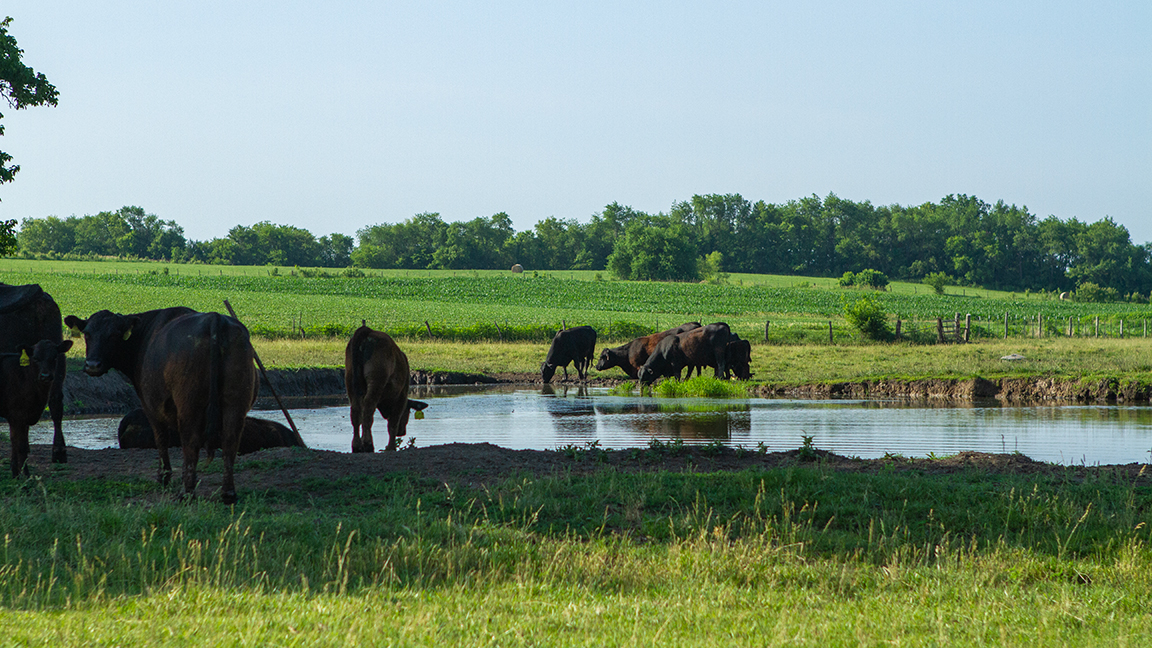

Liver flukes have traditionally been seen as a coastal menace; however, that is no longer the case. With a continued spread across the United States, producers need to familiarize themselves with the symptoms of liver fluke infestation and the options they have for prevention, as well as treatment.
For this episode of Angus at Work, Angus Beef Bulletin Editor Shauna Hermel sat down with Jody Wade, a technical veterinarian with Boehringer Ingelheim, to learn more about what he calls a biological time bomb.
What are they?
Wade says liver flukes have an incredible life cycle — from a veterinarian’s perspective at least — because their spread depends on a nonthreatening intermediate host: the snail.
“You have to have a snail involved to be able to transmit that fluke and get it through its life cycle,” Wade notes, saying that the ability of liver flukes to go through multiple life stages makes their existence even more impressive. “The other big thing is the environment.”
While farmers and ranchers get excited about moisture, so does the humble snail. For snails to thrive, they need wetlands. Moisture also ensures the miracidia — short-lived, free-swimming, ciliated larvae of parasitic flatworms excreted by snails — can swim to grass blades and stage themselves for cattle to pick up.
There are a lot of things that have to happen for liver flukes to survive, says Wade: “It’s a miracle. I mean, it really is.”
Prevention and treatment
While it may seem unlikely for the stars to align to bring forth the liver fluke in the first place, there is some good news for producers: There are drugs available that control part of that life cycle and keep liver flukes from completing their procreative journey.
Part of the prevention and treatment of liver flukes involves identifying when they may be a concern on any given operation. Luckily for producers, drug companies like Boehringer Ingelheim are conducting some surveillance.
“We are doing fecal diagnostics now and sending those to some of the veterinary schools to actually look for the liver fluke eggs,” says Wade, noting that liver fluke eggs are being found in locations previously deemed unlikely. “We’re finding them in places that you just couldn’t imagine … So we know that it’s moving to different areas now. It’s just doing the diagnostics and the surveillance to be able to find them.”
“Liver flukes are probably one of the most incredible life cycles that I guess you could ever deal with as a veterinarian, because they have to go through an intermediate host. So you have to have a snail involved to be able to transmit that fluke and get it through its life cycle.” — Jody Wade
How might a producer identify a problem with flukes within their own herd? That’s where things can get a little tricky. The trouble, Wade says, is that you may not ever see evidence. The problem usually manifests in a packing plant when livers are condemned due to the prevalence of flukes.
That doesn’t mean there aren’t any signs, though. Many puzzling performance issues may indeed be the handiwork of flukes, Wade says.
“We’ve never been able to really get a number. It varies from place to place,” Wade explains. “The biggest issue is, it’s a disease that we just assumed was going to stay down in those Gulf Coast states where we had those wetlands all the time. Now we’re seeing it manifest itself in places that it’s never been before.”
So how does a producer go about managing for liver flukes once they’re already on the ranch? Management plays a huge role, Wade says.
Limiting the ability of cattle to graze in those wet areas during certain times of the year is probably one of the biggest management strategies producers can employ, says Wade.
The biggest opportunity right now, he notes, is that we do have drugs that can treat the liver flukes. The frustration a lot of times is that most of the drugs available combat the adult stages of the liver fluke. However, a lot of damage is done by the juvenile stages as they migrate and go through the bile ducts trying to get out to the tissues.
“My biggest recap would be, try to control their environment as much as possible.” — Jody Wade
Wade’s final advice? Stop the life cycle of the liver fluke.
“Stop the life cycle,” Wade stresses. “We know that they can’t go any further without the snail.”
Editor’s note: The information above is summarized from the May 3, 2022, episode of Angus at Work. To access the full episode — including more on liver flukes, snails and general cattle health — check out our Angus at Work archive on www.angus.org. [Lead photo by Leann Schleicher.]
Angus Beef Bulletin EXTRA, Vol. 18, No. 2-A
Topics: Health , Management
Publication: Angus Beef Bulletin
Related Content



Current Angus Beef Bulletin
Our November issue focuses on the females of the herd and the records that validate them.