



ANGUS ADVISOR
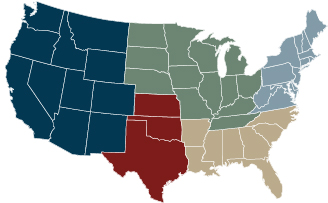
Angus Advisor: Southern Great Plains
Our team of Angus advisors offer regional tips for herd management.
July 18, 2026
Considerations for summer 2026
Except for portions of central Texas, drought conditions continue to intensify throughout much of the Southern Great Plains at the time of this writing. Fortunately, rain is in the forecast, and hopefully conditions will improve before this article is published in July. Nevertheless, according to the May 21 Oklahoma Farm Report, average statewide precipitation in Oklahoma measured only 1.23 inches (in.) compared to the long-term May average of 4.93 in. The driest May on record occurred in 1988, also with only 1.23 in. of rainfall.
Dry conditions early in the growing season, coupled with widespread wildfire activity throughout the spring, create several important management considerations for cow-calf producers this summer.
Surface water quality
Surface water sources should be monitored closely during prolonged dry periods. Dissolved solids become increasingly concentrated as water evaporates and livestock continue consuming water. Poor water quality can reduce water intake, forage consumption, and ultimately animal performance.
Restricted water intake almost always results in reduced forage intake. In severe cases, cattle may refuse water altogether. If drinking water quality is a concern and cattle cannot be moved to an alternative water source, water can be tested through a qualified laboratory at relatively low cost. The Oklahoma State University Soil, Water and Forage Analytical Laboratory currently charges $18 per sample. Guidelines for interpreting livestock drinking water quality are provided in the OSU Extension publication Understanding Your Water Test Report.
Water demand also increases substantially during hot weather, particularly for lactating cows. Additional information can be found in OSU Extension Fact Sheet AFS-3299, Estimating Water Requirements for Mature Beef Cows.
Hay quality during storage
Only time will tell, but hay could become an extremely valuable resource if drought conditions persist or intensify. As hay is harvested and stored, a few management practices can dramatically reduce storage losses and preserve forage quality.
Start with dense, well-formed round bales wrapped with net wrap. Dense bales create a tighter outer thatch layer that better sheds precipitation.
Store round bales tightly end-to-end in rows. If hay will not be protected under a roof or tarp, avoid vertical stacking. Under typical Southern Great Plains weather conditions, vertically stacked bales retain moisture and substantially increase spoilage losses.
Whenever possible, place hay storage areas on well-drained, south-facing slopes to encourage water runoff and maximize sunlight exposure for drying.
Orient bale rows north to south, and leave adequate space between rows. Rows positioned too closely together restrict airflow and sunlight exposure while increasing moisture wicking between bales.
If space allows, maintain at least 5 feet (ft.) of open space between rows. A practical guideline is to allow enough spacing for sunlight to reach approximately the lower one-third of both sides of the bale during part of the day.
Control vegetation between rows during storage. Excess vegetation reduces airflow and slows drying following rainfall.
Avoid storing hay near trees, buildings, brush, or tall vegetation where airflow and sunlight are restricted.
Bottom spoilage and moisture wicking can be dramatically reduced by storing bales on rock pads, railroad ties, pallets, or other materials that elevate hay off the ground surface.
Test warm-season annual forages
When spring drought persists, producers across the Southern Great Plains often increase reliance on warm-season annual forages such as sudangrass and sorghum-sudan hybrids.
Regardless of whether forage is purchased or raised, harvested forage should be tested for nutrient composition and potential anti-quality factors. A list of laboratories certified through the National Forage Testing Association is available at www.foragetesting.org/.
Sudangrass and sorghum-sudan hybrids intended for hay production should generally be harvested during the boot stage, typically when plants are 4 to 5 ft. tall.
Before harvest, forage should also be tested for nitrate concentration, particularly following drought stress or periods of slowed growth. Additional information is available in OSU Extension publication PSS-2903, Nitrate Toxicity in Livestock.
Have a plan to reduce stocking rate
When drought conditions develop, stocking rate should generally be reduced sooner than later to minimize long-term damage to perennial forages. Native rangelands in the Southern Great Plains are particularly vulnerable to overgrazing during prolonged drought, and recovery of desirable forage species may require several growing seasons once significant damage occurs.
Developing a proactive destocking plan can help producers make more objective and economically sound decisions.
Several management strategies can reduce forage demand while maintaining the core productivity of the cow herd.
Early weaning can substantially reduce nutrient requirements and forage demand for lactating cows.
Early pregnancy diagnosis followed by culling open females can quickly reduce stocking pressure.
Drought conditions also create an opportunity to remove cows with chronic performance or structural problems.
Historically strong cull-cow prices currently provide an additional incentive to make disciplined culling decisions before body condition declines and forage resources become depleted.
Drought conditions create challenges that extend well beyond reduced forage production.
Water quality, hay preservation, forage testing and strategic resource management all become increasingly important as environmental stress intensifies. While timely rainfall could still improve conditions substantially, producers who proactively protect forage resources and monitor cattle performance closely will be better positioned to manage risk and maintain productivity if dry conditions continue through the remainder of the growing season.
by David Lalman
Oklahoma State University
david.lalman@okstate.edu

Topics: Animal Handling , Business , EPDs , Equipment / Facilities , Feedstuffs , Foot score , Genetics , Health , Management , Nutrition , Pasture and Forage , Record Keeping , Sire Evaluation , Reproduction
Publication: Angus Journal
Related Publication Articles


Current Angus Journal
Keep up on the latest stories of the people and programs in the breed.

Latest Podcast Episode
Don’t miss conversations with breeders and industry experts.