


Navigating a New Frontier
A leap of faith led to a successful day for Stellpflug Cattle Company’s inaugural female sale.
June 11, 2026
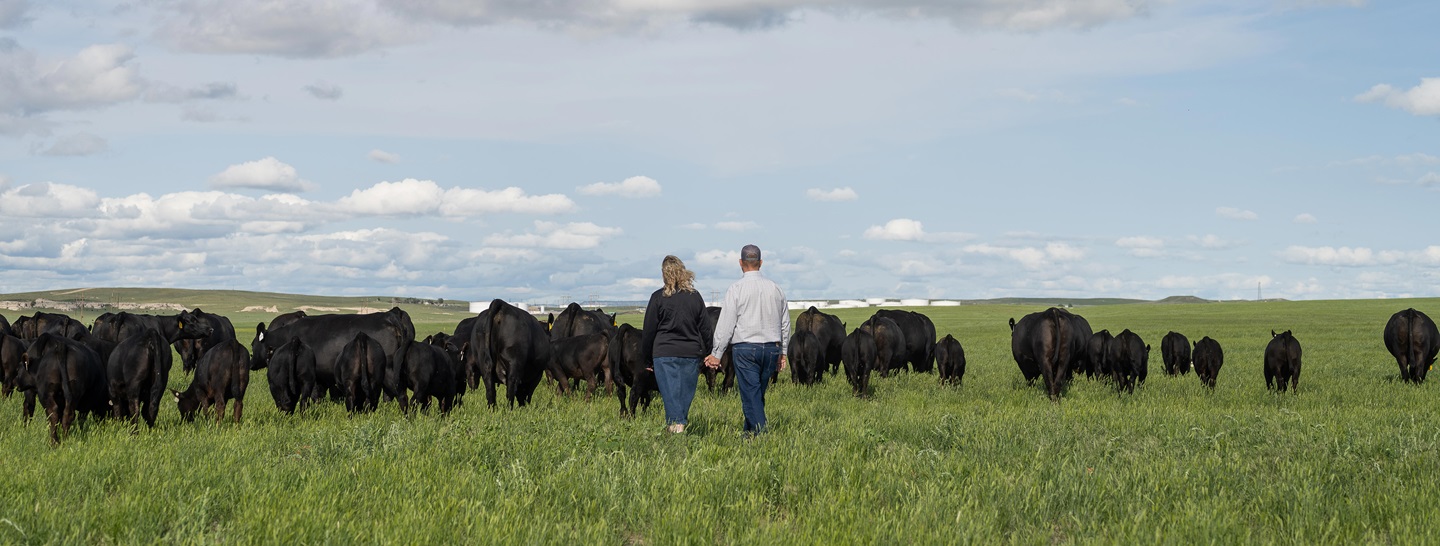

When Andy Stellpflug was growing up, his dad gave him a simple piece of advice.
“The key to your success is going to be the woman you marry.”
Stellpflug, a third-generation rancher in Guernsey, Wyo., says his dad was right — in more ways than one.
“I wouldn’t be where I’m at today without Theresa,” Stellpflug says. “She’s the glue that holds it all together. Anything good that happens here is because of what my wife has done.”
On the ranch, the importance of strong females doesn’t just apply to families; it applies to cattle, too.
At Stellpflug Cattle Company, they believe in a simple philosophy: the woman will make or break you. Whether in the home or on the ranch, great females are the foundation of a successful program.
Stellpflug says, “In the cattle business, if you make a wrong step, it’s going to haunt you for a long time.”
That’s why, above all else, their breeding strategy prioritizes making great cows; females with good temperament, good feet and good udders.
It’s simple math, Stellpflug explains, “If we have great cows, we’re going to have great heifers; if we have great cows, we’re going to have great bulls.”
That philosophy has carried the operation far. Stellpflug Cattle Company was established in 1913, and for more than 100 years, they’ve continued to remain successful in the difficult industry that is cattle ranching. A big part of that success has been a willingness to constantly innovate and improve in an ever-changing world.
If we have great cows, we’re going to have great heifers; if we have great cows, we’re going to have great bulls.” — Andy Stellpflug
Seedstock producers from the start, the goal at Stellpflug Cattle Co. has always been to support commercial cattlemen. In 2020, Andy and his dad, Glen, decided it was time to take the next big step in that goal — entering the world of registered cattle.
The pair travelled to Thedford, Neb., to meet with Jason Hoffman out at Hoffman Ranch. They came back to Wyoming with four Hereford bulls and a horse, but the story doesn’t stop there.
As Stellpflug tells it, they put those bulls out on their Angus cows. The results were better than anything they expected. The black baldie calves weighed about 30 to 40 pounds more at weaning than their straight Angus calves. It struck a chord, and Stellpflug saw an opportunity.
“I once heard a guy say one time that the only free meal in the cattle business is heterosis,” he says. “So I told my wife, ‘There’s got to be a better way to help the commercial guy to make more money, and I think the fastest way to do that is by better bulls.’”
A year later, Andy and Glen came back to Hoffman Ranch. This time, they left with 100 Angus heifers, 100 Hereford heifers and a plan to begin selling registered bulls through the Hoffmans’ annual sale.
“Then we got into an embryo transfer (ET) program,” Stellpflug explains. “We bought all of Hoffmans’ ET cows, all their donor cows, and the businesses kept growing.”
Fast forward to 2025. The Stellpflugs are now putting about 1,200 embryos into cows, calving about 650 registered cows and selling about 250 bulls through the Hoffmans’ sale.
As you can imagine, selling only bulls and keeping females, the ranch was starting to get a little crowded. Between all the cows they were calving and their registered heifers, Stellpflug Cattle Co. had close to a thousand head on their place. Stellpflug says they have room to winter about 400.
Those numbers forced a decision.
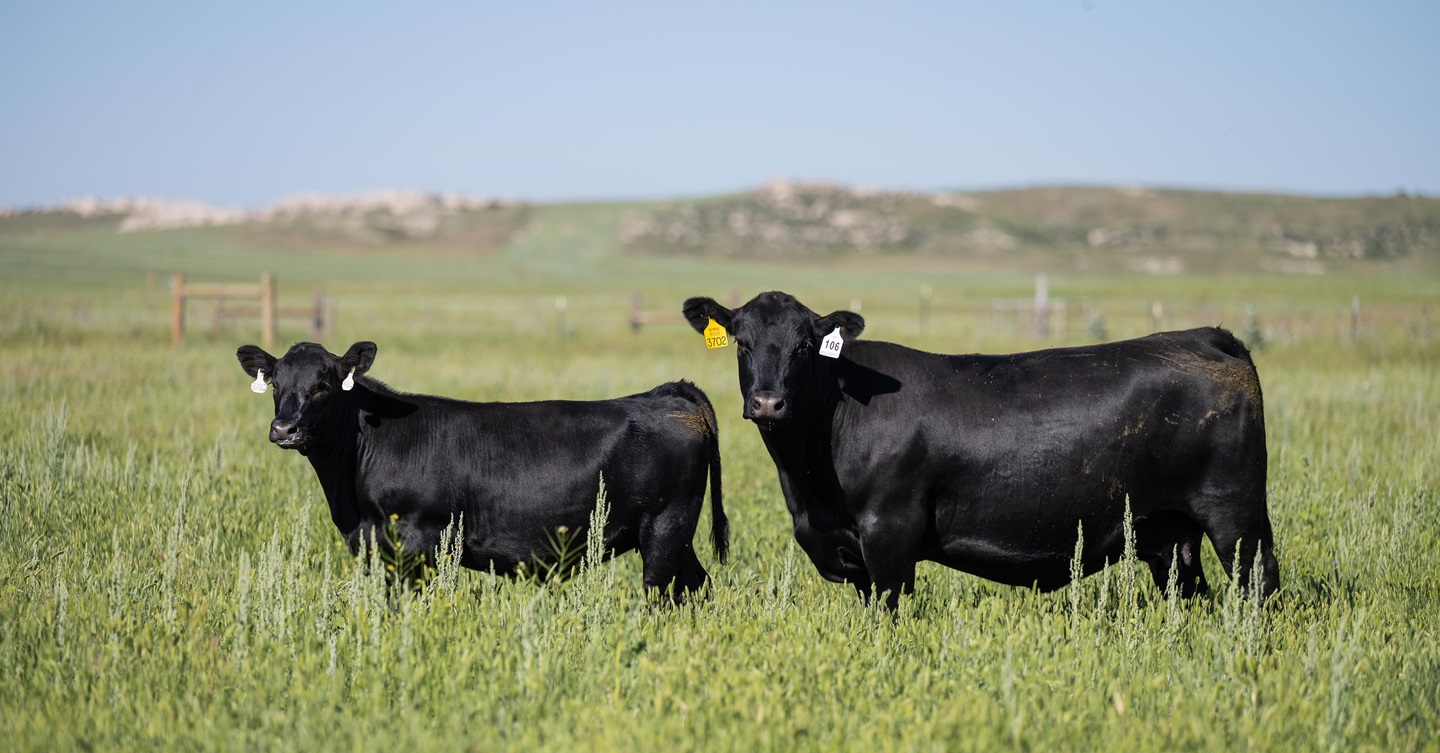

“When we first got into this, we were just focused on retaining really good females. But then we were overrun with cattle, and my wife started calling me a collector,” Stellpflug says. “So [at the] beginning of last year, I said, ‘We’re going to have a female sale.’”
A different approach
Once the decision was set, the race was on to build a sale from the ground up.
Stellpflug knew the one thing vital to the success of any sale is getting people there. And once they’re there, they need to feel like family and see good cattle. So, he started thinking about past female sales he’d been to. Something stuck out.
“Nine times out of ten, I’m finding that people are keeping the heifers they feel are the very best,” Stellpflug says.
While understandable, he saw an opportunity to do things a little differently. Above all else, Stellpflug’s goal as a seedstock producer is to help other ranchers get better genetics. When that happens, he says, the whole industry gets better.
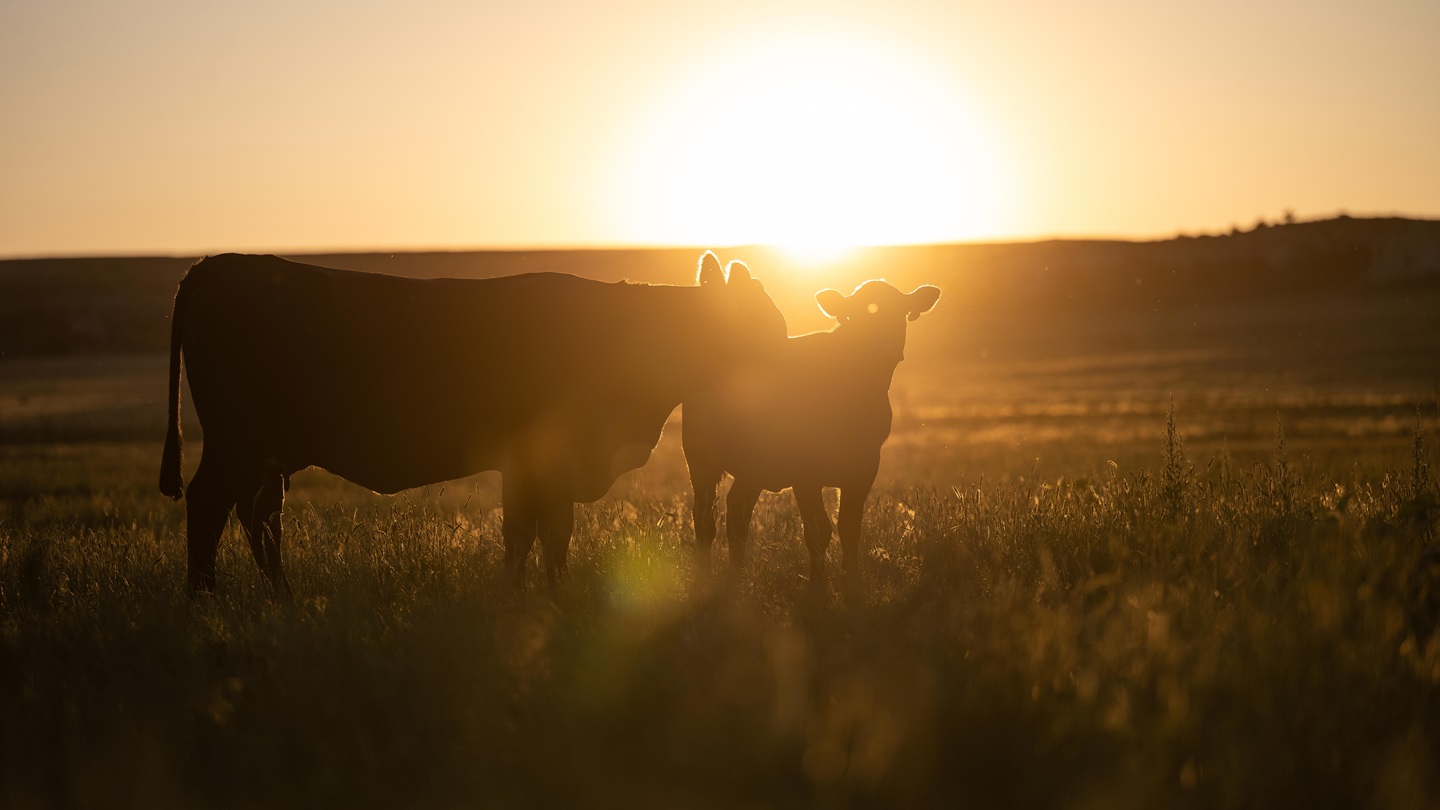
So for their inaugural female sale, the family took an unconventional approach. Instead of retaining the best calves into their herd, they made a massive commitment — to sell every single heifer calf out of their 2 and 3-year-old cows.
“That was kind of tough to do,” Stellpflug admits.
That kind of promise is exactly what gets people to come to a new sale. That settled, the family started to focus on other logistics. Planning started in fall of 2024 with a goal of hosting the sale in July 2025. The Stellpflugs quickly realized there was a lot to be done.
“We didn’t have any pens to display the cattle, so we had to build all the pens for that. We didn’t have a sale barn, so we had to build a sale barn,” Stellpflug says. “But because of the winter last year, we weren’t able to start any of that stuff until March.”
Now, Stellpflug says a sale in July probably seems crazy to most. But again, his goal with this sale was not just to provide good cattle, but to make everyone, including spouses and kids, feel not just invited, but welcomed.
“We wanted to encourage people to bring their families,” Stellpflug shares. “So we set up a bounce house, we had an ice cream truck, and a coffee truck and a food truck come out, and we just made a big day out of it. And the next day we took all the buyers to the Cheyenne Frontier Days.”
If that wasn’t enough to convince families, they also offered a $250 gift certificate for every woman who came to spend on Western jewelry from the Stellpflugs’ daughter’s business. They dubbed the sale “A New Frontier,” and it truly was. The Stellpflugs made sure this wouldn’t be just another sale, it would be an experience — one that would keep people coming back.
Stellpflug had the idea of what the sale should look and feel like, but the execution process was a beast. For all the attendees, it’s one day.
But between advertising properly, putting out a sale book in advance, setting up pens and more, Stellpflug says there’s tremendous amount of prep that happens prior to sale day.
The months went by, and days ticked closer and closer to July 24. Hours of prep and planning came to fruition and before the Stellpflugs knew it, their first female sale had come and gone.

Defining success
The first measure of success was simply turnout.
Stellpflug remembers the day all too well, saying, “I was having chest pains about three hours before the sale because there wasn’t anyone here, and then it was like a flood after that.”
To call the day a success would be an understatement, he says. Not because of the amount of money that came in from cattle sales, but because the feedback he received from attendees. More than 300 people showed up, and they gave away countless hats, shirts, ice cream, coffee and jewelry. Families came up to Stellpflug after with promises to be back next year. Word traveled fast, even to folks who weren’t in attendance.
Stellpflug says, “It was neat hearing it from the people, but then I heard from people that didn’t even come. They said, ‘Hey, I talked to so‑and‑so, and they said it was the most unbelievable hospitality they’ve ever seen.’”
To the family, that’s what success looks like. They know what keeps people coming back to sales year after year isn’t ice cream and coffee; it’s good cattle. But Stellpflug says he wants people to know that when they do come, they’ll be treated like family.
“I know the cattle are going to perform well, but to see people having a great time was just awesome,” he says. “I know you can’t judge on that day how happy people are going to be with their purchase, but I could judge that day on how good of a time people had.”
With the first female sale almost a year in the rearview, Stellpflug says he’s now measuring success by customer satisfaction with their purchase — if people come back because they like what they got.
“The heifers we sold last year are calving, and I’ve had some unbelievable feedback,” he says. “I want to stay in contact with all of the people that buy from us to see how they’re doing, because success to me will be repeat customers.”
In the spirit of constant improvement, some things will look a little different at this year’s female sale. But the core mission will always remain the same: helping fellow cattlemen better their herds, whether through bulls or females.
Stellpflug knows buyers wonder what stays behind the curtain; at his ranch, there isn’t one.
“They don’t have to worry about, ‘Well, what did Andy keep back, and what are we not getting to see?’” he explains. “We don’t do that. We just hope the next people take them and do something great.”
So my advice would be, number 1, make sure you have the very best product you can offer and be willing to sell it. and then, number 2, gear it toward the whole family operation." — Andy Stellpflug
A bit of advice
For breeders considering starting their own sale, Stellpflug’s advice is rooted in the basics of his own ranching philosophy.
“I think, Number 1, you have to have a great product,” he says. “But I think you also need to focus on the whole program. Growing up, it was a family operation. As kids, we helped my parents work and my mom helped my dad work, and we all poured into it. I think the sales should be focused the same way. These are family operations.”
It worked for the Stellpflugs. Offerings like ice cream, bounce houses and tickets to the Cheyenne Frontier Days were no small investment, but it made visitors feel at home in this small corner of Wyoming for the day, and to Stellpflug, that made it all worth it.
He says, “So my advice would be, Number 1, make sure you have the very best product you can offer and be willing to sell it. And then, Number 2, gear it toward the whole family operation.”
In the end, the Stellpflug Cattle Co. female sale was “A New Frontier” for everyone involved. But really, it felt less like a launch and more like the natural extension of how the ranch was already operating — female first and family first. Although the infrastructure and logistics will just keep getting better as the years go by, the heartbeat is already set.
“I think it’ll be something we do for a long, long time,” Stellpflug says.
Topics: Business , Management , Marketing , Ranch profile , Seedstock Marketing , Success Stories
Publication: Angus Journal
Related Publications


Current Angus Journal
Keep up on the latest stories of the people and programs in the breed.

Latest Podcast Episode
Don’t miss conversations with breeders and industry experts.