


Spray Drones Take Aim at Hard-to-Reach Problems
From mosquito control to pecan orchards, new drone technology is changing how land is treated from the air.
April 27, 2026
At the 2026 CattleCon conference, filled with discussions of innovation, one message landed clearly: drones are no longer experimental equipment. They are effectively operating at high levels over fields, orchards and cliff sides across the country.
Central UAS Technologies, a Florida-based drone manufacturer, has been part of this shift. Founded in 2012 as Leading Edge Associates, the company initially built drones and served as dealers of Chinese drone manufacturer, DJI.
Federal restrictions on the use of Chinese-made drones and components tightened in 2016, and the company began working closely with the Federal Aviation Administration (FAA), helping shape regulations for agricultural drone operations.
“We started early when we were kind of in a grey area with the FAA,” says Kelley Wittenberg, Central UAS Technologies national accounts manager. “They didn’t quite know what to do with the drones at that time. So, we helped to implement some of those original regulations with the FAA.”

Since then, the company has conducted more than 20,000 flights. Additional ownership changes have helped the company expand and grow.
“There is no faster way to find out in the real world what’s working and what’s not working,” she says. “Our pilots will not be shy about that information.”
Built for spraying, not just flying
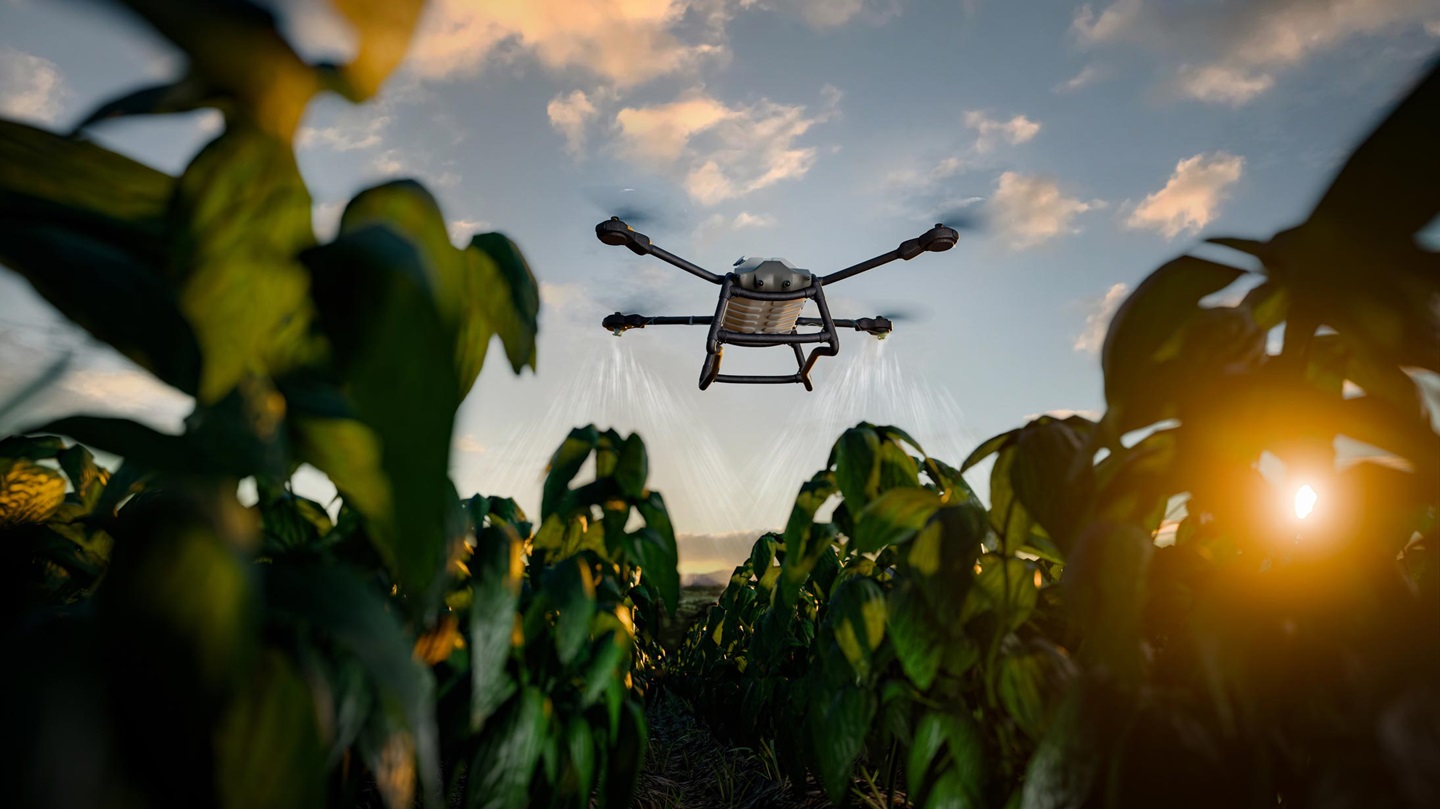
Unlike other adapted drones on the market, Central UAS designs aircraft specifically for application work. Its product line includes the PrecisionVision 35X, PrecisionVision 40X and PrecisionVision 100X.
Each drone is built to handle different payload and operational needs, supporting a range of nozzle configurations, from multi-nozzle booms to a single, downward-facing nozzle, depending on application goals.
“All of the data over the years has shown that a good old booming nozzle with the correct nozzle at the correct placement is the best option for your droplet deposition and your efficacy,” Wittenberg says.
PrecisionVision 100X, the company’s newest model, carries up to 100-pound payloads and allows payload systems to swap in less than two minutes. In addition to liquid payloads, Central UAS drones are equipped for granular applications. Wittenberg says the systems have been used to apply cover crop seed, grass seed, and granular larvicides for mosquito control and ant bites.
As drones have grown larger, Wittenberg says their usefulness has expanded into livestock pasture management, rangeland management, row crops and specialty crops.
Ensuring precision, Central UAS develops their own software: MapVision, DropVision and PrecisionVision, designed for tasks such as autonomous flight, droplet analysis and swath characterization.
“It’s very beneficial so that you know that you’re spraying and you’re getting the droplet deposition that the EPA says you need to,” she says.
Beyond traditional farmland, spray drones are proving valuable in harsher terrains. In California’s Big Sur region, for example, Central UAS works with state parks to treat invasive grasses on cliffs hundreds of feet above the ground.
Previous methods included rappelling down cliffs or flying a helicopter — both hazardous and costly options.
To address those challenges, Central UAS developed radar sensors allowing drones to follow terrain contours and maintain consistent height above treatment areas, preserving swath coverage and droplet placement.
“What the drone will do in those situations is kind of stair step down the mountain to make sure that you’re not in any danger of hitting any sort of terrain, but you’re also still getting on target with your applications,” Wittenberg says.
The regulatory landscape
Operating spray drones commercially requires both a Part 107 pilot certification and a Part 137 aerial applicator certificate from the FAA, as well as state-level pesticide licensing.
As of December 2025, new federal requirements mandate 60-70% of drone components be manufactured in the United States. Because Central UAS already builds its systems domestically, Wittenberg says the company already meets regulations and is positioned to expand work with federal and state agencies.
As regulations evolve to allow longer-range flights, nighttime operations and coordinated multi-drone missions, Wittenberg expects drone applications to become more precise and efficient.
“The future is really exciting for us as a company and for the drone industry at large,” she says. “Some of these regulations that have come down the pipeline [Washington, D.C.] are really going to enhance the way that we are manufacturing in America. It’s going to drive innovation, and hopefully it’s going to lead to better things for us as consumers and users as well.”
Editor’s note: Madison Paden is a freelance writer from Salesville, Ohio.
Topics: Business , Equipment / Facilities
Publication: Angus Journal
Related Publications


Current Angus Journal
Keep up on the latest stories of the people and programs in the breed.

Latest Podcast Episode
Don’t miss conversations with breeders and industry experts.