




ANGUS ADVISOR
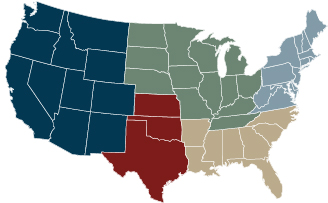
Angus Advisor Southern Great Plains
Principles and tools to assist cow-calf producers match winter supplements with available forage resources and cow nutrient requirements.
January 15, 2026
As of late November 2025, current conditions in the Southern Great Plains might be described as abundant standing and harvested forage availability, moderate to low winter protein and energy supplement prices, and variable soil moisture conditions. The Drought Monitor suggests expanding dry conditions in most of Texas and the southern half of Oklahoma, with good soil moisture conditions in northern Oklahoma and the western two-thirds of Kansas. Water quality and availability is once again a concern in Texas and southwest Oklahoma.
We recently presented current cow-calf enterprise annual grazing and feed (hay, concentrates, mineral) costs in one of our Ranchers’ Thursday Lunchtime Series (RTLS) webinars. In that session, we cover the principles and available tools to assist cow-calf producers in matching winter supplements with available forage resources and beef cow nutrient requirements. This recorded session can be found at www.beef.okstate.edu. Scroll down to the RTLS section and click on “Archived Webinars.” This recent series’ title is “Cow-Calf Corner Live.”
Small-grain winter pasture is in good condition in much of the central and northern areas of this region, and this resource works well as a winter supplement to beef cows and an excellent creep grazing opportunity for fall-born calves. We tracked performance of lactating Angus cows and their calves grazing wheat from January through grazeout in May (Table 1).
Table 1. Performance of fall-calving cows and calves grazing wheat pasture January through May
|
Item |
January 9 |
May 18 |
ADG, lb. |
|
Cow Weight, lb. |
1,157 |
1,429 |
2.1 |
|
Body Condition Score |
4.8 |
6.7 |
|
|
Milk, lb/day |
27 |
25 |
|
|
Calf Weight, lb. |
262 |
714 |
3.5 |
Notice cows averaged 26 pounds (lb.) of milk yield during late lactation and still managed to gain more than 2 lb. per day along with tremendous increase in body condition. The combination of forage quality and high forage intake can result in cows becoming overly conditioned. This would certainly be a concern in spring-calving cows as their nutrient requirements are substantially lower during gestation.
Limiting wheat pasture forage intake can serve to control cow condition and stretch the expensive, high-quality forage over more grazing days. One approach is to limit-graze the wheat as a protein and energy source to complement low-quality standing forage or hay.
We discovered that about nine to 12 hours per week of access to wheat pasture (three to four hours per day, three days per week) met supplmental protein and energy needs for lactating beef cows. Using this method, we were able to stock cows at about a cow-calf pair to 0.7 acres of wheat pasture from mid-November through mid-May.
Hours on wheat can be adjusted to maintain a minimum level of cow body condition. We fed low-quality native grass hay in drylot pens when the cows were not grazing wheat. Stockpiled forage in a pasture adjacent to the wheat pasture would be an ideal situation to minimize wintering costs. In our situation, automatic waterers were available in the drylot pens. After about three to four hours of grazing, the cows were ready to get a drink and lie down, so they would walk into the drylot pens and we would shut the wire gate behind them. Next to the gate, we simply raised the electric fence so the calves could pass under it to graze.
In our experiment, another set of cows were wintered grazing tallgrass prairie stockpiled forage and fed about 5 lb. per day of dried distillers’ grain with solubles. Calf weight averaged 467 lb. in mid-April in this “traditional” system whereas calves in the limit-grazed wheat pasture system averaged 565 lb. in mid-April.
by David Lalman
Oklahoma State University
david.lalman@okstate.edu

Topics: Animal Handling , Business , EPDs , Equipment / Facilities , Feedstuffs , Foot score , Genetics , Health , Management , Nutrition , Pasture and Forage , Record Keeping , Sire Evaluation , Reproduction
Publication: Angus Journal
Related Publication Articles


Current Angus Journal
Keep up on the latest stories of the people and programs in the breed.

Latest Podcast Episode
Don’t miss conversations with breeders and industry experts.