




ANGUS ADVISOR
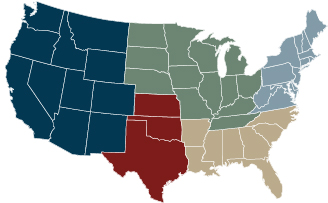
Angus Advisor: Midwest Region
Reevaluating mineral concentrations in tall fescue hay.
January 20, 2026
I was offered a semi-rare opportunity to evaluate tall fescue hay samples for mineral content recently. Since I am predicting a long hay feeding season, this is a good time to share information on mineral supplements for beef cows.
The mineral concentration in hay does not change drastically over time (if stored dry and covered/protected), but I’ve seen troubling analyses for the 2025 crop. Many folks were late getting into their hay fields this year due to above-average rain in May and June. When hay is harvested late, the nutrient concentrations (energy, protein, minerals) are generally less than if the hay had been harvested earlier, although I do grant that yield was likely above average.
In these analyses I reviewed, copper (~60%) and zinc (~55%) were the two principle minerals that were deficient relative to the requirements for a lactating cow. More troubling however was the iron concentration of these samples. Iron can bind with copper in the rumen and lower gut to form compounds that are not able to be absorbed.
In practice, that means even if the diet meets the copper requirement on paper, the cows could still show symptoms of copper deficiency. The general rule of thumb is iron above 500 parts per million (ppm) in the diet is a greater risk for copper antagonism. The samples I reviewed ranged from 345 to 716 ppm iron.
How does a nutritionist manage a known antagonism scenario? In practice, many nutritionists do not expect the mineral supplement alone to provide 100% of the requirement. Instead, they assume a portion will come from basal forages and other feeds. It’s common to design supplements to provide a large share (often around two-thirds to all) of the requirement, then adjust based on forage analysis and antagonists.
However, when a known antagonism exists, it would be more common to increase the concentration of the specific minerals in the supplement (meet 100-125% of cow requirement) and/or to use a more bioavailable source of the mineral (chelated, hydroxy, etc.). Beef cow mineral requirements are expressed as total dietary concentrations and are largely derived from studies using typical inorganic mineral sources under standard feeding conditions.
The requirement tables do not adjust values for each specific mineral source; instead, nutritionists adjust formulation based on the expected bioavailability of the sources they choose and the presence of antagonists. Among inorganic sources, sulfate salts are generally considered relatively bioavailable, whereas oxides often have poor bioavailability. Organic/chelated and hydroxy sources can provide similar or greater bioavailability than sulfates, especially when antagonists are present, which is why they are often used strategically in high-antagonism scenarios.
So, how would I put this into action? If you suspect your beef cow diet or water has copper antagonists, look for mineral supplements that have at least 1,400 ppm from copper sulfate with an expected daily intake of 4 ounces (oz.) per cow (0.25 pounds). That is the most common formulation for loose mineral supplements. If you are using a chelated or hydroxyl supplement that is more bioavailable, at least 1,050 ppm (75%) will likely provide enough copper to meet the requirement despite the known antagonism. For zinc, 4,200 ppm from an inorganic source or 3,150 ppm from an organic source should meet the requirement.
What about other minerals? Manganese was at least 4x the requirement in all the samples, so it’s less of a concern. For the macro minerals — calcium (Ca), phosphorus (P), magnesium (Mg), potassium (K), and sodium (Na) — only phosphorus (~90% of requirement) and sodium (10% of requirement) were below established requirement thresholds. A complete mineral that supplements a wide range of minerals is still a good insurance policy, especially with the value of cattle being so high these days in the cattle market.
Vitamins are a different scenario. Generally, vitamin A is the most limiting vitamin in beef cattle diets. Contrary to what some of the gurus are saying, we generally do not supplement beef cattle with water-soluble vitamins (various B vitamins and vitamin K). Vitamin E is also supplemented, but it is not a common deficiency in normal feeding scenarios.
The larger concern with vitamins is they are less stable, and vitamin concentrations in hay stored for more than a year are most likely less than in hay from the current year’s crop. To meet 100% of the vitamin A requirement for a lactating cow in the “4 oz.” mineral I discussed above, the supplement needs to contain at least 250,000 IU/lb. of vitamin A. Again, this is a level I would use if I feed the previous year’s hay crop for long periods.
Remember, deficiencies in micronutrients do not pop up overnight. If a cow goes through 1-2 months of a diet that is deficient in micronutrient(s), it is not likely to manifest in clinical symptoms. Ask any nutritionist who has tried to deplete an animal of a specific mineral or vitamin to study clinical deficiencies, and they will tell you how difficult it is to do in practice. However, in a long hay feeding season with poorer-than-normal grass hay, it would not be a shock to see some of these deficiencies pop up. Beef up your mineral/vitamin insurance policy and protect these valuable beef cows.
by Eric Bailey
University of Missouri
baileyeric@missouri.edu

Topics: Animal Handling , Business , EPDs , Equipment / Facilities , Feedstuffs , Foot score , Genetics , Health , Management , Nutrition , Pasture and Forage , Record Keeping , Reproduction , Sire Evaluation
Publication: Angus Journal
Related Publication Articles


Current Angus Journal
Keep up on the latest stories of the people and programs in the breed.

Latest Podcast Episode
Don’t miss conversations with breeders and industry experts.