




ANGUS ADVISOR
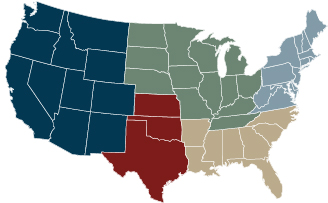
Midwest Region
Considerations for using growth-promoting implants.
July 16, 2025
This 70-year-old technology adds $50 per calf — are you using it?
In 2025, the U.S. beef industry is producing more than 26 billion lb. of beef with just 28.2 million beef cows — a remarkable achievement in production efficiency, considering that’s more beef than we’ve ever produced with the same number of beef cows as we had 60 years ago.
Yet, many cow-calf producers are leaving money on the table by overlooking a proven tool from the 1950s: growth-promoting implants.
At today’s market prices, every additional pound at weaning matters. Consider weaning a calf 20 lb. heavier — from 550 to 570 lb. If those pounds are worth $2.50 each (a conservative value of gain), that’s $50 more per calf. Skip implants, and that’s $50 per head left on the table.
Implants: simple, high-return investment
Cost is often the first concern, but implants for unweaned beef calves are cheap — $2-3 per calf, depending on the product. Compare that to a $50 gain from 20 added lb., and the return on investment becomes hard to ignore. For a 100-calf operation, that’s potentially $4,700 in added revenue for a $200–$300 investment.
Administering implants isn’t complicated. A short Merck Animal Health video demonstrates proper technique in under a minute. Products like Ralgro®, Synovex®-C and Component® E-C are widely available and well-documented in Oklahoma State University’s implant guide
Despite clear economic benefits, only 22.9% of U.S. beef calves receive growth-promoting implants before weaning, according to the USDA’s 2007-08 National Animal Health Monitoring System (NAHMS) study. Large operations (200+ cows) adopt at higher rates (31.1%), while smaller herds (1–49 cows) lag at just 7%.
Why the low adoption? Misconceptions about hormones, market penalties or complexity may be to blame. But these concerns don’t hold up to the facts.
Implants are safe. The FDA approved them for use in 1954. They increase weaning weights by 15 to 25 lb., reduce feed and resource use per pound of gain, and leave no required withdrawal period before harvest. They are placed in the ear because that is a human inedible part of a beef.
Hormonal concerns are often exaggerated. Beef from implanted cattle contains 2-3 nanograms (ng) of estrogen per 3-ounce serving. Nonimplanted beef has 1-2 ng. For perspective, broccoli contains 94,000 ng in the same portion.
Using implants is also a massive win for sustainability efforts. Heavier calves without additional feed and land inputs mean more efficient use of our natural resources.
Cautions and market considerations
Implanting isn’t for every animal. Heifers intended for breeding generally should not be implanted, as fertility may decline by 2-5%. Additionally, NHTC (Non-Hormone Treated Cattle) programs require cattle to be raised without implants, so check your market before starting.
Correct administration is key. Improper technique can lead to abscesses or crushed pellets, reducing effectiveness. Fortunately, proper technique is easy to learn and apply with minimal equipment.
Timing matters: don’t miss the payout window
The benefit of implanting depends heavily on timing. Implants for unweaned calves are effective for 90 to 120 days, depending on the product. Administering them at branding or 2-4 months of age gives the hormones time to work before weaning.
Implanting within 30 days of weaning can waste the opportunity for weight gain. Plan ahead to align your implant window with your weaning schedule.
Know the new rules
As of 2023, new regulations limit implant use to one per production phase (preweaning, stocker or feedlot). This simplifies compliance but means your implant strategy must be well-timed. For cow-calf producers, a single implant at 2 to 4 months delivers the biggest effect without interfering with downstream phases.
Implanting calves is less common than other basic management practices, yet offers one of the highest returns.
According to NAHMS:
- 71.6% of operations vaccinate
- 67.8% castrate
- 52.4% deworm
- But only 22.9% implantAdding implants to this list is a small step that pays big dividends. If you’re already working calves, this is one more squeeze of the chute that can add thousands in return.
Ready to boost profits?
Don’t leave $50 per calf on the table. Growth-promoting implants are a 70-year-old technology delivering modern results.
Here’s how to get started:
- Choose a product like Ralgro, Synovex-C or Component E-C.
- Implant calves at 2-4 months of age.
- Watch the Merck Animal Health implant video for proper technique.
- Read the Oklahoma State’s ANSI-3290 guide for instructions on selecting implants.
- Talk to your veterinarian or Extension agent for advice on timing and selection.
In a tight-margin industry, this is one decision that pays for itself and then some. Start implanting this season and watch your calves — and your profits — grow.
by Eric Bailey
University of Missouri
baileyeric@missouri.edu

Topics: Animal Handling , Business , EPDs , Equipment / Facilities , Feedstuffs , Foot score , Genetics , Health , Management , Nutrition , Pasture and Forage , Record Keeping , Reproduction , Sire Evaluation
Publication: Angus Journal
Related Publication Articles


Current Angus Journal
Keep up on the latest stories of the people and programs in the breed.

Latest Podcast Episode
Don’t miss conversations with breeders and industry experts.